Nitro
I composti nitro sono molecole organiche contenenti uno o più gruppi nitro (NO2). Questi composti sono ampiamente utilizzati nella sintesi di esplosivi, prodotti farmaceutici e coloranti. Da CymitQuimica, offriamo una vasta gamma di composti nitro di alta qualità per supportare le vostre applicazioni di ricerca e industriali, garantendo risultati sicuri ed efficaci. La nostra selezione include una varietà di composti nitro adatti a diverse sintesi chimiche e applicazioni.
Trovati 2516 prodotti di "Nitro"
Ordinare per
Purezza (%)
0
100
|
0
|
50
|
90
|
95
|
100
Diethyl[2-(4-nitrophenoxy)ethyl]amine
CAS:Prodotto controllato<p>Please enquire for more information about Diethyl[2-(4-nitrophenoxy)ethyl]amine including the price, delivery time and more detailed product information at the technical inquiry form on this page</p>Formula:C12H18N2O3Purezza:Min. 95%Peso molecolare:238.28 g/molN-Nitroso-N-methyl-4-aminobutyric acid methyl ester
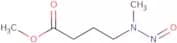
CAS:<p>Please enquire for more information about N-Nitroso-N-methyl-4-aminobutyric acid methyl ester including the price, delivery time and more detailed product information at the technical inquiry form on this page</p>Formula:C6H12N2O3Purezza:Min. 95%Peso molecolare:160.17 g/mol3-Chloro-7-nitro-1H-indole
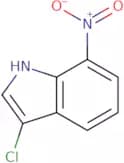
CAS:3-Chloro-7-nitro-1H-indole is a chemical compound that has been shown to have antitumor activity in clinical trials. It is catalysed by the addition of chloride ions to the nitro group, yielding an aminocarbonyl intermediate. This intermediate reacts with hydrogen chloride to form a chlorinating agent that can react with DNA and protein bases. The chlorinating agent has been shown to be efficient in screening for anticancer drugs. 3-Chloro-7-nitro-1H-indole is currently being tested for efficacy against colon carcinoma cells and human colon carcinoma xenografts.Formula:C8H5ClN2O2Purezza:Min. 95%Peso molecolare:196.59 g/mol4-Nitro lenalidomide
CAS:<p>4-Nitro lenalidomide is an organic compound that is a derivative of the drug lenalidomide. It is synthesized by reacting 2-nitrobenzaldehyde with amines, yielding 4-nitro-N-(2-chloroethyl)-N-(2,3-dihydroxypropyl)benzamide or 4-nitrolenalidomide. This reaction occurs in tetrahydrofuran (THF) as a solvent and in the presence of sodium borohydride (NaBH4). The four nitro groups are used to control the enantiomeric purity of the product. The chemical formula for 4-nitro lenalidomide is C12H14ClNO2.</p>Formula:C13H11N3O5Purezza:Min. 95%Peso molecolare:289.24 g/mol2,5-Dimethoxy-4-nitroaniline
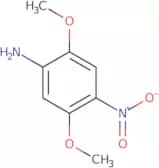
CAS:Prodotto controllato<p>Please enquire for more information about 2,5-Dimethoxy-4-nitroaniline including the price, delivery time and more detailed product information at the technical inquiry form on this page</p>Formula:C8H10N2O4Purezza:Min. 95%Peso molecolare:198.18 g/mol4-Chloronitrobenzene
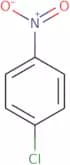
CAS:<p>4-Chloronitrobenzene is a type strain of the bacterium Nitrosomonas europaea. It has been shown to be toxic to cells in both aerobic and anaerobic culture. 4-Chloronitrobenzene inhibits the activity of hydrogenase enzymes, which are required for the reduction of molecular oxygen to water. The toxicity of 4-chloronitrobenzene is due to its ability to inhibit enzyme activity, leading to cell death. This bacterium also has the ability to use chlorinated hydrocarbons as a carbon source and cause chlorination of other biological molecules. In addition, it can reduce metal hydroxides and form metal complexes with palladium and platinum metals. 4-Chloronitrobenzene is found in soil samples that have high concentrations of chloride ions or neutral pH values. Its phase equilibrium diagram shows that this compound exists mainly in liquid form when it is at low temperature, but becomes more</p>Formula:C6H4ClNO2Purezza:Min. 95%Colore e forma:SolidPeso molecolare:157.55 g/mol(2S)-N’-Nitrosonornicotine
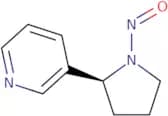
CAS:<p>(2S)-N’-Nitrosonornicotine is a tobacco-specific nitrosamine that has been shown to be carcinogenic in the experimental model. It has been found to inhibit the activity of liver microsomes, which are enzymes that break down drugs in the body. The pharmacokinetic properties of (2S)-N’-Nitrosonornicotine have been studied in rats and mice, but not humans. It has been shown that it is metabolized by methylation and ethylation, with nicotine being its major metabolite.</p>Formula:C9H11N3OPurezza:Min. 95%Colore e forma:Beige Slightly Yellow PowderPeso molecolare:177.2 g/mol4-(2-Chloro-4-nitrophenyl)piperazine-1-carboxamide
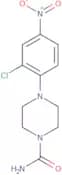
CAS:<p>Please enquire for more information about 4-(2-Chloro-4-nitrophenyl)piperazine-1-carboxamide including the price, delivery time and more detailed product information at the technical inquiry form on this page</p>Formula:C11H13ClN4O3Purezza:Min. 95%Peso molecolare:284.7 g/mol2-Cyclohexyl-4,6-dinitrophenol
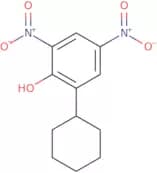
CAS:<p>2-Cyclohexyl-4,6-dinitrophenol is a chemical that inhibits the synthesis of viral DNA. It has been shown to have minimal toxicity in animal models and may be used for the treatment of metabolic disorders, such as hepatic steatosis or hepatitis. 2-Cyclohexyl-4,6-dinitrophenol has also been shown to inhibit the toll-like receptor (TLR) pathway and induce an antiviral state in vitro. In addition, it was found to have an effect on mitochondrial membrane potential, which may explain its antiviral activity. 2-Cyclohexyl-4,6-dinitrophenol has also been shown to inhibit viral replication in cells infected with HIV and other viruses such as Hepatitis C virus.</p>Formula:C12H14N2O5Purezza:Min. 95%Peso molecolare:266.25 g/moltert-Butyl 4-(5-nitro-2-oxo-1,3-benzoxazol-3(2H)-yl)piperidine-1-carboxylate
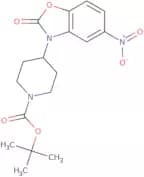
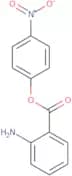
CAS:Prodotto controllato<p>Please enquire for more information about tert-Butyl 4-(5-nitro-2-oxo-1,3-benzoxazol-3(2H)-yl)piperidine-1-carboxylate including the price, delivery time and more detailed product information at the technical inquiry form on this page</p>Formula:C17H21N3O6Purezza:Min. 95%Peso molecolare:363.37 g/mol4-Nitrophenyl Anthranilate
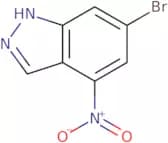
CAS:Prodotto controllato<p>4-Nitrophenyl anthranilate is a potent inhibitor of serine protease. It is synthesized by reacting an anthranilate with an hydroxyl group in the presence of ultraviolet light, and can be used as a fluorescent probe. 4-Nitrophenyl anthranilate binds to the active site of serine protease, and prevents the hydrolysis of proteins by blocking the cleavage of peptide bonds at the carboxylic acid termini. This compound has been shown to inhibit human serum albumin and cell nuclei in vitro. The reaction mechanism for this compound is unknown, but it is believed that it may involve a photo-induced electron transfer mechanism.</p>Formula:C13H10N2O4Purezza:Min. 95%Colore e forma:PowderPeso molecolare:258.23 g/mol6-Bromo-4-nitro-1H-indazole
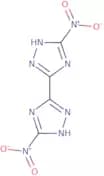
CAS:<p>Please enquire for more information about 6-Bromo-4-nitro-1H-indazole including the price, delivery time and more detailed product information at the technical inquiry form on this page</p>Formula:C7H4BrN3O2Purezza:Min. 95%Peso molecolare:242.03 g/mol5,5'-Dinitro-2H,2'H-3,3'-bi-1,2,4-triazole
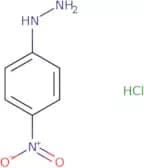
CAS:Prodotto controllato<p>Please enquire for more information about 5,5'-Dinitro-2H,2'H-3,3'-bi-1,2,4-triazole including the price, delivery time and more detailed product information at the technical inquiry form on this page</p>Formula:C4H2N8O4Purezza:Min. 95%Peso molecolare:226.11 g/mol4-Nitrophenylhydrazine hydrochloride
CAS:<p>4-Nitrophenylhydrazine hydrochloride is an organic compound that belongs to the class of hydrazines. It is a colorless solid that has a melting point of 202-204 °C. 4-Nitrophenylhydrazine hydrochloride is used in the synthesis of other compounds, such as trifluoroacetic acid and nucleophilic compounds. The chemical structure can be analyzed using nuclear magnetic resonance (NMR) spectroscopy, which shows that this compound contains amines and nitro groups. 4-Nitrophenylhydrazine hydrochloride is also soluble in water due to its acidic nature. This compound reacts with bases and alcohols to form salts, such as monosodium salt.</p>Formula:C6H7N3O2·HClPurezza:Min. 95%Colore e forma:PowderPeso molecolare:189.6 g/molL-Tyrosine 4-nitroanilide
CAS:<p>Please enquire for more information about L-Tyrosine 4-nitroanilide including the price, delivery time and more detailed product information at the technical inquiry form on this page</p>Formula:C15H15N3O4Purezza:Min. 95%Peso molecolare:301.3 g/mol3-Nitropropionic acid
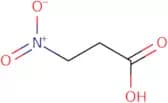
CAS:3-Nitropropionic acid (3NPA) is a mitochondrial toxin that causes neuronal death by inhibiting complex enzyme activities and inducing reactive oxygen species production. 3NPA also alters mitochondrial membrane potential and induces pro-apoptotic protein expression, leading to neuronal cell death. 3NPA has been shown to be effective in the treatment of experimental models of infectious diseases, such as rat sepsis and human HIV infection, by reducing the number of activated T cells and CD4+ T cells. 3NPA also exhibits anti-inflammatory properties by inhibiting the inflammatory responses of monocytes/macrophages and neutrophils.Formula:C3H5NO4Purezza:Min. 95%Colore e forma:PowderPeso molecolare:119.08 g/mol2,6-Dinitroaniline
CAS:<p>2,6-Dinitroaniline is an organic compound that is used as a pesticide. It is classified as a group P2 carcinogen and has been shown to cause cancer in laboratory animals. 2,6-Dinitroaniline binds to DNA and RNA molecules in plant cells, which inhibits protein synthesis and the production of energy in mitochondria. It also inhibits cell division by binding with proteins that regulate the cell cycle. The most common assay for 2,6-dinitroaniline is an immunosorbent assay that uses monoclonal antibodies to detect its presence in tissues or culture media. This test can be used for both qualitative and quantitative analysis of 2,6-dinitroaniline levels. Other methods include gas chromatography/mass spectrometry (GC/MS), liquid chromatography (LC)/MS, high performance liquid chromatography (HPLC), or thin layer chromatography (TLC).</p>Formula:C6H5N3O4Purezza:Min. 95%Colore e forma:Light (Or Pale) Yellow To Orange Yellow SolidPeso molecolare:183.12 g/molMethyl 3-nitroisonicotinate
CAS:<p>Methyl 3-nitroisonicotinate is a synthetic compound that belongs to the nitro group. It is a strong nucleophile that has been shown to react with chloride to give an active methylene chloride, which can be used for the synthesis of other compounds. Methyl 3-nitroisonicotinate also reacts with nucleophilic amines, including pyridine and ammonia, to form methyl 3-aminoisonicotinate. This compound has been shown to have antimicrobial activity against bacteria such as Staphylococcus aureus and Escherichia coli. Methyl 3-nitroisonicotinate is stable in basic conditions and at neutral pH but hydrolyzes rapidly in acid conditions.</p>Formula:C7H6N2O4Purezza:Min. 95%Peso molecolare:182.13 g/molFormaldehyde-2,4-dinitrophenylhydrazone
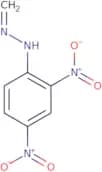
CAS:<p>Formaldehyde-2,4-dinitrophenylhydrazone (FDNH) is a chemical compound that inhibits the production of galacturonic acid. It is used as an analytical method to measure the concentration of galacturonic acid in biological samples. FDNH reacts with galacturonic acid to form a diazonium salt and a hydrazone derivative. The diazonium salt can be measured by liquid chromatography, while the hydrazone derivative can be measured by gas chromatography. This test has been used to measure the concentration of galacturonic acid in plants, pharmaceutical drugs, and reaction products.</p>Formula:C7H6N4O4Purezza:Min. 95%Peso molecolare:210.15 g/molN-Methyl-2,4-dinitroaniline
CAS:<p>N-Methyl-2,4-dinitroaniline is an organic compound that is used as a chemical intermediate. It is produced by the oxidation of N-methyl-2,4-dinitrophenylhydrazine with trifluoroacetic acid in the presence of amines and acetonitrile. It can be analyzed by gas chromatography for its oxidation products such as aldehydes and acetaldehyde. The sensitivity of this compound is insensitive to temperature and humidity, making it suitable for use in analytical chemistry.</p>Formula:C7H7N3O4Purezza:Min. 95%Peso molecolare:197.15 g/mol
![Diethyl[2-(4-nitrophenoxy)ethyl]amine](/_next/image/?url=https%3A%2Fstatic.cymitquimica.com%2Fproducts%2F3D%2Fthumb-webp%2FFD21808.webp&w=3840&q=75)