Nitro
I composti nitro sono molecole organiche contenenti uno o più gruppi nitro (NO2). Questi composti sono ampiamente utilizzati nella sintesi di esplosivi, prodotti farmaceutici e coloranti. Da CymitQuimica, offriamo una vasta gamma di composti nitro di alta qualità per supportare le vostre applicazioni di ricerca e industriali, garantendo risultati sicuri ed efficaci. La nostra selezione include una varietà di composti nitro adatti a diverse sintesi chimiche e applicazioni.
Trovati 2516 prodotti di "Nitro"
Ordinare per
Purezza (%)
0
100
|
0
|
50
|
90
|
95
|
100
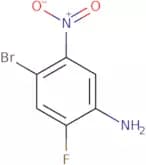
4-Bromo-2-fluoro-5-nitroaniline
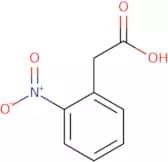
CAS:<p>4-Bromo-2-fluoro-5-nitroaniline is a chemical intermediate that has shown potential for use in research. This compound has been used as a building block for the synthesis of other compounds, and it has proven to be an excellent reagent for the reaction of amines with ketones. The CAS number for this product is 87547-06-6.</p>Formula:C6H4BrFN2O2Purezza:Min. 95%Colore e forma:PowderPeso molecolare:235.01 g/mol2-Nitrophenylacetic acid
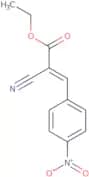
CAS:2-Nitrophenylacetic acid is a synthetic product that has been studied by electrochemical techniques. It is soluble in human serum and can be detected by a chromatographic method. The cationic surfactant, oxindole, chloride, and optimal reaction conditions are known for the solute. 2-Nitrophenylacetic acid is a pharmaceutical drug that can be cleaved into nitro and carboxylate products with hydrochloric acid and β-unsaturated ketone as cleavage products.Formula:C8H7NO4Purezza:Min. 98 Area-%Colore e forma:PowderPeso molecolare:181.15 g/molethyl 2-cyano-3-(4-nitrophenyl)prop-2-enoate
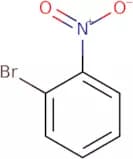
CAS:Ethyl 2-cyano-3-(4-nitrophenyl)prop-2-enoate is a functionalized molecule that contains a dipole. It has high selectivity for 1,3-dipolar cycloadditions because the electron density of the methylene group is greater than that of the aldehyde group. The mechanistic theory for this reaction is that the electron density on the methylene group in ethyl 2-cyano-3-(4-nitrophenyl)prop-2-enoate will cause it to become more reactive than the aldehyde group. The dipoles in this molecule are oriented such that they can react with each other to form an intermediate and then an adduct. This isomerization occurs through either dipolarophilic or electrocyclic mechanisms.Purezza:Min. 95%1-Bromo-2-nitrobenzene
CAS:1-Bromo-2-nitrobenzene is a chemical compound that can be used as a palladium catalyst for the synthesis of organic compounds. It is a group P2 ligand, which means it will bind to metals such as palladium and platinum. 1-Bromo-2-nitrobenzene undergoes nucleophilic addition reactions with diazonium salts to form the corresponding diazonium bromide. The diazonium bromide can then undergo transfer reactions with other molecules, such as alcohols and amines, to form new products. 1-Bromo-2-nitrobenzene also undergoes staudinger reduction to form a ketone or an aldehyde. This reaction requires the presence of hydrochloric acid, halides, or other electron-donating compounds in order to work properly. Chemical reactions involving 1-bromo-2-nitrobenzene may includeFormula:C6H4BrNO2Purezza:Min. 95%Colore e forma:PowderPeso molecolare:202.01 g/mol5,5-Dimethyl-3-(4-nitrobenzyl)imidazolidine-2,4-dione
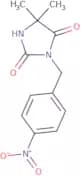
CAS:5,5-Dimethyl-3-(4-nitrobenzyl)imidazolidine-2,4-dione is a versatile chemical that can be used as a building block in the synthesis of complex compounds. It is an intermediate in the production of research chemicals and is also used as a reaction component in the synthesis of speciality chemicals. 5,5-Dimethyl-3-(4-nitrobenzyl)imidazolidine-2,4-dione has been shown to have high quality properties when synthesized using high purity reagents.Formula:C12H13N3O4Purezza:Min. 95%Colore e forma:White PowderPeso molecolare:263.25 g/mol5-Nitroisophthalic acid monomethyl ester
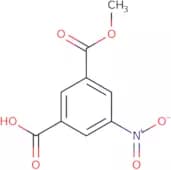
CAS:<p>5-Nitroisophthalic acid monomethyl ester (NIAE) is an acetylating agent that can be used for the preparation of 5-nitroisophthalic acid, which is a precursor to the synthesis of dyes and pharmaceuticals. The acetylation reaction of NIAE with proteins produces an insensitive material. Acetylation also inhibits the activity of serine proteases and virus replication. In addition, it has been found that the catalytic reduction of NIAE with palladium is faster than other synthetic methods. Optimal reaction conditions are obtained by adding chloride ions to the reaction mixture, while reductive conditions are optimal for catalysis. Reaction time can be shortened by using a soluble catalyst such as iodide ion or mercury(II) sulfate. The active site of NIAE contains a nitro group that reacts with substrates in the presence of oxygen, forming a product from which the acetyl group has been removed</p>Formula:C9H7NO6Purezza:Min 98%Colore e forma:PowderPeso molecolare:225.16 g/mol2-Methyl-5-nitrobenzoic acid
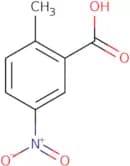
CAS:<p>2-Methyl-5-nitrobenzoic acid is a synthetic compound that has been shown to inhibit the growth of tumor xenografts in mice. This compound has been shown to inhibit the production of prostate-specific antigen and prostate cancer cells, as well as cause apoptosis in prostate cancer cells. 2-Methyl-5-nitrobenzoic acid also inhibits the activity of vitamin D3 and docetaxel, which are both chemotherapeutic agents used to treat prostate cancer. 2-Methyl-5-nitrobenzoic acid is a thermodynamic inhibitor with an IC50 value of 0.1 mM. It is an inhibitor of cellular respiration and mitochondrial function with a Km value of 1 mM. This agent also inhibits tumor perfusion, which may be due to its ability to induce apoptosis in tumor cells.</p>Formula:C8H7NO4Purezza:Min. 95%Colore e forma:PowderPeso molecolare:181.15 g/mol4-Hydroxy-3-nitropyridine
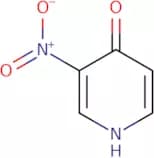
CAS:4-Hydroxy-3-nitropyridine is an organic chemical compound with the molecular formula CHNO. It has a structure that is composed of a nitro group bonded to a pyridine ring. 4-Hydroxy-3-nitropyridine can be found in wastewater and as a byproduct of the production of dyes, drugs, and explosives. It has been shown to react with primary amines to form nitrosamines. In its tautomeric form, 4-hydroxy-3-nitropyridine is more reactive and will react with chloride ions to form hydroxylamine. This reaction is used commercially for the synthesis of hydrazine and other products.Formula:C5H4N2O3Purezza:Min. 95%Colore e forma:PowderPeso molecolare:140.1 g/mol2-Fluoro-5-nitrobenzoic acid
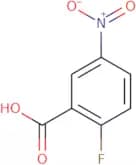
CAS:2-Fluoro-5-nitrobenzoic acid is a molecule that can be used in biological studies to measure the proton concentration of a solution. This compound has been shown to bind to caffeine and β-amino acids, which may be due to its ability to form intermolecular hydrogen bonds. 2-Fluoro-5-nitrobenzoic acid has also been shown to enhance reactive oxygen species generation by nitrobenzoic molecules, making it a potential drug for the treatment of cancer.Formula:C7H4FNO4Purezza:Min. 95%Colore e forma:PowderPeso molecolare:185.11 g/mol2-Bromo-5-nitrothiazole
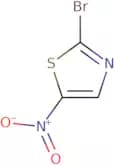
CAS:<p>2-Bromo-5-nitro thiazole (2BNIT) is a molecule that is commonly used in pharmaceutical preparations. 2BNIT has been shown to be toxic to mammalian cells, and hydrogen chloride (HCl) is produced as a result of the reaction. The HCl acts as an oxidizing agent that can react with nitrothiazole and nitro compounds, releasing ammonia gas. 2BNIT has been shown to have potent activity against three different species of bacteria, including Trichomonas vaginalis, Salmonella typhimurium, and Micrococcus luteus. The compound also has optical properties that can be observed by vibrational spectroscopy.</p>Formula:C3HBrN2O2SPurezza:Min. 95%Colore e forma:PowderPeso molecolare:209.02 g/mol1,8-Dinitroanthraquinone
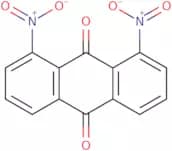
CAS:<p>1,8-Dinitroanthraquinone is an aromatic hydrocarbon that inhibits the growth of bacteria in vitro. This compound has been shown to inhibit telomerase activity and to be a potent inhibitor of monosodium glutamate-induced nitrosative stress in cultured cells. It also inhibits nitrite ion reduction by 2-phenylbutyric acid, which is an acceptor for the nitrite ion. 1,8-Dinitroanthraquinone has been shown to have a kinetic effect on the conversion of nitrite ion to nitrous acid, which is important in the formation of carcinogenic nitrosamines. The paradigm shift in this research was that the inhibition of telomerase activity was not only due to its effects on DNA but also due to its activation energy as well as its effects on protein synthesis.</p>Formula:C14H6N2O6Purezza:Min. 96 Area-%Colore e forma:PowderPeso molecolare:298.21 g/mol2-Methoxy-3-nitropyridine
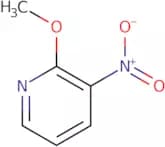
CAS:<p>2-Methoxy-3-nitropyridine is a chemical compound with the molecular formula CHNO. It is classified as an amine and has a molecular weight of 140.24 g/mol. 2-Methoxy-3-nitropyridine is a colorless liquid that can be used to make other compounds, such as nitroarenes, boronic acids, and dyes. The molecule consists of a central carbon atom with four nitrogen atoms at the corners of a tetrahedron. The electron configuration for this molecule is 1s22s22p4. This means that the outer shell electrons are in orbitals with principal quantum numbers s=1 and p=2. These orbitals are located near the middle of the molecule rather than on the periphery as in ethane (CH3CH2). This orientation provides more space for other atoms to attach to the central carbon atom, which increases its affinity for nucleophilic attack. 2-M</p>Formula:C6H6N2O3Purezza:Min. 95%Colore e forma:PowderPeso molecolare:154.12 g/mol2-Amino-3-chloro-5-nitrobenzonitrile
CAS:<p>2-Amino-3-chloro-5-nitrobenzonitrile is a hydroxyalkyl compound. It is sensitive to light, sulfamic acid and heat. The compound has been expressed in E. coli, but it is not possible to crystallize it due to its sensitivity to ph changes and organic solvents. The substance can be used as a dyestuff or dye intermediate. Due to its stability in crystal form, this substance can also be used as a raw material for the production of nitrite.</p>Formula:C7H4ClN3O2Purezza:Min. 95%Colore e forma:PowderPeso molecolare:197.58 g/mol2,3-Dichloro-6-nitrobenzonitrile
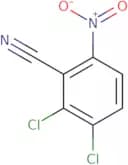
CAS:<p>2,3-Dichloro-6-nitrobenzonitrile is an organic chemical compound that has a nitrile group and a nitro group. It can be synthesized by the cycloalkylation of ethyl bromoacetate with hydroxylamine. The resulting 2,3-dichloro-6-nitrobenzonitrile is extracted from the reaction mixture with water, acidified with dilute hydrochloric acid, and then precipitated as its ethyl ester salt. The 3D structure of this chemical was determined by X-ray crystallography.</p>Formula:C7H2Cl2N2O2Purezza:Min. 95%Colore e forma:Yellow SolidPeso molecolare:217.01 g/molWST-1
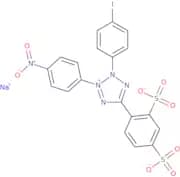
CAS:<p>WST-1 is a water soluble cell permeable dye. Upon NADH-dependent enzymatic cleavage by cellular mitochondrial dehydrogenases, formazan is released, which can be quantified by colorimetric detection at 450 nm.</p>Formula:C19H11IN5NaO8S2Purezza:Min. 95 Area-%Colore e forma:PowderPeso molecolare:651.35 g/mol3-Methyl-2-nitrophenol
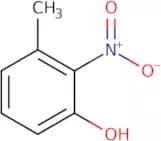
CAS:<p>3-Methyl-2-nitrophenol is a hydroxy group that contains a reactive methylene group. It has been shown to be formed by the reaction of nitric acid with alcohols or amines. The rate of formation is influenced by the steric interactions and intramolecular hydrogen bonds present in the reactants. 3-Methyl-2-nitrophenol can react with other molecules to form various reaction products, such as 2-methylphenol, nitrobenzene, and picric acid. 3-Methyl-2-nitrophenol also has phytotoxic properties, which may be due to its ability to inhibit root growth and chlorophyll production in plants.</p>Formula:C7H7NO3Purezza:Min. 95%Peso molecolare:153.14 g/mol3,5-Dimethyl-4-nitropyridine 1-oxide
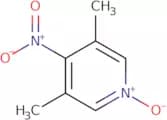
CAS:<p>3,5-Dimethyl-4-nitropyridine 1-oxide is a nitro compound with the chemical formula CHNO. It is an organic compound that has been shown to be carcinogenic in animal studies and has caused cancer in humans. 3,5-Dimethyl-4-nitropyridine 1-oxide can be found in the environment as a result of industrial accidents or environmental pollution. It is found in building materials such as acetonitrile and organic solvents. This compound is not soluble in water, which limits its potential for environmental transport.</p>Formula:C7H8N2O3Purezza:Min. 95%Colore e forma:PowderPeso molecolare:168.15 g/mol4-Acetamido-2'-amino-2-nitrophenyl sulphide
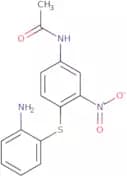
CAS:4-Acetamido-2'-amino-2-nitrophenyl sulphide is a versatile building block that is used as a reagent, speciality chemical, and useful scaffold. It is a complex compound with CAS No. 1017060-37-5. This compound has been shown to be useful in the synthesis of fine chemicals and other research chemicals. 4-Acetamido-2'-amino-2-nitrophenyl sulphide can also be used as an intermediate in reactions or as a reaction component, making it an important building block for high quality compounds.Formula:C14H13N3O3SPurezza:Min. 95%Colore e forma:PowderPeso molecolare:303.34 g/mol1-(4-(Methylthio)phenyl)-2-nitropropene
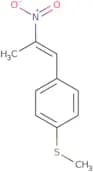
CAS:<p>Please enquire for more information about 1-(4-(Methylthio)phenyl)-2-nitropropene including the price, delivery time and more detailed product information at the technical inquiry form on this page</p>Formula:C10H11NO2SPurezza:Min. 95%Colore e forma:PowderPeso molecolare:209.27 g/mol3,5-Dinitro-1,2-phenylenediamine
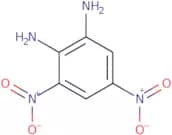
CAS:<p>3,5-Dinitro-1,2-phenylenediamine is an aromatic compound that is used as an anti-cancer drug. 3,5-Dinitro-1,2-phenylenediamine can be synthesized by the reaction of diethyl ester with nitrous acid. This product has been shown to inhibit the growth of cancer cells in culture and is cytotoxic to ovarian cancer cells. 3,5-Dinitro-1,2-phenylenediamine has also been shown to have a synergistic effect with other drugs. It inhibits the synthesis of DNA and RNA by binding to nucleic acids and blocking protein synthesis. This product is not active against bacteria or fungi but may be toxic if ingested.</p>Formula:C6H6N4O4Purezza:Min. 95%Colore e forma:PowderPeso molecolare:198.14 g/mol