Nitro
I composti nitro sono molecole organiche contenenti uno o più gruppi nitro (NO2). Questi composti sono ampiamente utilizzati nella sintesi di esplosivi, prodotti farmaceutici e coloranti. Da CymitQuimica, offriamo una vasta gamma di composti nitro di alta qualità per supportare le vostre applicazioni di ricerca e industriali, garantendo risultati sicuri ed efficaci. La nostra selezione include una varietà di composti nitro adatti a diverse sintesi chimiche e applicazioni.
Trovati 2516 prodotti di "Nitro"
Ordinare per
Purezza (%)
0
100
|
0
|
50
|
90
|
95
|
100
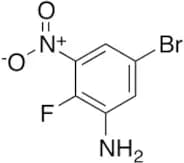
5-Bromo-2-fluoro-3-nitroaniline
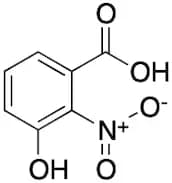
CAS:Prodotto controllatoFormula:C6H4BrFN2O2Colore e forma:NeatPeso molecolare:235.0113-Hydroxy-2-nitrobenzoic Acid
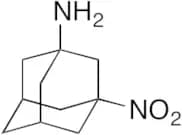
CAS:Prodotto controllato<p>Applications 3-Hydroxy-2-nitrobenzoic Acid (cas# 602-00-6) is a compound useful in organic synthesis.<br></p>Formula:C7H5NO5Colore e forma:NeatPeso molecolare:183.121-Amino-3-nitroadamantane
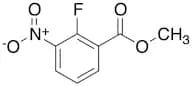
CAS:Prodotto controllato<p>Impurity Vildagliptin Impurity<br>Applications 1-Amino-3-nitroadamantane has potential application in co-catalyst for transition metal reactions and maybe a useful intermediate for the synthesis of Vildagliptin (V305000), an antidiabetic drug that inhibits dipeptidyl peptidase 4 (DPP-4). Vildagliptin exhibits antioxidant properties and may be an apoptotic compound against pancreatic cancer cells.<br>References Amritha, C., et al.: JCDR 9, FC14 (2015); Ahren, B., et al.: J. Clin. Endocrinol. Metab., 89, 2078 (2004), Ahren, B., et al.: Diabetes Care, 27, 2874 (2004), Barlocco, D., et al.: Curr. Opin. Invest. Drugs, 5, 1094 (2004)<br></p>Formula:C10H16N2O2Colore e forma:NeatPeso molecolare:196.25Methyl 2-fluoro-3-nitrobenzoate
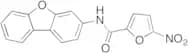
CAS:Prodotto controllato<p>Applications Methyl 2-fluoro-3-nitrobenzoate<br></p>Formula:C8H6FNO4Colore e forma:NeatPeso molecolare:199.14N-(3-Dibenzofuranyl)-5-nitro-2-furancarboxamide
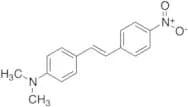
CAS:<p>Applications N-(3-Dibenzofuranyl)-5-nitro-2-furancarboxamide is synthesized from Dibenzo[b,d]furan-3-amine (D418205), which is a building block used as a reactant in the preparation of dibenzofuryl(phosphonomethyl)alanines as endothelin converting enzyme inhibitors.<br>References De Lombaert, S., et al.: J. Med. Chem., 43, 488 (2000);<br></p>Formula:C17H10N2O5Colore e forma:NeatPeso molecolare:322.274-Dimethylamino-4'-nitrostilbene
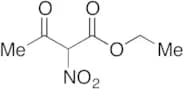
CAS:Prodotto controllato<p>Applications 4-Dimethylamino-4'-nitrostilbene (cas# 4584-57-0) is a useful research chemical.<br> Not a dangerous good if item is equal to or less than 1g/ml and there is less than 100g/ml in the package<br></p>Formula:C16H16N2O2Colore e forma:NeatPeso molecolare:268.32Ethyl Nitroacetoacetate
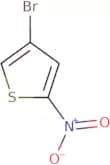
CAS:Prodotto controllatoFormula:C6H9NO5Colore e forma:NeatPeso molecolare:175.1394-Bromo-2-nitrothiophene
CAS:Please enquire for more information about 4-Bromo-2-nitrothiophene including the price, delivery time and more detailed product information at the technical inquiry form on this pageFormula:C4H2BrNO2SPurezza:Min. 95%Peso molecolare:208.03 g/mol2-Iodo-4-nitroanisole
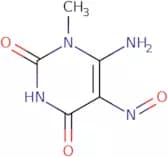
CAS:<p>2-Iodo-4-nitroanisole is a reagent that catalyzes the labeling of proteins with iodine. The reaction is anomalously slow in the presence of bovine serum albumin and results in an increase in the amount of labeled protein. This reagent can also be used to study the kinetics of reactions involving nitrous oxide. The rate of reaction is dependent on the concentration of hydrogen ions, which is why this reagent is often used in assays that have acidic conditions. 2-Iodo-4-nitroanisole can also be used to label lysine residues on proteins by reacting with nitrous oxide and dinitrogen tetroxide, which react at high rates when they are mixed together.</p>Formula:C7H6INO3Purezza:Min. 95%Peso molecolare:279.03 g/mol6-Amino-1-methyl-5-nitrosouracil
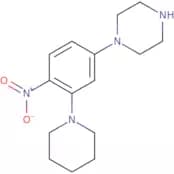
CAS:<p>6-Amino-1-methyl-5-nitrosouracil is a neutral form of the molecule that has both protonated and unprotonated forms. It is a bidentate ligand that can bind to a metal ion. The nitrogen atom in the molecule is an important part of its structure, as it contains two nitro groups and one amino group. 6-Amino-1-methyl-5-nitrosouracil has been used in techniques such as spectroscopies and dinitroso analysis. The neutral form of the molecule can be converted into its ionic form by adding either chlorine or nitrate ions to it, which causes the nitrogen atoms to be more electronegative. This conversion changes the nature of the compound, making it more acidic. Dehydration also occurs when water molecules are removed from 6-amino 1 methyl 5 nitrosourea, which causes a change in shape and shifts its properties to</p>Formula:C5H6N4O3Purezza:Min. 95%Peso molecolare:170.13 g/mol1-(4-Nitro-3-piperidin-1-ylphenyl)piperazine
CAS:1-(4-Nitro-3-piperidin-1-ylphenyl)piperazine is a synthetic molecule that is used as a polymerization initiator. It can be used to prepare polymers with functional groups that contain nitro and piperidine groups. 1-(4-Nitro-3-piperidin-1-ylphenyl)piperazine reacts with monomers such as thiourea, which are then polymerized by the addition of other reagents such as solvents or catalysts. The most common use of 1-(4-Nitro-3-piperidin-1-ylphenyl)piperazine is in the synthesis of nalidixic acid, an antibiotic drug that inhibits bacterial growth by preventing DNA replication. This compound has been shown to be nonhazardous to humans and animals in bioassays, although it may cause toxic effects on the skin, eyes, and respiratory system when exposedFormula:C15H22N4O2Purezza:Min. 95%Peso molecolare:290.36 g/mol4-Chloro-2-nitroaniline
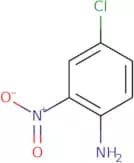
CAS:<p>4-Chloro-2-nitroaniline (4CNA) is a chemical that is used for wastewater treatment. 4CNA reacts with phosphorus pentachloride or phosphorus pentoxide to form phosphoric acid, which can be used as a pH buffer in water treatment applications. It is also used as an antidepressant treatment in pharmaceutical dosage and has been shown to have signal properties. 4CNA is also used in the production of monoclonal antibodies, n-dimethyl formamide and intracranial haemorrhage treatments. It can be produced by reacting hydrochloric acid with membrane systems at low energy.</p>Formula:C6H5ClN2O2Purezza:Min. 95%Peso molecolare:172.57 g/mol3-(Methylnitrosamino)propionitrile
CAS:3-(Methylnitrosamino)propionitrile (NNK) is a potent, but toxic, carcinogen that has been shown to be one of the major causes of lung cancer in animals. It is metabolized to 3-aminobenzamide and N-nitrosodimethylamine (NDMA) by cytochrome P450 enzymes. These metabolites are then further converted into reactive species that bind covalently with DNA, leading to mutations and ultimately cancer. The activation of NNK can be prevented by inhibiting the enzyme hydrolysis or by blocking the synthesis of the reactive metabolites.Formula:C4H7N3OPurezza:Area-% Min. 95 Area-%Peso molecolare:113.12 g/molN-Methyl-4-nitroaniline
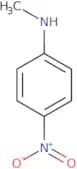
CAS:Prodotto controllato<p>Intermediate in the synthesis of nintedanib</p>Formula:C7H8N2O2Purezza:Min. 95%Peso molecolare:152.15 g/mol4-(Methylnitrosoamino)-1-(3-pyridinyl)-1-butanone
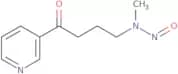
CAS:<p>4-(Methylnitrosoamino)-1-(3-pyridinyl)-1-butanone (NNK) is a carcinogenic chemical that has been identified in tobacco smoke. It induces squamous cell carcinomas in the respiratory tract of rodents and induces lung cancer in the offspring of pregnant rats exposed to NNK. This compound binds to double-stranded DNA, with high affinity for the minor groove, and inhibits DNA synthesis by binding to enzymes such as polymerase chain. In addition, it has been shown to cause transformation of epithelial cells into mesenchymal cells in vitro. 4-(Methylnitrosoamino)-1-(3-pyridinyl)-1-butanone binds to α7 nicotinic acetylcholine receptors and increases the response element activity.</p>Formula:C10H13N3O2Purezza:Min. 95%Colore e forma:PowderPeso molecolare:207.23 g/mol2-Bromo-4-nitrophenol
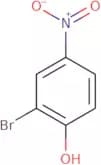
CAS:2-Bromo-4-nitrophenol is a byproduct of the reaction between hydrogen peroxide and sodium bromate. It can be detected in the presence of hydrochloric acid, which reacts with 2-bromo-4-nitrophenol to form an orange color that can be detected spectrophotometrically. 2-Bromo-4-nitrophenol has been shown to inhibit the growth of various strains of bacteria, including Escherichia coli, Bacillus subtilis, and Pseudomonas aeruginosa. This compound binds to flavin adenine dinucleotide (FAD) as well as other nucleophilic cofactors such as thioredoxin reductase. The binding affinity is increased when carbon sources are present. This property makes it a useful inhibitor for catalytic reduction reactions in biotechnology and synthetic chemistry applications.br>br> 2B4NP is a byFormula:C6H4BrNO3Purezza:Min. 95%Colore e forma:PowderPeso molecolare:218 g/mol5-Nitropyridin-3-ol
CAS:Please enquire for more information about 5-Nitropyridin-3-ol including the price, delivery time and more detailed product information at the technical inquiry form on this pageFormula:C5H4N2O3Purezza:Min. 95%Peso molecolare:140.1 g/mol2-(2-Nitroanilino)-5-methylthiophene-3-carbonitrile
CAS:<p>2-(2-Nitroanilino)-5-methylthiophene-3-carbonitrile is a crystalline compound that belongs to the group of small molecules. It has a molecular weight of 153.2 g/mol and a melting point of 281 °C. The compound has three different crystalline forms, including a monoclinic form, which is thermodynamically stable at room temperature. 2-(2-Nitroanilino)-5-methylthiophene-3-carbonitrile can be used as a model system for studying influenza virus and as an inhibitor of influenza virus replication. 2-(2-Nitroanilino)-5-methylthiophene-3-carbonitrile also inhibits the activity of carbamazepine, which is an anti epileptic drug, by binding to its active site on the molecule.</p>Formula:C12H9N3O2SPurezza:Min. 95%Colore e forma:PowderPeso molecolare:259.29 g/mol2,4-Dinitrobenzenesulfonyl chloride
CAS:<p>2,4-Dinitrobenzenesulfonyl chloride is a chemical reagent that is used in analytical chemistry. It reacts with pyrazole rings to form 2-aminopyridine derivatives. The reaction can be enhanced by adding metal ions such as copper(II) or zinc(II). 2,4-Dinitrobenzenesulfonyl chloride is also used in the solid-phase synthesis of heterocycles and in the synthesis of pharmaceuticals. The compound has been shown to react with human serum and form an unstable intermediate that undergoes hydrolysis to produce sulfate ion and trifluoroacetic acid. This reaction mechanism can be applied to other nucleophilic compounds such as bromide ion. 2,4-Dinitrobenzenesulfonyl chloride reacts with the amine group of proteins using the S N 1 mechanism. The resulting product is a chlorinated amino acid derivative which exhibits fluorescence properties when reacted with</p>Formula:C6H3ClN2O6SPurezza:Min. 95%Peso molecolare:266.62 g/mol