Nitro
Trovati 2518 prodotti di "Nitro"
1,3-Dinitrobenzene
CAS:Prodotto controllatoApplications 1,3-Dinitrobenzene is used as an analyte to detect explosive environments (1), including those containing picric acid (2). Neurotoxic agent (3). Drinking water contaminant candidate (CCL3) as per United States Environmental Protection Agency (EPA). Environmental contaminants; Food contaminants.
Not a dangerous good if item is equal to or less than 1g/ml and there is less than 100g/ml in the package
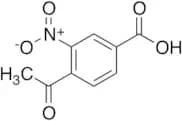
References 1. ÄŒapka, L. et al.: J. Chromatogr. A. 2015 Apr 3;1388:167-73.2. Sanda, S. et al.: Chem. Commun. (Camb) 2015 Apr 18;51(30):6576-93. Maurer, L. et al.: Neurotoxicology. 2016 Mar;53:74-84Formula:C6H4N2O4Colore e forma:Light YellowPeso molecolare:168.114-Acetyl-3-nitrobenzoic Acid
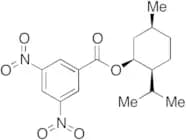
CAS:Prodotto controllatoFormula:C9H7NO5Colore e forma:NeatPeso molecolare:209.156(1R,3R,4R)-(-)-3,5-Dinitrobenzoate Menthol
CAS:Prodotto controllatoApplications (1S,3S,4S)-(-)-3,5-dinitrobenzoate Menthol is an intermediate in the synthesis of (±)-Neoisomenthol (N389960) which is a useful synthetic intermediate. It is used to prepare alkyl and aryl esters by chemoselective acylation of alkyl and aryl alcohols with carboxylic acid anhydrides in the presence of magnesium bis(trifluoromethylsulfonyl)amide under solvent-free conditions.
References Chakraborti, A., et al.: J. Org. Chem., 71, 5785 (2006)Formula:C32H36O8SiColore e forma:NeatPeso molecolare:576.7092,5-Dinitrotoluene
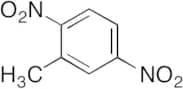
CAS:Prodotto controllatoApplications 2,5-Dinitrotoluene, is a building block used in various chemical synthesis.
Not a dangerous good if item is equal to or less than 1g/ml and there is less than 100g/ml in the packageFormula:C7H6N2O4Colore e forma:NeatPeso molecolare:182.13N-(4-Chlorobenzyl)-1-(5-nitrothiophen-2-yl)methanamine
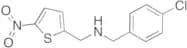
CAS:Prodotto controllatoApplications N-(4-Chlorobenzyl)-1-(5-nitrothiophen-2-yl)methanamine is an analogue of GSK 4112 (G797700) which is a synthetic ligand for REV-ERBα, a member of the nuclear receptor superfamily that functions as a receptor for the porphoryin heme. GSK 4112 mimics the action of heme acting as agonist and suppresses the expression of REV-ERBα target genes involved in gluconeogenesis.
References Kojetin, D. et al.: ACS Chem. Biol., 6, 131 (2011); Grant, D. et al.: ACS Chem. Biol., 5, 925 (2010)Formula:C12H11ClN2O2SColore e forma:NeatPeso molecolare:282.75N-(Nitrosomethyl)ethanolamine
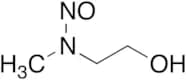
CAS:Prodotto controllatoApplications N-(Nitrosomethyl)ethanolamine can be used to study the chemical-molecular perspective of the liver specificity of the carcinogenicity of NOCs.
References Yuan, J., et.al.: Chem. Res. Toxicol., 25, 2432-2442, (2012);Formula:C3H8N2O2Colore e forma:Colourless To Light YellowPeso molecolare:104.112-Nitrobenzene-1,4-diamine
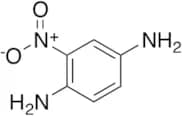
CAS:Prodotto controllatoApplications 2-nitrobenzene-1,4-diamine (cas# 5307-14-2) is a useful research chemical.
Formula:C6H7N3O2Colore e forma:NeatPeso molecolare:153.14Nitrosyl Tetrafluoroborate
CAS:Prodotto controllatoApplications Nitrosyl Tetrafluoroborate is a reagent in the formation of miRNA-34a-conjugated magnetic nanovectors which shows therapeutic effects by inhibiting cellular migration and invasion through CD44 gene suppression.
Not a dangerous good if item is equal to or less than 1g/ml and there is less than 100g/ml in the package
References Lee, H., et al.: J. Nanosci. Nanotechnol., 16, 12939-12946 (2016);Formula:BF4NOColore e forma:NeatPeso molecolare:116.81Nitrobenzene
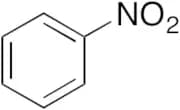
CAS:Prodotto controllatoApplications Nitrobenzene is a compound that exhibits chromosomal genotoxicity against hamster lung cells, and has the potential to cause cancer in humans (1,2). Nitrobenzene is also used as a starting material to synthesize 4-Aminophenol (A618920) through catalytic hydrogenation (3). Drinking water contaminant candidate list 3 (CCL 3) compound as per United States Environmental Protection Agency (EPA), environmental, and food contaminants.
Not a dangerous good if item is equal to or less than 1g/ml and there is less than 100g/ml in the package
References 1. Bonacker, D. et al.: Arch. Toxicol. 2004 Jan;78(1):49-57.2. Hsu, C. et al.: J. Environ. Sci. Health. C. Environ. Carcinog. Ecotoxicol. Rev. 2007 Apr-Jun;25(2):155-843. Rode, C. et al.: Org. Proc. Res. Dev. 1999 Nov;3(6), pp 465–470Formula:C6H5NO2Colore e forma:Light YellowPeso molecolare:123.114-Nitroguaiacol
CAS:Prodotto controllatoApplications 4-Nitroguaiacol (cas# 3251-56-7) is a compound useful in organic synthesis. Dyes and metabolites.
References Conn, H., et al.: J. Bacteriol.,54, 291(1947), Schleifer, K., et al.: Bacteriol. Rev., 36, 407 (1972), Collins, M., et al.: J. Gen. Microbiol., 100, 221(1977), Schleifer, K., et al.: Methods Microbiol., 18, 123 (1985),Formula:C7H7NO4Colore e forma:NeatPeso molecolare:169.133,4-Dinitroaniline
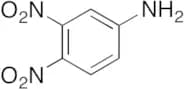
CAS:Prodotto controllatoApplications 3,4-Dinitroaniline is a useful intermediate for the preparation of various industrially important chemicals like dyes, pestices, herbicides and other useful research chemicals.
References Sivakumar, K. K., et al.: Int. J. Res. Pharm. Chem., 4, 517 (2014); Shahinian, E. G. H., et al.: Sci. Bull. B: Chem. Mater. Sci., 73, 153 (2011); Jahn, U.: Science of Synthesis, 41, 371 (2010)Formula:C6H5N3O4Colore e forma:NeatPeso molecolare:183.124-Nitrobenzoic Acid
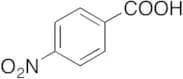
CAS:Prodotto controllatoStability Hygroscopic
Applications 4-Nitrobenzoic Acid is used in the synthesis of anti-Trypanosoma cruzi agents in the treatment of chagas disease.
References Palace-Berl, F. et al.: Bioorg, Med. Chem. Lett., 21, 5395 (2013); Zhou, L. et al.: J. Med. Chem., 56, 796 (2013);Formula:C7H5NO4Colore e forma:NeatPeso molecolare:167.123,5-Dinitrobenzoic Acid
CAS:Prodotto controllatoFormula:C7H4N2O6Colore e forma:NeatPeso molecolare:212.12Nitrofurate
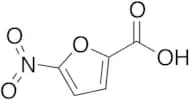
CAS:Prodotto controllatoApplications Nitrofurate is a useful organic reagent. It is used for preparation of polycyclic small molecules.
References Tan, D., et al.: J. Am. Chem. Soc., 121, 9073 (1999); Lu, P., et al.: Org. Lett., 11, 5710 (2009);Formula:C5H3NO5Colore e forma:NeatPeso molecolare:157.082-Amino-5-nitro-2'-chlorobenzophenone
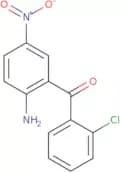
CAS:2-Amino-5-nitro-2'-chlorobenzophenone (2ACCB) is a precursor for the synthesis of 2,4,6-trichlorophenol. 2ACCB reacts with hydrochloric acid in the presence of a scrubber to produce diphenyl ether and activated 2ACCB. The reaction rate can be increased by adding sodium hydroxide solution to the reaction solution. The hydroxy group on the 2ACCB molecule can be converted to a terpene by transfer reactions with glycol esters. This compound has been used as a sterilant and disinfectant in reaction solutions containing chlorine atoms or carbonyl groups.Formula:C13H9ClN2O3Purezza:Min. 95%Colore e forma:PowderPeso molecolare:276.67 g/mol2,5-Dichloronitrobenzene
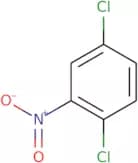
CAS:2,5-Dichloronitrobenzene is a compound that is used to manufacture dyes and pharmaceuticals. It can be synthesized from sodium carbonate, 4-tert-butylbenzoic acid, and sodium hydroxide solution. To produce 2,5-dichloronitrobenzene, the reactants are heated in a reaction vessel with a diphenyl ether as an acid catalyst. The product of this reaction is then dissolved in deionized water or water containing other solvents such as methanol or ethanol. The reaction yield is approximately 95%. The byproducts of this process include 2-chloroacetophenone and hydrogen chloride gas. 2,5-Dichloronitrobenzene reacts with sodium hydroxide solution to form 4-tert-butyl benzoic acid and sodium chloride. This reaction occurs because these compounds have polar functional groups which can form hydrogen bonds with eachFormula:C6H3Cl2NO2Purezza:Min. 95%Colore e forma:PowderPeso molecolare:192 g/mol6-Chloro-2-nitrotoluene
CAS:6-Chloro-2-nitrotoluene is a synthetic organic compound that has been identified in environmental samples as a reaction product of chlorine and organic compounds. It has been shown to induce root formation in plants, which is related to its ability to inhibit the formation of chlorinated hydrocarbons. 6-Chloro-2-nitrotoluene can be produced by reacting nitrogen atoms with zirconium at high temperatures and low pressures, requiring an activation energy of 50 kcal/mol.Formula:C7H6ClNO2Purezza:Min. 95%Peso molecolare:171.58 g/mol5-Bromo-2,4-dimethoxy-β-methylnitrostyrene
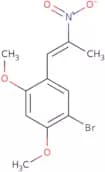
CAS:5-Bromo-2,4-dimethoxy-beta-methylnitrostyrene is a fine chemical that is an important reagent and building block. It can be used as a reaction component or intermediate for the synthesis of more complex compounds. 5-Bromo-2,4-dimethoxy-beta-methylnitrostyrene can also be used as a versatile building block to produce high quality complex compounds. The compound has been shown to have a high level of purity and is suitable for use in research or speciality chemicals.Formula:C11H12BrNO4Purezza:Min. 95%Colore e forma:PowderPeso molecolare:302.12 g/mol(1-(4-Diethylamino)phenyl)-2-nitroethane
CAS:1-(4-Diethylamino)phenyl)-2-nitroethane is a reagent that is used as a building block in the synthesis of various heterocycles. It has been shown to be useful for the preparation of many heterocyclic compounds. The compound is also used as a research chemical and as a precursor to other organic compounds. 1-(4-Diethylamino)phenyl)-2-nitroethane is also an intermediate in the production of other speciality chemicals, such as pharmaceuticals, dyes, and pesticides.Formula:C12H18N2O2Purezza:Min. 95%Peso molecolare:222.28 g/mol3-Nitro-o-cresol
CAS:3-Nitro-o-cresol is a chlorinated aromatic compound that has been shown to be an inhibitor of the enzyme catalase. Catalase is an enzyme that catalyzes the decomposition of hydrogen peroxide into water and oxygen. 3-Nitro-o-cresol inhibits this reaction by binding to the heme group in the enzyme, which prevents it from binding with molecular oxygen. This chemical also has a vibrational frequency of 1225 cm−1 and a molecular weight of 171.2 g/mol. 3-Nitro-o-cresol can be used as an antimicrobial agent against organisms such as Streptococcus pneumoniae, Escherichia coli, and Pseudomonas aeruginosa in liquid phase systems.Formula:C7H7NO3Purezza:Min. 95%Colore e forma:PowderPeso molecolare:153.14 g/mol