Nitro
I composti nitro sono molecole organiche contenenti uno o più gruppi nitro (NO2). Questi composti sono ampiamente utilizzati nella sintesi di esplosivi, prodotti farmaceutici e coloranti. Da CymitQuimica, offriamo una vasta gamma di composti nitro di alta qualità per supportare le vostre applicazioni di ricerca e industriali, garantendo risultati sicuri ed efficaci. La nostra selezione include una varietà di composti nitro adatti a diverse sintesi chimiche e applicazioni.
Trovati 2516 prodotti di "Nitro"
Ordinare per
Purezza (%)
0
100
|
0
|
50
|
90
|
95
|
100
2-Chloro-3,5-dinitrobenzoic acid
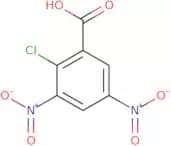
CAS:2-Chloro-3,5-dinitrobenzoic acid is a chemical reagent that belongs to the group of p2-substituted benzenes. It is used in organic synthesis as a synthon for dimethylnaphthalene, which is an intermediate in the production of polyester fibers and polyurethane. The compound has been shown to induce apoptosis in prostate cancer cells. This effect may be due to its ability to react with amines and form nitrosating species, which may cause DNA damage. 2-Chloro-3,5-dinitrobenzoic acid can also react with 5-nitrosalicylic acid to form a stepwise reaction product.Formula:C7H3ClN2O6Purezza:Min. 95%Colore e forma:PowderPeso molecolare:246.56 g/mol3,4-Dihydroxy-2-nitrobenzyl alcohol
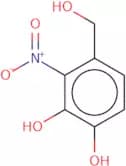
CAS:3,4-Dihydroxy-2-nitrobenzyl alcohol is a fine chemical that is useful as a scaffold and building block for organic synthesis. It is also an intermediate in the preparation of other chemicals such as reaction components. 3,4-Dihydroxy-2-nitrobenzyl alcohol has CAS No. 1017060-58-0 and belongs to the speciality chemical category. This compound can be used as a reagent or research chemical in biochemical assays and other applications. 3,4-Dihydroxy-2-nitrobenzyl alcohol is soluble in methanol, ethanol, acetone, dichloromethane, ethyl acetate, and chloroform. It is insoluble in water and ether. It is stable at pH values between 2 and 10 but decomposes when heated to 80°C or above.Formula:C7H7NO5Purezza:Min. 95%Peso molecolare:185.13 g/mol4-Nitrocinnamaldehyde
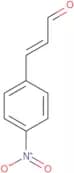
CAS:<p>4-Nitrocinnamaldehyde is a diazonium salt that is used as an efficient method for the synthesis of nitro compounds. Nitro compounds are used in the production of explosives, insecticides, and herbicides. 4-Nitrocinnamaldehyde reacts with hydrochloric acid to produce trifluoroacetic acid, which is then reacted with an organic compound to produce a nitro compound. This reaction has been shown to be irreversible and not sensitive to functional groups. 4-Nitrocinnamaldehyde binds to the enzyme cytochrome P450 reductase, inhibiting its function. The binding of 4-nitrocinnamaldehyde to enzymes such as pyruvate kinase and acetylcholinesterase has also been observed in binding experiments.</p>Formula:C9H7NO3Purezza:Min. 95%Colore e forma:PowderPeso molecolare:177.16 g/mol3-Nitrophenol
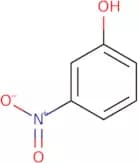
CAS:<p>3-Nitrophenol is an organic compound that is used in wastewater treatment, specifically to remove nitrogenous compounds from the water. It reacts with a hydroxyl group and a nitro group to form a molecule with three nitro groups. The presence of this molecule in wastewater can lead to population growth, which may be reduced by thermal expansion. 3-Nitrophenol is also used as an electrode for gravimetric analysis of metals and as a reagent for the detection of sodium ions. This compound has been shown to have a ph optimum of 7.5, but will react with hydrogen bonds at any ph value.</p>Formula:C6H5NO3Purezza:Min. 95%Colore e forma:PowderPeso molecolare:139.11 g/mol2,4-Dichloro-β-methyl-β-nitrostyrene
CAS:2,4-Dichloro-beta-methyl-beta-nitrostyrene is a versatile building block that can be used as a reaction component or reagent for the synthesis of other fine chemicals. It is also a useful intermediate for the production of complex compounds. 2,4-Dichloro-beta-methyl-beta-nitrostyrene has been widely used in research and development due to its high quality and versatility. This compound is also available from Sigma Aldrich at competitive prices.Formula:C9H7Cl2NO2Purezza:Min. 95%Peso molecolare:232.06 g/mol4-Chloro-3-nitrobenzyl alcohol
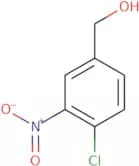
CAS:<p>4-Chloro-3-nitrobenzyl alcohol is a synthetic chemical that reacts with hydrochloric acid to form 4-chloro-3-nitrobenzyl chloride and hydrogen. It can be used in the preparation of other chemicals, such as divinylbenzene and chloride. This compound is insoluble in water and soluble in organic solvents, such as acetone and ether. 4-Chloro-3-nitrobenzyl alcohol has two stereoisomers, one of which is more reactive than the other.</p>Formula:C7H6ClNO3Purezza:Min. 95%Peso molecolare:187.58 g/mol3,5-Dinitro-4-methylbenzoic acid
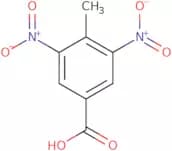
CAS:<p>3,5-Dinitro-4-methylbenzoic acid is a compound that can be used in the synthesis of many organic compounds. It is an important reagent for the preparation of nitroarenes and it is also used as a precursor to other organic compounds. 3,5-Dinitro-4-methylbenzoic acid has been shown to have a hydrogen bond with malonic acid and can form an asymmetric hydrogen bond with the hydroxyl group of protonated water. 3,5-Dinitro-4-methylbenzoic acid has three different resonance structures and its x-ray diffraction data show that it has a cavity shape. This molecule can be found in the nmr spectra at around 8.3 ppm and its kinetic constants are given as k1 = 0.01 s−1 and k2 = 0.06 s−1 for the two reactions. 3,5-Dinitro-4-methylben</p>Formula:C8H6N2O6Purezza:Min. 95%Colore e forma:PowderPeso molecolare:226.14 g/mol2,4-Dinitro-5-methylphenylhydrazine
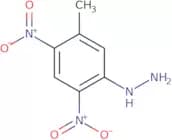
CAS:<p>2,4-Dinitro-5-methylphenylhydrazine (DMN) is a fine chemical that is used as a versatile building block in the synthesis of complex compounds. It can be used to synthesize high quality reagents and reaction components for research purposes. DMN has been shown to have a number of properties that make it useful in industrial processes, including its stability and resistance to heat and light.</p>Formula:C7H8N4O4Purezza:Min. 95%Colore e forma:PowderPeso molecolare:212.16 g/molN-Nitrosobis(2-hydroxypropyl)amine
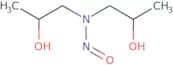
CAS:<p>N-Nitrosobis(2-hydroxypropyl)amine is a polymerase chain reaction (PCR) enhancer that has been shown to be carcinogenic in experimental animals. It is used as a synthetic retinoid, which results in the conversion of thyroxine to triiodothyronine by the thyroid gland. N-Nitrosobis(2-hydroxypropyl)amine is also used as an experimental model for squamous cell carcinoma and tumors. It causes tumor development by inhibiting DNA synthesis and increasing cellular proliferation, which leads to liver lesions and carcinomas in animal models.</p>Formula:C6H14N2O3Purezza:Min. 95%Colore e forma:Yellow PowderPeso molecolare:162.19 g/mol4-Bromo-3-nitrotoluene
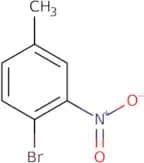
CAS:<p>4-Bromo-3-nitrotoluene is a carbazole that has been found to have insecticidal activity. The compound reacts with serotonin to form the reactive intermediate 4-bromo-3-nitrosobenzaldehyde, which is then oxidized to the final product 4-bromo-3-nitrobenzoic acid. The insecticidal activity of 4-Bromo-3-nitrotoluene was found to be due in part to its ability to inhibit serotonin uptake and metabolism by blocking serotonin transporters. It also induces dihedral angles in positron emission tomography (PET) imaging of human brain tissue, suggesting it may be useful for brain imaging studies.</p>Formula:C7H6BrNO2Purezza:Min. 95%Colore e forma:Clear LiquidPeso molecolare:216.03 g/molMethyl 4-(2-nitro-4-(trifluoromethyl)phenoxy)benzoate
CAS:Please enquire for more information about Methyl 4-(2-nitro-4-(trifluoromethyl)phenoxy)benzoate including the price, delivery time and more detailed product information at the technical inquiry form on this pageFormula:C15H10F3NO5Purezza:Min. 95%Colore e forma:PowderPeso molecolare:341.24 g/mol3-Chloro-4-nitrobenzaldehyde
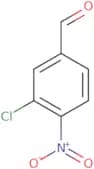
CAS:<p>3-Chloro-4-nitrobenzaldehyde is an aldehyde that is produced by the oxidation of 2-chloro-4-nitrobenzaldehyde. This chemical has been shown to have antitubercular activity in human erythrocytes, and it can be recycled from its reaction product with sodium hypochlorite. 3-Chloro-4-nitrobenzaldehyde has been shown to interact with acidic heterocycles such as oxadiazoles and triazoles. 3-Chloro-4-nitrobenzaldehyde has also been shown to alter the morphology of bacteria, such as subtilis, when exposed to ionic liquids. It is also known to inhibit the growth of Gram positive bacteria and show cytotoxic effects on mammalian cells.</p>Formula:C7H4ClNO3Purezza:Min. 95%Peso molecolare:185.56 g/mol5-Methyl-2-nitrobenzamide
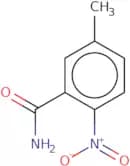
CAS:5-Methyl-2-nitrobenzamide is a compound that has antiproliferative activity and is used as an anticancer drug. This drug inhibits the polymerization of the protein tubulin in cancer cells, thereby inhibiting cell division. It also inhibits the growth of certain tumor cell lines in vitro. 5-Methyl-2-nitrobenzamide was found to inhibit the proliferation of human ovarian carcinoma cells by binding to DNA, preventing transcription and replication of genetic information. In addition, this agent binds to tubulin and prevents its polymerization, leading to inhibition of cell division.Formula:C8H8N2O3Purezza:Min. 95%Colore e forma:PowderPeso molecolare:180.16 g/molTribromonitromethane
CAS:<p>Tribromonitromethane is a fatty acid that is used in analytical chemistry as a standard for calibrating the linear range of analytical methods. It is also used in specific treatments for cancer, such as treatment of carcinomas. Tribromonitromethane has been shown to have carcinogenic potential and may be harmful to humans when ingested or inhaled. The chemical structure of tribromonitromethane consists of a series of three bromine atoms attached to one carbon atom with two hydroxyl groups at either end. This chemical can be oxidized to form tribromo nitro methane, which is more reactive than tribromonitromethane. Tribromonitromethane has no known biological function and does not occur naturally in the environment. It is also known to be potent inducers of transfer reactions, which are reactions where electrons are transferred from one molecule to another. These reactions are important for the synthesis and degradation of various molecules, including amino</p>Formula:CBr3NO2Purezza:Min. 95%Colore e forma:Clear LiquidPeso molecolare:297.73 g/mol3,4-(Methylenedioxy)-6-nitrocinnamic acid
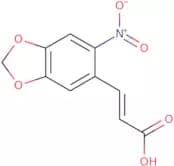
CAS:3,4-(Methylenedioxy)-6-nitrocinnamic acid is a cytotoxic molecule that inhibits the growth of cells by interfering with the synthesis of proteins. It binds to DNA and prevents the transcription process from occurring. This molecule has been shown to inhibit endoplasmic reticulum and Golgi apparatus functions in plant cells. 3,4-(Methylenedioxy)-6-nitrocinnamic acid has also been used as a polymerization agent for polyacrylamide gels. A number of modifications have been made to this molecule in order to increase its effectiveness, such as methyl esterification and mutagenesis. This compound has also been shown to enhance Taxol's anti-cancer effects on cell cultures.Formula:C10H7NO6Purezza:Min. 90%Colore e forma:White PowderPeso molecolare:237.17 g/mol4-Methyl-3-nitrobenzenesulfonyl chloride
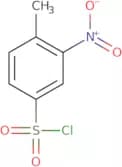
CAS:4-Methyl-3-nitrobenzenesulfonyl chloride (4MNBS) is a fungicide that inhibits the growth of fungi, such as Plasmodiophora brassicae, by inhibiting the enzyme dehydrogenase. 4MNBS has also been shown to inhibit mammalian pyridine nucleotide dehydrogenase and to have low toxicity in mammals. 4MNBS has been found to be an inhibitor of human cytochrome P450 isoforms CYP1A2, CYP2B6, and CYP3A4 with IC50 values ranging from 10 μM to 100 μM. 4MNBS was also shown to be a potent inhibitor of chloroplast dehydrogenases from cruciferous plants with IC50 values between 0.1 μM and 100 nM. This compound has low phytotoxicity and does not accumulate in the leaves of cruciferous plants at a concentration of 500 ppm or higher.Formula:C7H6ClNO4SPurezza:Min. 95%Peso molecolare:235.65 g/mol4-Chloro-2-fluoro-5-nitroaniline
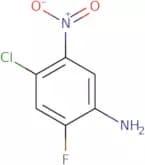
CAS:<p>4-Chloro-2-fluoro-5-nitroaniline is a fine chemical that is used as a reagent and speciality chemical in research, as well as a building block for the synthesis of complex compounds. 4-Chloro-2-fluoro-5-nitroaniline has been shown to be an excellent building block for the synthesis of versatile scaffolds, which can be used in the production of drugs with antibacterial properties. This product is also useful as a reaction component for the synthesis of high quality, complex compounds.</p>Formula:C6H4ClFN2O2Purezza:Min. 95%Colore e forma:PowderPeso molecolare:190.56 g/molMethyl 5-hydroxy-2-nitrobenzoate
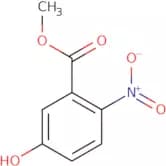
CAS:<p>Methyl 5-hydroxy-2-nitrobenzoate is a synthetic pesticide that is used to control pests in animals. It has been shown to be an antigen that induces antibody production in mice. This chemical is also a ligand, as it binds with proteins and other molecules. Methyl 5-hydroxy-2-nitrobenzoate has been shown to inhibit the enzymatic activity of the organophosphorus pesticide, which is primarily used for pest control. The chemical was also found to inhibit the growth of plants by inhibiting protein synthesis and cell division at low concentrations.</p>Formula:C8H7NO5Purezza:Min. 95%Colore e forma:White PowderPeso molecolare:197.14 g/molEthyl 3-nitrobenzoate
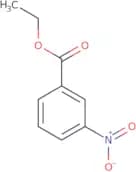
CAS:<p>Ethyl 3-nitrobenzoate is an organic compound that belongs to the methyl ketones group. It is a colorless liquid with a sweet, aromatic odor. Ethyl 3-nitrobenzoate has been shown to interact with benzocaine and other local anesthetics, which may lead to its use as a precursor for these drugs. It can also be used as a carbon source for bacterial cells and can be used in an efficient method for the synthesis of antigenic determinants. This compound has been shown to have anticomplementary properties and may be useful in treatment of bacterial infections.</p>Formula:C9H9NO4Purezza:Min. 95%Colore e forma:PowderPeso molecolare:195.17 g/molMethyl 3-methyl-4-nitrobenzoate
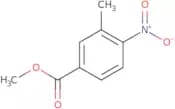
CAS:<p>Methyl 3-methyl-4-nitrobenzoate is a potential antitumor agent that has been shown to have minimal inhibitory concentrations against a variety of human tumor cell lines. It also has potent antifungal activity and can be used for the treatment of opportunistic fungal infections in humans. Methyl 3-methyl-4-nitrobenzoate may be modified by substituting or deleting the aromatic ring, which can lead to improved inhibitory properties. Methyl 3-methyl-4-nitrobenzoate can also be modified by replacing the methyl group on the nitro group with a fluorine atom, which changes its structure and enhances its inhibitory potency.</p>Formula:C9H9NO4Purezza:Min. 95%Peso molecolare:195.17 g/mol