Chetoni
Le chetoni sono composti organici caratterizzati dalla presenza di un gruppo carbonile (C=O) legato a due atomi di carbonio. Questi composti sono altamente versatili e svolgono un ruolo cruciale in varie reazioni chimiche, tra cui ossidazione, riduzione e condensazione. I chetoni sono intermedi essenziali nella sintesi di prodotti farmaceutici, fragranze e polimeri. Presso CymitQuimica, offriamo una vasta gamma di chetoni di alta qualità per supportare le vostre applicazioni di ricerca e industriali.
Trovati 18867 prodotti di "Chetoni"
Ordinare per
Purezza (%)
0
100
|
0
|
50
|
90
|
95
|
100
7-Chloro-1,2,3,4-tetrahydrobenzo[b]azepin-5-one
CAS:<p>7-Chloro-1,2,3,4-tetrahydrobenzo[b]azepin-5-one (7CTB) is a synthetic vasopressin analogue that is used as a vasopressin receptor antagonist. It is a competitive inhibitor of the vasopressin V2 receptor and has been shown to be effective in the treatment of diabetes insipidus. 7CTB has also been shown to bind to and inhibit the binding of arginine, an acid binding agent, preventing hydrolysis reactions with other compounds. 7CTB has been shown to be an effective agent for the treatment of congestive heart failure and chronic kidney disease in animal models. The synthesis process involves sulfonylation followed by dieckmann condensation and organic solvent extraction.</p>Formula:C10H10ClNOPurezza:Min. 95%Peso molecolare:195.65 g/mol1-(4-Amino-3,5-dichloro-phenyl)-2-bromo-ethanone
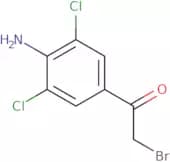
CAS:<p>Please enquire for more information about 1-(4-Amino-3,5-dichloro-phenyl)-2-bromo-ethanone including the price, delivery time and more detailed product information at the technical inquiry form on this page</p>Formula:C8H6BrCl2NOPurezza:Min. 95%Peso molecolare:282.95 g/mol1-(4-Chlorophenoxy)-1-(1H-imidazol-1-yl)-3,3-dimethyl-2-butanone
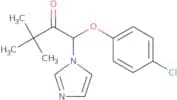
CAS:<p>1-(4-Chlorophenoxy)-1-(1H-imidazol-1-yl)-3,3-dimethyl-2-butanone (CID) is a hydroxylated fatty acid that is used as an antimicrobial agent. CID has been shown to be effective against Gram negative bacteria such as Escherichia coli and Pseudomonas aeruginosa, but not against Gram positive bacteria such as Staphylococcus aureus. The optimum concentration of CID for the inhibition of bacterial growth was determined by analyzing different concentrations of the compound in vitro. A model system was developed to investigate the effect of matrix components on the solubility of CID. LCMS/MS analysis was performed to measure the concentration of CID in wastewater samples. Climbazole, glycol ethers, and experimental solubility data were also collected and analyzed for this study</p>Formula:C15H17ClN2O2Purezza:Min. 95%Colore e forma:PowderPeso molecolare:292.76 g/mol4-N-Boc-aminocyclohexanone
CAS:<p>4-N-Boc-aminocyclohexanone is a chemical that inhibits the proliferation of cancer cells in vitro. It also has an antiproliferative effect on fibroblast cells, which may be due to its ability to inhibit protein synthesis and induce cell death by apoptosis. 4-N-Boc-aminocyclohexanone can also be used for the preparation of photoresponsive polymers that are used in drug delivery systems. This compound can be prepared by reacting 4-aminocyclohexanol with formaldehyde in the presence of base. This reaction forms a five-membered ring via an amide bond. The amide group is then hydrolyzed to form the corresponding carboxylic acid. The colorimetric method is used to determine the degree of hydrolysis, which is determined by measuring the absorbance at 590 nm. In addition, this compound can be used as a reactive intermediate for other compounds like</p>Formula:C11H19NO3Purezza:Min. 95%Colore e forma:White To Light (Or Pale) Yellow SolidPeso molecolare:213.27 g/mol3,7,4'-Trihydroxy-5-methoxy-8-prenylflavanone, (2R,3S)-
<p>3,7,4'-Trihydroxy-5-methoxy-8-prenylflavanone, (2R,3S)- is a naturally occurring prenylated flavanone, which is primarily sourced from various plant species. This compound is part of the larger flavonoid family and is often found in certain medicinal plants known for their wide range of therapeutic properties. Its structure comprises a flavanone backbone, modified by hydroxyl, methoxy, and prenyl groups that contribute to its distinctive chemical profile.</p>Purezza:Min. 95%Cyclohexanone
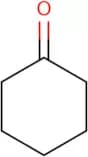
CAS:Prodotto controllato<p>Cyclohexanone is an organic compound with the chemical formula CH2O. It is a colorless liquid that has a pleasant odor. This compound has been shown to be metabolized by microsomal enzymes in rat liver and in human urine samples. Cyclohexanone has been found to react with hydrochloric acid to form cyclohexanol and hydrogen chloride gas. Cyclohexanol is a beta-keto acid that can be converted into fatty acids, such as methyl myristate, which are used for the synthesis of fat cells. The structural analysis of cyclohexanone has revealed that it contains a hydroxyl group and a methyl ketone moiety on adjacent carbons.</p>Formula:C6H10OPurezza:Min. 95%Colore e forma:Clear LiquidPeso molecolare:98.14 g/mol7-Benzyl-1H-Purine-2,6(3H,7H)-Dione
CAS:Prodotto controllato<p>Please enquire for more information about 7-Benzyl-1H-Purine-2,6(3H,7H)-Dione including the price, delivery time and more detailed product information at the technical inquiry form on this page</p>Formula:C12H10N4O2Purezza:Min. 95%Peso molecolare:242.23 g/mol1,3-Dibromoacetone
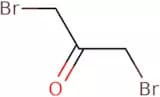
CAS:<p>1,3-Dibromoacetone (1,3-DB) is a chemical compound that is used in analytical chemistry to separate peptides and proteins by hydrophilic interaction chromatography. 1,3-DB reacts with the cysteine residues in the protein to form a disulfide bond. The complex formed can be detected using a fluorescent dye such as fluorescein. This compound has been used to characterize the urine samples of patients with α subunit amyloidosis who have increased levels of adenine nucleotides. It has also been used for detection sensitivity testing for the histidine residues on the enzyme synthetase and subunits of streptavidin.</p>Formula:C3H4Br2OPurezza:Min. 95%Colore e forma:Clear LiquidPeso molecolare:215.87 g/mol3-Methoxy-7a-methyl-estra-2,5(10)-dien-17-one
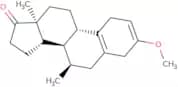
CAS:Prodotto controllato<p>Please enquire for more information about 3-Methoxy-7a-methyl-estra-2,5(10)-dien-17-one including the price, delivery time and more detailed product information at the technical inquiry form on this page</p>Formula:C20H28O2Purezza:Min. 95%Peso molecolare:300.44 g/mol2-(Chloromethyl)-3-(2-methoxyphenyl)quinazolin-4(3H)-one
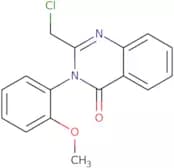
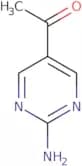
CAS:Prodotto controllatoPlease enquire for more information about 2-(Chloromethyl)-3-(2-methoxyphenyl)quinazolin-4(3H)-one including the price, delivery time and more detailed product information at the technical inquiry form on this pageFormula:C16H13ClN2O2Purezza:Min. 95%Peso molecolare:300.74 g/mol1-(2-Aminopyrimidin-5-yl)ethanone
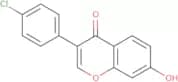
CAS:Please enquire for more information about 1-(2-Aminopyrimidin-5-yl)ethanone including the price, delivery time and more detailed product information at the technical inquiry form on this pageFormula:C6H7N3OPurezza:Min. 95%Peso molecolare:137.14 g/mol3-(4--Chloro-phenyl)-7-hydroxy-chromen-4-one
CAS:<p>3-(4-Chloro-phenyl)-7-hydroxy-chromen-4-one is an intermediate that is used in the research of Alzheimer's disease. It coordinates transition metals, such as copper (Cu), zinc (Zn), and nickel (Ni) to form a pharmacophore. This pharmacophore binds with flavones, which are compounds found in plants that have hypotensive and antihypertensive properties. 3-(4-Chloro-phenyl)-7-hydroxy-chromen-4-one has been shown to be an effective inhibitor of angiotensin II type 1 receptors and has a crystalline structure. 3-(4--Chloro---></p>Formula:C15H9ClO3Purezza:Min. 95%Peso molecolare:272.68 g/mol2-[2-(Dimethylamino)ethyl]-1-indanone
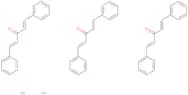
CAS:<p>Please enquire for more information about 2-[2-(Dimethylamino)ethyl]-1-indanone including the price, delivery time and more detailed product information at the technical inquiry form on this page</p>Formula:C13H17NOPurezza:Min. 95%Peso molecolare:203.28 g/molTris(dibenzylideneacetone)dipalladium(0)
CAS:<p>Tris(dibenzylideneacetone)dipalladium(0) (Pd2(dba)) is a monoclonal antibody that is used to treat infectious diseases. The metal complex binds to the fatty acid and inhibits the synthesis of membrane lipids, which leads to an inhibition of virus replication. Tris(dibenzylideneacetone)dipalladium(0) has been shown to have potent antitumor activity in animal models, with cytotoxic effects on mutant melanoma cells and hydrochloric acid. This drug also has potent pro-apoptotic properties, inducing apoptosis by binding to pro-apoptotic proteins. Tris(dibenzylideneacetone)dipalladium(0) has been shown to be a potent inhibitor of x-ray crystal structures at high temperatures, where it competes with water for the labile hydrogen atoms on the surface of hydroxyl groups.</p>Formula:C17H14O·Pd2Purezza:Min. 95%Colore e forma:Purple PowderPeso molecolare:915.72 g/mol3-(Dimethylaminomethyl)-5-methyl-2-hexanone
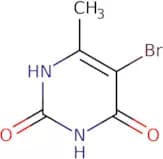
CAS:<p>3-(Dimethylaminomethyl)-5-methyl-2-hexanone is a chemical compound that can be used as an intermediate in the synthesis of tetrabenazine. It is a colorless liquid that can be synthesized from 2,4-diiodobenzene and dimethylamine. The optimal reaction time for this chemical is at reflux conditions. 3-(Dimethylaminomethyl)-5-methyl-2-hexanone has a molecular weight of 164.27 g/mol and an elemental composition of C: 68.09%, H: 18.07%, N: 7.91%. The target product for this chemical is 2,5-dimethyloctane, which has a molecular weight of 116.14 g/mol and an elemental composition of C: 73.06%, H: 9.11%, N: 5.79%. This chemical reacts with triethylbenzylammonium to form 3-(dim</p>Formula:C10H21NOPurezza:Min. 95%Peso molecolare:171.28 g/mol5-Bromo-6-methylpyrimidine-2,4(1H,3H)-dione
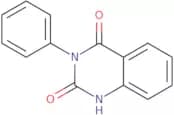
CAS:<p>5-Bromo-6-methylpyrimidine-2,4(1H,3H)-dione is an immunosuppressive drug that belongs to the class of hydantoins. It can be used to treat a variety of diseases associated with immunodeficiency including AIDS. 5-Bromo-6-methylpyrimidine-2,4(1H,3H)-dione inhibits viral replication by alkylating nucleotides and DNA synthesis at the GTPase level. The amide group in the molecule is responsible for this property. Kinetics studies have shown that the rate of hydrolysis of 5-bromo-6-methylpyrimidine-2,4(1H,3H)-dione depends on the pH and temperature of solution.</p>Formula:C5H5BrN2O2Purezza:Min. 95%Peso molecolare:205.01 g/mol3-Phenylquinazoline-2,4(1H,3H)-dione
CAS:Prodotto controllato<p>3-Phenylquinazoline-2,4(1H,3H)-dione is an efficient synthesis of hydrazine. It can be used in the synthesis of other molecules.</p>Formula:C14H10N2O2Purezza:Min. 95%Peso molecolare:238.24 g/mol1-(Toluene-4-sulfonyl)-1,2,3,4-tetrahydrobenzo[b]azepin-5-one
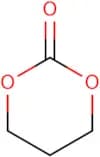
CAS:<p>Please enquire for more information about 1-(Toluene-4-sulfonyl)-1,2,3,4-tetrahydrobenzo[b]azepin-5-one including the price, delivery time and more detailed product information at the technical inquiry form on this page</p>Formula:C17H17NO3SPurezza:Min. 95%Peso molecolare:315.39 g/mol1,3-Dioxan-2-one
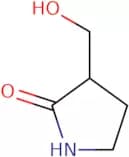
CAS:<p>1,3-Dioxan-2-one is a polymerization initiator that is used to prepare polyvinyl alcohol and polyvinyl acetate. It can also be used as an antimicrobial agent, with the ability to kill bacteria in aqueous solutions. In addition, 1,3-dioxan-2-one has been shown to have good biocompatibility and does not react with carbonates or water vapor.</p>Formula:C4H6O3Purezza:Min. 95%Colore e forma:PowderPeso molecolare:102.09 g/mol3-(Hydroxymethyl)pyrrolidin-2-one
CAS:<p>Please enquire for more information about 3-(Hydroxymethyl)pyrrolidin-2-one including the price, delivery time and more detailed product information at the technical inquiry form on this page</p>Formula:C5H9NO2Purezza:Min. 95%Peso molecolare:115.13 g/mol
![7-Chloro-1,2,3,4-tetrahydrobenzo[b]azepin-5-one](/_next/image/?url=https%3A%2Fstatic.cymitquimica.com%2Fproducts%2F3D%2Fthumb-webp%2FFC51283.webp&w=3840&q=75)




![2-[2-(Dimethylamino)ethyl]-1-indanone](/_next/image/?url=https%3A%2Fstatic.cymitquimica.com%2Fproducts%2F3D%2Fthumb-webp%2FFD22321.webp&w=3840&q=75)

![1-(Toluene-4-sulfonyl)-1,2,3,4-tetrahydrobenzo[b]azepin-5-one](/_next/image/?url=https%3A%2Fstatic.cymitquimica.com%2Fproducts%2F3D%2Fthumb-webp%2FFT151126.webp&w=3840&q=75)