Chetoni
Le chetoni sono composti organici caratterizzati dalla presenza di un gruppo carbonile (C=O) legato a due atomi di carbonio. Questi composti sono altamente versatili e svolgono un ruolo cruciale in varie reazioni chimiche, tra cui ossidazione, riduzione e condensazione. I chetoni sono intermedi essenziali nella sintesi di prodotti farmaceutici, fragranze e polimeri. Presso CymitQuimica, offriamo una vasta gamma di chetoni di alta qualità per supportare le vostre applicazioni di ricerca e industriali.
Trovati 18810 prodotti di "Chetoni"
Ordinare per
Purezza (%)
0
100
|
0
|
50
|
90
|
95
|
100
(2E)-1-[5,6-Dihydro-3-(trifluoromethyl)-1,2,4-triazolo[4,3-a]pyrazin-7(8H)-yl]-4-(2,4,5-trifluorophenyl)-2-buten-1-one
CAS:<p>Please enquire for more information about (2E)-1-[5,6-Dihydro-3-(trifluoromethyl)-1,2,4-triazolo[4,3-a]pyrazin-7(8H)-yl]-4-(2,4,5-trifluorophenyl)-2-buten-1-one including the price, delivery time and more detailed product information at the technical inquiry form on this page</p>Formula:C16H12F6N4OPurezza:95%NmrPeso molecolare:390.28 g/molAc-Tyr-Val-Ala-Asp-2,6-dimethylbenzoyloxymethylketone
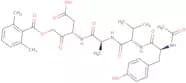
CAS:<p>Ac-Tyr-Val-Ala-Asp-2,6-dimethylbenzoyloxymethylketone is a potent transcriptional regulator that can be used to treat breast cancer. Ac-Tyr-Val-Ala-Asp-2,6-dimethylbenzoyloxymethylketone binds to estrogen receptor and prevents the binding of estrogen to its receptor. This leads to the death of cancer cells by inhibiting the function of bcl family proteins. Acetylation of this compound at C8, C10, and C17 positions increases its potency in vivo. In addition, Acetylated TAVADM can inhibit pancreatic cancer cell growth by activating signal transducer and activator of transcription 3 (STAT3) and inhibiting the activity of bcl family proteins such as BCL2 and BCLXL. Acetylated TAVADM has also been shown to have antiapoptotic</p>Formula:C33H42N4O10Purezza:Min. 95%Peso molecolare:654.71 g/mol2,6-Di-tert-butylcyclohexa-2,5-diene-1,4-dione
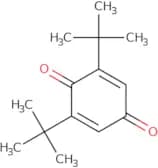
CAS:<p>2,6-Di-tert-butylcyclohexa-2,5-diene-1,4-dione (BHT) is a chemical compound that is used as an oxygenation catalyst and analytical method. The molecular structure of BHT contains a hydroxyl group with a redox potential of 0.3 V and a thermal expansion coefficient of 7 x 10 K. This compound has been shown to be toxic in mice, causing lung damage and oxidative DNA damage. BHT also inhibits the transcriptional regulation of genes by binding to amines in the cell membrane. It can act as an antioxidant because it binds to reactive oxygen species and prevents them from oxidizing other molecules in the cell. These properties make it useful for protecting cells from oxidative stress caused by reactive oxygen species or peroxides.</p>Formula:C14H20O2Purezza:Min. 95%Peso molecolare:220.31 g/mol17-α,21-Dihydroxy-16-a-methylpregna-1,4,9(11)-triene-3,20-dione 21-acetate
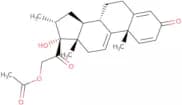
CAS:Prodotto controllato<p>Please enquire for more information about 17-alpha,21-Dihydroxy-16-a-methylpregna-1,4,9(11)-triene-3,20-dione 21-acetate including the price, delivery time and more detailed product information at the technical inquiry form on this page</p>Formula:C24H30O5Purezza:Min. 95%Peso molecolare:398.49 g/mol1-(3-Chloro-4-methoxyphenyl)acetone
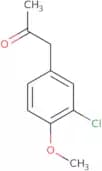
CAS:<p>1-(3-Chloro-4-methoxyphenyl)acetone is a white solid with a melting point of 60-61°C. It is a versatile building block that can be used in the synthesis of complex compounds and as a reaction component for the preparation of speciality chemicals. 1-(3-Chloro-4-methoxyphenyl)acetone has been studied extensively as an intermediate for the synthesis of pharmaceuticals, including acetaminophen and amoxicillin. This compound also has uses in research laboratories and as a reagent in organic synthesis.</p>Formula:C10H11ClO2Purezza:Min. 95%Peso molecolare:198.65 g/mol1-(2-Furyl)-1,3-butanedione
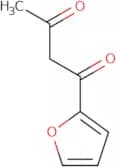
CAS:<p>1-(2-Furyl)-1,3-butanedione is an organic compound with the chemical formula CO. It is a diketone that acts as a metal chelate. The molecule has been shown to have antibacterial properties against gram-negative bacteria and also inhibits the growth of amyloid plaques in Alzheimer's disease. 1-(2-Furyl)-1,3-butanedione binds to the chlorine atom of a bacterial cell wall and prevents it from binding to the amine group on the surface of proteins, which are vital for protein synthesis. This leads to a decrease in bacterial growth. 1-(2-Furyl)-1,3-butanedione can be used as an alternative for chlorine gas in water purification processes because it reacts with HCl and converts it into less toxic hydrogen chloride.</p>Formula:C8H8O3Purezza:Min. 95%Colore e forma:Clear LiquidPeso molecolare:152.15 g/molZ-Ile-Glu(OMe)-Thr-DL-Asp(OMe)-fluoromethylketone
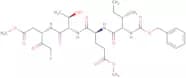
CAS:<p>Z-Ile-Glu(OMe)-Thr-DL-Asp(OMe)-fluoromethylketone is an apoptosis inducer that belongs to the category of small molecules. It has been shown to induce apoptosis in cells by binding to DNA and inhibiting transcription, leading to DNA fragmentation and the activation of caspase-8. Z-Ile-Glu(OMe)-Thr-DL-Asp(OMe)-fluoromethylketone has also been shown to have a synergistic effect on cells when combined with other potent inducers of apoptosis. This drug binds to toll receptors (TLR) and IL2 receptors, which are important for cell signaling pathways.</p>Formula:C30H43FN4O11Purezza:Min. 95%Peso molecolare:654.68 g/molMeOSuc-Ala-Ala-Pro-Ala-chloromethylketone
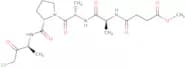
CAS:<p>MeOSuc-Ala-Ala-Pro-Ala-chloromethylketone is a peptidyl substrate for the enzyme carboxypeptidase A. This substrate has a high specificity for carboxypeptidase A and does not bind to other enzymes such as carboxypeptidase B, D, or L. The hydrophobic nature of this substrate has been shown in both hamsters and macaques. MeOSuc-Ala-Ala-Pro-Ala-chloromethylketone also shows cardiovascular effects in both animal models. It is possible that this effect is due to the proteolytic activity of the enzyme. More research needs to be done to identify the sequence of this peptide and how it may affect humans.</p>Formula:C20H31ClN4O7Purezza:Min. 95%Peso molecolare:474.94 g/mol5-Hydroxy-4-propyl-2(5H)-furanone
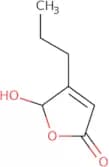
CAS:<p>Please enquire for more information about 5-Hydroxy-4-propyl-2(5H)-furanone including the price, delivery time and more detailed product information at the technical inquiry form on this page</p>Formula:C7H10O3Purezza:Min. 95%Colore e forma:Yellow PowderPeso molecolare:142.15 g/molMeOSuc-Ala-Ala-Pro-Val-chloromethylketone
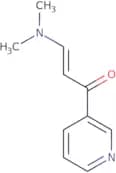
CAS:<p>MeOSuc-Ala-Ala-Pro-Val-chloromethylketone is a serine protease inhibitor that has been shown to be effective against influenza virus and HIV. It was found to be active against a number of serine proteases, such as trypsin, chymotrypsin, and elastase. MeOSuc-Ala-Ala-Pro-Val-chloromethylketone also has chemotactic activity in thp1 cells and lung fibroblasts. It is activated by the addition of water and has been shown to inhibit the growth of soybean trypsin. However, it does not have any effect on human trypsin.</p>Formula:C22H35ClN4O7Purezza:Min. 95%Peso molecolare:502.99 g/mol3-Dimethylamino-1-(3-pyridyl)-2-propen-1-one
CAS:<p>3-Dimethylamino-1-(3-pyridyl)-2-propen-1-one is a synthetic anticancer compound. It is an amide derivative of 3-dimethylamino-1-(3-pyridyl)-2-propenal, which is synthesized by reacting 3,5,6,7 tetrahydrobenzo[b]thiophene with 3-(dimethylamino)acrylic acid chloride. The synthesis of 3DAP was reported in 1974 by Novartis Pharmaceuticals Corporation and it has been used as a lead compound for the development of other anticancer agents. This drug can inhibit the growth of myelogenous leukemia cells and has been shown to be effective against cancer cells that are resistant to imatinib.</p>Formula:C10H12N2OPurezza:Min. 95%Colore e forma:Off-White To Yellow SolidPeso molecolare:176.22 g/mol6,7-Dihydro-5H-quinolin-8-one
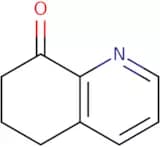
CAS:<p>6,7-Dihydro-5H-quinolin-8-one is a quinoline derivative that can be used to treat cancer. It is an inhibitor of topoisomerase II, which is an enzyme that catalyzes the formation of single stranded breaks in DNA and then reseals them. The inhibition of topoisomerase II leads to the accumulation of single strand breaks, which causes cell death. 6,7-Dihydro-5H-quinolin-8-one has been shown to have inhibitory activity against cancer cells in laboratory tests and also inhibits the growth of breast cancer cells in mice. This compound also has a number of other biological effects including being a ligand for some receptors and amine oxidases as well as having antihistamine properties.</p>Formula:C9H9NOPurezza:Min. 95%Colore e forma:White PowderPeso molecolare:147.17 g/mol4-Bromo-6-chloropyridazin-3(2H)-one
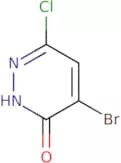
CAS:<p>4-Bromo-6-chloropyridazin-3(2H)-one is a glycosylation inhibitor and nucleoside analog that can be used in the treatment of cancer. It inhibits the synthesis of deoxyribonucleotides from ribonucleotides by binding to the enzyme ribonucleotide reductase, which catalyzes the conversion of ribonucleotides to deoxynucleotides. 4-Bromo-6-chloropyridazin-3(2H)-one has been shown to inhibit glycosylation in rat liver cells. This drug also inhibits acetone and glycosidation, which are reactions that produce glucose from amino acids or carbohydrates. The crystallization process is also inhibited by this drug because it prevents the formation of nucleoside crystals, which are involved in DNA replication and cell division.</p>Formula:C4H2BrClN2OPurezza:Min. 95%Peso molecolare:209.43 g/molAc-Cys(dodecyl)-chloromethylketone
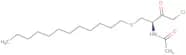
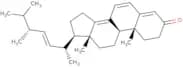
CAS:<p>Please enquire for more information about Ac-Cys(dodecyl)-chloromethylketone including the price, delivery time and more detailed product information at the technical inquiry form on this page</p>Formula:C18H34ClNO2SPurezza:Min. 95%Peso molecolare:363.99 g/molErgosta-4,6,8(14),22-tetraen-3-one
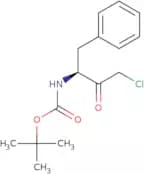
CAS:Prodotto controllato<p>Ergosta-4,6,8(14),22-tetraen-3-one is a fatty acid that occurs naturally in the acetate extract of the kidney of sheep. It has been shown to induce apoptosis in cervical cancer cells and inhibit growth of bacteria by inhibiting energy metabolism. Ergosta-4,6,8(14),22-tetraen-3-one can be used as an antimicrobial agent because it has broad-spectrum activity against bacteria and fungi. This compound also has been found to be effective in treating kidney fibrosis. It has been shown to inhibit tubulointerstitial injury and plasma concentration–time curve by binding to human serum albumin.</p>Formula:C28H40OPurezza:Min. 95%Peso molecolare:392.62 g/mol(3S)-3-(tert-Butoxycarbonyl)amino-1-chloro-4-phenyl-2-butanone
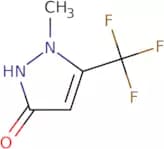
CAS:<p>(3S)-3-(tert-Butoxycarbonyl)amino-1-chloro-4-phenyl-2-butanone is an organic compound that belongs to the class of carbonyl reductase. It is used as a catalyst for the transformation of secondary alcohols to ketones or aldehydes, including isopropyl alcohol. The reaction proceeds via an intermediate carboxylic acid. The enzyme has been found in various microorganisms, and can be purified from Bacillus megaterium and Streptomyces lividans. The enzyme’s activity can be inhibited by steric effects, metal ions, or other compounds. (3S)-3-(tert-Butoxycarbonyl)amino-1-chloro-4-phenyl-2-butanone crystallizes in two forms: one with the chiral center at the 3 position and one with it at the 4 position.</p>Purezza:Min. 95%1,2-Dihydro-1-Methyl-5-(Trifluoromethyl)-3H-Pyrazol-3-One
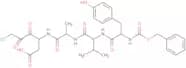
CAS:<p>Please enquire for more information about 1,2-Dihydro-1-Methyl-5-(Trifluoromethyl)-3H-Pyrazol-3-One including the price, delivery time and more detailed product information at the technical inquiry form on this page</p>Formula:C5H5F3N2OPurezza:Min. 95%Peso molecolare:166.1 g/molZ-Tyr-Val-Ala-Asp-chloromethylketone
CAS:<p>Z-Tyr-Val-Ala-Asp-chloromethylketone is a fluorescent probe that can be used for the detection of phosphatidic acid. It is also an apoptosis inducer, which means that it promotes cell death. Z-Tyr-Val-Ala-Asp-chloromethylketone induces apoptosis by binding to the kinases and causing their activation, leading to phosphatidic acid production. This process is activated by the presence of ethylene, which binds to Z-Tyr-Val-Ala-Asp chloromethylketone and stabilizes its structure.</p>Formula:C30H37ClN4O9Purezza:Min. 95%Peso molecolare:633.09 g/molAzocan-2-one
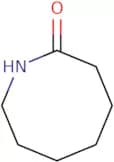
CAS:<p>Azocan-2-one is a polyamide that has been shown to inhibit the activity of enzymes such as hydroxylases and esterases. Azocan-2-one binds to the enzyme's active site and blocks the catalytic site. This binding leads to inhibition of these enzymes, which in turn prevents reactions from occurring. Azocan-2-one can be used as an inhibitor in polymer synthesis, amide formation, and radiation chemistry. The compound also has three functional groups that allow it to act as an acid or base, making it capable of reacting with both organic and inorganic acids. Azocan-2-one is also soluble in water and hydrochloric acid, which allows for its use in various solution types.</p>Purezza:Min. 95%1-(5-Bromopyrimidin-2-yl)ethanone
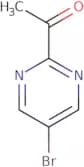
CAS:<p>Please enquire for more information about 1-(5-Bromopyrimidin-2-yl)ethanone including the price, delivery time and more detailed product information at the technical inquiry form on this page</p>Formula:C6H5BrN2OPurezza:Min. 95%Peso molecolare:201.02 g/mol
![(2E)-1-[5,6-Dihydro-3-(trifluoromethyl)-1,2,4-triazolo[4,3-a]pyrazin-7(8H)-yl]-4-(2,4,5-trifluorop…](/_next/image/?url=https%3A%2Fstatic.cymitquimica.com%2Fproducts%2F3D%2Fthumb-webp%2FFD103313.webp&w=3840&q=75)