Amidi
Le amidi sono una vasta gamma di composti chimici che contengono almeno un anello eterociclico, che possiede atomi di almeno due elementi diversi nella struttura dell'anello, e almeno un gruppo ammidico (-CONH2). Questi composti sono cruciali nella sintesi di prodotti farmaceutici, polimeri e agrochimici. Le amidi presentano proprietà e reattività uniche, che le rendono intermedi preziosi nella sintesi organica. Presso CymitQuimica, offriamo una selezione completa di amidi di alta qualità per supportare le vostre esigenze di ricerca e industriali.
Trovati 16483 prodotti di "Amidi"
Ordinare per
Purezza (%)
0
100
|
0
|
50
|
90
|
95
|
100
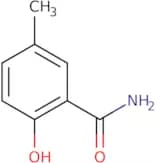
2-Hydroxy-5-methylbenzamide
CAS:Labetalol is a β-blocker that is used to treat high blood pressure. Labetalol hydrochloride, the active form of labetalol, is a white, crystalline compound with a melting point of 200 °C. It is soluble in water and has an acidic pH of 2. Labetalol hydrochloride is synthesized by reacting methylbenzene with labetalol, which forms intermediates such as methyl 4-hydroxylbenzoate and methyl 3-hydroxylbenzoate in the process. The intermediates are then recrystallized to form the final product. Labetalol hydrochloride undergoes thermal analysis using thermogravimetry, calorimetry, and residue analysis to determine its purity. This product also undergoes carbonaceous and oxidative analysis by GC-MS for quality control purposes.Formula:C8H9NO2Purezza:Min. 95%Colore e forma:PowderPeso molecolare:151.16 g/molEliglustat
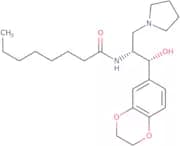
CAS:Eliglustat is an oral medication used as a substrate reduction therapy for Gaucher disease type 1, which is an inherited lysosomal storage disorder. This product is a small-molecule inhibitor derived via chemical synthesis. Its primary mode of action involves the selective inhibition of glucosylceramide synthase, an enzyme responsible for the first committed step in glycosphingolipid biosynthesis. By reducing the production of glucosylceramide, eliglustat decreases the substrate accumulation that contributes to the pathophysiology of Gaucher disease.Formula:C23H36N2O4Purezza:Min. 97 Area-%Colore e forma:White PowderPeso molecolare:404.54 g/molRink amide-AM Resin
CAS:Rink amide-AM resin is a cation exchange resin that is used in peptide synthesis. It has an optimal pH range of 8-9. Rink amide-AM resin can be activated with trifluoroacetic acid or piperidine and washed with a mixture of water and methanol to remove the salt byproduct. The resin can then be used for peptide synthesis, which is typically done by adding the desired amino acids in sequence to the resin. The synthesis is stopped when the linear peptide reaches a desired length, typically 12-15 amino acids long. The linear peptides are then cleaved from the resin using trifluoroacetic acid or piperidine, depending on which activation reagent was used during synthesis. After cleavage, the linear peptides are precipitated from solution using ethanol or acetone and collected by filtration.Colore e forma:Off-White Powder2-Phenyl-N-phenylacetamide
CAS:2-Phenyl-N-phenylacetamide is an amide that is a potent inhibitor of cholesterol acyltransferase. It has been shown to be effective in animal models of insulin resistance and hypertension, as well as in humans. 2-Phenyl-N-phenylacetamide inhibits the activity of cholesterol acyltransferase by competitive inhibition and thereby reduces the production of triglycerides. This drug also inhibits the synthesis of phospholipids and bile acids, which are important for fat digestion. 2-Phenyl-N-phenylacetamide reacts with phosphorus pentoxide to form phenoxyacetic acid, which is hydrolyzed to phenoxyacetate and phenol. The hydroxy group on phenol reacts with aryl halides to form aryl esters. These reactions lead to the formation of divalent hydrocarbon intermediates such as malonic acid, which can be used for energy production through oxidation or as precursorsFormula:C14H13NOPurezza:Min. 95%Peso molecolare:211.26 g/mol2,2,2-Trifluoro-n-phenylacetamide
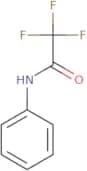
CAS:2,2,2-Trifluoro-n-phenylacetamide is a functionalized trifluoroacetic acid. It is inactive and can be used for diagnostic purposes. 2,2,2-Trifluoro-n-phenylacetamide reacts with amines to form the corresponding deuterium isotope labeled amine. The heterocyclic amines that are formed react with diazonium salt to produce an enolate anion that reacts with chloride to form the corresponding carboxylic acid derivative. The proton of the carboxylic acid leaves as a protonated ammonium ion, which is stable in alkaline solutions. Amides have a negative charge on the nitrogen atom due to its electron withdrawing properties.Formula:C8H6F3NOPurezza:Min. 95%Colore e forma:PowderPeso molecolare:189.13 g/mol2-Chloro-N-(2-chloro-5-nitrophenyl)propanamide
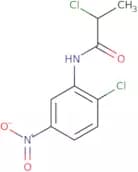
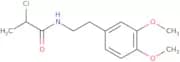
CAS:Please enquire for more information about 2-Chloro-N-(2-chloro-5-nitrophenyl)propanamide including the price, delivery time and more detailed product information at the technical inquiry form on this pageFormula:C9H8Cl2N2O3Purezza:Min. 95%Peso molecolare:263.08 g/molN-(2-(3,4-dimethoxyphenyl)ethyl)-2-chloropropanamide
CAS:Please enquire for more information about N-(2-(3,4-dimethoxyphenyl)ethyl)-2-chloropropanamide including the price, delivery time and more detailed product information at the technical inquiry form on this pagePurezza:Min. 95%Hydroxy flutamide
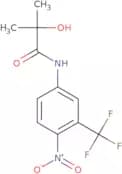
CAS:Hydroxyflutamide is an anti-androgen drug that belongs to the group of nonsteroidal anti-androgens. It has been shown to bind to the androgen receptor with high affinity and inhibit the growth of cancer cells in vitro. Hydroxyflutamide also has a strong antitumor response in vivo, which is due to its ability to inhibit cellular proliferation by binding to DNA polymerase during replication. The drug may also have some activity as an antineoplastic agent because it inhibits the growth of prostate cancer cells. However, hydroxyflutamide has never been tested on humans or animals, so its effects are unknown.
Formula:C11H11F3N2O4Purezza:Min. 98 Area-%Colore e forma:Yellow PowderPeso molecolare:292.21 g/molAvenanthramide C
CAS:Avenanthramide C is a potent polyphenolic compound that is isolated from the bark of the plant, Avena sativa. It has been shown to be an effective chemotherapeutic treatment for breast cancer and leukemia cells in vitro. Avenanthramide C has a hydroxyl group at its 6th carbon position and is a member of the class of compounds called avenanthramides. The biological properties of this compound have been examined using skin cells and it has been shown to exhibit significant activity against DNA polymerase, DNA binding activity, and enzyme activities. This compound also exhibits chemoattractant protein-like activity, which may be due to its ability to bind with high affinity to specific receptors on leukocytes.Formula:C16H13NO6Purezza:Min. 95%Colore e forma:PowderPeso molecolare:315.28 g/mol2-(5-Bromo-1H-indol-3-yl)acetamide
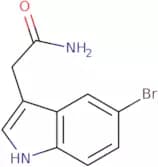
CAS:2-(5-Bromo-1H-indol-3-yl)acetamide is a high quality, reagent, complex compound, useful intermediate and fine chemical. It is also a useful scaffold or building block for the synthesis of speciality chemicals. 2-(5-Bromo-1H-indol-3-yl)acetamide is used in research and development as a versatile building block for the synthesis of new compounds. The CAS number for this compound is 196081-79-5.Formula:C10H9BrN2OPurezza:Min. 98 Area-%Colore e forma:PowderPeso molecolare:253.1 g/mol2-Bromo-N,N-diethylacetamide
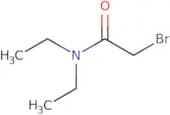
CAS:2-Bromo-N,N-diethylacetamide is a chemical compound that is used as an amide. It has been shown to have anti-inflammatory properties and can be used for the treatment of inflammatory lesions. This drug also has been shown to inhibit the production of 3-bromopropylamine hydrobromide in laboratory animals. 2-Bromo-N,N-diethylacetamide binds to cellular proteins such as mt2 receptors and can be used for the treatment of nervous system diseases such as depression. The titration calorimetry shows that 2-Bromo-N,N-diethylacetamide is a good candidate for use in biomolecular applications due to its low toxicity and high thermal stability.Formula:C6H12BrNOPurezza:Min. 95%Colore e forma:LiquidPeso molecolare:194.07 g/molEthionamide sulfoxide
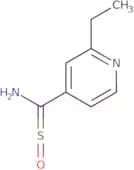
CAS:Ethionamide is a drug that is used for the treatment of tuberculosis. It binds to the enzyme preparations in the bacterial cell wall by competitive inhibition, which prevents formation of an antibiotic-inhibitor complex with the enzyme cell wall synthesis that is required for cell wall biosynthesis, inhibiting protein synthesis and cell division. The sulfoxide form of ethionamide is converted to the sulfone form when it enters the body. This conversion takes place primarily in the liver with assistance from alcohol dehydrogenase, cytochrome P450, and glutathione reductase. The sulfone form has higher potency than its precursor (sulfoxide) because it has lower protein binding affinity and more rapid elimination from plasma.Formula:C8H10N2OSPurezza:Min. 95 Area-%Colore e forma:PowderPeso molecolare:182.24 g/molTiaramide hydrochloride
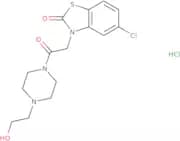
CAS:Tiaramide hydrochloride is a nonsteroidal anti-inflammatory drug that inhibits the production of prostaglandins. It has been shown to have an anti-inflammatory activity in bowel disease and inflammatory bowel disease, which may be due to its ability to inhibit the production of prostaglandin synthesis. Tiaramide hydrochloride is also a coumarin derivative that can form an n-oxide on exposure to air or light. It has been used in tissue culture experiments as a nanoparticulate composition, where it was found to have a dose-dependent effect on cell viability and proliferation. Tiaramide hydrochloride has been used in sample preparation for human serum and rat liver microsomes, where it showed a hydroxyl group that binds with fatty acids.Formula:C15H18ClN3O3S·HClPurezza:Min. 95%Colore e forma:PowderPeso molecolare:392.3 g/molN-(4-Fluorophenyl)(5-methyl-3-phenylisoxazol-4-yl)formamide
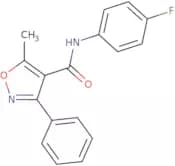
CAS:Please enquire for more information about N-(4-Fluorophenyl)(5-methyl-3-phenylisoxazol-4-yl)formamide including the price, delivery time and more detailed product information at the technical inquiry form on this pageFormula:C17H13FN2O2Purezza:Min. 95%Colore e forma:PowderPeso molecolare:296.3 g/mol2-Chloro-5-(2,3-dihydro-1-hydroxy-3-oxo-1H-isoindol-1-yl)-benzenesulfonamide
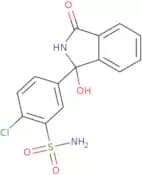
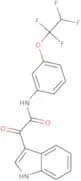
CAS:Prodotto controllato2-Chloro-5-(2,3-dihydro-1-hydroxy-3-oxo-1H-isoindol-1-yl)-benzenesulfonamide is a drug that belongs to the class of sulfonamides which is used in pharmaceutical formulations. It has been shown to have potent antihypertensive effects, and it also lowers blood pressure by inhibiting an enzyme called carbonic anhydrase. 2CCHIB binds to the chloride channel in kidney tubule cells and prevents the reabsorption of chloride ions in these cells. This leads to more water being excreted from the body, which reduces blood volume and pressure. The low density lipoprotein (LDL) cholesterol levels are also reduced when this drug is taken orally. 2CCHIB increases high sensitivity C reactive protein (hsCRP), a marker for inflammation, but it can also have antioxidant effects.Formula:C14H11ClN2O4SPurezza:Min. 95%Colore e forma:PowderPeso molecolare:338.77 g/mol2-Indol-3-yl-2-oxo-N-(3-(1,1,2,2-tetrafluoroethoxy)phenyl)ethanamide
CAS:Please enquire for more information about 2-Indol-3-yl-2-oxo-N-(3-(1,1,2,2-tetrafluoroethoxy)phenyl)ethanamide including the price, delivery time and more detailed product information at the technical inquiry form on this pageFormula:C18H12F4N2O3Purezza:Min. 95%Colore e forma:PowderPeso molecolare:380.29 g/molC26-Ceramide
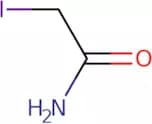
CAS:Marker for Farber disease diagnosisFormula:C44H87NO3Purezza:Min. 95%Colore e forma:White PowderPeso molecolare:678.17 g/mol2-Iodoacetamide
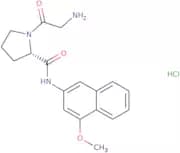
CAS:2-Iodoacetamide is a synthetic retinoid that binds to the DNA of cells, altering transcription. It also has been found to be effective in treating bowel disease and has been shown to have dna binding activity. The compound was synthesized by attaching iodine molecules to acetamide. 2-Iodoacetamide targets the protein thiols on the surface of cells, which are responsible for oxidation and damage due to reactive oxygen species (ROS). This compound is metabolized by alcohol dehydrogenase and can be used as a biological sample or natural compound.Formula:C2H4INOPurezza:Min. 95%Colore e forma:SolidPeso molecolare:184.96 g/molGly-pro-4-methoxy-β-naphthylamide hydrochloride
CAS:Gly-pro-4-methoxy-β-naphthylamide hydrochloride is a fine chemical that is useful as a versatile building block and intermediate. It is a research chemical that has been used in the production of other compounds, such as drugs, pesticides, and dyes. This compound is also used to synthesize certain polymers and plastics. Gly-pro-4-methoxy-β-naphthylamide hydrochloride has CAS number 100929-90-6, but it can be found under many other names including 4-(2′,5′dimethylphenyl)-1-(2′hydroxyethyl)piperazine (CAS 105999).Formula:C18H22ClN3O3Purezza:Min. 95 Area-%Colore e forma:PowderPeso molecolare:363.84 g/mol2-((4-Methylphenyl)sulfonyl)-N-(((2-thienylcarbonylamino)thioxomethyl)amino)ethanamide
CAS:Please enquire for more information about 2-((4-Methylphenyl)sulfonyl)-N-(((2-thienylcarbonylamino)thioxomethyl)amino)ethanamide including the price, delivery time and more detailed product information at the technical inquiry form on this pageFormula:C15H15N3O4S3Purezza:Min. 95%Colore e forma:PowderPeso molecolare:397.5 g/mol