Amidi
Trovati 16513 prodotti di "Amidi"
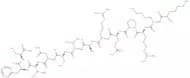
Dynorphin A (1-13) amide trifluoroacetate salt
CAS:Please enquire for more information about Dynorphin A (1-13) amide trifluoroacetate salt including the price, delivery time and more detailed product information at the technical inquiry form on this page
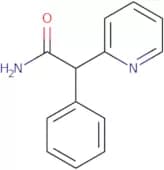
Formula:C75H127N25O14Purezza:Min. 95%Peso molecolare:1,602.97 g/molPhenyl-(2-pyridyl)acetamide
CAS:Please enquire for more information about Phenyl-(2-pyridyl)acetamide including the price, delivery time and more detailed product information at the technical inquiry form on this page
Formula:C13H12N2OPurezza:Min. 95%Peso molecolare:212.25 g/molClopamide
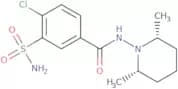
CAS:Clopamide is a diuretic drug that belongs to the group of protein genes. It is used in the treatment of chronic heart failure, low-density lipoprotein cholesterol and infectious diseases. Clopamide has been shown to increase the glomerular filtration rate by inhibiting the sodium citrate enzyme, which is involved in the formation of urine from blood plasma. This drug also reduces blood pressure by blocking angiotensin II receptors on vascular smooth muscle cells. Clopamide does not have any significant interactions with other drugs, although caution should be exercised when using it with cardiac drugs due to its effects on blood pressure.
Formula:C14H20ClN3O3SPurezza:Min. 98 Area-%Colore e forma:White PowderPeso molecolare:345.85 g/molN,N-Bis(2-hydroxyethyl)dodecanamide
CAS:N,N-Bis(2-hydroxyethyl)dodecanamide is a surfactant that is used in the treatment of wastewater. It has been shown to be effective at removing p-hydroxybenzoic acid from water and at reducing the concentration of this compound in the environment. N,N-Bis(2-hydroxyethyl)dodecanamide also has antimicrobial properties and synergizes with other antimicrobial agents to provide a more potent effect than when it is used alone. This surfactant has been shown to have an effect on congestive heart failure by blocking the action of angiotensin II receptors.
Formula:C16H33NO3Colore e forma:Clear LiquidPeso molecolare:287.44 g/molMidodrine
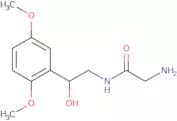
CAS:Prodotto controllato2-Amino-N-[2-(2,5-dimethoxyphenyl)-2-hydroxyethyl]-acetamide is a drug that has been used to treat a variety of diseases and conditions. It is an alpha adrenergic agonist that works by stimulating the alpha receptors in the body, which increase blood pressure and improve blood flow. This drug also has significant effects on energy metabolism, including the production of ATP. 2-Amino-N-[2-(2,5-dimethoxyphenyl)-2-hydroxyethyl]-acetamide is used to treat patients with congestive heart failure who are taking low doses of midodrine hydrochloride or nonsteroidal antiinflammatory drugs.Formula:C12H18N2O4Purezza:Min. 95%Colore e forma:PowderPeso molecolare:254.28 g/mol4-Biphenylac-Cys(Me)-D-Arg-Phe-(2-phenylethyl)amide
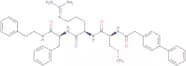
CAS:4-Biphenylac-Cys(Me)-D-Arg-Phe-(2-phenylethyl)amide is a tetrapeptide that has been shown to have antihypertensive properties. This drug binds to the regulatory proteins of the renin angiotensin system and blocks the production of angiotensin II, which decreases blood pressure. 4-Biphenylac-Cys(Me)-D-Arg-Phe-(2-phenylethyl)amide has also shown to be an effective treatment for skin care products, especially those used for inflammatory skin diseases. 4-Biphenylac-Cys(Me)-D-Arg-Phe-(2-phenylethyl)amide has been shown to be a potent inhibitor of serine proteases and can inhibit cellular proliferation and induce apoptosis in cancer cells.
Formula:C41H49N7O4SPurezza:Min. 95%Peso molecolare:735.94 g/molRef: 3D-FB111103
Prodotto fuori produzioneKemptamide trifluoroacetate salt
CAS:Kemptamide is a peptide that has been shown to have cytotoxic and anti-proliferative effects on renal cancer cells. It is a synthetic analogue of an endogenous peptide, Lys-Lys-Arg-Pro-Gln-Arg-Ala-Thr-Ser-Asn-Val-Phe, that is found in porcine kidney. Kemptamide’s cytotoxic activity may be due to its ability to inhibit the activity of phosphatases. Kemptamide also has regulatory properties and can modulate the expression of genes that are involved in cell growth and apoptosis. This peptide has been shown to be reactive with kidney cells, which may lead to its therapeutic effect on renal cancer.
Formula:C65H112N24O18Purezza:Min. 95%Peso molecolare:1,517.74 g/molRef: 3D-FK110967
Prodotto fuori produzionepTH (1-31) amide (human)
CAS:pTH (1-31) amide is a polymer conjugate that is used to treat osteoporosis. It has been shown to be effective in reducing the risk of fracture and increasing bone mineral density in animals. The compound binds to the extracellular domain of the estrogen receptor, altering its conformation and preventing it from interacting with other proteins in the nucleus. pTH (1-31) amide has also been shown to reduce blood pressure in animals by inhibiting angiotensin-converting enzyme. Clinical data on this drug are limited, but it has been well tolerated so far.Formula:C162H270N50O46S2Purezza:Min. 95%Peso molecolare:3,718.32 g/molPhenylacetyl-(D-Arg2·28,p-chloro-Phe6, Homoarg 9·29,Tyr(Me)10, Abu 15, Nle 27)-GRF (1-29) amide (human)
CAS:Please enquire for more information about Phenylacetyl-(D-Arg2·28,p-chloro-Phe6, Homoarg 9·29,Tyr(Me)10, Abu 15, Nle 27)-GRF (1-29) amide (human) including the price, delivery time and more detailed product information at the technical inquiry form on this pageFormula:C172H284ClN53O41Purezza:Min. 95%Peso molecolare:3,785.88 g/mol(Phe4)-Dermorphin (1-4) amide
CAS:Dermorphin is a peptide that is derived from the proenkephalin gene. It is an opioid analgesic and has been shown to be effective in the treatment of hernias. Dermorphin has also been shown to inhibit platelet aggregation and blood coagulation, making it an antithrombotic therapy. The structure of dermorphin has been determined using a hydroxy group as the reactive site for synthesis and molecular modelling techniques. Dermorphin has also been shown to have an active oxygen species selectivity index (a measure of antioxidant activity) higher than those of other drugs in its class, which makes it suitable for use as a sealant in abdominal surgery.Formula:C30H35N5O5Purezza:Min. 95%Peso molecolare:545.63 g/mol4-Methylsalicylamide
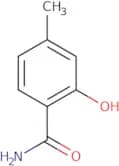
CAS:4-Methylsalicylamide is a chemical compound that belongs to the class of isonicotinic amides. It is a potent anti-inflammatory agent with minimal inhibitory concentration (MIC) values of 4 µg/mL for gram-positive bacteria and 8 µg/mL for gram-negative bacteria. This compound has been shown to be effective against methicillin-resistant Staphylococcus aureus (MRSA) and Clostridium perfringens, although is not active against acid-fast bacteria such as Mycobacterium tuberculosis or Mycobacterium avium complex. 4-Methylsalicylamide has been shown to have an inhibitory effect on ring-opening, which may be due to its ability to acetylate mitochondrial membranes, altering the membrane potential. The molecular modeling studies also showed that 4MSAM binds at the same site as antibiotics such as penicillin and erythromycin in bacterial ribos
Formula:C8H9NO2Purezza:Min. 95%Colore e forma:PowderPeso molecolare:151.16 g/molRef: 3D-FM70805
Prodotto fuori produzionePAR-2 (1-6) amide (human) trifluoroacetate salt
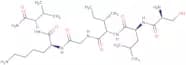
CAS:PAR-2 (1-6) amide (human) trifluoroacetate salt H-Ser-Leu-Ile-Gly-Lys-Val-NH2 trifluoroacetate salt is a protease inhibitor that inhibits the activity of PAR2, a protein receptor. PAR2 is implicated in cancer and inflammation. It has been shown to inhibit growth factor signaling, as well as activate toll-like receptor 4 and other inflammatory pathways. PAR2 inhibition has also been studied in vivo and found to be effective in treating wild type mice with melanoma cells. In vitro studies have shown that PAR2 inhibition by PAR 2 (1-6) amide (human) trifluoroacetate salt H-Ser-Leu-Ile-Gly-Lys-Val NH2 trifluoroacetate salt blocks the production of tumour necrosis factor alpha and interleukin 6.Formula:C28H54N8O7Purezza:Min. 95%Peso molecolare:614.78 g/molDithiooxamide
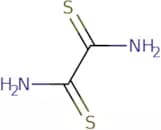
CAS:Dithiooxamide is a chemical compound that contains two sulfur atoms, one oxygen atom, and one nitrogen atom. It has been shown to be an effective treatment for wastewater by removing nitrogen and phosphorus. Dithiooxamide binds to metal ions such as copper and iron in the water, forming a complex. This process prevents the metal ions from being available as catalysts in the oxidation of organic pollutants. The binding of dithiooxamide with these metals also removes them from wastewater, preventing them from being taken up by plants or animals. Dithiooxamide can be used to remove malonic acid (a carcinogen) and p-nitrophenyl phosphate (a liver toxin) from blood samples for analysis using electrochemical impedance spectroscopy, which relies on the ability of dithiooxamide to bind to these chemicals. Dithiooxamide is also used as a surfactant in analytical chemistry methods such as gas chromatography or liquid chromatography because it
Formula:C2H4N2S2Purezza:Min. 95%Colore e forma:PowderPeso molecolare:120.2 g/mol