Amidi
Le amidi sono una vasta gamma di composti chimici che contengono almeno un anello eterociclico, che possiede atomi di almeno due elementi diversi nella struttura dell'anello, e almeno un gruppo ammidico (-CONH2). Questi composti sono cruciali nella sintesi di prodotti farmaceutici, polimeri e agrochimici. Le amidi presentano proprietà e reattività uniche, che le rendono intermedi preziosi nella sintesi organica. Presso CymitQuimica, offriamo una selezione completa di amidi di alta qualità per supportare le vostre esigenze di ricerca e industriali.
Trovati 16485 prodotti di "Amidi"
Ordinare per
Purezza (%)
0
100
|
0
|
50
|
90
|
95
|
100
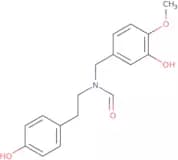
N-(p-Hydroxyphenethyl)-N-(3-hydroxy-4-methoxybenzyl)formamide
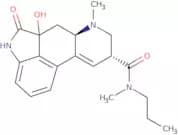
CAS:Prodotto controllato<p>Please enquire for more information about N-(p-Hydroxyphenethyl)-N-(3-hydroxy-4-methoxybenzyl)formamide including the price, delivery time and more detailed product information at the technical inquiry form on this page</p>Formula:C17H19NO4Purezza:Min. 95%Peso molecolare:301.34 g/mol2-Oxo-3-hydroxy-N-methyl-N-propyl D-lysergamide
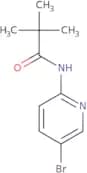
CAS:Prodotto controllato<p>2-Oxo-3-hydroxy-N-methyl-N-propyl D-lysergamide (2OMD) is a metabolite of the drug lysergic acid diethylamide (LSD). It can be detected in urine, blood, and saliva. The detection time in urine is approximately 3 hours after ingestion. 2OMD can be found by chromatography techniques, such as thin layer chromatography or high performance liquid chromatography. It can also be detected using mass spectrometric techniques, such as gas chromatography/mass spectrometry or liquid chromatography/mass spectrometry. 2OMD can also be detected in urine samples by calibrations with standards of known concentration and by the use of analytical methods such as gas chromatography/mass spectroscopy.</p>Formula:C20H25N3O3Purezza:Min. 95%Peso molecolare:355.43 g/molN-(5-bromo-pyridin-2-yl)-2,2-dimethyl-propionamide
CAS:Please enquire for more information about N-(5-bromo-pyridin-2-yl)-2,2-dimethyl-propionamide including the price, delivery time and more detailed product information at the technical inquiry form on this pageFormula:C10H13BrN2OPurezza:Min. 95%Peso molecolare:257.13 g/mol5-Diazoimidazole-4-carboxamide
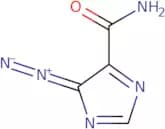
CAS:<p>5-Diazoimidazole-4-carboxamide is an inhibitor of energy metabolism. It was found that dacarbazine, a drug used to treat cancer, and 5-diazoimidazole-4-carboxamide form a reversible complex. The formation of this complex leads to the irreversible inhibition of cellular respiration and cell lysis. This drug has been shown to be effective against malignant melanoma cells in animals and can be used as a photoinitiator for polymerization. 5-Diazoimidazole-4-carboxamide has also been shown to have an inhibitory effect on blood pressure in animals.</p>Formula:C4H3N5OPurezza:Min. 95 Area-%Colore e forma:PowderPeso molecolare:137.1 g/molN,N'-Dimethylethanebis(thioamide)
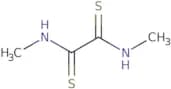
CAS:<p>N,N'-Dimethylethanebis(thioamide) is a ligand that binds to the metal rhenium. It has been shown to be an efficient catalyst for the oxidation of nitrates and organic compounds. N,N'-Dimethylethanebis(thioamide) is also used as a fertility agent in oral doses because it can increase the production of sperm in males and ovulation in females. The vibrational spectra of this compound show strong intermolecular hydrogen bonds with halogens and nitrogen atoms. This ligand has been shown to have high affinity for metal ions such as rhenium due to its chelate ring structure.</p>Formula:C4H8N2S2Purezza:Min. 95%Peso molecolare:148.25 g/mol7-Phenylacetamide-3-chloromethyl-3-cephem-4-carboxylic acid diphenylmethyl ester
CAS:<p>7-Phenylacetamide-3-chloromethyl-3-cephem-4-carboxylic acid diphenylmethyl ester is an organic solution that is used in the detoxification of chemical substances. It has a hydroxyl group and is soluble in nonpolar solvents. 7PAMC has been shown to be effective against bone lesions caused by acylation reactions. This drug also binds to the enzyme called cytochrome P450, which is involved in the metabolism of many drugs. It also inhibits bacterial growth by binding to DNA gyrase and topoisomerase IV, enzymes that maintain bacterial DNA integrity. The particle size of this drug is small, with a diameter of less than 10 microns. 7PAMC has a viscosity of 1 cps at 25°C and a melting point of 129°C.</p>Formula:C29H25ClN2O4SPurezza:Min. 95%Peso molecolare:533.04 g/mol2-Hydroxy-N-1H-1,2,4-triazol-3-ylbenzamide
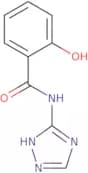
CAS:<p>2-Hydroxy-N-1H-1,2,4-triazol-3-ylbenzamide is a synthetic product that is a white crystalline solid. It has a melting point of 105°C and an average particle diameter of 3.5 nm. This compound is used as a precursor to produce the peroxide 2,2'-dihydroxybenzophenone, which can be used in the synthesis of other organic compounds. It can also be used in the production of amides and quaternary ammonium salts. 2-Hydroxy-N-1H-1,2,4-triazol-3-ylbenzamide is structurally similar to hydrotalcite and hydroxyl group which are both natural products found in nature.</p>Formula:C9H8N4O2Purezza:Min. 95%Peso molecolare:204.19 g/mol2-Methylbenzenesulfonamide
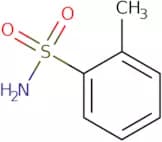
CAS:<p>2-Methylbenzenesulfonamide is a chemical compound that has been shown to induce apoptosis in bladder cancer cells. It is an acid conjugate of the drug 2-methylbenzene-1,4-sulfonamide and it can be used for the treatment of bladder cancer. The compound binds to the apoptosis protein and inhibits its function, leading to cell death. The cytotoxic effects of 2-methylbenzenesulfonamide have been shown in short term toxicity studies in rats. In long term animal studies, this compound showed no adverse effects on the liver or kidneys, but did show some indication of reproductive toxicity. 2-Methylbenzenesulfonamide is not mutagenic and does not affect male fertility when given orally at doses up to 2000 mg/kg body weight for 90 days. 2-Methylbenzenesulfonamide binds to receptors on the surface of cancerous cells and induces apoptosis by inhib</p>Formula:C7H9NO2SPurezza:Min. 95%Peso molecolare:171.0354N-Desmethyl loperamide
CAS:<p>N-Desmethyl loperamide is a prodrug of loperamide, which is a peripherally acting μ-opioid receptor agonist. It has been shown to be effective in reducing the uptake of radiation in wild-type mice. This drug also inhibits p-glycoprotein (p-gp), and has been shown to reduce the uptake of pyridinium ions and amide substrates. N-Desmethyl loperamide has been shown to have anticancer properties, including resistance to radiation, inhibition of tumor growth and metastasis, and induction of apoptosis, which may be due to its ability to inhibit cellular proliferation and induce cell death. The mechanism by which this drug functions is not yet clear but it may involve inhibition of the expression or function of p-gp or other efflux pumps in cells that are sensitive to these drugs.</p>Formula:C28H31ClN2O2Purezza:Min. 95%Peso molecolare:463.01 g/molN-[4-Amino-3-(trifluoromethyl)phenyl]-2-methylpropanamide
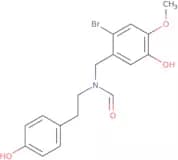
CAS:<p>Please enquire for more information about N-[4-Amino-3-(trifluoromethyl)phenyl]-2-methylpropanamide including the price, delivery time and more detailed product information at the technical inquiry form on this page</p>Formula:C11H13F3N2OPurezza:Min. 95%Peso molecolare:246.23 g/molN-(p-Hydroxyphenethyl)-N-(2-bromo-5-hydroxy-4-methoxybenzyl)formamide
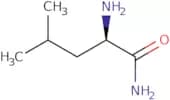
CAS:Prodotto controllato<p>N-(p-Hydroxyphenethyl)-N-(2-bromo-5-hydroxy-4-methoxybenzyl)formamide is an anticancer drug that belongs to the class of phenethyl derivatives. It is a radiosensitizer that inhibits DNA and RNA synthesis, leading to cancer cell death. The drug has been shown to have a chiral center and two enantiomers, with the (S)-enantiomer being more active than the (R)-enantiomer. N-(p-Hydroxyphenethyl)-N-(2-bromo-5-hydroxy-4-methoxybenzyl)formamide has been shown to be effective in animal models for brain tumors and breast cancer cells. It has also been shown to be effective against leukemia cells, which are resistant to other treatments. N-(p-Hydroxyphenethyl)-N-(2-bromo-5-hydroxy-4</p>Formula:C17H18BrNO4Purezza:Min. 95%Peso molecolare:380.23 g/molD-Leucine amide
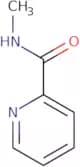
CAS:<p>D-Leucine amide is a hydrophobic, carboxyamide amino acid that is found in the fungus Ochrobactrum anthropi. D-Leucine amide has been shown to catalyze the formation of tripeptides, such as d-alanine and d-tryptophan, from their monomers. The presence of this compound enhances the expression of genes encoding proteins involved in the synthesis of these amino acids. This compound also has been shown to enhance gene analysis by increasing the stability of DNA and RNA molecules.</p>Formula:C6H14N2OPurezza:Min. 95%Peso molecolare:130.19 g/molN-Methyl picolinamide
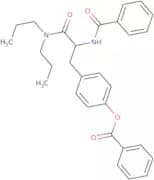
CAS:N-Methyl picolinamide is a novel anticancer agent that inhibits the activity of BCR-ABL kinase. It has been shown to be effective against human colon cancer cells (HCT116) and breast cancer cells (MCF-7). N-Methyl picolinamide binds to the ATP binding site of BCR-ABL kinase, inhibiting its enzymatic activity. The compound also binds to annexin II and blocks cell cycle progression at G2/M phase. The chemical structure of N-Methyl picolinamide includes an amide group, which may lead to low bioavailability. This drug has significant inhibitory activities against nitrogen atoms and inhibition constants for both the A and B forms of the enzyme.Formula:C7H8N2OPurezza:Min. 95%Colore e forma:Colorless PowderPeso molecolare:136.15 g/molalpha-(Benzoylamino)-4-(benzoyloxy)-N,N-dipropylbenzenepropanamide
CAS:<p>Please enquire for more information about alpha-(Benzoylamino)-4-(benzoyloxy)-N,N-dipropylbenzenepropanamide including the price, delivery time and more detailed product information at the technical inquiry form on this page</p>Formula:C29H32N2O4Purezza:Min. 95%Peso molecolare:472.58 g/molL-Glutamic acid gamma-tert-butyl ester alpha-amide hydrochloride
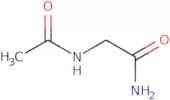
CAS:<p>Please enquire for more information about L-Glutamic acid gamma-tert-butyl ester alpha-amide hydrochloride including the price, delivery time and more detailed product information at the technical inquiry form on this page</p>Formula:C9H18N2O3·HClPurezza:Min. 95%Peso molecolare:238.71 g/molN-Acetylglycinamide
CAS:Prodotto controllato<p>N-Acetylglycinamide is an amide that is structurally similar to the amino acid glycine. It has been shown to have anti-inflammatory properties by inhibiting prostaglandin synthesis in vitro. In vivo, N-acetylglycinamide is metabolized and excreted as the non-polar solvents n-acetylglycine and chloride. This amide is soluble in non-polar solvents such as chloroform, dichloromethane, or ether. N-acetylglycinamide also has a pairwise orientational order with respect to solvent molecules and exhibits a low degree of hydrogen bonding interactions with water molecules.</p>Purezza:Min. 95%N-(4-Aminophenyl)butanamide
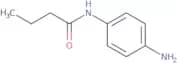
CAS:<p>Please enquire for more information about N-(4-Aminophenyl)butanamide including the price, delivery time and more detailed product information at the technical inquiry form on this page</p>Formula:C10H14N2OPurezza:Min. 95%Peso molecolare:178.23 g/molOxamide
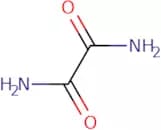
CAS:<p>Oxamide is a chemical compound with the molecular formula CHNO. It is a white solid that is moderately soluble in water and alcohol, but not in ether. Oxamide has been shown to have antioxidative properties and to inhibit the formation of reactive oxygen species. This drug also has an effect on thermal expansion and on the blood flow rate in human serum.</p>Formula:C2H4N2O2Purezza:Min. 95%Peso molecolare:88.07 g/mol3-(2-Aminoethyl)-N-methyl-1H-indole-5-methanesulfonamide
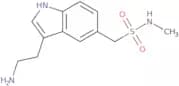
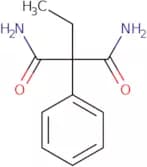
CAS:<p>3-(2-Aminoethyl)-N-methyl-1H-indole-5-methanesulfonamide (AMIS) is an intermediate in the preparation of medicaments. It is a stable process and can be used as an intermediate for other compounds. AMIS is prepared by reacting methanesulfonic acid with methanol and ammonium carbonate, which produces methanesulfonamide, succinic acid and ammonium hydroxide. The reaction liquid is then heated to produce a crystalline solid. The crystals are then recrystallized to yield AMIS as a white solid.</p>Formula:C12H17N3O2SPurezza:Min. 95%Colore e forma:Off-White To Beige To Light Brown SolidPeso molecolare:267.35 g/mol2-Ethyl-2-phenylmalonamide
CAS:2-Ethyl-2-phenylmalonamide (2-EPMA) is a metabolite of primidone that acts as an inhibitor of glutamate dehydrogenase and may be used in the treatment of epilepsy. It has been shown to be effective in treating seizures caused by carbamazepine, phenobarbital, or phenytoin. 2-EPMA is also used to measure enzyme activities in serum, which can be used as a diagnostic tool for liver diseases. 2-EPMA is typically prepared for use as an enzyme inhibitor by diluting it with high salt or human serum. This compound may have carcinogenic potential and should not be administered with single doses greater than 100 mg/kg body weight. 2-EPMA interacts with many other drugs such as phenobarbital, phenytoin, and carbamazepine.Formula:C11H14N2O2Purezza:Min. 95%Peso molecolare:206.24 g/mol


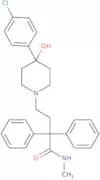
![N-[4-Amino-3-(trifluoromethyl)phenyl]-2-methylpropanamide](/_next/image/?url=https%3A%2Fstatic.cymitquimica.com%2Fproducts%2F3D%2Fthumb-webp%2FFA17485.webp&w=3840&q=75)