


Aldeidi
Gli aldeidi sono composti organici che contengono un gruppo carbonilico (C=O) legato ad almeno un atomo di idrogeno. Questi composti versatili sono fondamentali in varie reazioni chimiche, tra cui ossidazione, riduzione e addizione nucleofila. Gli aldeidi sono building blocks essenziali nella sintesi di prodotti farmaceutici, fragranze e polimeri. Presso CymitQuimica, offriamo una vasta selezione di aldeidi di alta qualità per supportare le vostre applicazioni di ricerca e industriali.
Trovati 8551 prodotti di "Aldeidi"
Ordinare per
Purezza (%)
0
100
|
0
|
50
|
90
|
95
|
100
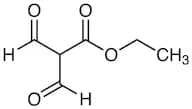
Ethyl Diformylacetate
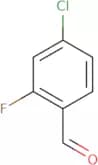
CAS:Formula:C6H8O4Purezza:>97.0%(T)Colore e forma:Colorless to Light yellow to Light orange clear liquidPeso molecolare:144.134-Chloro-2-fluorobenzaldehyde
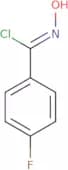
CAS:<p>4-Chloro-2-fluorobenzaldehyde is an aryl aldehyde that belongs to the class of chemical compounds known as chloroaldehydes. It can be synthesized from 4-chlorophenylacetic acid and 2,3-dichloroacetone. The compound is chiral and has two enantiomers. One enantiomer is less reactive than the other, which is more reactive. 4-Chloro-2-fluorobenzaldehyde can be used in the synthesis of a variety of organic compounds, such as pharmaceuticals, herbicides, pesticides, and dyes. This compound can also be used for microbial strain identification by liquid chromatography (LC) with ultraviolet (UV) detection. The yields are typically high (>90%), and the process can be performed at room temperature without any need for vacuum or pressure conditions.</p>Formula:C7H4ClFOPurezza:Min. 95%Colore e forma:PowderPeso molecolare:158.56 g/molα-Chloro-4-fluorobenzaldehyde oxime
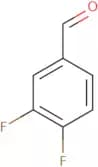
CAS:<p>Alpha-Chloro-4-fluorobenzaldehyde oxime is a selenium compound that can be stabilized with heat resistance and structuring. It is used as an additive in the plating of alloys, thermoplastics, and rubber products. Alpha-Chloro-4-fluorobenzaldehyde oxime has been shown to have anti-oxidant effects, which may be due to its ability to stabilize free radicals.</p>Formula:C7H5ClFNOPurezza:Min. 95%Peso molecolare:173.57 g/mol3,4-Difluorobenzaldehyde
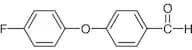
CAS:<p>3,4-Difluorobenzaldehyde is a chemical inhibitor that has been shown to be effective in the treatment of cancer. It inhibits the activity of an enzyme called tyrosine kinase by reacting with its functional group, leading to decreased production of growth factors and cell proliferation. 3,4-Difluorobenzaldehyde has been shown to have a high reaction yield in animal health studies, and it can be used as a drug for treating carcinoma cells. This compound also has strong liquid crystal properties and can be used as a component of diphenyl ether molecules. 3,4-Difluorobenzaldehyde is metabolized by the liver or excreted through urine. The pharmacokinetic properties of this compound are similar to those of other drugs that are metabolized by humans.</p>Formula:C7H4F2OPurezza:Min. 95%Colore e forma:Colorless Clear LiquidPeso molecolare:142.1 g/mol4-(4-Fluorophenoxy)benzaldehyde
CAS:Formula:C13H9FO2Purezza:>98.0%(GC)Colore e forma:White to Yellow to Orange powder to crystalPeso molecolare:216.212,3-Dimethyl-1H-indole-5-carbaldehyde
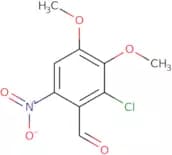
CAS:<p>2,3-Dimethyl-1H-indole-5-carbaldehyde is a high quality reagent that is used as a complex compound. It has been shown to be a useful intermediate and building block in the production of fine chemicals. 2,3-Dimethyl-1H-indole-5-carbaldehyde is also useful as a research chemical. This compound is versatile and can be used in reactions as an intermediate or building block. As a speciality chemical, it has various applications and is not limited to any specific area of research.</p>Formula:C11H11NOPurezza:Min. 95%Colore e forma:PowderPeso molecolare:173.21 g/mol2-Chloro-3,4-dimethoxy-6-nitrobenzaldehyde
CAS:<p>2-Chloro-3,4-dimethoxy-6-nitrobenzaldehyde is a fine chemical with a CAS number of 82330-54-9. It is a versatile building block that can be used as a reagent or intermediate for the production of other chemicals. This product has been shown to have many different reactions. It is useful in the synthesis of complex compounds and offers high quality and purity.</p>Formula:C9H8ClNO5Purezza:Min. 95%Colore e forma:PowderPeso molecolare:245.62 g/mol4-(Piperidin-1-ylmethyl)benzaldehyde
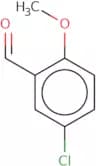
CAS:<p>4-(Piperidin-1-ylmethyl)benzaldehyde is a benzyl compound that has been shown to inhibit the activity of some imidazole compounds. It has been shown to have an agonistic effect on h3 receptors, and can be used for the treatment of anxiety disorders. This compound can be used in drug design as a linker or pharmacophore for other compounds. 4-(Piperidin-1-ylmethyl)benzaldehyde can be synthesized from commercially available materials, which makes it worth further exploration.</p>Formula:C13H17NOPurezza:Min. 95%Colore e forma:PowderPeso molecolare:203.28 g/mol5-Chloro-2-methoxybenzaldehyde
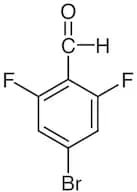
CAS:<p>5-Chloro-2-methoxybenzaldehyde is a potent inhibitor of the bacterial enzyme acetylcholinesterase. It has been shown to have an interaction with biomolecules, such as chalcones, and can be used in the manufacture of antibacterial agents. 5-Chloro-2-methoxybenzaldehyde has been found to have potent inhibitory activity against organocatalytic aldehydes and atypical aldehydes and can be used as an active ingredient in the synthesis of novel compounds with antibacterial activity.</p>Formula:C8H7ClO2Purezza:Min. 95%Colore e forma:PowderPeso molecolare:170.59 g/mol4-Bromo-2,6-difluorobenzaldehyde
CAS:Formula:C7H3BrF2OPurezza:>98.0%(GC)Colore e forma:White to Light yellow to Light orange powder to crystalPeso molecolare:221.00Benzo[d]oxazole-5-carbaldehyde
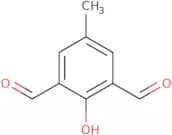
CAS:<p>Benzo[d]oxazole-5-carbaldehyde is a chemical compound that can be used as a building block in the synthesis of more complex molecules. It is a high quality, versatile building block with many applications. Benzo[d]oxazole-5-carbaldehyde can be used as a reagent in organic chemistry and as a reaction component in the synthesis of more complex compounds. This compound can also serve as an intermediate or scaffold for the synthesis of other compounds.</p>Formula:C8H5NO2Purezza:Min. 95%Colore e forma:White PowderPeso molecolare:147.13 g/mol2-Hydroxy-5-methylisophthalaldehyde
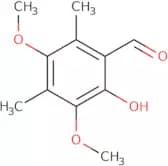
CAS:<p>2-Hydroxy-5-methylisophthalaldehyde is a tetranuclear coordination compound with a tridentate ligand. The ligand can bind to three metal ions in the same way as an octahedral geometry, but the fourth nitrogen atom is not coordinated and can be replaced by other ligands. Two of these compounds have been synthesized and their structures determined by x-ray crystallography. The ligands are planar and form hydrogen bonds, which contribute to the high stability of these compounds. These properties may be useful for biological studies, such as synchronous fluorescence and intramolecular hydrogen transfer, as well as for catalysis and chemical sensing.</p>Formula:C9H8O3Purezza:Min. 95%Colore e forma:PowderPeso molecolare:164.16 g/mol2-Hydroxy-4,6-dimethoxy-3,5-dimethylbenzaldehyde
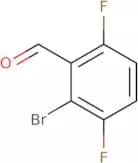
CAS:<p>2-Hydroxy-4,6-dimethoxy-3,5-dimethylbenzaldehyde is a versatile building block that can be used in research chemicals, reagents, and speciality chemicals. It is also a useful building block that can be used as a reaction component or scaffold for high-quality compounds. This chemical has been shown to have antihistamine properties with applications in treatment of allergies and asthma.</p>Formula:C11H14O4Purezza:Min. 95%Colore e forma:PowderPeso molecolare:210.23 g/mol2-Bromo-3,6-difluorobenzaldehyde
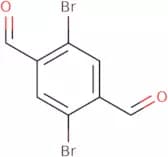
CAS:<p>2-Bromo-3,6-difluorobenzaldehyde is a versatile building block that is used in the synthesis of many complex compounds. It has been shown to be a useful intermediate and reaction component in organic synthesis. 2-Bromo-3,6-difluorobenzaldehyde can be used as a reagent or speciality chemical for research purposes. This compound has high quality and is a useful scaffold for the preparation of fine chemicals.</p>Formula:C7H3BrF2OPurezza:Min. 95%Colore e forma:Off-White PowderPeso molecolare:221 g/mol2,5-Dibromoterephthalaldehyde
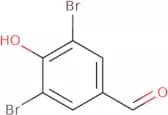
CAS:<p>2,5-Dibromoterephthalaldehyde is a red fluorescent compound that has been shown to have potential as a cancer therapy. The compound is able to bind to the electron acceptor 2,5-dibromoterephthalate (DBT) and can be used in photocatalytic reactions. It has been shown that 2,5-dibromoterephthalaldehyde can cause high levels of cell death in cancer cells with low levels of toxicity to healthy cells. This property may be due to its ability to target cancerous cells by binding with their mitochondria. The compound is also fluorescent and emits light when excited with UV light. 2,5-Dibromoterephthalaldehyde has been shown to form structured metallacycles in the presence of copper ions.<br>!--</p>Formula:C8H4Br2O2Purezza:Min. 95%Colore e forma:PowderPeso molecolare:291.92 g/mol3,5-Dibromo-4-hydroxybenzaldehyde
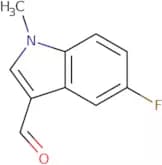
CAS:<p>3,5-Dibromo-4-hydroxybenzaldehyde is an aldehyde that is used as a precursor to other organic compounds. It can be produced using the efficient method of reacting 3,5-dibromo-4-hydroxybenzoic acid with sodium borohydride in methanol. The molecule has three hydroxymethyl groups and two functional groups. 3,5-Dibromo-4-hydroxybenzaldehyde is soluble in water and organic solvents such as ethanol and acetone. This compound has shown antibacterial activity against some strains of bacteria, including group P2 bacteria. The reaction yield for the synthesis of this compound is approximately 93%. The inhibitory activities of 3,5-dibromo-4-hydroxybenzaldehyde have been demonstrated against both Gram positive and Gram negative bacteria.</p>Formula:C7H4Br2O2Purezza:Min. 95%Colore e forma:PowderPeso molecolare:279.91 g/mol5-Fluoro-1-Methyl-1H-Indole-3-Carbaldehyde
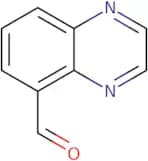
CAS:<p>5-Fluoro-1-Methyl-1H-Indole-3-Carbaldehyde is a high quality chemical that is used as a reagent, an intermediate for the synthesis of pharmaceuticals, and in the production of fine chemicals. 5FMICA is also a useful scaffold for developing valuable building blocks. This chemical has been shown to be a versatile building block for the synthesis of complex compounds. 5FMICA can be used as a reaction component for the preparation of speciality chemicals and research chemicals.</p>Formula:C10H8FNOPurezza:Min. 95%Colore e forma:PowderPeso molecolare:177.18 g/molQuinoxaline-5-carboxaldehyde
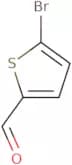
CAS:<p>Quinoxaline-5-carboxaldehyde is a versatile building block and reagent for organic chemistry. It is a complex compound that can be used as a research chemical or as a speciality chemical, with high quality and a useful scaffold. This compound has been shown to be an intermediate in the synthesis of other compounds, such as quinoxaline-5-carboxylic acid.</p>Formula:C9H6N2OPurezza:Min. 95%Colore e forma:Off-White PowderPeso molecolare:158.16 g/mol5-Bromo thiophene-2-aldehyde
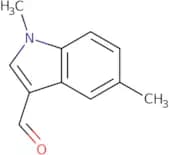
CAS:<p>5-Bromo thiophene-2-aldehyde is a trifluoroacetic acid derivative used as an activatable probe for the study of biomolecular interactions. This compound has been shown to be biocompatible and has a low cytotoxicity. 5-Bromo thiophene-2-aldehyde binds to malonic acid in the presence of x-ray radiation and forms a complex that can be detected by electrochemical impedance spectroscopy. The structure of this complex was determined by x-ray crystal structures. This probe is also able to bind to nitrogen atoms in proteins, which can be used to diagnose cancer resistance through protease activity. 5-Bromo thiophene-2-aldehyde is isolated as its hydrochloride salt, which can be purified with a suzuki coupling reaction.</p>Formula:C5H3BrOSPurezza:Min. 95%Colore e forma:Yellow PowderPeso molecolare:191.05 g/mol1,5-Dimethyl-1H-indole-3-carbaldehyde
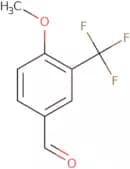
CAS:<p>1,5-Dimethyl-1H-indole-3-carbaldehyde is a useful building block for organic synthesis. It is an important reagent for the synthesis of complex compounds and it has been used as a versatile building block in organic chemistry. This compound can be used as a starting point for the preparation of other chemicals, such as pharmaceuticals, pesticides, and dyes. 1,5-Dimethyl-1H-indole-3-carbaldehyde is also a fine chemical that has been used for research purposes. There are no known commercial uses for this compound.</p>Formula:C11H11NOPurezza:Min. 95%Colore e forma:PowderPeso molecolare:173.21 g/mol4-Methoxy-3-(trifluoromethyl)benzaldehyde
CAS:<p>4-Methoxy-3-(trifluoromethyl)benzaldehyde is a fine chemical that can be used as a building block for pharmaceuticals and other organic compounds. It is also used in research for the synthesis of complex compounds. This chemical has been reported to be a useful intermediate or scaffold for organic syntheses. 4-Methoxy-3-(trifluoromethyl)benzaldehyde is soluble in water and ethanol, and insoluble in ether. It has a melting point of 140°C, boiling point of 249°C, density 1.096 g/cm³, and refractive index (20°C) 1.567.</p>Formula:C9H7F3O2Purezza:Min. 95%Peso molecolare:204.15 g/mol3-Oxo-3,4-dihydro-2H-pyrido[3,2-b][1,4]oxazine-6-carbaldehyde
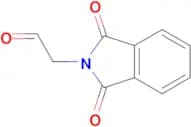
CAS:Purezza:95%Peso molecolare:178.1470032N-(2-Oxoethyl)phthalimide
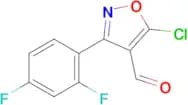
CAS:Formula:C10H7NO3Purezza:95.0%Colore e forma:SolidPeso molecolare:189.175-chloro-3-(2,4-difluorophenyl)-1,2-oxazole-4-carbaldehyde
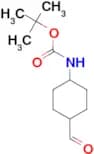
CAS:Formula:C10H4ClF2NO2Purezza:95.0%Peso molecolare:243.59(4-Formyl-cyclohexyl)-carbamic acid tert-butyl ester
CAS:Formula:C12H21NO3Purezza:95.0%Peso molecolare:227.3042,3-Dihydroxybenzaldehyde
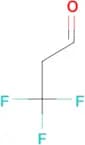
CAS:Formula:C7H6O3Purezza:95%Colore e forma:Solid, Beige powderPeso molecolare:138.1223,3,3-Trifluoropropanal (contains oligomers)
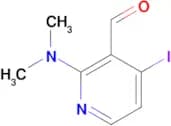
CAS:Formula:C3H3F3OPurezza:95%Colore e forma:Clear LiquidPeso molecolare:112.0512-Dimethylamino-4-iodo-3-pyridinecarboxaldehyde
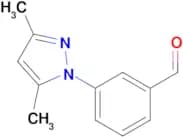
CAS:Formula:C8H9IN2OPurezza:98.0%Colore e forma:SolidPeso molecolare:276.0773-(3,5-Dimethyl-pyrazol-1-yl)-benzaldehyde
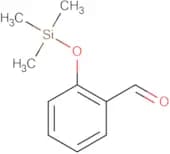
CAS:Formula:C12H12N2OPurezza:98+%Colore e forma:White powderPeso molecolare:200.2412-Trimethylsilyloxybenzaldehyde
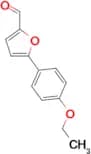
CAS:<p>S19899 - 2-Trimethylsilyloxybenzaldehyde</p>Formula:C10H14O2SiPurezza:95%Colore e forma:LiquidPeso molecolare:194.3055-(4-ethoxyphenyl)-2-furaldehyde
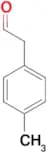
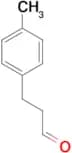
CAS:Formula:C13H12O3Purezza:95.0%Colore e forma:SolidPeso molecolare:216.236(4-Methylphenyl)acetaldehyde
CAS:Formula:C9H10OPurezza:95% (stabilized with Citric acid)Colore e forma:LiquidPeso molecolare:134.178[1,1′-Biphenyl]-3,3′,5,5′-tetracarbaldehyde
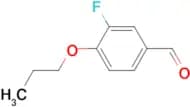
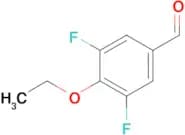
CAS:Purezza:95%Colore e forma:SolidPeso molecolare:266.25201423,5-Difluoro-4-ethoxybenzaldehyde
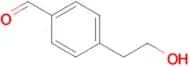
CAS:Formula:C9H8F2O2Purezza:≥95%Colore e forma:SolidPeso molecolare:186.1584-(2-Hydroxyethyl)benzaldehyde
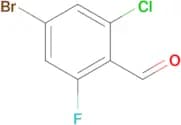
CAS:Formula:C9H10O2Purezza:95%Colore e forma:LiquidPeso molecolare:150.1774-Bromo-2-chloro-6-fluorobenzaldehyde
CAS:Formula:C7H3BrClFOPurezza:98%Colore e forma:SolidPeso molecolare:237.452-Amino-4-bromobenzaldehyde
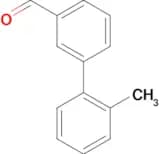
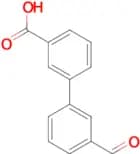
CAS:Formula:C7H6BrNOPurezza:95%Colore e forma:Solid, Yellow powderPeso molecolare:200.0353′-Formyl-biphenyl-3-carboxylic acid
CAS:Formula:C14H10O3Purezza:97%Colore e forma:SolidPeso molecolare:226.231[4-(3-formyl-2,5-dimethyl-1H-pyrrol-1-yl)phenoxy]acetic acid
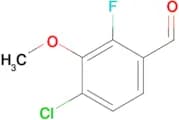
CAS:Formula:C15H15NO4Purezza:95.0%Peso molecolare:273.2884-Chloro-2-fluoro-3-methoxybenzaldehyde
CAS:Formula:C8H6ClFO2Purezza:≥95%Colore e forma:SolidPeso molecolare:188.582-Methyl-4-pyrrolidin-1-yl-benzaldehyde
CAS:Formula:C12H15NOPurezza:95.0%Colore e forma:SolidPeso molecolare:189.258Benzo[d]oxazole-5-carbaldehyde
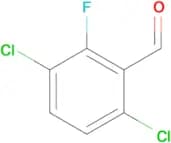
CAS:Formula:C8H5NO2Purezza:97%Colore e forma:SolidPeso molecolare:147.1333,6-Dichloro-2-fluorobenzaldehyde
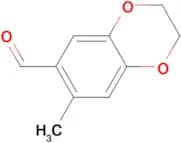
CAS:Formula:C7H3Cl2FOPurezza:≥95%Colore e forma:SolidPeso molecolare:1937-methyl-2,3-dihydro-1,4-benzodioxine-6-carbaldehyde
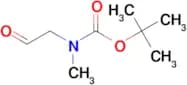
CAS:Formula:C10H10O3Purezza:98%Peso molecolare:178.187N-Boc-(Methylamino)acetaldehyde
CAS:Formula:C8H15NO3Purezza:94.0%Colore e forma:LiquidPeso molecolare:173.2124-(1-(Trifluoromethyl)cyclopropyl)benzaldehyde
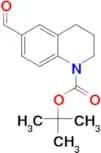
CAS:Formula:C11H9F3OPurezza:95.0%Colore e forma:No data available.Peso molecolare:214.187TERT-BUTYL 6-FORMYL-3,4-DIHYDROQUINOLINE-1(2H)-CARBOXYLATE
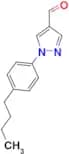
CAS:Formula:C15H19NO3Purezza:95.0%Peso molecolare:261.3211-(4-butylphenyl)-1H-pyrazole-4-carbaldehyde
CAS:Formula:C14H16N2OPurezza:95.0%Peso molecolare:228.295N-Boc-4-Piperidineacetaldehyde
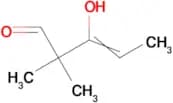
CAS:Formula:C12H21NO3Purezza:95.0%Colore e forma:LiquidPeso molecolare:227.3042,2-Dimethyl-3-oxopentanal
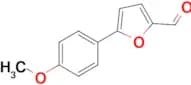
CAS:Formula:C7H12O2Purezza:98% (stabilized with Citric acid)Peso molecolare:128.1715-(4-Methoxy-phenyl)-furan-2-carbaldehyde
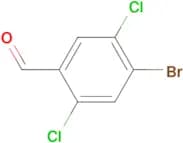
CAS:Formula:C12H10O3Purezza:95%Colore e forma:SolidPeso molecolare:202.2094-Bromo-2,5-dichlorobenzaldehyde
CAS:Formula:C7H3BrCl2OPurezza:90.0%Colore e forma:SolidPeso molecolare:253.91-[2-(4-fluorophenoxy)ethyl]-1H-indole-3-carbaldehyde
CAS:Formula:C17H14FNO2Purezza:95.0%Peso molecolare:283.302




![Benzo[d]oxazole-5-carbaldehyde](/_next/image/?url=https%3A%2Fstatic.cymitquimica.com%2Fproducts%2F3D%2Fthumb-webp%2FFB143425.webp&w=3840&q=75)

![3-Oxo-3,4-dihydro-2H-pyrido[3,2-b][1,4]oxazine-6-carbaldehyde](/_next/image/?url=https%3A%2Fstatic.cymitquimica.com%2Fproducts%2F10%2Fthumb-webp%2FF608156.webp&w=3840&q=75)



![4-[METHYL(4-METHYLPHENYL)AMINO]BENZALDEHYDE](/_next/image/?url=https%3A%2Fstatic.cymitquimica.com%2Fproducts%2F10%2Fthumb-webp%2FF505627.webp&w=3840&q=75)


![[1,1′-Biphenyl]-3,3′,5,5′-tetracarbaldehyde](/_next/image/?url=https%3A%2Fstatic.cymitquimica.com%2Fproducts%2F10%2Fthumb-webp%2FF606560.webp&w=3840&q=75)
![6-Fluoroimidazo[1,2-a]pyridine-2-carbaldehyde](/_next/image/?url=https%3A%2Fstatic.cymitquimica.com%2Fproducts%2F10%2Fthumb-webp%2FF605636.webp&w=3840&q=75)

![6-Fluoroimidazo[1,2-a]pyridine-3-carbaldehyde](/_next/image/?url=https%3A%2Fstatic.cymitquimica.com%2Fproducts%2F10%2Fthumb-webp%2FF611942.webp&w=3840&q=75)


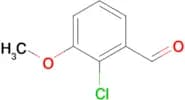


![[4-(3-formyl-2,5-dimethyl-1H-pyrrol-1-yl)phenoxy]acetic acid](/_next/image/?url=https%3A%2Fstatic.cymitquimica.com%2Fproducts%2F10%2Fthumb-webp%2FF315142.webp&w=3840&q=75)

![Benzo[d]oxazole-5-carbaldehyde](/_next/image/?url=https%3A%2Fstatic.cymitquimica.com%2Fproducts%2F10%2Fthumb-webp%2FF220705.webp&w=3840&q=75)




![6-FLUOROBENZO[D]ISOXAZOLE-3-CARBALDEHYDE](/_next/image/?url=https%3A%2Fstatic.cymitquimica.com%2Fproducts%2F10%2Fthumb-webp%2FF536222.webp&w=3840&q=75)


![2-Formyl-[1,1′-biphenyl]-4,4′-dicarboxylic acid](/_next/image/?url=https%3A%2Fstatic.cymitquimica.com%2Fproducts%2F10%2Fthumb-webp%2FF786238.webp&w=3840&q=75)
![1H-Pyrrolo[3,2-b]pyridine-6-carbaldehyde](/_next/image/?url=https%3A%2Fstatic.cymitquimica.com%2Fproducts%2F10%2Fthumb-webp%2FF608126.webp&w=3840&q=75)
![1-[2-(4-fluorophenoxy)ethyl]-1H-indole-3-carbaldehyde](/_next/image/?url=https%3A%2Fstatic.cymitquimica.com%2Fproducts%2F10%2Fthumb-webp%2FF314910.webp&w=3840&q=75)