Aldeidi
Trovati 8576 prodotti di "Aldeidi"
4-Hydroxy-3,5-dimethoxybenzaldehyde
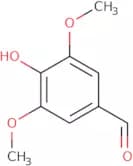
CAS:4-Hydroxy-3,5-dimethoxybenzaldehyde (4HMB) is a phenolic compound that can be obtained from lignin. 4HMB is the precursor in the synthesis of vanillin, which has a characteristic flavor and odor. It is also used as an additive in perfumes. The compound is found naturally in plants, such as in the bark of cinchona trees, and can be extracted using preparative high performance liquid chromatography (HPLC). 4HMB can be synthesized by reacting p-hydroxybenzoic acid with 3,4,5-trimethoxybenzyl alcohol in the presence of copper chloride. This chemical reaction results in an aldehyde form of the molecule. 4HMB binds to sodium salts to form a water soluble salt that can be used for wastewater treatment. It also has antioxidant properties due to its ability to scavenge free radicals. The enzyme activities of 4HMB are not wellFormula:C9H10O4Purezza:Min. 95%Colore e forma:Off-White PowderPeso molecolare:182.17 g/mol8-Hydroxy-5-nitroquinoline-2-carbaldehyde
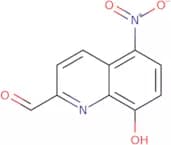
CAS:8-Hydroxy-5-nitroquinoline-2-carbaldehyde is a high quality, versatile building block that can be used as a reaction intermediate or to synthesize heterocycles. It is also a useful scaffold for the synthesis of complex compounds. The CAS number of this chemical is 884497-63-6.Formula:C10H6N2O4Purezza:Min. 95%Colore e forma:PowderPeso molecolare:218.17 g/mol7-Isopropyl-1,4-dimethylazulene-3-carboxaldehyde
CAS:Formula:C16H18OPurezza:>97.0%(GC)Colore e forma:Gray to Dark purple to Black powder to crystalPeso molecolare:226.322,3-Dimethyl-1H-indole-5-carbaldehyde
CAS:2,3-Dimethyl-1H-indole-5-carbaldehyde is a high quality reagent that is used as a complex compound. It has been shown to be a useful intermediate and building block in the production of fine chemicals. 2,3-Dimethyl-1H-indole-5-carbaldehyde is also useful as a research chemical. This compound is versatile and can be used in reactions as an intermediate or building block. As a speciality chemical, it has various applications and is not limited to any specific area of research.Formula:C11H11NOPurezza:Min. 95%Colore e forma:PowderPeso molecolare:173.21 g/mol3-(4-tert-Butylphenyl)isobutyraldehyde
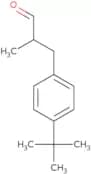
CAS:3-(4-tert-Butylphenyl)isobutyraldehyde is a metal hydroxide that is synthesized by the asymmetric synthesis of 4-tert-butylbenzoic acid. The compound has been shown to be effective in increasing the mitochondrial membrane potential and preventing oxidative damage in liver cells. 3-(4-tert-Butylphenyl)isobutyraldehyde has been detected in urine samples and has been shown to be metabolized by human metabolism, with fatty acids and diphenyl ether as metabolites.Formula:C14H20OPurezza:Min. 95%Colore e forma:Clear LiquidPeso molecolare:204.31 g/mol1-Ethyl-3-methyl-1H-pyrazole-4-carbaldehyde
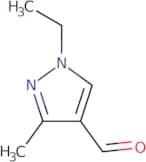
CAS:1-Ethyl-3-methyl-1H-pyrazole-4-carbaldehyde is a reactive intermediate that is used as a reagent in organic synthesis. It is also a useful scaffold for the synthesis of complex compounds, such as pharmaceuticals and agrochemicals. 1-Ethyl-3-methyl-1H-pyrazole-4-carbaldehyde has been used as an intermediate to synthesize the antihistamine drug terfenadine and the insecticide carbofuran. This chemical is manufactured by reacting ethyl pyruvate with anhydrous hydrazine.
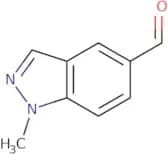
Formula:C7H10N2OPurezza:Min. 95%Colore e forma:Yellow PowderPeso molecolare:138.17 g/mol1-Methyl-1H-indazole-5-carbaldehyde
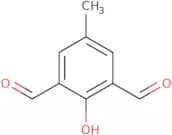
CAS:1-Methyl-1H-indazole-5-carbaldehyde is a selective inhibitor of the enzyme lysine acetyltransferase (KAT). KAT inhibitors are a new class of compounds that have been shown to be effective in inhibiting the growth of acute myeloid leukaemia cells, with little effect on other cells. 1-Methyl-1H-indazole-5-carbaldehyde has potent inhibitory activity against human myeloid leukemia cells and does not affect the viability of normal human erythrocytes or peripheral blood mononuclear cells. This compound is reversible, meaning it can be turned off when it is no longer needed. 1-Methyl-1H-indazole-5-carbaldehyde has also been shown to inhibit maoA and thymidine phosphorylase in vitro.Formula:C9H8N2OPurezza:Min. 95%Colore e forma:PowderPeso molecolare:160.17 g/mol2-Hydroxy-5-methylisophthalaldehyde
CAS:2-Hydroxy-5-methylisophthalaldehyde is a tetranuclear coordination compound with a tridentate ligand. The ligand can bind to three metal ions in the same way as an octahedral geometry, but the fourth nitrogen atom is not coordinated and can be replaced by other ligands. Two of these compounds have been synthesized and their structures determined by x-ray crystallography. The ligands are planar and form hydrogen bonds, which contribute to the high stability of these compounds. These properties may be useful for biological studies, such as synchronous fluorescence and intramolecular hydrogen transfer, as well as for catalysis and chemical sensing.Formula:C9H8O3Purezza:Min. 95%Colore e forma:PowderPeso molecolare:164.16 g/mol(E)-2-Hexadecenal
CAS:(E)-2-Hexadecenal is an asymmetric molecule that is a reactive and carcinogenic compound. It has been shown to induce c-Jun phosphorylation in the human carcinoma cell lines, leading to physiological changes. (E)-2-Hexadecenal has also been used to induce chemiluminescence in vitro, which can be used for analytical chemistry. It is made by a hydroxyl group on a fatty acid with a biofuel reaction. This molecule may also have pro-apoptotic properties due to its chemical biology and ability to affect mitochondrial membrane potentials.
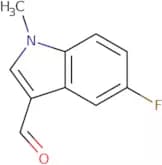
Formula:C16H30OPurezza:Min. 95%Colore e forma:PowderPeso molecolare:238.41 g/mol5-Fluoro-1-Methyl-1H-Indole-3-Carbaldehyde
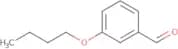
CAS:5-Fluoro-1-Methyl-1H-Indole-3-Carbaldehyde is a high quality chemical that is used as a reagent, an intermediate for the synthesis of pharmaceuticals, and in the production of fine chemicals. 5FMICA is also a useful scaffold for developing valuable building blocks. This chemical has been shown to be a versatile building block for the synthesis of complex compounds. 5FMICA can be used as a reaction component for the preparation of speciality chemicals and research chemicals.Formula:C10H8FNOPurezza:Min. 95%Colore e forma:PowderPeso molecolare:177.18 g/mol3-Butoxybenzaldehyde
CAS:3-Butoxybenzaldehyde is an electron donor. It is used in the synthesis of heterocyclic compounds and as a reagent or postulated intermediate in the formation of epoxides, ethylene, and peroxides. 3-Butoxybenzaldehyde also functions as a precursor to other oxygenated compounds. 3-Butoxybenzaldehyde has been shown to undergo both aldol condensation and interaction with other compounds.
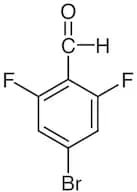
Formula:C11H14O2Purezza:Min. 95%Colore e forma:PowderPeso molecolare:178.23 g/mol4-Bromo-2,6-difluorobenzaldehyde
CAS:Formula:C7H3BrF2OPurezza:>98.0%(GC)Colore e forma:White to Light yellow to Light orange powder to crystalPeso molecolare:221.002,6-Dimethylbenzaldehyde
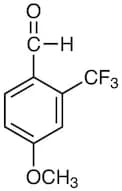
CAS:2,6-Dimethylbenzaldehyde is a colorless liquid with a sweet odor. It is used in the synthesis of fatty acids and as an intermediate for other compounds. This chemical has significant cytotoxicity against leukemia cells, and is used in the production of acrylonitrile. 2,6-Dimethylbenzaldehyde can be synthesized by reacting an amine with an acyl chloride, followed by hydrolysis of the resulting ester. A contactor is usually added to facilitate the reaction. The reaction can also be carried out in the presence of a phosphorane or organic solvent. 2,6-Dimethylbenzaldehyde can be hydrogenated to produce 2,4-dimethylaniline and 2,4,6-trimethylaniline.Formula:C9H10OPurezza:Min. 95%Colore e forma:Clear White Solid Or Liquid (May Vary)Peso molecolare:134.18 g/mol4-Methoxy-2-(trifluoromethyl)benzaldehyde
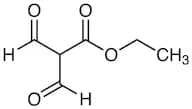
CAS:Formula:C9H7F3O2Purezza:>97.0%(GC)Colore e forma:White to Almost white powder to lumpPeso molecolare:204.15Ethyl Diformylacetate
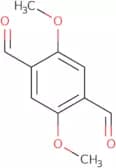
CAS:Formula:C6H8O4Purezza:>97.0%(T)Colore e forma:Colorless to Light yellow to Light orange clear liquidPeso molecolare:144.132,5-Dimethoxyterephthalaldehyde
CAS:2,5-Dimethoxyterephthalaldehyde (2,5DMP) is a protonated molecule that can be used in sample preparation for analytical methods. 2,5DMP has been used as a dispersive solid-phase extraction solvent and an adsorbent material. This compound has been shown to exhibit strong hydrophobic interactions with the carbonyl group of aromatic compounds and to have a high chemical stability. 2,5DMP also has an electrochemical impedance spectroscopy (EIS) property that can be used for monitoring the electrochemical behaviour of molecules and magnetic particles in the solution. The EIS property has been enhanced by hydrogen bonding between the protonated molecules and metal ions in the solution.Formula:C10H10O4Purezza:Min. 95%Colore e forma:PowderPeso molecolare:194.18 g/mol6-Hydroxy-2-naphthaldehyde
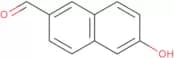
CAS:6-Hydroxy-2-naphthaldehyde is a reactive compound that is used to measure the fluorescence resonance of mitochondria. It is a fluorophore that has been used as a probe for the measurement of membrane permeability, and as a hydroxyl group it can be converted into 6-hydroxy-2-naphthalenecarboxylic acid which is used in the production of dyes. 6-Hydroxy-2-naphthaldehyde has been shown to have congestive heart effects in mice, but this effect may be due to its ability to induce naphthalene and formamide.Formula:C11H8O2Purezza:Min. 95%Peso molecolare:172.18 g/mol5-Chloro-2-(trifluoromethyl)benzaldehyde
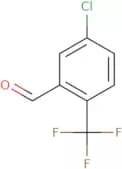
CAS:5-Chloro-2-(trifluoromethyl)benzaldehyde is a fine chemical that can be used as a versatile building block for organic synthesis. It has CAS number 90381-07-0 and is an intermediate in the synthesis of a variety of organic compounds. 5-Chloro-2-(trifluoromethyl)benzaldehyde is also an effective reagent for the preparation of complex compounds. It is soluble in polar solvents, such as chloroform, ethanol, ether, acetone, and benzene.Formula:C8H4ClF3OPurezza:Min. 95%Peso molecolare:208.56 g/molα-Chloro-4-fluorobenzaldehyde oxime
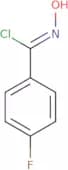
CAS:Alpha-Chloro-4-fluorobenzaldehyde oxime is a selenium compound that can be stabilized with heat resistance and structuring. It is used as an additive in the plating of alloys, thermoplastics, and rubber products. Alpha-Chloro-4-fluorobenzaldehyde oxime has been shown to have anti-oxidant effects, which may be due to its ability to stabilize free radicals.Formula:C7H5ClFNOPurezza:Min. 95%Peso molecolare:173.57 g/mol5-Chloro-3-nitrosalicylaldehyde
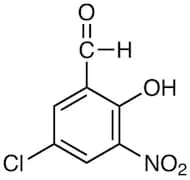
CAS:Formula:C7H4ClNO4Purezza:>98.0%(GC)(T)Colore e forma:Light orange to Yellow to Green powder to crystalPeso molecolare:201.56