Aldeidi
Gli aldeidi sono composti organici che contengono un gruppo carbonilico (C=O) legato ad almeno un atomo di idrogeno. Questi composti versatili sono fondamentali in varie reazioni chimiche, tra cui ossidazione, riduzione e addizione nucleofila. Gli aldeidi sono building blocks essenziali nella sintesi di prodotti farmaceutici, fragranze e polimeri. Presso CymitQuimica, offriamo una vasta selezione di aldeidi di alta qualità per supportare le vostre applicazioni di ricerca e industriali.
Trovati 8573 prodotti di "Aldeidi"
Ordinare per
Purezza (%)
0
100
|
0
|
50
|
90
|
95
|
100
Butyraldehyde
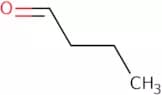
CAS:<p>Butyraldehyde is a colorless to yellowish liquid with a strong, pungent odor. It is soluble in water and has an acidic pH of 2.6-3.0. Butyraldehyde is used as a chemical intermediate for the production of polyvinyl acetate and can be made by reacting acetic acid with butanol or butyl acetate. This chemical reacts with human serum albumin at low concentrations and may have biological properties such as catalyzing the conversion of picolinic acid to nicotinic acid, which aids in the prevention against infectious diseases. Butyraldehyde also has synergistic effects when used with picolinic acid, increasing its effectiveness in combating infection.</p>Formula:C4H8OPurezza:Min. 95%Colore e forma:Clear LiquidPeso molecolare:72.11 g/mol5,6,7,8-Tetrahydronaphthalene-1-carbaldehyde
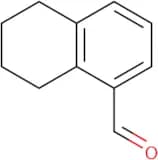
CAS:<p>Please enquire for more information about 5,6,7,8-Tetrahydronaphthalene-1-carbaldehyde including the price, delivery time and more detailed product information at the technical inquiry form on this page</p>Formula:C11H12OPurezza:Min. 95%Colore e forma:Clear LiquidPeso molecolare:160.21 g/mol2-Cyanopyridine-4-carboxaldehyde
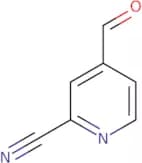
CAS:<p>Please enquire for more information about 2-Cyanopyridine-4-carboxaldehyde including the price, delivery time and more detailed product information at the technical inquiry form on this page</p>Formula:C7H4N2OPurezza:Min. 95%Peso molecolare:132.12 g/mol3-Methyl-p-anizaldehyde
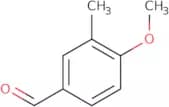
CAS:<p>3-Methyl-p-anizaldehyde is a vanillyl alcohol, which is a natural compound that can be found in vanilla beans. It has been used in the synthesis of vanillic acid and lactams. 3-Methyl-p-anizaldehyde has been shown to react with alkyl halides to form alkylated products. These reactions are catalyzed by an enzyme called alcohol dehydrogenase. This enzyme binds to the hydroxyl group on the 3 position of the vanillin molecule, which is then oxidized to form a functional group called an acetate ester. The reaction occurs at low temperatures and can result in optical activity if it produces a chiral product. 3-Methyl-p-anizaldehyde also reacts with ecteinascidins, which are marine natural products that have potent cytotoxic properties against cancer cells.</p>Formula:C9H10O2Purezza:Min. 95%Peso molecolare:150.17 g/molFerrocenecarboxaldehyde
CAS:<p>Ferrocenecarboxaldehyde is a fatty acid with a ferrocene carboxylic acid group. It has been shown to have antimicrobial activity against bacteria, fungi, and yeast when it was mixed with nitric acid. Ferrocenecarboxaldehyde can be synthesized by reacting ferrocene with glycerol in the presence of sulfuric acid. The reaction mechanism of this synthesis is as follows: The structural analysis of ferrocenecarboxaldehyde has been studied using FT-IR spectroscopy and NMR spectroscopy. The chemical structure of ferrocenecarboxaldehyde is as follows: The asymmetric synthesis of ferrocenecarboxaldehyde is shown below:</p>Formula:C11H10FeOPurezza:Min. 95%Colore e forma:PowderPeso molecolare:214.04 g/molTacrolimus methyl acryl aldehyde
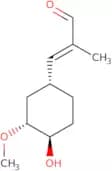
CAS:Please enquire for more information about Tacrolimus methyl acryl aldehyde including the price, delivery time and more detailed product information at the technical inquiry form on this pageFormula:C11H18O3Purezza:Min. 95%Peso molecolare:198.26 g/mol5-(1H-Pyrazol-5-yl)thiophene-2-carbaldehyde
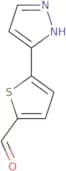
CAS:<p>Please enquire for more information about 5-(1H-Pyrazol-5-yl)thiophene-2-carbaldehyde including the price, delivery time and more detailed product information at the technical inquiry form on this page</p>Formula:C8H6N2OSPurezza:Min. 95%Peso molecolare:178.21 g/mol4-(Dimethylamino)-2-hydroxybenzaldehyde
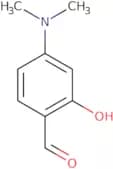
CAS:<p>4-(Dimethylamino)-2-hydroxybenzaldehyde (DMAA) is an anticancer agent that has been shown to enhance the antitumor effect of sodium succinate. DMAA binds to the tetradentate site of the DNA and prevents it from binding with a transcription factor, which may lead to cancer cell death. DMAA has low detection in urine and blood, making it difficult to detect its presence in patients. DMAA also has no known complexation partners, making it difficult for the body to excrete this drug. DMAA is not carcinogenic or mutagenic. It is used as a fluorescent probe for detecting hydroxy groups in organic compounds and as an environmental pollutant when mixed with other chemicals such as benzene and methylene chloride.</p>Purezza:Min. 95%3-Chloro-1H-indole-2-carbaldehyde
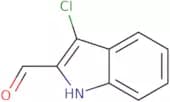
CAS:<p>3-Chloro-1H-indole-2-carbaldehyde is a bifunctional reagent that can be used to form amides. It reacts with primary and secondary amines, as well as dialkyl and methylene amines, to produce the corresponding chloro-, phenylhydrazine-, or nitrosoaminoureas. This reaction is intramolecular and yields the desired product in high yield. The reactant can also be used as a chloride source. 3-Chloro-1H-indole-2-carbaldehyde is manufactured by reacting phenylhydrazine with chloroacetic acid in an organic solvent at room temperature (25°C).</p>Formula:C9H6ClNOPurezza:Min. 95%Peso molecolare:179.6 g/mol4-Bromobenzaldehyde
CAS:<p>Please enquire for more information about 4-Bromobenzaldehyde including the price, delivery time and more detailed product information at the technical inquiry form on this page</p>Formula:C7H5BrOPeso molecolare:185.03 g/molRef: 3D-B-5782
1kgPrezzo su richiesta100gPrezzo su richiesta250gPrezzo su richiesta500gPrezzo su richiesta2,4-Dihydroxy-6-methylbenzaldehyde
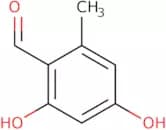
CAS:<p>2,4-Dihydroxy-6-methylbenzaldehyde is a chemical that is found naturally in a variety of plants. It has been shown to have immunomodulatory and anti-inflammatory effects in vitro and in vivo. 2,4-Dihydroxy-6-methylbenzaldehyde has been shown to reduce the production of inflammatory molecules such as tumor necrosis factor alpha (TNFα) and interleukin 12 (IL-12) by inhibiting the activation of microglia cells. This compound also inhibits LPS induced inflammatory response in human carcinoma cells. 2,4-Dihydroxy-6 methylbenzaldehyde is currently undergoing clinical trials for its potential use in regenerative medicine.</p>Formula:C8H8O3Purezza:Min. 95%Peso molecolare:152.15 g/mol3,5-Dichloro-4-pyridinecarboxaldehyde
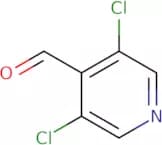
CAS:<p>3,5-Dichloro-4-pyridinecarboxaldehyde is a synthetic heterocycle that has been studied for its pharmacokinetic properties. The compound has the ability to bind to the active site of metalloporphyrin and inhibit the enzyme's activity. This inhibition leads to an increase in the levels of homologous aldehydes, which are oxidized by hydrogen peroxide to produce electrosprays. 3,5-Dichloro-4-pyridinecarboxaldehyde also has a number of oxidation products that have been found in experiments using purines as substrates.</p>Formula:C6H3Cl2NOPurezza:Min. 95%Peso molecolare:176 g/mol5-Ethyl-2-furaldehyde
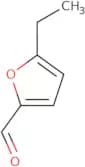
CAS:<p>Furfural is a five-carbon aldehyde produced by the hydrolysis of pentoses. It has been used as an industrial solvent, plasticizer, and fuel. Furfural is also used to produce butanol and biofuels. Furfural can be oxidized in the redox cycle to produce active oxygen species that are reactive with other biological molecules. Furfural is also used as an inhibitor of acetaldehyde formation in beer production. This molecule has two forms: the cis form (C3H4O) and the trans form (C3H3O). The cis form has a chemical structure of CH2=CH-CH2OH, whereas the trans form is CH=CH-CH2OH.</p>Formula:C7H8O2Purezza:Min. 95%Peso molecolare:124.14 g/mol3-(Difluoromethoxy)benzaldehyde
CAS:<p>Please enquire for more information about 3-(Difluoromethoxy)benzaldehyde including the price, delivery time and more detailed product information at the technical inquiry form on this page</p>Formula:C8H6F2O2Purezza:Min. 95%Peso molecolare:172.13 g/mol2-fluoro-5-hydroxybenzaldehyde
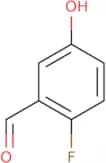
CAS:2-Fluoro-5-hydroxybenzaldehyde (2FHBA) is an olefinic compound that is synthesized from 2,5-dihydroxybenzaldehyde by reductive amination with formaldehyde. The configuration of 2FHBA is dependent on the dihedral angle between the two olefinic groups. Liquid chromatography has been used to analyze the metabolic pathway of 2FHBA in rats and humans. This study showed that tyramine and aligned are metabolites of 2FHBA in rats, while crystallized and emission are metabolites in humans. The positron emission studies also showed that 2FHBA was metabolized by erythrocytes in vitro to produce positron emission.Formula:C7H5FO2Purezza:Min. 95%Peso molecolare:140.11 g/mol2-Furaldehyde diethylacetal
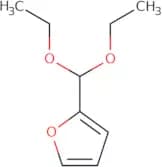
CAS:<p>2-Furaldehyde diethylacetal is a synthetic compound that has been used in the synthesis of calcium carbonate. It is also a potent inhibitor of p. aeruginosa and other bacteria, as well as organic acids and halogen compounds. It reacts with hydroxy groups to form aldehydes, which are then oxidized to form carboxylic acid derivatives. The reaction mechanism for this compound is not well understood, but it is thought that the activation energy for the reaction may be low due to the presence of a furfural functional group.</p>Formula:C9H14O3Purezza:Min. 95%Peso molecolare:170.21 g/mol4-Cinnolinecarboxaldehyde
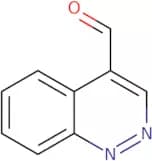
CAS:<p>4-Cinnolinecarboxaldehyde is an organic compound that belongs to the group of cinnoline. It is a colorless liquid that can be used as a precursor in the production of aluminum metal. 4-Cinnolinecarboxaldehyde reacts with lithium aluminum hydride to form a compound that can be used as a reducing agent in organic chemistry. 4-Cinnolinecarboxaldehyde is also used as a precursor for preparing other compounds, such as lithium aluminum hydride and lithium aluminum trihydride.</p>Formula:C9H6N2OPurezza:Min. 95%Peso molecolare:158.16 g/mol2-Bromo-6-hydroxybenzaldehyde
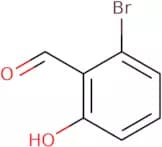
CAS:<p>2-Bromo-6-hydroxybenzaldehyde is a synthetic chemical that consists of a furan ring with an acetonitrile group. It has been shown to be a constant in cyclic electroreduction and is used as a biomolecular surfactant. 2-Bromo-6-hydroxybenzaldehyde has also been shown to react intramolecularly with the hydroxyl group on the benzene ring, which results in the formation of a dimer. This chemical can be produced by solvolysis or electroreduction.</p>Formula:C7H5BrO2Purezza:Min. 95%Colore e forma:PowderPeso molecolare:201.02 g/mol2-Hydroxy-4-(trifluoromethyl)benzaldehyde
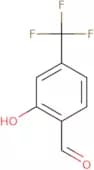
CAS:<p>2-Hydroxy-4-(trifluoromethyl)benzaldehyde is an analgesic and anti-inflammatory agent that belongs to the pyrazole family. It has shown analgesic and anti-inflammatory effects in animal studies. 2-Hydroxy-4-(trifluoromethyl)benzaldehyde has been shown to be a potent inhibitor of cyclooxygenase (COX), which is responsible for prostaglandin synthesis, and as such, may have potential as a treatment for inflammatory conditions such as rheumatoid arthritis. This drug also inhibits the production of nitric oxide, which is involved in vasodilation and increased blood flow. 2-Hydroxy-4-(trifluoromethyl)benzaldehyde has been demonstrated to inhibit COX enzymes by forming a covalent bond with active site serine residues on the enzyme. The docked complex shows hydrogen bonding interactions between the hydroxyl group of 2</p>Formula:C8H5F3O2Purezza:Min. 95%Peso molecolare:190.12 g/mol3-Aminopyridine-4-carboxaldehyde
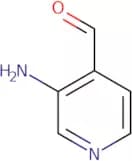
CAS:<p>3-Aminopyridine-4-carboxaldehyde (3APCA) is an acridone that is a colorless, crystalline solid. It has a molecular formula of C8H6N2O2 and a molecular weight of 174.14 g/mol. 3APCA can be synthesized by heating 2-pyridinecarboxylic acid with chloroacetyl chloride in the presence of pyridine as a solvent. The compound can be detected by nmr spectra, which are efficient methods for characterization of this chemical. The spectrum shows peaks at δ 8.22 ppm (1H), 7.61 ppm (1H), 6.99 ppm (2H), 5.87 ppm (1H), 4.06 ppm (2H). 3APCA has been shown to react with alkyl bromides to form carboxylic acids, which are shown by the peaks at δ 8.22 ppm and</p>Formula:C6H6N2OPurezza:Min. 95%Peso molecolare:122.12 g/mol