Aldeidi
Gli aldeidi sono composti organici che contengono un gruppo carbonilico (C=O) legato ad almeno un atomo di idrogeno. Questi composti versatili sono fondamentali in varie reazioni chimiche, tra cui ossidazione, riduzione e addizione nucleofila. Gli aldeidi sono building blocks essenziali nella sintesi di prodotti farmaceutici, fragranze e polimeri. Presso CymitQuimica, offriamo una vasta selezione di aldeidi di alta qualità per supportare le vostre applicazioni di ricerca e industriali.
Trovati 8573 prodotti di "Aldeidi"
Ordinare per
Purezza (%)
0
100
|
0
|
50
|
90
|
95
|
100
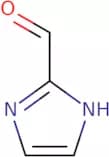
Imidazole-2-carboxaldehyde
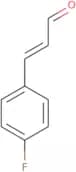
CAS:<p>Imidazole-2-carboxaldehyde is a broad-spectrum antimicrobial that has been shown to inhibit the growth of bacteria by interfering with protein synthesis. It binds to the cytosolic protein and receptor molecule, which are involved in the activation of bacterial enzymes. Imidazole-2-carboxaldehyde reacts with anhydrous sodium and copper complex to produce hydrogen bonds, which prevent the formation of the nitrogen atoms necessary for cellular processes. This chemical also has biological properties such as glyoxal, which inhibits bacterial growth by reacting with amino groups on proteins.</p>Formula:C4H4N2OPurezza:Min. 98 Area-%Colore e forma:Slightly Yellow PowderPeso molecolare:96.09 g/mol4-Fluorocinnamaldehyde
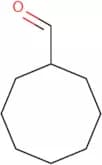
CAS:<p>4-Fluorocinnamaldehyde is a reactive molecule that can be used in the catalytic asymmetric synthesis of 4-fluoroalkylbenzenes, which are used as intermediates in the production of pharmaceuticals. It reacts with hydroxymethyl groups to form 4-fluoroalkylbenzene derivatives, which are substrates for asymmetric reactions. This compound has been shown to react with amines and thiols to form Michael acceptors and Michael donors respectively. The crystallographic data obtained from this molecule shows that it belongs to space group P2 and its crystal system is orthorhombic. It also has optical properties that make it suitable for use as an optical material or nanowires.</p>Formula:C9H7FOPurezza:Min. 80%Colore e forma:Clear LiquidPeso molecolare:150.15 g/molCyclooctanecarbaldehyde
CAS:<p>Cyclooctanecarbaldehyde is a reactive chemical that contains a hydroxyl group and hydroxy group. It is used for the production of polymers such as cyclooctyne-1,4-diol. Cyclooctanecarbaldehyde is also used to synthesize acyl halides. The compound has been shown to be cytotoxic in cancer cells. It can inhibit the production of nucleic acids, proteins and lipids in cancer cells, leading to cell death. Cyclooctanecarbaldehyde also has depression and cardiac arrhythmia effects due to its κ-opioid receptor agonist properties.</p>Formula:C9H16OPurezza:Min. 95%Colore e forma:Clear LiquidPeso molecolare:140.22 g/mol3-Chloro-2-nitrobenzaldehyde
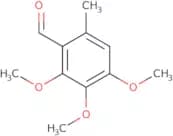
CAS:<p>3-Chloro-2-nitrobenzaldehyde is an analog of 2-nitrobenzaldehyde. It can be synthesized by reacting a halogen with benzaldehyde, such as chlorine or bromine. 3-Chloro-2-nitrobenzaldehyde is unreactive and can be used in the production of other compounds, such as pharmaceuticals. 3-Chloro-2-nitrobenzaldehyde has been shown to react with sodium methoxide to produce a methoxide. The methoxide is then reacted with an alcohol to produce an ester.</p>Formula:C7H4ClNO3Purezza:Min. 95%Peso molecolare:185.56 g/mol2,3,4-Trimethoxy-6-methylbenzaldehyde
CAS:<p>2,3,4-Trimethoxy-6-methylbenzaldehyde is a synthetic coumarin with antibacterial activity. It is synthesized by the condensation of 3-hydroxyacetophenone and benzaldehyde. 2,3,4-Trimethoxy-6-methylbenzaldehyde has been shown to have antibacterial activity against both Gram-positive and Gram-negative bacteria. This molecule has also been shown to inhibit the growth of Gram negative bacteria in the presence of hydrogen peroxide. The crystal structure of this molecule was determined by XRD analysis and shows that it contains a dihedral angle of about 155°.</p>Formula:C11H14O4Purezza:Min. 95%Peso molecolare:210.23 g/molIsoquinoline-4-carbaldehyde
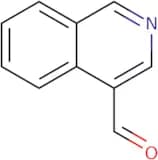
CAS:<p>Isoquinoline-4-carbaldehyde is an aldehyde chemical that has been synthesized in the laboratory. It is a chiral molecule with one asymmetric carbonyl group. Isoquinoline-4-carbaldehyde is a potential precursor to naphthyridine, which can be used as a building block for the synthesis of natural products. Isoquinoline-4-carbaldehyde has been shown to have phosphine properties, and it can be used as a ligand in transition metal complexes. The molecule has been shown to exist in two forms, which coexist in equilibrium and can undergo interconversion.</p>Formula:C10H7NOPurezza:Min. 95%Peso molecolare:157.17 g/mol4-Methoxycinnamylidene acetaldehyde
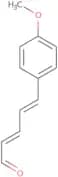
CAS:<p>4-Methoxycinnamylidene acetaldehyde is a versatile building block with a CAS number of 27394-81-6. It is used in the research and production of fine chemicals, pharmaceuticals, and high quality reagents. 4-Methoxycinnamylidene acetaldehyde can be used as a useful scaffold for the synthesis of complex compounds. This building block is also a useful intermediate in organic chemistry reactions.</p>Formula:C12H12O2Purezza:Min. 95%Colore e forma:PowderPeso molecolare:188.22 g/mol4-Methoxy-2-methylbenzaldehyde
CAS:<p>4-Methoxy-2-methylbenzaldehyde (4MMBA) is a synthetic chemical that is used as an antifungal agent. It interacts with the cellular membranes of fungi and disrupts their ability to maintain homeostasis. 4MMBA inhibits the growth of invasive aspergillosis by inhibiting protein synthesis, which leads to cell death. The mechanism of action for 4MMBA is not well understood, but it has been shown to inhibit the growth of fungi in a model system. It also inhibits the production of pyrylium, which may be responsible for its activity against fungi.</p>Formula:C9H10O2Purezza:90%Peso molecolare:150.17 g/mol4-Hydroxybenzaldehyde
CAS:<p>4-Hydroxybenzaldehyde is a phenolic compound that is produced in plants. 4-Hydoxybenzaldehyde is used as an extractant for sodium carbonate and hydroxyl group from acetate extract. The locomotor activity of animals was tested following administration of this substance, and it has been shown to have a high resistance against x-ray crystallography. The reaction mechanism for the formation of p-hydroxybenzoic acid from 4-hydroxybenzaldehyde has been proposed, which may be due to the oxidation of 4-hydroxybenzaldehyde by hydrogen peroxide. This reaction also induces apoptosis pathway in cells. Kinetic data for the reaction between 4-hydroxybenzaldehyde and hydrogen peroxide were obtained using UV spectroscopy.</p>Formula:C7H6O2Purezza:Min. 95%Colore e forma:White PowderPeso molecolare:122.12 g/mol3-Chloro-4-nitrobenzaldehyde
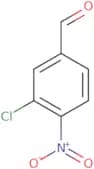
CAS:<p>3-Chloro-4-nitrobenzaldehyde is an aldehyde that is produced by the oxidation of 2-chloro-4-nitrobenzaldehyde. This chemical has been shown to have antitubercular activity in human erythrocytes, and it can be recycled from its reaction product with sodium hypochlorite. 3-Chloro-4-nitrobenzaldehyde has been shown to interact with acidic heterocycles such as oxadiazoles and triazoles. 3-Chloro-4-nitrobenzaldehyde has also been shown to alter the morphology of bacteria, such as subtilis, when exposed to ionic liquids. It is also known to inhibit the growth of Gram positive bacteria and show cytotoxic effects on mammalian cells.</p>Formula:C7H4ClNO3Purezza:Min. 95%Peso molecolare:185.56 g/mol2-Aminobenzaldehyde
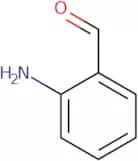
CAS:<p>2-Aminobenzaldehyde is an aromatic compound that contains a hydroxyl group, two nitrogen atoms, and an anhydrous sodium. It can be synthesized by the reaction of hydroxybenzaldehyde with trifluoroacetic acid or nitrobenzene. 2-Aminobenzaldehyde is used as a precursor to other compounds, such as 2-aminobenzonitrile and 2-aminophenol. It also reacts with anthranilic acid in the presence of sodium salts to give a variety of pyrazoles. This product has been shown to react with epidermal growth factor (EGF) in the presence of light to produce light emissions.</p>Formula:C7H7NOPurezza:Min. 95%Colore e forma:PowderPeso molecolare:121.14 g/mol2-Oxocyclohexanecarbaldehyde
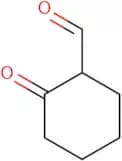
CAS:<p>2-Oxocyclohexanecarbaldehyde is a bifunctional carbonyl compound that reacts with amines to form carbinols. It can be used as a cheaper and more environmentally friendly alternative to the use of piperidine. 2-Oxocyclohexanecarbaldehyde also reacts with potassium hydride to form the corresponding ketones. The reaction of 2-oxocyclohexanecarbaldehyde with primary amines leads to isomeric products, depending on the position of substitution on the aromatic ring. This compound has been shown to react electrochemically in an asymmetric synthesis and has been used in the synthesis of morpholine, which is an important intermediate for pharmaceuticals, agrochemicals, and other chemical compounds.</p>Formula:C7H10O2Purezza:Min. 90%Colore e forma:Clear LiquidPeso molecolare:126.15 g/mol5-Hydroxy-3-methyl-1H-pyrazole-4-carbaldehyde
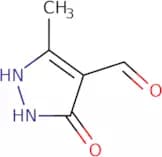
CAS:<p>5-Hydroxy-3-methyl-1H-pyrazole-4-carbaldehyde is an organic compound that is used as a building block in the synthesis of a variety of complex compounds. It can be used as a reaction component and is also useful in the production of speciality chemicals. 5-Hydroxy-3-methyl-1H-pyrazole-4-carbaldehyde has been shown to form complexes with metals, such as copper, silver, and gold. These complexes are useful for research into catalytic reactions and electrochemistry. This chemical is also used in the production of pharmaceuticals, agrochemicals, and other high quality reagents.</p>Formula:C5H6N2O2Purezza:Min. 95%Colore e forma:PowderPeso molecolare:126.11 g/mol6-Fluoroindole-3-carboxaldehyde
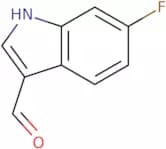
CAS:<p>6-Fluoroindole-3-carboxaldehyde (6FLA) is a synthetic compound that inhibits biosynthesis of the phytoalexins salicylic acid and lignin in plants. It also inhibits the β-glucuronidase enzyme, which hydrolyzes the glucuronide conjugates of phenolic compounds and xenobiotics. 6FLA has been shown to cause mild liver damage in rats, but its effects on humans are unknown. 6FLA may be used as a detectable substance for assays.</p>Formula:C9H6FNOPurezza:Min. 95%Peso molecolare:163.15 g/mol3-Hydroxy-2-iodobenzaldehyde
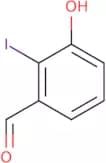
CAS:<p>3-Hydroxy-2-iodobenzaldehyde is a heterocyclic compound that is synthesized from an acetoacetic ester. It is a photochemical precursor to many organic compounds, such as phenanthrene. The synthesis of 3-hydroxy-2-iodobenzaldehyde can be achieved by reacting acetoacetic acid with iodine and sodium nitrite in the presence of a base. This reaction yields 2-iodobenzoic acid in addition to the desired product. 3-Hydroxy-2-iodobenzaldehyde has been studied for its use in the preparation of natural products and research advances.</p>Formula:C7H5IO2Purezza:Min. 95%Colore e forma:PowderPeso molecolare:248.02 g/mol2-Hydroxy-3,4-dimethoxybenzaldehyde
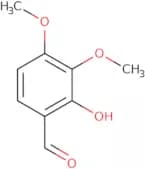
CAS:<p>2-Hydroxy-3,4-dimethoxybenzaldehyde is a molecule that has an acidic character. It has been shown to be able to form a copper complex with good optical properties. A method using this compound as the monomer was found to be efficient for synthesizing polymers with size exclusion chromatography. 2-Hydroxy-3,4-dimethoxybenzaldehyde is a monocarboxylic acid that contains an aliphatic hydrocarbon and hydroxyl group. It can also act as a monomer in polymerization reactions and can be used in chemical structures such as multidrugs, which are made from large molecules of different types of atoms. The acid catalyst is required for these reactions to take place.</p>Formula:C9H10O4Purezza:Min. 95%Colore e forma:PowderPeso molecolare:182.17 g/mol2-Hydroxy-5-iodo-3-methoxybenzaldehyde
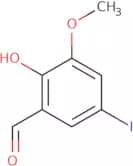
CAS:<p>Please enquire for more information about 2-Hydroxy-5-iodo-3-methoxybenzaldehyde including the price, delivery time and more detailed product information at the technical inquiry form on this page</p>Formula:C8H7IO3Purezza:Min. 98%Colore e forma:PowderPeso molecolare:278.04 g/mol5-Methylindole-3-carboxaldehyde
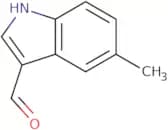
CAS:<p>5-Methylindole-3-carboxaldehyde (5MI) is a β-unsaturated aldehydes that is used as an analyte in assays for the detection of α,β-unsaturated aldehydes. It has been shown to be effective in degranulation of cells and induces cellular degranulation. 5MI has also been shown to be an analog of other β-unsaturated aldehydes and acts competitively with these compounds.</p>Formula:C10H9NOPurezza:Min. 95%Colore e forma:PowderPeso molecolare:159.18 g/mol2-(2-Bromoethyl)benzaldehyde
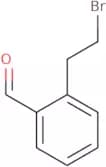
CAS:<p>2-(2-Bromoethyl)benzaldehyde is an organic compound that is used in the synthesis of many other compounds. It is produced by the acetylation of 2-bromoethanol with acetic anhydride and hydrochloric acid. This reaction mechanism starts with the formation of a carbocation from the protonated bromine and ethylene, followed by nucleophilic attack by the acetate anion to form a tertiary alcohol. The final step involves elimination of bromine to give 2-(2-bromoethyl)benzaldehyde. Techniques such as basic hydrolysis or chiral resolution can be used to produce optically pure 2-(2-bromoethyl)benzaldehyde.</p>Formula:C9H9BrOPurezza:(%) Min. 80%Colore e forma:Clear LiquidPeso molecolare:213.07 g/mol2,3,4-Trimethoxybenzaldehyde
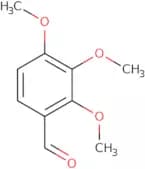
CAS:<p>2,3,4-Trimethoxybenzaldehyde is a hydroxylated aromatic compound that is used as a dietary supplement. It is found in the natural form of zirconium oxide and has been shown to have cancer-fighting properties. It has also been shown to be able to inhibit the growth of liver cancer cells in vitro and in vivo models. The mechanism of 2,3,4-trimethoxybenzaldehyde's ability to inhibit cancer growth is not fully understood but it may be due to its ability to react with reactive oxygen species and its ability to bind with methoxy groups and benzyl groups.</p>Formula:C10H12O4Purezza:Min. 95%Colore e forma:PowderPeso molecolare:196.2 g/mol