Aldeidi
Gli aldeidi sono composti organici che contengono un gruppo carbonilico (C=O) legato ad almeno un atomo di idrogeno. Questi composti versatili sono fondamentali in varie reazioni chimiche, tra cui ossidazione, riduzione e addizione nucleofila. Gli aldeidi sono building blocks essenziali nella sintesi di prodotti farmaceutici, fragranze e polimeri. Presso CymitQuimica, offriamo una vasta selezione di aldeidi di alta qualità per supportare le vostre applicazioni di ricerca e industriali.
Trovati 8573 prodotti di "Aldeidi"
Ordinare per
Purezza (%)
0
100
|
0
|
50
|
90
|
95
|
100
3,4-Dihydroxy-2-nitrobenzaldehyde
CAS:3,4-Dihydroxy-2-nitrobenzaldehyde is a high quality chemical that is used as a reagent and as an intermediate in the synthesis of complex compounds. It has many uses, including being a useful building block for speciality chemicals, research chemicals, and reaction components. 3,4-Dihydroxy-2-nitrobenzaldehyde is versatile and can be used in the synthesis of various types of compounds. This compound is also an excellent scaffold for drug discovery.Formula:C7H5NO5Purezza:Min. 95%Colore e forma:PowderPeso molecolare:183.12 g/mol5-Methylnicotinaldehyde
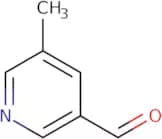
CAS:<p>5-Methylnicotinaldehyde is a chemical compound that belongs to the group of tetrahydropyridines. It is a reagent for producing triphosgene and dimethylformamide. 5-Methylnicotinaldehyde has been shown to inhibit muscarinic acetylcholine receptors, leading to an increase in acetylcholine release from nerve endings. This may be due to its ability to bind with the receptor affinity site at the base of the nicotinic acetylcholine receptor. 5-Methylnicotinaldehyde also has anti-inflammatory properties and can be used as a pesticide.</p>Formula:C7H7NOPurezza:Min. 95%Colore e forma:PowderPeso molecolare:121.14 g/mol3-Methoxy-4-(4-nitrobenzyloxy)benzaldehyde
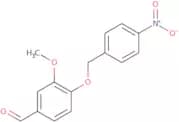
CAS:3-Methoxy-4-(4-nitrobenzyloxy)benzaldehyde is a chemical intermediate that is used in the synthesis of complex compounds. It has been shown to be an effective reagent for the synthesis of various organic compounds, such as pharmaceuticals and pesticides. 3-Methoxy-4-(4-nitrobenzyloxy)benzaldehyde is also used as a research chemical or as a speciality chemical in laboratories. This compound can be used as a building block in the synthesis of other compounds with interesting properties, such as 3-methoxy-4-(2,5-dichlorobenzyloxy)benzaldehyde.Formula:C15H13NO5Purezza:Min. 95%Colore e forma:PowderPeso molecolare:287.27 g/mol2-(3-Fluorophenyl)thiazole-4-carbaldehyde
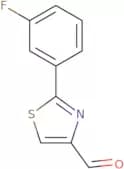
CAS:<p>Please enquire for more information about 2-(3-Fluorophenyl)thiazole-4-carbaldehyde including the price, delivery time and more detailed product information at the technical inquiry form on this page</p>Formula:C10H6FNOSPurezza:Min. 95%Colore e forma:PowderPeso molecolare:207.23 g/mol2,4-Dihydroxybenzaldehyde
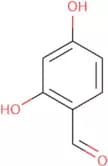
CAS:<p>2,4-Dihydroxybenzaldehyde (2,4DBA) is a copper complex that has been shown to have biological properties. This compound has been studied in biological studies and is classified as group p2 on the periodic table. It is a redox potential of -0.95 V and can undergo intramolecular hydrogen bonding with itself or with other molecules to form hydrogen bonds. Hydroxyl groups are found on 2,4DBA and can coordinate with the nitrogen atoms found on penicillin-binding proteins or acetylcholinesterase inhibition. The coordination geometry of 2,4DBA is tetrahedral and its methyl ethyl group is also found on this molecule.</p>Formula:C7H6O3Purezza:Min. 98 Area-%Colore e forma:White PowderPeso molecolare:138.12 g/mol3-(2-Phenylethoxy)benzaldehyde
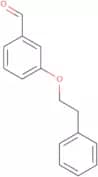
CAS:3-(2-Phenylethoxy)benzaldehyde is a benzaldehyde derivative with an ether group at the 3-position. It is used as a building block for the synthesis of organic compounds and as a reaction component in the preparation of research chemicals, speciality chemicals, and complex compounds. This compound has been shown to have high purity and to be a versatile building block for the synthesis of pharmaceuticals, agrochemicals, and other fine chemicals.Formula:C15H14O2Purezza:Min. 95%Colore e forma:PowderPeso molecolare:226.27 g/mol4-Cyanobenzaldehyde
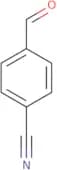
CAS:<p>4-Cyanobenzaldehyde is an acid that inhibits tyrosinase, an enzyme involved in the production of melanin. It has been shown to have a strong inhibitory effect on the activity of this enzyme in a variety of biological studies. 4-Cyanobenzaldehyde is chemically stable and does not react with hydrochloric acid or water at room temperature, making it suitable for use in experiments involving these substances. This chemical also has antiinflammatory properties and can be used as a substitute for phenols in some chemical reactions. 4-Cyanobenzaldehyde is soluble in methanol and reacts with diphenolase, an enzyme involved in the synthesis of lignin, to produce benzophenone and benzoic acid. This reaction may be important for the formation of lignin during wood decomposition.</p>Formula:C8H5NOPurezza:80%Colore e forma:PowderPeso molecolare:131.13 g/moltrans-4-Fluorocinnamaldehyde
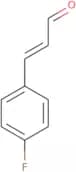
CAS:<p>Trans-4-fluorocinnaMaldehyde is a molecule that was synthesized as part of an asymmetric synthesis. It has been shown to inhibit serotonin reuptake in vitro (in human lung) and have light emission properties. Trans-4-fluorocinnaMaldehyde is chemically stable and has active substances with optical properties. Furthermore, it can be used for the production of nanowires.</p>Formula:C9H7FOPurezza:(%) Min. 90%Colore e forma:PowderPeso molecolare:150.15 g/mol3-Sulfobenzaldehyde sodium salt
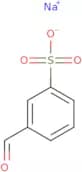
CAS:<p>3-Sulfobenzaldehyde sodium salt is a novel anticancer agent that inhibits the activity of HDACs. It has shown a strong inhibitory effect on cancer cells in vivo, and can be used for the treatment of tumors. 3-Sulfobenzaldehyde sodium salt has an anti-proliferative effect on cancer cells, which may be due to its ability to inhibit the activity of HDACs and acetylation mediated by these enzymes. This drug also has an anti-proliferative effect in tumor growth, which may be due to its ability to inhibit the HDAC cycle and acetylation, leading to cell death.</p>Formula:C7H5NaO4SPurezza:85%MinColore e forma:PowderPeso molecolare:208.17 g/mol4-Fluoro-2-(trifluoromethyl)benzaldehyde
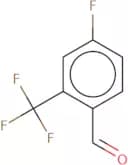
CAS:<p>4-Fluoro-2-(trifluoromethyl)benzaldehyde is a chemical compound that can be used as a reagent in the formylation reaction. This product is soluble in ether, chloroform and benzene. The crystallographic data of this product are available and show that it has an isotropic crystal structure with a monoclinic unit cell. The molecular weight of this product is 150.38 g/mol and the molecular formula is C8H6F3O. The wavelength at which maximum absorption occurs for this product is 266 nm.</p>Formula:C8H4F4OPurezza:Min. 95%Colore e forma:Clear LiquidPeso molecolare:192.11 g/mol3,5-Dimethylbenzaldehyde oxime
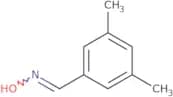
CAS:<p>3,5-Dimethylbenzaldehyde oxime is a white crystalline solid that is soluble in organic solvents. 3,5-Dimethylbenzaldehyde oxime reacts with water to produce hydrogen peroxide and formaldehyde. This reaction is an example of a dehydration reaction.</p>Formula:C9H11NOPurezza:Min. 95%Colore e forma:PowderPeso molecolare:149.19 g/mol2,4-Dimethylbenzaldehyde oxime
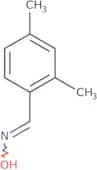
CAS:<p>2,4-Dimethylbenzaldehyde oxime is a useful chemical for the synthesis of complex organic compounds. It is used as a research chemical and as a speciality chemical in the production of fine chemicals. 2,4-Dimethylbenzaldehyde oxime can be used as a versatile building block to form new compounds with different substituents. The compound has been shown to have high reactivity and good quality.</p>Formula:C9H11NOPurezza:Min. 95%Peso molecolare:149.19 g/moltrans-2-Heptenal
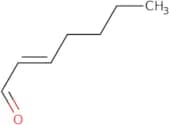
CAS:<p>2-Heptenal is a fatty acid that is found in small quantities in the human body. It has been shown to inhibit the activity of lipases and esterases, which are enzymes that break down fats. 2-Heptenal can be used as an analog for fatty acids and as a sample preparation agent when preparing fatty acids for analysis. 2-Heptenal has been shown to exhibit degenerative disease properties, such as Alzheimer's disease. Researchers have used 2-heptenal as a model system to study the aggregation process of amyloid proteins, which may lead to the development of drugs for treatment of these diseases.</p>Formula:C7H12OPurezza:Min. 95.0 Area-%Colore e forma:Colorless Slightly Yellow Clear LiquidPeso molecolare:112.17 g/mol2,4-Dinitrobenzaldehyde
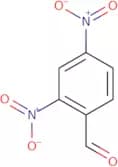
CAS:2,4-Dinitrobenzaldehyde is a chemical compound that contains a hydroxyl group and an amine. It is reactive and can form cationic surfactants with other compounds. 2,4-Dinitrobenzaldehyde has been shown to react with dimethyl fumarate in the presence of ethyl esters to form ethyl 2,4-dinitrophenolate. This reaction is catalyzed by dinucleotide phosphate and requires salinity or a base such as sodium methoxide. 2,4-Dinitrobenzaldehyde reacts with 2-aminoethanol in the presence of water or alcohols to produce 2,4-diaminobenzoic acid. The reaction mechanism for this process is not known but it may involve hydrogen bonding between the hydroxyl group and amine groups. 2,4-Dinitrobenzaldehyde has been used as a reagent for staining DNA in gel electFormula:C7H4N2O5Purezza:Min. 95%Colore e forma:PowderPeso molecolare:196.12 g/molo-Anisaldehyde
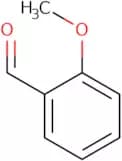
CAS:o-Anisaldehyde is a chemical compound that has the molecular formula CH3CHO. It is an aromatic compound that contains a hydroxyl group (-OH) bonded to a benzene ring. o-Anisaldehyde is soluble in water and reacts with copper chloride to form copper (II) o-anisate, which can be used as a reagent for oxidation reactions. It also forms coordination compounds with metal ions like zinc and iron. The crystal structure of o-anisaldehyde has been determined by x-ray crystallography and shows that it contains two asymmetric carbon atoms, which are oriented in opposite directions. This molecule can be synthesized from phenol or catechol by heating them with an acidified solution of sodium nitrite in ethanol. The reaction mechanism of this process involves the formation of an oxime intermediate followed by hydrolysis. The kinetics data of this reaction have been obtained using titration calorimetry and kinetic energy measurements show that the reactionFormula:C8H8O2Purezza:Min. 95%Colore e forma:PowderPeso molecolare:136.15 g/mol2,3-Dimethoxybenzaldehyde
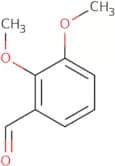
CAS:<p>2,3-Dimethoxybenzaldehyde is a chemical substance that binds to its ligands by hydrogen bonding and van der Waals forces. It is used in the synthesis of diethyl succinate. 2,3-Dimethoxybenzaldehyde has been shown to inhibit the growth of squamous carcinoma cells. The conversion of 2,3-dimethoxybenzaldehyde into benzoquinone is catalyzed by glucose oxidase and peroxidase. This oxidation process results in a loss of two electrons and one proton from the molecule, changing it from a phenol to an aromatic hydrocarbon.</p>Formula:C9H10O3Purezza:Min. 95%Colore e forma:PowderPeso molecolare:166.17 g/mol3-Methoxybenzaldehyde
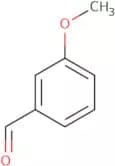
CAS:<p>3-Methoxybenzaldehyde is a chemical compound that is used as an intermediate in the synthesis of organic compounds. This compound has shown to be a potent inhibitor of several enzymes, including diamine tetraacetic acid (DAT)-dependent aminotransferase, trimethyl amine N-oxide reductase, and hydrochloric acid hydrolases. 3-Methoxybenzaldehyde also inhibits the growth of hepg2 cells and induces apoptosis. The chemical structure of this compound contains a boron nitride group that can form hydrogen bonds with other molecules and fatty acids that can act as a substrate for oxidation reactions.</p>Formula:C8H8O2Purezza:Min. 98 Area-%Colore e forma:Clear LiquidPeso molecolare:136.15 g/mol5-Hydroxy-3-methyl-1H-pyrazole-4-carbaldehyde
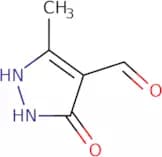
CAS:<p>5-Hydroxy-3-methyl-1H-pyrazole-4-carbaldehyde is an organic compound that is used as a building block in the synthesis of a variety of complex compounds. It can be used as a reaction component and is also useful in the production of speciality chemicals. 5-Hydroxy-3-methyl-1H-pyrazole-4-carbaldehyde has been shown to form complexes with metals, such as copper, silver, and gold. These complexes are useful for research into catalytic reactions and electrochemistry. This chemical is also used in the production of pharmaceuticals, agrochemicals, and other high quality reagents.</p>Formula:C5H6N2O2Purezza:Min. 95%Colore e forma:PowderPeso molecolare:126.11 g/mol2-Hydroxy-5-iodo-3-methoxybenzaldehyde
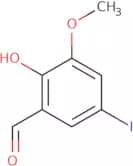
CAS:<p>Please enquire for more information about 2-Hydroxy-5-iodo-3-methoxybenzaldehyde including the price, delivery time and more detailed product information at the technical inquiry form on this page</p>Formula:C8H7IO3Purezza:Min. 98%Colore e forma:PowderPeso molecolare:278.04 g/mol2,3,4-Trimethoxy-6-methylbenzaldehyde
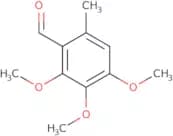
CAS:2,3,4-Trimethoxy-6-methylbenzaldehyde is a synthetic coumarin with antibacterial activity. It is synthesized by the condensation of 3-hydroxyacetophenone and benzaldehyde. 2,3,4-Trimethoxy-6-methylbenzaldehyde has been shown to have antibacterial activity against both Gram-positive and Gram-negative bacteria. This molecule has also been shown to inhibit the growth of Gram negative bacteria in the presence of hydrogen peroxide. The crystal structure of this molecule was determined by XRD analysis and shows that it contains a dihedral angle of about 155°.Formula:C11H14O4Purezza:Min. 95%Peso molecolare:210.23 g/mol