Aniline
Trovati 102 prodotti per "Aniline".
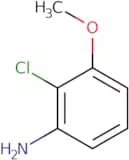
2-Chloro-3-methoxyaniline
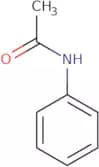
CAS:2-Chloro-3-methoxyaniline is a high quality chemical. It is an intermediate in the synthesis of other complex compounds and has been used as a reagent for organic synthesis. It is also useful as a building block for the preparation of speciality chemicals, research chemicals, and versatile building blocks. 2-Chloro-3-methoxyaniline reacts with other chemicals to form new compounds that are useful for pharmaceuticals and agrochemicals.Formula:C7H8ClNOPurezza:Min. 95%Colore e forma:Brown PowderPeso molecolare:157.6 g/molAcetanilide
CAS:Aniline derivative; analgesic; anti-pyretic; electroosmotic flow marker.An organic compound primarily used as a precursor in the synthesis of dyes and pharmaceuticals. It is derived from aniline, an aromatic amine that is acetylated to produce the product in question. Acetanilide functions by inhibiting the precursor to prostaglandins, providing analgesic and antipyretic effects through its action on cyclooxygenase enzymes, although this mode of action posed historical safety concerns.Although once widely used in medicine, the application of acetanilide in modern pharmaceuticals has declined due to its potential for causing methemoglobinemia and other toxic effects. Currently, it serves as an important intermediate in the chemical industry, particularly in the manufacture of rubber accelerators and a variety of dyes. Scientists and industry professionals continue to explore its derivatives for safer and more effective alternatives in pain and fever relief, noting its role as a cornerstone in the development of safer analgesics like acetaminophen.Formula:C8H9NOPurezza:(Titration) Min. 99.20%Colore e forma:White PowderPeso molecolare:135.16 g/molIsovanillin
CAS:Isovanillin is a naturally occurring compound in plants and has been shown to have biological effects on the mitochondria of cells. It has been found to inhibit the mitochondrial membrane potential of k562 cells, which is associated with cell death. Isovanillin has also been shown to affect bacterial strains, such as Acinetobacter baumannii, by inhibiting their growth. This x-ray crystal structure was determined using a lc-MS/MS method and it was found that isovanillin reacts with p-hydroxybenzoic acid to form methyl ethyl benzoate. Isovanillin is toxic and has been found to cause cellular physiology changes when administered at high concentrations.Formula:C8H8O3Purezza:Min. 95%Colore e forma:White PowderPeso molecolare:152.15 g/mol2,4-Dinitroaniline
CAS:2,4-Dinitroaniline is a diazonium salt that is used in the wastewater treatment process. It is an analytical reagent that can be used to detect and identify nucleophilic groups. 2,4-Dinitroaniline is used as a precursor for other dyes and has been shown to have genotoxic activity in some cases. The chemical structure of 2,4-dinitroaniline is made up of two nitro groups attached to an amino group. This compound absorbs ultraviolet light at 260 nm and emits radiation at 360 nm, which can be measured using synchronous fluorescence spectroscopy. It reacts with hydrochloric acid to form diazonium salt.
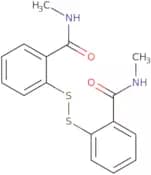
2,4-Dinitroaniline has been shown to react with the protein monoclonal antibody CEA3B3 by binding to its reactive thiols. This binding leads to the disruption of the antibody's function and inhibitsFormula:C6H5N3O4Purezza:Min. 95%Colore e forma:Yellow PowderPeso molecolare:183.12 g/molDithio-2,2'-bis(N-methylbenzamide)
CAS:Dithio-2,2'-bis(N-methylbenzamide) is a chlorphenesin and benzyl alcohol combination that also contains pyrithione, benzyl chloride and benzalkonium chloride. It is a microbicide that inhibits the growth of bacteria by reacting with their cell membranes. Dithio-2,2'-bis(N-methylbenzamide) is used in cosmetics as a preservative, and has been shown to have antimicrobial properties against the section Micrococcus luteus. This product also contains imidazolidinyl urea as an anti-fungal agent.
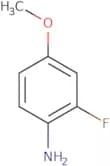
Formula:C16H16N2O2S2Purezza:Min. 95%Colore e forma:White PowderPeso molecolare:332.44 g/mol2-Fluoro-4-methoxyaniline
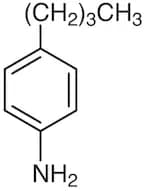
CAS:2-Fluoro-4-methoxyaniline is a non-selective amide that forms in the presence of amines, aminobutyraldehyde, and fluorine. 2-Fluoro-4-methoxyaniline is a product of the industrial process for synthesizing acetylated products through the use of dichloroketene as an acetylating agent. This chemical compound has been used to produce five-membered heterocycles that are used in the manufacture of pharmaceuticals. Mechanistic studies have shown that this chemical reacts with oxygen, water, and halogens to form a variety of products.Formula:C7H8FNOPurezza:Min. 95%Colore e forma:Yellow PowderPeso molecolare:141.14 g/mol4-Butylaniline
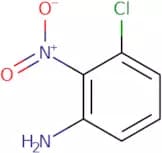
CAS:Formula:C10H15NPurezza:>97.0%(GC)(T)Colore e forma:Colorless to Red to Green clear liquidPeso molecolare:149.243-Chloro-2-nitroaniline
CAS:3-Chloro-2-nitroaniline is an organic compound that regulates the neuron and can be used in the treatment of Alzheimer's disease. It has been shown to bind to the potassium channel, which regulates the flow of potassium ions across neuronal membranes. 3-Chloro-2-nitroaniline also binds to the CB2 receptor, which is found on immune cells, and has been shown to be a potent agonist for this receptor. The affinity of 3-chloro-2-nitroaniline for the CB2 receptor is about 100 times greater than for the CB1 receptor. 3-Chloro-2-nitroaniline also binds to other proteins such as ABCA1 and Abca1, which regulate cholesterol transport in cells. 3-Chloro-2-nitroaniline is currently being studied as a potential drug candidate for treatment of Alzheimer's disease and other neurological disorders.
Formula:C6H5ClN2O2Purezza:Min. 95%Colore e forma:PowderPeso molecolare:172.57 g/mol2,4,6-Tribromo-3-nitroaniline
CAS:2,4,6-Tribromo-3-nitroaniline is a brominating agent that can produce hydrogen peroxide. It is prepared by the reaction of hydrochloric acid with 2,4,6-tribromoaniline. The bromination of 2,4,6-tribromo-3-nitroaniline produces 4 equivalents of hydrogen peroxide.
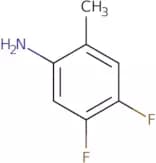
Formula:C6H3Br3N2O2Purezza:Min. 95%Colore e forma:Beige To Brown SolidPeso molecolare:374.81 g/mol4,5-Difluoro-2-methylaniline
CAS:4,5-Difluoro-2-methylaniline is a chemical intermediate that is used as a reaction component in the synthesis of organic compounds. It is a fine chemical with CAS No. 875664-57-6, and it can be used as a building block for the synthesis of complex organic molecules. This reagent is useful for the production of pharmaceuticals, agrochemicals, and other specialty chemicals. 4,5-Difluoro-2-methylaniline has been shown to act as an intermediate for the synthesis of many different types of compounds, including complex compounds such as imidazole derivatives and N-(4-fluorophenyl)benzo[d]oxazole derivatives.
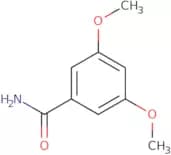
Formula:C7H7F2NPurezza:Min. 95%Colore e forma:Off-White PowderPeso molecolare:143.13 g/mol3,5-Dimethoxybenzamide
CAS:3,5-Dimethoxybenzamide belongs to the class of quinolone drugs. It is a potentiator of nabilone, which is a synthetic cannabinoid similar to THC. 3,5-Dimethoxybenzamide has been shown to be an electron-deficient compound that reacts with 5-hydroxytryptamine (serotonin) in vitro. This reaction leads to the formation of hydrogen bonds and modifications in the structure of serotonin molecules. 3,5-Dimethoxybenzamide also has grignard reagent activity and can be used as a carboxyamide or amide precursor in organic synthesis.Formula:C9H11NO3Purezza:Min. 95%Colore e forma:PowderPeso molecolare:181.19 g/mol4-Amino-3-chloro-5-methylphenol hydroiodide
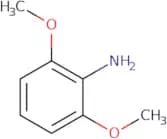
CAS:Please enquire for more information about 4-Amino-3-chloro-5-methylphenol hydroiodide including the price, delivery time and more detailed product information at the technical inquiry form on this pageFormula:C7H8ClNO•HIPurezza:Min. 95%Peso molecolare:285.51 g/mol2,6-Dimethoxyaniline
CAS:2,6-Dimethoxyaniline is a synthetic compound that has been used in the past as an antibacterial agent. It has been shown to be effective against Staphylococcus aureus and Escherichia coli, but not against Pseudomonas aeruginosa. 2,6-Dimethoxyaniline forms nanowires with an average diameter of 100 nm and lengths up to 1 micron when exposed to radiation (e.g., gamma rays). The reaction rate is dependent on the architecture and morphology of the azobenzene moiety. The chloride anion coordinates with the nitrogen atom in the molecule, which leads to a phase transition temperature of about 230 K.Formula:C8H11NO2Purezza:Min. 95%Colore e forma:White PowderPeso molecolare:153.18 g/molSulfabenzamide
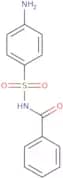
CAS:Sulfabenzamide is a sulfa drug that has been used in the treatment of infectious diseases. It inhibits microbial growth by inhibiting synthesis of folic acid, which is essential for bacterial growth. Sulfabenzamide has been shown to have antimicrobial effects against a number of microorganisms, including several Gram-positive and Gram-negative bacteria. This drug also has anti-inflammatory properties and can be used in the treatment of bowel disease, such as ulcerative colitis. Sulfabenzamide is used to treat choroidal neovascularization in patients with age-related macular degeneration. This drug binds to glycol esters on the surface of human erythrocytes and can be extracted using dispersive solid-phase extraction (DSPE). The DSPE extract was analyzed by a LC-MS/MS method and found to contain sulfabenzamide and sulfadiazine.Formula:C13H12N2O3SPurezza:Min. 95%Colore e forma:White PowderPeso molecolare:276.31 g/mol3-Chloro-4-fluoroaniline
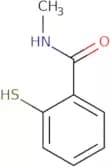
CAS:3-Chloro-4-fluoroaniline is a versatile building block that can be used in the synthesis of many different compounds. It is a reagent that is used in research, where it can be used as a reactant or an intermediate. This chemical has been shown to have high quality and can be used as a starting material for the synthesis of other chemicals. 3-Chloro-4-fluoroaniline has been shown to react with various functional groups such as amines and acid chlorides. It is also useful for the construction of scaffolds, which are three dimensional structures that are built from small molecules and organic compounds. 3-Chloro-4-fluoroaniline is classified as a speciality chemical and its CAS number is 367-21-5.Formula:C6H5ClFNPeso molecolare:145.56 g/mol2-Mercapto-N-methylbenzamide
CAS:2-Mercapto-N-methylbenzamide is a synthetic compound that has been shown to have inhibitory activities against activated brain cells and cell lines. This drug has been used in the synthesis of axitinib, a cancer drug that inhibits cellular growth. 2-Mercapto-N-methylbenzamide is also used as a preservative in cosmetics and can be found in carbonated drinks and foods. It has been shown to inhibit the production of serotonin in microbicidal reactions by inhibiting the enzyme hydroxymethyl transferase, which catalyzes the conversion of 5-hydroxytryptophan to serotonin. It also prevents the reaction products from being formed by reacting with hypoxanthine, xanthine, and phosphoribosyl pyrophosphate (PRPP). 2-Mercapto-N-methylbenzamide also reacts with plasma samples to form ethylmercaptoacetate, which is then oxidized to merc
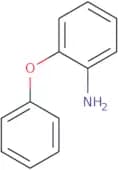
Formula:C8H9NOSPurezza:Min. 95%Colore e forma:White PowderPeso molecolare:167.23 g/mol2-Phenoxyaniline
CAS:2-Phenoxyaniline is a nitro compound that can be converted to the corresponding palladium complexes. It is an inhibitor of the acylation reaction, which is a type of chemical reaction in which an organic molecule reacts with an acid. The inhibition of this reaction has been shown to have an effect on heart disease, specifically by lowering cholesterol levels and reducing atherosclerosis. 2-Phenoxyaniline has also been shown to inhibit the activation energy for electron transfer reactions, making it useful as a catalyst in analytical methods. 2-Phenoxyaniline also undergoes vibrational spectroscopy when exposed to liquid chromatography and other analytical methods.
Formula:C12H11NOPurezza:Min. 95%Colore e forma:Brown PowderPeso molecolare:185.22 g/mol2,2'-Dithiodianiline
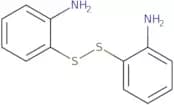
CAS:2,2'-Dithiodianiline is a redox-active molecule with a redox potential of -0.08 V. It has been shown to inhibit the polymerase chain reaction by binding to DNA and inhibiting the enzyme DNA polymerase. 2,2'-Dithiodianiline is a potent inhibitor of bacterial growth in vitro, and has been shown to be cytotoxic in vivo. 2,2'-Dithiodianiline inhibits the growth of resistant mutants that are resistant to other antibiotics such as penicillin and ampicillin. This compound binds to molybdenum at an optimum concentration of 0.5 mM and coordinates through electrostatic interactions with the molybdenum atom. Structural analysis reveals that 2,2'-dithiodianiline forms hydrogen bonds with adenine residues in DNA and interacts with guanine residues in RNA through π-π stacking interactions. This interaction prevents transcription by blocking the binding
Formula:C12H12N2S2Purezza:Min. 98 Area-%Colore e forma:PowderPeso molecolare:248.37 g/mol2,6-Dichloro-4-methoxyaniline
CAS:2,6-Dichloro-4-methoxyaniline is a chemical that belongs to the group of methyl derivatives. It is used as an industrial chemical and as a precursor to other chemicals in the production of pesticides, herbicides, and other products. 2,6-Dichloro-4-methoxyaniline can be found in brominated flame retardants and phenolic resins. It is also present in pentachlorophenol (PCP) and hydroxylated congeners. 2,6-Dichloro-4-methoxyaniline has been detected in humans at levels ranging from 10 to 100 parts per billion. The chemical structure of 2,6-dichloro-4-methoxyaniline is similar to that of triclosan, which has been shown to have antimicrobial activity against bacteria such as Staphylococcus aureus and EscherichFormula:C7H7Cl2NOPurezza:Min. 95%Peso molecolare:192.04 g/molRef: IN-DA001T68
Prodotto fuori produzione