Acidi benzoici
Trovati 5474 prodotti di "Acidi benzoici"
3,4,5-Tribromobenzoic acid
CAS:3,4,5-Tribromobenzoic acid is a metabolite of 3-indoleacetic acid. It is excreted in the urine and has a phaseolus-like physiological activity. This compound has been found to reduce the number of internodes in plants and increase the number of subjacent nodes. In addition, it has been shown to inhibit abscission (the separation of plant parts) by inhibiting the release of auxin from the upper node. The structural properties of 3,4,5-tribromobenzoic acid are similar to those of benzoic acid and it can be found naturally in some plants. Diversity in this chemical has been found among different species: for example, 2,3,5-triiodobenzoic acid is only present in citrus fruits such as oranges and lemons.
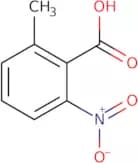
Formula:C7H3Br3O2Purezza:Min. 95%Colore e forma:PowderPeso molecolare:358.81 g/mol2-Methyl-6-nitrobenzoic acid
CAS:2-Methyl-6-nitrobenzoic acid is a yellow needle solid that is soluble in organic solvents. It is used as a reagent to prepare other chemicals and has been shown to react with sodium hydrogen sulfate, chloride, and sulfuric acid to form 2-methyl-6-nitrobenzenesulfonic acid. The mixture of 2-methyl-6-nitrobenzoic acid and sodium hydrogen sulfate reacts violently with chlorine gas or argon. This reaction solution can be evaporated by heating at atmospheric pressure or under vacuum, leaving 2-methyl-6-nitrobenzenesulfonic acid behind. 2MBA can also be purified by filtration or recrystallization from a suitable solvent such as chloroform or ether.
Formula:C8H7NO4Purezza:Min. 95%Colore e forma:Slightly Yellow PowderPeso molecolare:181.15 g/molRef: 3D-FM54884
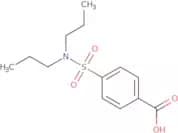
Prodotto fuori produzioneProbenecid
CAS:Prodotto controllatoOrganic anion transporter inhibitor; pannexin 1 channel inhibitor
Formula:C13H19NO4SPurezza:Min. 97.5 Area-%Colore e forma:White PowderPeso molecolare:285.36 g/molRef: 3D-FD27163
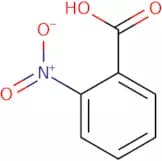
Prodotto fuori produzione2-Nitrobenzoic acid - Technical
CAS:2-Nitrobenzoic acid is an organic compound that is used as a reagent in the preparation of aldehydes, esters, and amides. It has been shown to be a potent inhibitor of the MCL-1 protein. This protein is an important regulator of mitochondrial permeability transition pore (MPTP) opening and apoptosis induction. The inhibition of the MPTP by 2-nitrobenzoic acid may be due to its ability to react with nitric oxide (NO) to form peroxynitrite, which reacts with MPTP proteins in the mitochondria. The use of 2-nitrobenzoic acid has been found to be effective in treating infectious diseases such as HIV, as well as autoimmune diseases such as psoriasis.
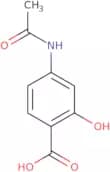
Formula:C7H5NO4Purezza:Min. 95%Colore e forma:PowderPeso molecolare:167.12 g/molN-Acetyl-4-aminosalicylic acid
CAS:N-Acetyl-4-aminosalicylic acid is an active site directed probe for the detection of salicylic acid. It has a fluorescence emission maximum at 370 nm and a fluorescence quantum yield of 0.93. N-Acetyl-4-aminosalicylic acid can be used to analyze samples, such as wastewater and human urine, which contain salicylic acid. The probe is protonated in the presence of salicylic acid and then binds to the acceptor in the sample with a bimodal distribution. The fluorescence resonance energy transfer (FRET) process between the donor and acceptor leads to an increase in fluorescence intensity that can be detected by electrophoresis methods. This probe also has a conformational change when it binds to its target, which allows for easy separation from other components in the sample by size exclusion chromatography.
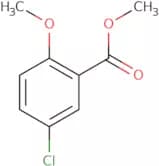
Formula:C9H9NO4Purezza:Min. 95%Colore e forma:Slightly Brown PowderPeso molecolare:195.17 g/mol5-Chloro-2-methoxybenzoic methyl ester
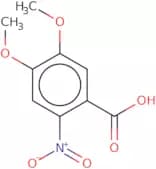
CAS:5-Chloro-2-methoxybenzoic methyl ester is a versatile building block commonly used in the synthesis of various compounds. It serves as an acid methyl ester, making it suitable for use in medicinal chemistry and other synthetic applications. This compound can be obtained through pyrolysis or by reacting 5-chloro-2-methoxybenzoic acid with methanol under appropriate conditions.Formula:C9H9ClO3Purezza:Min. 95%Colore e forma:PowderPeso molecolare:200.62 g/mol4,5-Dimethoxy-2-nitrobenzoic acid
CAS:4,5-Dimethoxy-2-nitrobenzoic acid (DMNB) is a nitrophenol compound that is used as an intermediate in the synthesis of pesticides. DMNB inhibits the growth of bacteria through its ability to inhibit protein synthesis and DNA replication. The inhibition is due to DMNB’s ability to covalently bind to nucleophilic sites on enzymes that are essential for these processes. It has been shown that DMNB can be degraded by microorganisms, such as bacteria, fungi, and algae. The biodegradation process may be facilitated by its solubility in water and its low molecular weight.
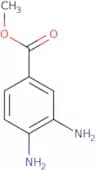
Formula:C9H9NO6Purezza:Min. 97.5%Colore e forma:Yellow SolidPeso molecolare:227.17 g/molMethyl 3,4-diaminobenzoate
CAS:Methyl 3,4-diaminobenzoate is a molecule that has been shown to inhibit nitrite reductase. It also binds to the receptor binding domain of the growth factor and to quinoxalines, which are antimicrobial peptides. In vitro assays have revealed that methyl 3,4-diaminobenzoate has antimicrobial properties against bacteria such as Enterococcus faecalis, Pseudomonas aeruginosa, Staphylococcus aureus, and Bacillus cereus. The mechanism of action for these activities is not well understood. Methyl 3,4-diaminobenzoate has been shown to be an inhibitor of tryptophan fluorescence in vitro and may act as a competitive inhibitor of the enzyme tryptophan fluorescence decarboxylase.
Formula:C8H10N2O2Purezza:Min. 95%Colore e forma:White PowderPeso molecolare:166.18 g/molRef: 3D-FM45100
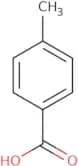
Prodotto fuori produzione4-Toluic acid
CAS:4-Toluic acid is a chemical compound with the molecular formula CH3C6H2O2. It is a white solid that is soluble in water and alcohol. 4-Toluic acid can be produced by oxidation of benzoate, which is a reaction catalyzed by light or by using a catalyst such as trifluoroacetic acid. The reaction mechanism begins with the formation of the intramolecular hydrogen and subsequent oxidation to form an organic radical. This organic radical then reacts with oxygen to produce 4-toluic acid. 4-Toluic acid has been shown to have biochemical properties such as enzyme inhibition, DNA cleavage, and protein denaturation. The coordination geometry for this molecule is octahedral, and its redox potentials are -0.27 V (in acidic solution) and -1.06 V (in alkaline solution).
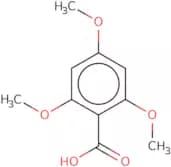
Formula:C8H8O2Purezza:Min. 98 Area-%Colore e forma:White PowderPeso molecolare:136.15 g/mol2,4,6-Trimethoxybenzoic acid
CAS:2,4,6-Trimethoxybenzoic acid (TMB) is a monomer that belongs to the class of organic compounds known as phenols. It can undergo dehydrogenation reactions with nitroethane in the presence of trifluoroacetic acid and catalytic amounts of hydrogen gas. TMB has been shown to interact with an allyl group in other molecules. The reaction system was studied under different flow rates and was found to be best described by an isotherm equation.
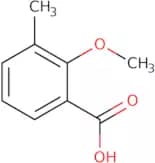
Formula:C10H12O5Purezza:Min. 95%Colore e forma:PowderPeso molecolare:212.2 g/mol2-Methoxy-3-methylbenzoic acid
CAS:2-Methoxy-3-methylbenzoic acid is a methoxy methyl, benzyl, methyl ether that can be used as a reagent in organic chemistry. It is an intermediate in the synthesis of phthalic anhydride and in the production of esters and quinones. 2-Methoxy-3-methylbenzoic acid is also used to produce potassium t-butoxide, which can be used for the synthesis of new types of reagents for organic synthesis. The chemical reacts with potassium hydroxide or potassium t-butoxide to form potassium 2-methoxy 3-methyl benzoate, which is soluble in water. This compound can also be produced from methoxy methyl benzyl chloride by reacting it with either potassium or sodium hydroxide.
Formula:C9H10O3Purezza:Min. 95%Colore e forma:White PowderPeso molecolare:166.17 g/molRef: 3D-FM70200
Prodotto fuori produzione4-Amino-3-methoxybenzoic acid
CAS:4-Amino-3-methoxybenzoic acid is an inhibitor of the enzyme hydroxylase. It has been shown to inhibit cancer cell growth in nanomolar concentrations and may be a potential anti-cancer drug candidate. 4-Amino-3-methoxybenzoic acid inhibits the production of 3-methoxy-4-nitrobenzoic acid, which is an intermediate in the biosynthesis of cyclic peptides. This compound also has potent inhibitory activity against active enzymes involved in the biosynthesis of 3-methoxy-4-nitrobenzoic acid, such as hydroxylases, nitroreductases, and methyltransferases.
Formula:C8H9NO3Purezza:Min. 95%Colore e forma:PowderPeso molecolare:167.16 g/mol2,5-Dichlorobenzoic acid methyl ester
CAS:2,5-Dichlorobenzoic acid methyl ester is a synthetic chemical compound that belongs to the class of aryl chlorides. It is soluble in organic solvents and can be polymerized using the vibrational method. 2,5-Dichlorobenzoic acid methyl ester has been shown to inhibit the growth of various bacteria strains by binding to sulfhydryl groups on proteins and inhibiting protein synthesis. This chemical also inhibits the uptake of sulfate ions by inhibiting the enzyme sulfate adenylyltransferase.
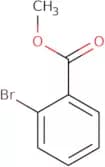
Formula:C8H6Cl2O2Purezza:Min. 95%Colore e forma:PowderPeso molecolare:205.04 g/molMethyl 2-bromobenzoate
CAS:Methyl 2-bromobenzoate is a chemical compound that can be used as a light emitting material. It is also used as a component of organic electrochemical cells (OECs) for the conversion of solar energy to electricity and can be used in the treatment of hepatitis. The reaction product is generated from the reaction of the halide with benzoate and light, which leads to an emission spectrum in the visible region. Methyl 2-bromobenzoate has been shown to be an efficient catalyst for Friedel-Crafts reactions, and it's pharmacokinetic properties have been studied in rats.
Methyl 2-bromobenzoate can also be used as a solid catalyst for the synthesis of bicyclic heterocycles.Formula:C8H7BrO2Purezza:Min. 95%Colore e forma:Colorless Clear LiquidPeso molecolare:215.04 g/molRef: 3D-FM36905
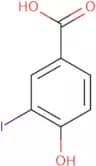
Prodotto fuori produzione4-Hydroxy-3-iodobenzoic acid
CAS:4-Hydroxy-3-iodobenzoic acid is a synthetic retinoid that is used in the synthesis of various other pharmaceutical compounds. It is also an inhibitor of bacterial growth, which may be due to its ability to bind to receptors on the bacterial cell surface. The antibiotic activity of 4-hydroxy-3-iodobenzoic acid has been demonstrated using an in vitro assay with Escherichia coli and Streptococcus pyogenes. 4-Hydroxy-3-iodobenzoic acid has also been shown to have antiestrogen properties when it competes with estradiol for receptor binding sites. This compound binds to the estrogen receptor and blocks its activity, inhibiting estrogen production by the ovaries or from other sources. Structural analysis of 4-hydroxy-3-iodobenzoic acid revealed that this compound has two functional groups: one group that interacts with nitrogen and another that binds to hydrogen or oxygen. These
Formula:C7H5IO3Purezza:Min. 95%Colore e forma:PowderPeso molecolare:264.02 g/mol5,6-Dichlorovanillic acid
CAS:5,6-Dichlorovanillic acid is a high quality, versatile molecule that can be used as a reagent in organic synthesis or as a building block for the synthesis of complex compounds. It has many useful properties, such as being a fine chemical and research chemicals. 5,6-Dichlorovanillic acid is also a speciality chemical with versatile uses in building blocks or reaction components.
Formula:C8H6Cl2O4Purezza:Min. 95%Colore e forma:PowderPeso molecolare:237.04 g/mol2-Nitrobenzoic acid
CAS:2-Nitrobenzoic acid is a diagnostic chemical that has been used for the detection of epidermal growth factor. It also has therapeutic properties, and has been used to treat infectious diseases and autoimmune diseases. 2-Nitrobenzoic acid is an organic compound that contains two nitro groups, which are connected to a benzene ring by two carbon chains. The molecule also contains two aldehyde groups, which are connected to the benzene ring by one carbon chain each. 2-Nitrobenzoic acid is a white crystalline solid with a melting point of 118°C and boiling point of 310°C. It is soluble in water and alcohols, but insoluble in ethers or chloroform.
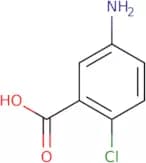
2-Nitrobenzoic acid can be synthesized from nitric acid and benzoic acid. This reaction produces enough heat to ignite the mixture if it's not cooled down first.Formula:C7H5NO4Purezza:Min. 94 Area-%Colore e forma:PowderPeso molecolare:167.12 g/mol5-Amino-2-chlorobenzoic acid
CAS:5-Amino-2-chlorobenzoic acid is a carboxylate that has antiproliferative effects. It is synthesized through the reaction of morpholine and malonic acid. 5-Amino-2-chlorobenzoic acid has been shown to have an optimal reaction with UV light, which may be due to its structure activity relationship with other carboxylates. It also has a high affinity for metal ions such as magnesium and chloride, which are thought to be important in cancer cell proliferation. 5-Amino-2-chlorobenzoic acid can be used in analytical methods because it is soluble in water and can be obtained through gravimetric analysis.
Formula:C7H6ClNO2Colore e forma:PowderPeso molecolare:171.58 g/molRef: 3D-FA36935
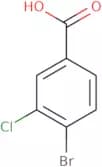
Prodotto fuori produzione4-Bromo-3-chlorobenzoic acid
CAS:4-Bromo-3-chlorobenzoic acid is a molecule that belongs to the class of antimicrobial compounds and is used for the treatment of gram-negative pathogens. It inhibits the growth of these bacteria by blocking their ability to synthesize DNA, RNA, and proteins. 4-Bromo-3-chlorobenzoic acid has been shown to be effective against bacteria in mammalian cells and also has activity against multidrug resistant strains. This compound is biosynthesized in plant cells from carbon sources like glucose, and it can be found in plants like carrot tissue. The resistance of bacteria to this compound has been observed globally, with outbreaks occurring in Japan and India.
Formula:C7H4BrClO2Purezza:Min. 95%Colore e forma:White PowderPeso molecolare:235.46 g/mol2-Amino-6-fluorobenzoic acid
CAS:Intermediate in the synthesis of idelalisib
Formula:C7H6FNO2Purezza:Min. 98 Area-%Colore e forma:PowderPeso molecolare:155.13 g/molRef: 3D-FA11268
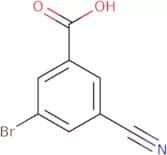
Prodotto fuori produzione3-Bromo-5-cyanobenzoic acid
CAS:3-Bromo-5-cyanobenzoic acid is a fine chemical that is used as a reagent or intermediate in the production of other chemicals. 3-Bromo-5-cyanobenzoic acid can be used as an intermediate in the synthesis of pharmaceuticals, agrochemicals, and perfumes. This compound is also useful as a building block for making speciality chemicals and research chemicals. 3-Bromo-5-cyanobenzoic acid is versatile because it can be used in many different reactions with many different substrates to make many different products.
Formula:C8H4BrNO2Purezza:Min. 95%Colore e forma:PowderPeso molecolare:226.03 g/molRef: 3D-FB12102
Prodotto fuori produzione4-(Acetylamino)-2-nitrobenzoic acid
CAS:4-(Acetylamino)-2-nitrobenzoic acid (AAANB) is a versatile building block that can be used in the synthesis of a wide range of organic and pharmaceutical compounds. AAANB is an intermediate in the preparation of 4-Amino-3-nitrophenol, which is an important research chemical. This compound is a useful scaffold for the synthesis of organic compounds with various biological activities. The CAS number for this product is 21573-29-5.
Formula:C9H8N2O5Purezza:Min. 95%Colore e forma:PowderPeso molecolare:224.17 g/molRef: 3D-FA131194
Prodotto fuori produzione3,5-Diamino-2,4,6-triiodobenzoic acid
CAS:3,5-Diamino-2,4,6-triiodobenzoic acid is a metabolite of hydrochloric acid and has been used in sample preparation for roentgenographic techniques. It is also used in the preparation of methylating agents for mass spectrometric analysis. It is hydrophilic with a methyl esterification that can be activated by amines. This chemical compound is found in human urine and has been shown to have an enhanced effect on tissues when combined with hydrochloric acid.
Formula:C7H5I3N2O2Purezza:Min. 95%Colore e forma:PowderPeso molecolare:529.84 g/mol4-Methyl-3-nitrobenzoic acid
CAS:4-Methyl-3-nitrobenzoic acid is a fine chemical that is used as a building block in the synthesis of complex compounds. It is often used as a reagent or speciality chemical, and it has a CAS number of 96-98-0. 4-Methyl-3-nitrobenzoic acid can be react with other chemicals to form useful intermediates or scaffolds for larger molecules. This chemical is versatile and can be used in many different reactions.
Formula:C8H7NO4Purezza:Min. 98.0 Area-%Peso molecolare:181.15 g/molRef: 3D-M-4217
Prodotto fuori produzione