Naftaleni
Trovati 2438 prodotti di "Naftaleni"
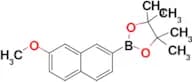
2-(7-Methoxynaphthalen-2-yl)-4,4,5,5-tetramethyl-1,3,2-dioxaborolane
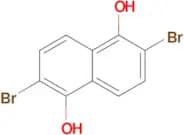
CAS:Purezza:97%Peso molecolare:284.16000372,6-Dibromonaphthalene-1,5-diol
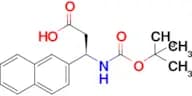
CAS:Formula:C10H6Br2O2Purezza:93%Colore e forma:SolidPeso molecolare:317.964(R)-3-((tert-Butoxycarbonyl)amino)-3-(naphthalen-2-yl)propanoic acid
CAS:Purezza:98%Peso molecolare:315.368988N2,N7-DI-1-NAPHTHALENYL-N2,N7-DIPHENYL-9,9′-SPIROBI[9H-FLUORENE]-2,7-DIAMINE
CAS:Purezza:98%Peso molecolare:750.9450073(R)-3,3′-Bis(4-nitrophenyl)-[1,1′-binaphthalene]-2,2′-diol
CAS:Purezza:97%Peso molecolare:528.5200195Calmagite [Metal indicator for Ca, Mg etc.]
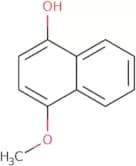
CAS:Formula:C17H14N2O5SColore e forma:Red to Dark blue to Black powder to crystalPeso molecolare:358.374-Methoxy-1-naphthol
CAS:Spectrophotometric substrate for peroxidase
Formula:C11H10O2Purezza:Min. 95%Colore e forma:Brown PowderPeso molecolare:174.2 g/mol1-Bromo-4-iodonaphthalene
CAS:1-Bromo-4-iodonaphthalene is an organic compound that can be synthesized in a number of steps. The first step involves the reaction of 4-bromobenzonitrile with sulfur. This is followed by the acetylation of the product to give 2-(acetyloxy)benzonitrile. An intermediate product is then obtained by reacting this with sodium azide in water and heating to 90°C for 12 hours. Finally, the intermediate product is reacted with phenylmagnesium bromide in ether and hydrolyzed with an alkali to give 1-bromo-4-iodonaphthalene. This compound has been used in the industrial synthesis of biphenyls and dyes such as methyl violet.
Formula:C10H6BrIPurezza:Min. 95%Colore e forma:Off-White PowderPeso molecolare:332.96 g/mol5,6,7,8-Tetrahydronaphthalene-2-carbaldehyde
CAS:5,6,7,8-Tetrahydronaphthalene-2-carbaldehyde is an indole derivative that is used as a precursor to produce other compounds. It is an inducers of enzymes (e.g., hydroxylase) and has been shown to increase the production of toxic metabolites such as cyclized products. 5,6,7,8-Tetrahydronaphthalene-2-carbaldehyde can be synthesized from anthracene by reacting it with acetone and hydrochloric acid. This compound can be converted into a variety of derivatives including esters and zoxazolamine. 5,6,7,8-Tetrahydronaphthalene-2-carbaldehyde also has carcinogenic properties and has been shown to cause cancer in rats when injected or orally administered in high doses.Formula:C11H12OPurezza:Min. 95%Colore e forma:PowderPeso molecolare:160.21 g/mol6-Hydroxy-2-naphtoic acid
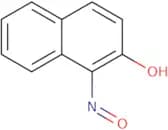
CAS:6-Hydroxy-2-naphtoic acid is an amide that is hydrolyzed to 6-hydroxybenzoic acid and formamide. It has been used as a viscosity modifier in the synthesis of polymers. 6-Hydroxy-2-naphtoic acid can be produced by a borane-tetrahydrofuran complex reaction with naphthalene. This reaction also produces p-hydroxybenzoic acid, which can then be converted to hydroxybenzoic acid with hydrochloric acid. The structural analysis of this compound has been performed using fluorescence probes and an inorganic acid.Formula:C11H8O3Purezza:Min. 95%Colore e forma:Yellow PowderPeso molecolare:188.18 g/mol1-Nitroso-2-naphthol
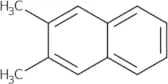
CAS:1-Nitroso-2-naphthol is a copper complex that is used as an analytical reagent for the determination of nitrogen content in organic compounds. It has been shown to have linear calibration curves with a detection limit of 0.01% nitrogen at a concentration of 20 ppm. The thermodynamic data for the formation of this complex is available and includes free energy, enthalpy, entropy, and Gibbs free energy values. A reaction mechanism has also been proposed for this compound. 1-Nitroso-2-naphthol has been shown to chelate ligands such as picolinic acid and matrix effects on its electrochemical impedance spectra can be seen. Pharmaceutical preparations containing 1-nitroso-2-naphthol are on the market as treatment for gastric ulcers and duodenal ulcers.Formula:C10H7NO2Purezza:Min. 95%Colore e forma:Brown PowderPeso molecolare:173.17 g/mol2,3-Dimethylnaphthalene
CAS:Dimethylnaphthalene is an aromatic hydrocarbon that absorbs UV radiation. The absorption of UV radiation can be used to measure the concentration of this compound in a sample. The solubility data for dimethylnaphthalene show that it is soluble in supercritical carbon dioxide, but insoluble in water. Dimethylnaphthalene is a chemical compound that can be used as a skin conditioner or in biological treatment. It has been shown to have antioxidant properties and may also have anti-inflammatory effects. Dimethylnaphthalene is synthesized from naphthalene by two different reactions: hydrogenation and oxidation. The reaction mechanism for these two reactions has not yet been determined, but both are believed to produce the same product.
Formula:C12H12Purezza:Min. 95%Colore e forma:White PowderPeso molecolare:156.22 g/mol

![(S)-[1,3′:1′,1”:3”,1”’-QUATERNAPHTHALENE]-2′,2”-DIOL](/_next/image/?url=https%3A%2Fstatic.cymitquimica.com%2Fproducts%2F10%2Fthumb-webp%2FF809455.webp&w=3840&q=75)
![(S)-2′-Amino-[1,1′-binaphthalen]-2-ol](/_next/image/?url=https%3A%2Fstatic.cymitquimica.com%2Fproducts%2F10%2Fthumb-webp%2FF890136.webp&w=3840&q=75)
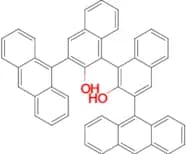
![N2,N7-DI-1-NAPHTHALENYL-N2,N7-DIPHENYL-9,9′-SPIROBI[9H-FLUORENE]-2,7-DIAMINE](/_next/image/?url=https%3A%2Fstatic.cymitquimica.com%2Fproducts%2F10%2Fthumb-webp%2FF799501.webp&w=3840&q=75)
![(R)-3,3′-DIIODO-[1,1′-BINAPHTHALENE]-2,2′-DIOL](/_next/image/?url=https%3A%2Fstatic.cymitquimica.com%2Fproducts%2F10%2Fthumb-webp%2FF811375.webp&w=3840&q=75)
![(R)-3,3′-Bis(4-nitrophenyl)-[1,1′-binaphthalene]-2,2′-diol](/_next/image/?url=https%3A%2Fstatic.cymitquimica.com%2Fproducts%2F10%2Fthumb-webp%2FF869876.webp&w=3840&q=75)
![Calmagite [Metal indicator for Ca, Mg etc.]](/_next/image/?url=https%3A%2Fstatic.cymitquimica.com%2Fproducts%2F3B%2Fthumb-webp%2FC0008.webp&w=3840&q=75)