Standard farmaceutici
Gli standard farmaceutici sono un insieme completo di materiali di riferimento essenziali per garantire la sicurezza, l'efficacia e la qualità dei prodotti farmaceutici. Questa categoria include standard per ingredienti farmaceutici attivi (API), che sono i componenti principali responsabili degli effetti terapeutici. Inoltre, copre composti e metaboliti rilevanti sia per l'industria farmaceutica che veterinaria, fornendo punti di riferimento per la misurazione e l'analisi precisa di queste sostanze. Gli standard di controllo delle nitrosammine sono cruciali per rilevare e mitigare le nitrosammine potenzialmente dannose nelle formulazioni di farmaci. Gli standard di tossicologia aiutano a valutare la sicurezza e i potenziali effetti avversi dei composti farmaceutici. Inoltre, gli standard per attivatori e inibitori enzimatici sono vitali per la ricerca e lo sviluppo, consentendo studi precisi delle vie biochimiche e dei meccanismi d'azione dei farmaci. Questi standard farmaceutici sono strumenti indispensabili per la conformità normativa, il controllo di qualità e la ricerca, garantendo che i prodotti farmaceutici soddisfino rigorosi criteri di sicurezza ed efficacia.
Sottocategorie di "Standard farmaceutici"
- APIs per la ricerca e le impurità(274.749 prodotti)
- Attivatori e inibitori enzimatici(2.827 prodotti)
- Nitrosamine(2.605 prodotti)
- Composti e metaboliti farmaceutici e veterinari(2.808 prodotti)
- Tossicologia(13.652 prodotti)
Trovati 7836 prodotti di "Standard farmaceutici"
Ordinare per
Purezza (%)
0
100
|
0
|
50
|
90
|
95
|
100
N,N,N-Trimethyl-2-oxo-1-propanaminium Chloride
CAS:Prodotto controllato<p>Applications N,N,N-Trimethyl-2-oxo-1-propanaminium Chloride is an intermediate in the synthesis of 3-Carboxy-N.N,N-trimethyl-2-oxo-1-propanaminium Chloride (C183230), which is a derivative of L-Carnitine (C184110).<br>References Brewer, F. et al.: Arch. Biochem. Biophys., 276, 495 (1990);<br></p>Formula:C6H14NO•ClColore e forma:NeatPeso molecolare:116.11 + (35.45)Polygalacturonic Acid (Technical Grade)
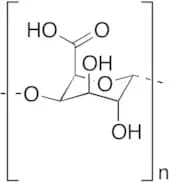
CAS:Prodotto controllato<p>Applications Polygalacturonic Acid is found in ripe fruits and some vegetables and is a degradation product of pectin in plants.<br>References Aspinall, G., et al.: J. Chem. Soc., 4020 (1958);<br></p>Formula:(C6H10O7)nColore e forma:NeatPeso molecolare:194.14Glutaurine Sodium Salt
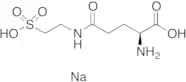
CAS:<p>Applications Glutaurine Sodium Salt is the salt of Glutaurine (G597350) which has been observed to display antiepileptic effects with anti-amnesia properties. Mimics anxiolytic drug Diazepam (D416855).<br>References Bittner, S. et al.: Amino Acids., 28, 343 (2005); Uemura, S. et al.: Brain. res., 594, 347 (1992);<br></p>Formula:C7H14N2O6S•x(Na)Colore e forma:NeatPeso molecolare:254.2622991,2-Dihydro Beclomethasone Dipropionate
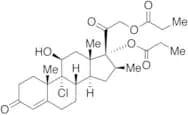
CAS:Prodotto controllato<p>Impurity Beclomethasone Dipropionate EP Impurity L<br>Applications 1,2-Dihydro Beclomethasone Dipropionate (Beclomethasone Dipropionate EP Impurity L) is an impurity of Beclomethasone Dipropionate (B131030).<br></p>Formula:C28H39ClO7Colore e forma:NeatPeso molecolare:523.06Sinensetin
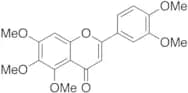
CAS:Prodotto controllato<p>Applications Sinensetin exhibits anti-fungal, anti-histamine activity; induce cell differentiation, inhibition of linoleic acid oxidation, inhibition of white blood cells in the human zona protein Interleukin -1-induced expression of tissue factor.<br> Not a dangerous good if item is equal to or less than 1g/ml and there is less than 100g/ml in the package<br>References Elliott, A., et al.: Biochem. Pharmacol., 44, 1603 (1992), Furuta, S., et al.: J. Food Sci., 62, 526 (1997),<br></p>Formula:C20H20O7Colore e forma:NeatPeso molecolare:372.37Phenylglyoxylic Acid-13C8
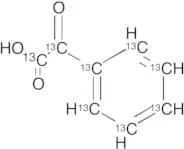
CAS:<p>Applications Phenylglyoxylic Acid-13C8 is an intermediate used in the synthesis of Mandelic Acid-13C8 (M162523), which is the C13 labelled Mandelic Acid which is used as an antiseptic (urinary). It is also used as a short-term exposure biomarker in urine from styrene exposed workers.<br>References Pessela, B., et al.: Enzyme Microb. Technol., 40, 310 (2007); Carrasco-Lopez, C., et al.: J. Biol. Chem., 284, 4365 (2009); Fustinoni, S., et al.: Toxicol. Lett., 192, 40 (2010)<br></p>Formula:C8H6O3Colore e forma:NeatPeso molecolare:158.07Terazosin (piperazine D8)
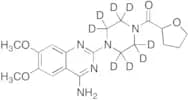
CAS:Prodotto controllato<p>Applications Terazosin (piperazine D8) is labelled Terazosin (T105000, HCl salt; T105005, HCl Dihydrate) which is an α-1-adrenergic blocker related to prazosin.<br>References Patterson, S.E., et al.: J. Chromatog., 311, 206 (1984); Fort, F.L., et al.: Drug Chem. Toxicol., 7, 435 (1984); Lepor, H., et al.: J. Urol., 148, 1467 (1992)<br></p>Formula:C19H17D8N5O4Colore e forma:NeatPeso molecolare:395.483-(4-Chlorophenyl)-4-hydroxybutyric Acid Sodium Salt
CAS:Prodotto controllato<p>Applications A metabolite of Baclofen (c).<br>References Ault, B., et al.: Eur. J. Pharmacol., 71, 357 (1981),<br></p>Formula:C10H10ClNaO3Colore e forma:NeatPeso molecolare:236.63Potassium Bromide
CAS:<p>Applications Potassium bromide is an ionic compound that is commonly used in chemistry to form a pellet that can be used to analyze a number of compounds by means of infrared spectroscopy. Potassium bromide is also used as an anticonvulsant to treat refractory seizures in humans and dogs.<br>References Kirkland, J.: Anal. Chem., 27, 1537 (1955); Korinthenberg, R., et al.: J. Child Neuro., 22, 414 (2007); Wilberley, S., et al.: Anal. Chem., 29, 210 (1957); Yohn, S., et al.: J. Am. Vet. Med. Ass., 201, 468 (1992)<br></p>Formula:BrKColore e forma:White To Off-WhitePeso molecolare:119.00Diazoxide-d3
CAS:Prodotto controllato<p>Applications Diazoxide-d3 is the labeled analogue of Diazoxide (D417305), which reduces status epilepticus neuron damage in diabetes.<br>References Baba, A., et al.: J. Neurosci., 23, 7737 (2003); Bancila, V., et al.: J. Neurochem., 90, 1243 (2004); Bancila, V., et al.: J. Biol. Chem., 280, 8793 (2005)<br></p>Formula:C8H4D3ClN2O2SColore e forma:NeatPeso molecolare:233.69Isovaleric anhydride
CAS:Prodotto controllato<p>Applications Isovaleric anhydride<br> Not a dangerous good if item is equal to or less than 1g/ml and there is less than 100g/ml in the package<br></p>Formula:C10H18O3Colore e forma:ColourlessPeso molecolare:186.25Tranexamic-d2 Acid
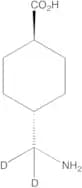
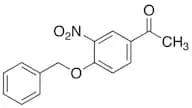
CAS:Prodotto controllato<p>Applications Tranexamic-d2 acid is deuterium labelled tranexamic acid (T714505), which is an antifibrinolytic agent that blocks lysine binding sites of plasminogen. Hemostatic.<br>References Andersson, et al.: Scand. J. Haematol. 2, 230 (1965), Melander, B., et al.: Acta Pharmacol. Toxicol., 22, 340 (1965), Bonnar, J., et al.: Br. Med. J., 313, 579 (1996), Dunn, C.J., et al.: Drugs, 57, 1005 (1999),<br></p>Formula:C8H13D2NO2Colore e forma:NeatPeso molecolare:159.224’-Benzyloxy-3’-nitroacetophenone
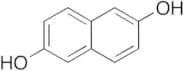
CAS:Prodotto controllato<p>Applications 4’-Benzyloxy-3’-nitroacetophenone (cas# 14347-05-8) is a compound useful in organic synthesis.<br></p>Formula:C15H13NO4Colore e forma:NeatPeso molecolare:271.272,6-Dihydroxynaphthalene
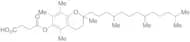
CAS:Prodotto controllato<p>Applications 2,6-Dihydroxynaphthalene can produce convulsions in mice. Monooxylosylated 2,6-Dihydroxynaphthalene exhibits antiproliferative activity towards certain cells.<br>References Angel, A., et al.: Toxicol. Appl. Pharm., 21, 14 (1972); Jacobsson, M., et al.: J. Med. Chem., 49, 1932 (2006)<br></p>Formula:C10H8O2Colore e forma:NeatPeso molecolare:160.17dl-α-Tocopherol Succinate
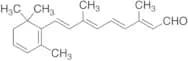
CAS:Prodotto controllatoFormula:C33H54O5Colore e forma:NeatPeso molecolare:530.783-Dehydro Retinal
CAS:Prodotto controllato<p>Stability Light Sensitive, Temperature Sensitive<br>Applications An oxidized derivative of the visual pigment carotenoid.<br>References Wada, A., et al.: Chem. Pharm. Bull., 56, 112 (2008), Smolensky, E., et al.: Biochem., 48, 9170 (2009),<br></p>Formula:C20H26OColore e forma:NeatPeso molecolare:282.42Acetylsalicylic Acid-d3
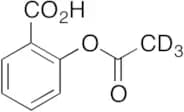
CAS:Prodotto controllato<p>Stability Hygroscopic<br>Applications Acetyl-d3-salicylic Acid is an an Analgesic; antipyretic; anti-inflammatory; antithrombotic and was found to have a large degree of similarity in terms of molecular reorientation just above the glass transition temperature, with other glass formers at its super cooled and glassy states.<br>References Nath, R., Nowaczyk, A., Geil, B., Boehmer, R.: J. Non-cryst. Solids, 353, 3788 (2007); Hart, E.R., et al.: J. Pharmacol. Exp. Ther., 89, 205 (1947); Florey, K., et al.: Anal. Profiles Drug Subs., 8, 1 (1979)<br></p>Formula:C92H3H5O4Colore e forma:NeatPeso molecolare:183.18γ-Heptalactone
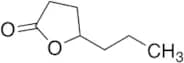
CAS:Prodotto controllato<p>Applications ��-Heptanolactone, �� 98.0% (cas# 105-21-5) is a useful research chemical.<br></p>Formula:C7H12O2Colore e forma:NeatPeso molecolare:128.17N2'-Deacetyl-N2'-[3-(methylthio)-1-oxopropyl]-maytansine
CAS:Prodotto controllato<p>Applications N2'-Deacetyl-N2'-[3-(methylthio)-1-oxopropyl]-maytansine is an active metabolite of Maytansine (M197940), inhibits in vitro polymerization of tubulin and is used in the treatment of advanced breast cancer.<br>References Remillard, S., et. al.: Science, 189, 1002 (1975); Prota, A.E., et. al.: P. Natl. Acad. Sci. USA, 111, 13817 (2014)<br></p>Formula:C36H50ClN3O10SPurezza:>90%Colore e forma:NeatPeso molecolare:752.31Naphthalene-1-sulfonic Acid (Technical Grade)
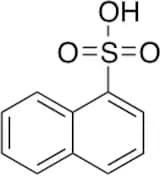
CAS:Prodotto controllato<p>Applications Naphthalene-1-sulfonic acid (cas# 85-47-2) is a useful research chemical.<br> Not a dangerous good if item is equal to or less than 1g/ml and there is less than 100g/ml in the package<br></p>Formula:C10H8O3SColore e forma:NeatPeso molecolare:208.23






![N2'-Deacetyl-N2'-[3-(methylthio)-1-oxopropyl]-maytansine](/_next/image/?url=https%3A%2Fstatic.cymitquimica.com%2Fproducts%2FTR%2Fthumb-webp%2FD199035.webp&w=3840&q=75)