Standard farmaceutici
Gli standard farmaceutici sono un insieme completo di materiali di riferimento essenziali per garantire la sicurezza, l'efficacia e la qualità dei prodotti farmaceutici. Questa categoria include standard per ingredienti farmaceutici attivi (API), che sono i componenti principali responsabili degli effetti terapeutici. Inoltre, copre composti e metaboliti rilevanti sia per l'industria farmaceutica che veterinaria, fornendo punti di riferimento per la misurazione e l'analisi precisa di queste sostanze. Gli standard di controllo delle nitrosammine sono cruciali per rilevare e mitigare le nitrosammine potenzialmente dannose nelle formulazioni di farmaci. Gli standard di tossicologia aiutano a valutare la sicurezza e i potenziali effetti avversi dei composti farmaceutici. Inoltre, gli standard per attivatori e inibitori enzimatici sono vitali per la ricerca e lo sviluppo, consentendo studi precisi delle vie biochimiche e dei meccanismi d'azione dei farmaci. Questi standard farmaceutici sono strumenti indispensabili per la conformità normativa, il controllo di qualità e la ricerca, garantendo che i prodotti farmaceutici soddisfino rigorosi criteri di sicurezza ed efficacia.
Sottocategorie di "Standard farmaceutici"
- APIs per la ricerca e le impurità(273.647 prodotti)
- Attivatori e inibitori enzimatici(2.827 prodotti)
- Nitrosamine(2.605 prodotti)
- Composti e metaboliti farmaceutici e veterinari(2.602 prodotti)
- Tossicologia(13.652 prodotti)
Trovati 7836 prodotti di "Standard farmaceutici"
Ordinare per
Purezza (%)
0
100
|
0
|
50
|
90
|
95
|
100
4,4'-Diphenyl-2,2'-bipyridine
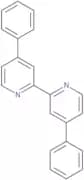
CAS:<p>4,4'-Diphenyl-2,2'-bipyridine is a ligand that can be used to produce more efficient magnesium peroxide catalysts. The efficiency of the catalyst was found to increase with increasing concentrations of the ligand. 4,4'-Diphenyl-2,2'-bipyridine has been shown to bind strongly to chloride ions and may have potential applications in animal health as a supplement. This compound is also useful in electrochemical data studies because it has a relatively high oxidation potential and electrochemical stability. It can also be used for photophysical studies due to its strong fluorescence. 4,4'-Diphenyl-2,2'-bipyridine can be synthesized by reacting carbon tetrachloride with an animal or vegetable oil or fat.</p>Formula:C22H16N2Purezza:Min. 95 Area-%Colore e forma:PowderPeso molecolare:308.38 g/molBiotinyl-Asp-Glu-Val-Asp-aldehyde (pseudo acid)
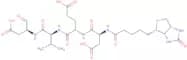
CAS:<p>Biotinyl-Asp-Glu-Val-Asp-aldehyde (pseudo acid) is a biotinylated amino acid, which can be used to study the affinity of caspases and other proteases. Biotin binds to the peptide through an amide bond and the amino group on the biotin molecule reacts with reactive groups on proteins, such as lysine, cysteine, histidine, or arginine. This reaction leads to the formation of a stable link between biotin and the target protein. The biotinylated peptide can then be purified from a sample by using an affinity chromatography column that has been pre-coated with streptavidin.<br>Biotin is not toxic because it does not bind to DNA.</p>Formula:C28H42N6O12SPurezza:Min. 95%Peso molecolare:686.73 g/molCholesterol butyrate
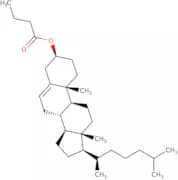
CAS:Prodotto controllato<p>Cholesterol butyrate is a fatty acid that has been shown to have antimicrobial activity against Lactobacillus acidophilus. It is also used as a treatment for trigeminal neuralgia and bowel disease. Cholesterol butyrate has been shown to inhibit the growth of cancer cells in vitro by inducing apoptosis. This compound may be effective in the treatment of cancer due to its photostability and ability to bind with lipoproteins and other compounds, which leads to an increased concentration of cholesterol butyrate at the site of inflammation. Cholesterol butyrate has also been shown to be effective in preventing inflammatory bowel disease by inhibiting prostaglandin synthesis.</p>Formula:C31H52O2Purezza:Min. 95%Colore e forma:PowderPeso molecolare:456.74 g/mol3'-methoxy apiin;Chrysoeiol-7-(2-O-apiosylglucoside)
CAS:<p>Please enquire for more information about 3'-methoxy apiin;Chrysoeiol-7-(2-O-apiosylglucoside) including the price, delivery time and more detailed product information at the technical inquiry form on this page</p>Purezza:Min. 95%(D-Ala2,N-Me-Phe4,methionin(O)-ol5)-Enkephalin trifluoroacetate salt
CAS:<p>D-Ala2,N-Me-Phe4,methionin(O)-ol5)-Enkephalin trifluoroacetate salt H-Tyr-D-Ala-Gly-N-Me-Phe-methionin(O)-ol trifluoroacetate salt is an analog of the endocannabinoid neurotransmitter, anandamide. It has been shown to be effective in the treatment of autoimmune diseases such as multiple sclerosis and inflammatory bowel disease. D-(3R)-3-[(1S,2R,3R,5R) -3-[2-(2,6 dichlorophenyl)ethenyl] -1H -indole]-1 -butanamine trifluoroacetate salt has been shown to inhibit the replication of a number of viruses including human immunodeficiency virus type 1 (HIV). This drug also inhibits the growth of organisms that are resistant</p>Formula:C29H41N5O7SPurezza:Min. 95%Peso molecolare:603.73 g/molcis-Vitamin K1
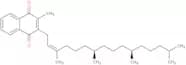
CAS:<p>Vitamin K is a fat-soluble vitamin that is required for blood coagulation. The major form of vitamin K in the body is the chemically similar menaquinone. Vitamin K1, also known as phylloquinone, is synthesized by plants and bacteria and can be found in green leafy vegetables, broccoli, cabbage, Brussels sprouts, kale, spinach, soybean oil and margarine. It has been shown to be an effective supplement for treating hypoprothrombinemia (low levels of prothrombin) in infants and tissues. The terminal half-life of vitamin K1 is about 20 days.</p>Formula:C31H46O2Purezza:Min. 95%Peso molecolare:450.7 g/mol4'-Demethyl homoharringtonine
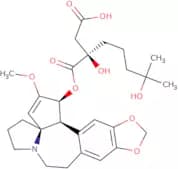
CAS:<p>Homoharringtonine is a natural drug that has been used for the treatment of cancer and other diseases. It is an antitumor agent that inhibits cell growth by affecting DNA synthesis, RNA synthesis, protein synthesis, and the activity of enzymes. Homoharringtonine also has antineoplastic effects and can be used to treat leukemia. Homoharringtonine binds to DNA in a ring-opening reaction with yields of up to 20%. This compound can be synthesized from phenylalanine and substituted with a trisubstituted benzene ring. It also catalyzes the conversion of an enamine into an iminium ion, which reacts with a second molecule of enamine to form a keto-enamine.</p>Formula:C28H37NO9Purezza:Min. 95%Peso molecolare:531.59 g/moltrans,cis-2,6-Nonadienal
CAS:<p>Trans,cis-2,6-Nonadienal is a fatty acid derivative with an unsaturated 2,6-nonadiene structure. It is an inhibitor of the enzyme fatty acid synthase, which catalyzes the formation of long-chain polyunsaturated fatty acids. Trans,cis-2,6-Nonadienal has been shown to inhibit v79 cells and ester compounds that are used in analytical methods for measuring fatty acids. It is also able to inhibit lysine residues and it can be used as a reactive antioxidant system in mammalian cells. Trans,cis-2,6-Nonadienal has shown a profile of activities that includes inhibition at multiple endpoints involving noncompetitive inhibition as well as antioxidant activity.</p>Formula:C9H14OPurezza:Min. 95%Colore e forma:Clear LiquidPeso molecolare:138.21 g/molDesmethylene paroxetine hydrochloride salt
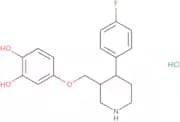
CAS:<p>Please enquire for more information about Desmethylene paroxetine hydrochloride salt including the price, delivery time and more detailed product information at the technical inquiry form on this page</p>Formula:C18H21ClFNO3Purezza:Min. 95%Peso molecolare:353.82 g/mol1,1-Diethylurea
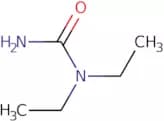
CAS:<p>1,1-Diethylurea is a 5-nitrosalicylic acid amide derivative. It is used as a reagent to synthesize other chemicals, such as 3,5-dinitrosalicylic acid and N-acetyl-2,6-diaminopurine. The reaction intermediates of this compound are chloride and liquid chromatograph with azides and quinoline derivatives. The molecular modeling and reaction products of 1,1-diethylurea are organic solution and pharmaceutical preparations. Fatty acids can be used to manufacture this product.</p>Formula:C5H12N2OPurezza:Min. 95%Peso molecolare:116.16 g/molCamphorquinone
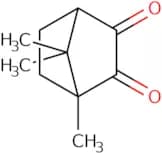
CAS:<p>Camphorquinone is an inorganic acid that is a component of the topical anaesthetic hydrochloride, which is used for the treatment of pain. Camphorquinone has a hydroxyl group, which can be replaced with other groups to produce different compounds. It has been shown to have a kinetic data for the polymerase chain reaction and to inhibit the activity of 4-dimethylaminobenzoic acid. Camphorquinone has also been shown to be effective against dental plaque and rat liver microsomes. The clinical relevance of camphorquinone has not yet been determined, but it may have an effect on hydrochloric acid production by zirconium oxide light emission.</p>Formula:C10H14O2Purezza:Min. 95%Colore e forma:PowderPeso molecolare:166.22 g/mol4-Methyl-3-nitrophenyl isocyanate
CAS:<p>4-Methyl-3-nitrophenyl isocyanate (4MPN) is a chiral diisocyanate that can be used as an activated diisocyanate. 4MPN is prepared by the carbonylation of 3-nitrobenzaldehyde and xylene with hydrogen chloride in the presence of a catalyst. Impurities, such as chlorides or sulfurs, can be detected using surface methodology techniques. The feedstock for this compound is usually xylene, which has a high boiling point. This product contains reactive functional groups that can be used to modify surfaces and create polyurethane products.</p>Formula:C8H6N2O3Purezza:Min. 95%Colore e forma:PowderPeso molecolare:178.14 g/mol3'-[2- Cyanoethyl N, N- bis(1- methylethyl) phosphoramidite]-5'- O- [bis(4- methoxyphenyl) phenylmethyl] - 2'- O- methyl- N- [2- [4- (1- methylethyl) phenoxy] acetyl] -guanosine
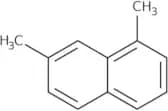
CAS:<p>Please enquire for more information about 3'-[2- Cyanoethyl N, N- bis(1- methylethyl) phosphoramidite]-5'- O- [bis(4- methoxyphenyl) phenylmethyl] - 2'- O- methyl- N- [2- [4- (1- methylethyl) phenoxy] acetyl] -guanosine including the price, delivery time and more detailed product information at the technical inquiry form on this page</p>Formula:C52H62N7O10PPurezza:Min. 95%Peso molecolare:976.06 g/mol1,7-Dimethylnaphthalene
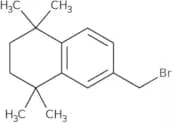
CAS:<p>1,7-Dimethylnaphthalene is a molecule that can be found in various aromatic hydrocarbons. It has been shown to have an inhibitory effect on the growth of cancer cells. 1,7-Dimethylnaphthalene is also used as a biological treatment in industrial chemicals. It is known to increase the rate of fatty acid biosynthesis and inhibits the production of certain enzymes that are involved in cancer development.</p>Formula:C12H12Purezza:Min. 95%Peso molecolare:156.22 g/mol6-(Bromomethyl)-1,1,4,4-tetramethyl-1,2,3,4-tetrahydronaphthalene
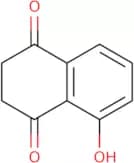
CAS:<p>Please enquire for more information about 6-(Bromomethyl)-1,1,4,4-tetramethyl-1,2,3,4-tetrahydronaphthalene including the price, delivery time and more detailed product information at the technical inquiry form on this page</p>Formula:C15H21BrPurezza:Min. 80 Area-%Colore e forma:Clear LiquidPeso molecolare:281.23 g/mol5-Hydroxy-2,3-dihydronaphthalene-1,4-dione
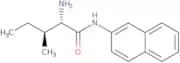
CAS:<p>Please enquire for more information about 5-Hydroxy-2,3-dihydronaphthalene-1,4-dione including the price, delivery time and more detailed product information at the technical inquiry form on this page</p>Formula:C10H8O3Purezza:Min. 95%Peso molecolare:176.17 g/molL-Isoleucine β-naphthylamide
CAS:<p>L-Isoleucine beta-naphthylamide is an amide derivative of L-isoleucine and 2-naphthylamine, which are carboxylic acid derivatives. The condensation of these two substances leads to the formation of a new compound with a carboxy group and an amino group.</p>Formula:C16H20N2OPurezza:Min. 95%Peso molecolare:256.34 g/mol(+/-)-Perillaldehyde
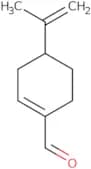
CAS:<p>Perillaldehyde is a natural compound that has been used in food and medicine for centuries. It is an antimicrobial agent with dextran sulfate, which is a sugar polymer that inhibits the growth of fungi and bacteria. Perillaldehyde also has been shown to inhibit the energy metabolism of microorganisms by decreasing ATP production. Perillaldehyde has also been shown to have genotoxic activity, as it can cause DNA strand breaks. This compound also causes oxidative stress in cells by reducing mitochondrial membrane potential and inducing reactive oxygen species (ROS). Perillaldehyde has acute toxicities, as it causes electrochemical impedance spectroscopy changes that indicate cell death.</p>Formula:C10H14OPurezza:Min. 95%Colore e forma:PowderPeso molecolare:150.22 g/mol2-(2-Naphthyloxy)propanoic acid
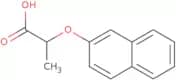
CAS:<p>2-(2-Naphthyloxy)propanoic acid is a naphthalene derivative that is found in the plant species Carthamus tinctorius. It has been shown to have potent antagonist activity against the NMDA receptor, as well as antinociceptive and analgesic properties in vivo. 2-(2-Naphthyloxy)propanoic acid also shows potent anti-inflammatory and cardioprotective effects in vitro and in vivo. 2-(2-Naphthyloxy)propanoic acid can be used for the treatment of bone cancer, congestive heart failure, diabetic neuropathy, or other disorders of the peripheral nervous system.</p>Formula:C13H12O3Purezza:Min. 95%Peso molecolare:216.23 g/molTriglycerol monolaurate
CAS:<p>Triglycerol monolaurate (GLA) is a fatty acid that can be synthesized by reacting glycerol with lauric acid. It has been shown to have antimicrobial properties, inhibiting the growth of fungi such as flavus and staphylococcus. GLA also inhibits the production of lipase and protease, enzymes that are required for the digestion of dietary fats. GLA has been used in infant formulas to inhibit the growth of bacteria, such as p. aeruginosa, which may cause infantile diarrhea. Triglycerol monolaurate is also used as dietary supplement to treat eczema due to its inhibitory effect on inflammatory cytokines such as tumor necrosis factor-α (TNF-α).</p>Formula:C21H42O8Purezza:Min. 95%Peso molecolare:422.55 g/mol




![3'-[2- Cyanoethyl N, N- bis(1- methylethyl) phosphoramidite]-5'- O- [bis(4- methoxyphenyl) phenylm…](/_next/image/?url=https%3A%2Fstatic.cymitquimica.com%2Fproducts%2F3D%2Fthumb-webp%2FFC165570.webp&w=3840&q=75)