Standard farmaceutici
Gli standard farmaceutici sono un insieme completo di materiali di riferimento essenziali per garantire la sicurezza, l'efficacia e la qualità dei prodotti farmaceutici. Questa categoria include standard per ingredienti farmaceutici attivi (API), che sono i componenti principali responsabili degli effetti terapeutici. Inoltre, copre composti e metaboliti rilevanti sia per l'industria farmaceutica che veterinaria, fornendo punti di riferimento per la misurazione e l'analisi precisa di queste sostanze. Gli standard di controllo delle nitrosammine sono cruciali per rilevare e mitigare le nitrosammine potenzialmente dannose nelle formulazioni di farmaci. Gli standard di tossicologia aiutano a valutare la sicurezza e i potenziali effetti avversi dei composti farmaceutici. Inoltre, gli standard per attivatori e inibitori enzimatici sono vitali per la ricerca e lo sviluppo, consentendo studi precisi delle vie biochimiche e dei meccanismi d'azione dei farmaci. Questi standard farmaceutici sono strumenti indispensabili per la conformità normativa, il controllo di qualità e la ricerca, garantendo che i prodotti farmaceutici soddisfino rigorosi criteri di sicurezza ed efficacia.
Sottocategorie di "Standard farmaceutici"
- APIs per la ricerca e le impurità(275.013 prodotti)
- Attivatori e inibitori enzimatici(2.827 prodotti)
- Nitrosamine(2.605 prodotti)
- Composti e metaboliti farmaceutici e veterinari(2.878 prodotti)
- Tossicologia(13.652 prodotti)
Trovati 7836 prodotti di "Standard farmaceutici"
Ordinare per
Purezza (%)
0
100
|
0
|
50
|
90
|
95
|
100
5’-Deoxyfluorouridine-13C,15N2
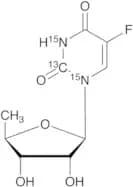
CAS:Prodotto controllato<p>Applications 5’-Deoxyfluorouridine-13C,15N2 is a compound useful in organic synthesis.<br></p>Formula:C8CH11FN2O5Colore e forma:NeatPeso molecolare:249.17Methyl-(4-nitrophenylethyl)-(4-nitrophenoxyethyl)amine
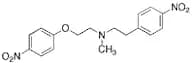
CAS:Prodotto controllato<p>Applications Methyl-(4-nitrophenylethyl)-(4-nitrophenoxyethyl)amine (cas# 115287-37-1) is a compound useful in organic synthesis.<br></p>Formula:C17H19N3O5Colore e forma:NeatPeso molecolare:345.35Hematoporphyrin Dihydrochloride
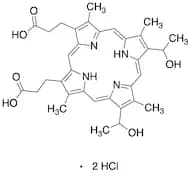
CAS:Prodotto controllato<p>Stability Hygroscopic<br>Applications Hematoporphyrin dihydrochlordie (cas# 17696-69-4) is a useful research chemical.<br></p>Formula:C34H38N4O6·2ClHColore e forma:NeatPeso molecolare:671.61N-Acetyl-L-tyrosine
CAS:Prodotto controllato<p>Applications N-Acetyl-L-tyrosine is an analogue of L-tyrosine which stimulate the transport of L-Tyr, mainly by the ASC system.<br>References Jara, J. et al.: Melanoma Res., 1, 15 (1991),<br></p>Formula:C11H13NO4Colore e forma:Off-WhitePeso molecolare:223.23Ademethionine-d3 1,4-Butanedisulfonate (>85%)
CAS:Prodotto controllato<p>Applications Ademethionine-d3 1,4-Butanedisulfonate, is a labeled analogue of Ademethionine 1,4-Butanedisulfonate (A280355), used in the synthesis of sulfonio-adenosyl-L-methionine (SAMe) salts.<br></p>Formula:C15H20D3N6O5S(C4H8O6S2)·(C4H10O6S2)Purezza:>85%Colore e forma:NeatPeso molecolare:402.46 (Free Base)Cinnamic Acid-13C3
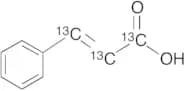
CAS:<p>Applications Cinnamic Acid-13C3 is the labelled analogue of Cinnamic Acid which is rac-form of trans-Cinnamic Acid (P336185) that is used in the synthesis of amides and esters through coupling reactions involving carboxylic acids and amines and N-methylation of amides and O-methylation of carboxylic acids.<br>References Kunishima, M. et al.: Tetrahedron, 55, 13159 (1999); Xia, Q. et al.: Org. Lett., 15, 3326 (2013);<br></p>Formula:C613C3H8O2Colore e forma:White To Off-WhitePeso molecolare:151.141,2,4-Trioctyl Ester 1,2,4-Benzenetricarboxylic Acid-d51
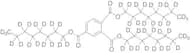
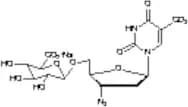
CAS:Prodotto controllato<p>Applications Isotope labelled 1,2,4-Trioctyl Ester 1,2,4-Benzenetricarboxylic Acid is a widely used and often incorporated in plasticizer for PVC for a higher molecular weight.<br>References Jones, C., et al.: Int. J. Artificial. Organs., 12, 466 (1989); Khang, G., et al.: Bio-Med. Mater. Engineer., 12, 135 (2002);<br></p>Formula:C33D51H3O6Colore e forma:NeatPeso molecolare:598.0923'-Azido-3'-deoxythymidine-methyl-d3 β-D-glucuronide, Sodium Salt
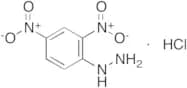
CAS:Prodotto controllato<p>Applications A deuterated metabolite of the potent and selective inhibitor of HIV-1 replication, AZT.This compounds contains Sodium Chloride. Water content not determined.<br></p>Formula:C16D3H17N5O10·NaColore e forma:NeatPeso molecolare:468.36582,4-Dinitrophenylhydrazine Hydrochloride
CAS:<p>Stability Hygroscopic<br>Applications 2,4-Dinitrophenylhydrazine Hydrochloride (cas# 55907-61-4) is a useful research chemical.<br> Not a dangerous good if item is equal to or less than 1g/ml and there is less than 100g/ml in the package<br></p>Formula:C6H6N4O4·ClHColore e forma:NeatPeso molecolare:234.5973'-Amino-2'-hydroxyacetophenone Hydrochloride
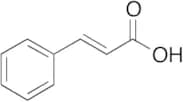
CAS:Prodotto controllato<p>Applications Reagent used to prepare Aminophenol derivatives.<br></p>Formula:C8H10ClNO2Colore e forma:NeatPeso molecolare:187.62Cinnamic Acid
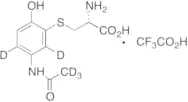
CAS:Prodotto controllato<p>Applications Cinnamic Acid is rac-form of trans-Cinnamic Acid (P336185) which is used in the synthesis of amides and esters through coupling reactions involving carboxylic acids and amines and N-methylation of amides and O-methylation of carboxylic acids.<br>References Kunishima, M. et al.: Tetrahedron, 55, 13159 (1999); Xia, Q. et al.: Org. Lett., 15, 3326 (2013);<br></p>Formula:C9H8O2Colore e forma:White To Off-WhitePeso molecolare:148.1593-Cysteinylacetaminophen-D5 (major), Trifluoroacetic Acid Salt
CAS:Prodotto controllato<p>Applications 3-Cysteinylacetaminophen-D5 (major), Trifluoroacetic Acid Salt is deuterium labeled 3-Cysteinylacetaminophen Trifluoroacetic Acid Salt (C994750), which is a metabolite of Acetaminophen (A161220), an analgesic and antipyretic agent used as a pain reliever to treat headache, muscle aches, and arthritis (1,2,3).Minimum isotopic incorporation d-3, no d-0 present. A representative lot has 64% isotopic incorporation at the 6-position, 89% at the 4-position.<br>References (1) McGill, M. R. and Jaeschke, H. Pharm Res. 30, 2174 (2013)(2) Fairbrother, J.E., et al.: Anal. Profiles Drug Subs., 3, 1 (1974) (3) Hinson, J.A., et al.: Rev. Biochem. Toxicol., 2, 103 (1980)<br></p>Formula:C11H9D5N2O4S•C2HF3O2Colore e forma:NeatPeso molecolare:389.36(4-Chloro-2-methylphenoxy-2,3,5-d3)acetic Acid
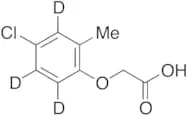
CAS:Prodotto controllato<p>Applications Labelled derivative of (4-Chloro-2-methylphenoxy)acetic Acid (C369470).(4-Chloro-2-methylphenoxy)acetic Acid is a herbicide.Environmental toxin on US EPA Toxic Release Inventory list (TRI) list.<br>References Elliott, B., et al.: Mutagenesis, 20, 3 (2005); Pfleeger, T., et al.; Environmental Toxicology and Chemistry 30, 455 (2010);<br></p>Formula:C92H3H6ClO3Colore e forma:White To Off-WhitePeso molecolare:203.642-Naphthylamine Hydrochloride
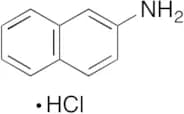
CAS:Prodotto controllato<p>Applications 2-Naphthylamine Hydrochloride is listed as a known human carcinogen used in the manufacturing of dyes and as antioxidant in rubber.<br>References IARC Monographs, 4, 97 (1974),<br></p>Formula:C10H9N·(HCl)Colore e forma:NeatPeso molecolare:143.19 + (36.46)2,3-Dihydroxy-1,4-naphthoquinone
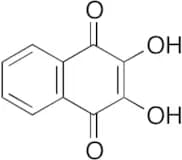
CAS:Prodotto controllato<p>Applications 2,3-dihydroxynaphthoquinone (cas# 605-37-8) is a useful research chemical.<br></p>Formula:C10H6O4Colore e forma:NeatPeso molecolare:190.153-Hydroxy Desloratadine
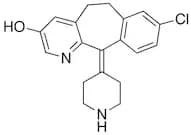
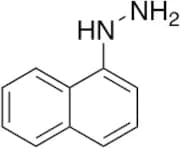
CAS:Prodotto controllatoFormula:C19H19ClN2OColore e forma:NeatPeso molecolare:326.821-Naphthylhydrazine
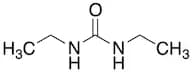
CAS:Prodotto controllato<p>Applications 1-Naphthylhydrazine (cas# 2243-55-2) is a useful research chemical.<br></p>Formula:C10H10N2Colore e forma:NeatPeso molecolare:158.21,3-Diethylurea
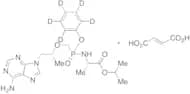
CAS:Prodotto controllato<p>Applications 1,3-Diethylurea<br></p>Formula:C5H12N2OColore e forma:NeatPeso molecolare:116.16Tenofovir Alafenamide-d5 Fumarate(diastereomers)
CAS:Prodotto controllato<p>Stability Moisture Sensitive<br>Applications Tenofovir Alafenamide-d5 Fumarate (diastereomers), is labeled GS 7171. Tenofovir Alafenamide (T018555) is an isomer of GS 7171.<br></p>Formula:C21H24D5N6O5P·C4H4O4Colore e forma:NeatPeso molecolare:481.5011607p-Salicylic Acid 4-Sulfate Disodium Salt
CAS:Prodotto controllato<p>Applications p-Salicylic Acid 4-Sulfate is a urine metabolite of Methylated paraben (B693600), an antimicrobial agent used in cosmetic products.<br>References Tsukamoto, H., et al: Chem. Pharma. Bull., 10, 86 (1962); Desai, N.B., et al.: J. Sci. Indust. Res., 14, 330 (1955);<br></p>Formula:C7H4O6S·2NaColore e forma:NeatPeso molecolare:262.15Succinylacetone
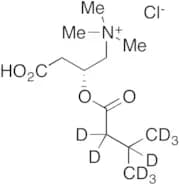
CAS:<p>Applications Succinylacetone (SA) is a specific marker for the inherited metabolic disease, hepatorenal tyrosinemia. It was developed a stable-isotope for the determination of SA in dried blood spots (DBS) and liquid urine using a 13C4-SA as internal standard. The method was applied retrospectively and prospectively for the diagnosis of hepatorenal tyrosinemia and for follow-up of patients under treatment.<br>References Kvittingen, E., et al.: Inher. Metab. Dis., 14, 554 (1991), Lindstedt, S., et al.: Lancet, 340, 813 (1992), Schulze, A., et al.: Clin. Chem., 47, 1424 (2001), Allard, P., et al.: Clin. Biochem., 37, 1010 (2004),<br></p>Formula:C7H10O4Colore e forma:White To Off-WhitePeso molecolare:158.15Isovaleryl L-Carnitine-d9 Chloride
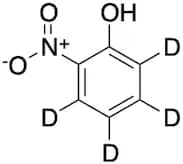
CAS:Prodotto controllato<p>Stability Hygroscopic<br>Applications Isovaleryl L-Carnitine-d9 Chloride is labelled Isovaleryl L-Carnitine Chloride (I917580) which is used to prepare carnitine benzyl esters as neuroprotectant prodrugs.<br>References Gong, X., et al.: J. Chem. Res., 6, 327 (2008)<br></p>Formula:C12H15D9ClNO4Colore e forma:NeatPeso molecolare:290.832-Nitrophenol-3,4,5,6-d4
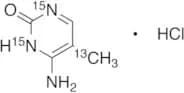
CAS:Prodotto controllato<p>Applications 2-Nitrophenol-3,4,5,6-d4 (CAS# 93951-78-1) is a useful isotopically labeled research compound.<br></p>Formula:C6D4HNO3Colore e forma:NeatPeso molecolare:143.135-Methyl Cytosine-13C,15N2 Hydrochloride
CAS:<p>Applications A labelled derivative of Dibarbituric acid.<br>References Hitchings, G.H., et al.: J. Biol. Chem., 177, 357 (1949),<br></p>Formula:CC4H715N2NO·ClHColore e forma:NeatPeso molecolare:164.573-(4-Chlorophenyl)glutaric Acid
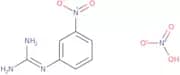
CAS:<p>Applications 3-(4-Chlorophenyl)glutaric Acid (cas# 35271-74-0) is a compound useful in organic synthesis. Baclofen Impurity 1<br></p>Formula:C11H11ClO4Colore e forma:NeatPeso molecolare:242.663-Nitrophenylguanidine nitrate
CAS:<p>3-Nitrophenylguanidine nitrate is a drug that targets the enzyme kinases, which are involved in the regulation of cell growth and division. It has been shown to inhibit the activity of stromal tumor cells, as well as chronic myeloid leukemia cells. 3-Nitrophenylguanidine nitrate inhibits protein synthesis by inhibiting demethylation and efflux, which enables imatinib to bind to the target site. This drug also has a rapid onset of action and can be used for monitoring chronic myeloid leukemia patients without the need for positron emission tomography (PET) scanning.</p>Formula:C7H8N4O2•HNO3Purezza:Min. 95%Colore e forma:PowderPeso molecolare:243.18 g/mol2-Chloroinosine 3',4',6'-triacetate
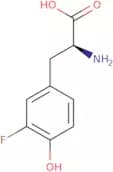
CAS:<p>2-Chloroinosine 3',4',6'-triacetate is a reagent, useful intermediate, fine chemical, and speciality chemical. It is used as an important building block in organic synthesis. 2-Chloroinosine 3',4',6'-triacetate can be used as a versatile building block for the synthesis of many other compounds. The high quality and usefulness of this compound make it a good choice for research chemicals.</p>Formula:C16H17ClN4O8Purezza:Min. 95%Colore e forma:White to pale yellow solid.Peso molecolare:428.78 g/mol3-Fluoro-L-tyrosine
CAS:3-Fluoro-L-tyrosine is a hydroxylated amino acid that is used as a pharmacological agent. 3-Fluoro-L-tyrosine has been shown to be a substrate for the enzyme tyrosinase, which catalyzes the conversion of L-tyrosine into 3,4 dihydroxyphenylalanine (DOPA). 3-Fluoro-L-tyrosine also reacts with bacterial enzymes and may have antibacterial properties.Formula:C9H10FNO3Purezza:Min. 95%Colore e forma:PowderPeso molecolare:199.18 g/molN-Acetyl-phytosphingosine
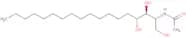
CAS:<p>N-Acetyl-phytosphingosine is a sphingoid base that functions as a phospholipid constituent of the cell membrane. It participates in the regulation of calcium and lipid metabolism, as well as cell proliferation and differentiation. N-Acetyl-phytosphingosine has been shown to suppress the production of prostaglandin E2, which may be due to its ability to inhibit cyclooxygenases and their downstream products, prostaglandin synthesis. This compound also represses activity of human cancer cells by intercepting the process that leads to prostaglandin synthesis. The anti-inflammatory effect of this molecule is demonstrated by its ability to reduce inflammation in keratinocytes (skin cells) and human keratinocytes.</p>Formula:C20H41NO4Purezza:Min. 98 Area-%Colore e forma:PowderPeso molecolare:359.54 g/molFenofibric acid methyl ester
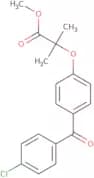
CAS:<p>Fenofibric acid methyl ester is a chemical that has been used as a reference standard for the calibration of HPLC. It is an acidic compound that can be used to measure the flow rate of liquids. Fenofibric acid methyl ester has a particle size between 2 and 4 micrometers in diameter, which has been shown to be consistent with the use of dihedrals and diameters. This product has been found to be suitable for chromatographic methods such as calibration and validation. The purity of this chemical has been validated by regression analysis using chromatograms.</p>Formula:C18H17ClO4Purezza:Min. 95%Colore e forma:PowderPeso molecolare:332.78 g/molL-Aspartic acid sodium salt monohydrate
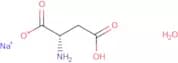
CAS:<p>L-Aspartic acid sodium salt monohydrate is a sodium carbonate salt of L-aspartic acid that has been shown to inhibit the growth of leishmania in vitro. It may also be effective against other protozoa and amoeba, including Entamoeba histolytica and Naegleria fowleri. L-Aspartic acid sodium salt monohydrate inhibits acid formation by inhibiting the enzyme carbonate synthetase. This compound also has potential as a drug target for infantile lysosomal storage disease due to its ability to activate glutamate, which is an amino acid that is deficient in this condition. The surface methodology used for this study was titration calorimetry, which can be used to measure the thermodynamic properties of activated carboxylates.</p>Formula:C4H6NO4Na·H2OColore e forma:White Off-White Clear LiquidPeso molecolare:173.1 g/mol2,2'-Dithio-bis(5-nitropyridine)
CAS:2,2'-Dithio-bis(5-nitrophenyl) is a redox probe that can be used to study ATP-sensitive K+ channels. This probe has been shown to bind to the carboxy terminal of the channel and disulfide bond through its thiol group. The binding of 2,2'-dithio-bis(5-nitropyridine) to the activated liver cells causes an increase in the redox potential, which leads to an accumulation of electrons in these cells. These electrons are then transferred to pyridine nucleotides and phosphate ions, leading to an increase in ATP levels and activation of ATP-sensitive K+ channels.Formula:C10H6N4O4S2Purezza:Min. 95%Peso molecolare:310.31 g/mol(E)-3-[3'-(4''-fluorophenyl)-1'-(1''-methylethyl)-1H-indol-2''-yl]-2-propnal
CAS:(E)-3-[3'-(4''-Fluorophenyl)-1'-(1''-methylethyl)-1H-indol-2''-yl]-2-propnal is an amoebicidal agent that belongs to the class of indole derivatives. It has been shown to inhibit tumor growth in animal models, and thus may be a potential anti-cancer drug. The activity index of (E)-3-[3'-(4''-fluorophenyl)-1'-(1''-methylethyl)-1H-indol-2''-yl]-2-propnal was significantly lower than those of fenoldopam, a well known antihypertensive agent, for the treatment of liver cancer. The compound also inhibits the growth of bacteria by inhibiting protein synthesis in organisms such as amoeba.Formula:C20H18FNOPurezza:Min. 95%Colore e forma:Yellow PowderPeso molecolare:307.36 g/mol5,6,7,8-Tetrahydro-1-naphthoic acid
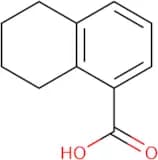
CAS:<p>5,6,7,8-Tetrahydro-1-naphthoic acid is a synthetic organic compound that is used to make dyes and paints. It has toxic properties and can cause irritation of the skin or lungs. The mechanism of its toxicity is not known, but it may be due to the formation of reactive oxygen species in the body or the inhibition of monoamine oxidase. 5,6,7,8-Tetrahydro-1-naphthoic acid exhibits dose-dependent toxicity with increasing doses resulting in more severe reactions. It also has a high potential for long term carcinogenicity.</p>Formula:C11H12O2Purezza:Min. 95%Peso molecolare:176.21 g/mol1,2,3,4-Tetrahydro-1-naphthylamine hydrochloride
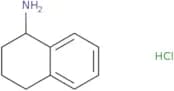
CAS:1,2,3,4-Tetrahydro-1-naphthylamine hydrochloride is a high quality reagent that can be used as an intermediate in the synthesis of various organic compounds. It has been shown to be a useful building block for the synthesis of complex compounds and speciality chemicals. Tetrahydro-1-naphthylamine hydrochloride is also a versatile building block for reactions involving amines or other nucleophiles. Tetrahydro-1-naphthylamine hydrochloride is an interesting scaffold for research chemicals due to its ability to react with various functional groups.Formula:C10H13N•HClPurezza:Min. 95%Colore e forma:PowderPeso molecolare:183.68 g/molFluvastatin
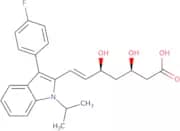
CAS:<p>Fluvastatin is a statin that lowers blood cholesterol and triglycerides by inhibiting HMG-CoA reductase, an enzyme that plays a critical role in the synthesis of cholesterol. Fluvastatin has also been shown to reduce the incidence of myocardial infarction, and to reduce atherosclerotic lesions in animal models, reducing the incidence of cardiovascular disease. Fluvastatin also has been shown to inhibit the activation of toll-like receptor 4 (TLR4) by lipopolysaccharide (LPS), which may be related to its anti-inflammatory effects. Furthermore, through lowering blood cholesterol, Fluvastatin also inhibits tubulointerstitial injury and prevents renal damage caused by high concentrations of the lipid.</p>Formula:C24H26FNO4Purezza:Min. 95%Colore e forma:PowderPeso molecolare:411.47 g/mol(4α,6β(E))-DL-6-(2-(4'-Fluoro-3,3',5-trimethyl(1,1'-biphenyl)-2-Yl)ethenyl)tetrahydro-4-hydroxy-2H-pyran-2-one
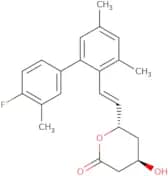
CAS:Prodotto controllato(4alpha,6beta(E))-DL-6-(2-(4'-Fluoro-3,3',5-trimethyl(1,1'-biphenyl)-2-Yl)ethenyl)tetrahydro-4-hydroxy-2H-pyran-2-one is a pharmacological agent that binds to and inhibits the HMG CoA reductase enzyme. This enzyme plays a role in the production of cholesterol, which is used to form bile acids and steroid hormones. The ring structure of (4alpha,6beta(E))-DL-6-(2-(4'-Fluoro-3,3',5-trimethyl(1,1'-biphenyl)-2--Yl)ethenyl)tetrahydro -4hydroxy -2H pyran 2 one allows for it to bind to the active site of the reductase enzymeFormula:C22H23FO3Purezza:Min. 95%Peso molecolare:354.41 g/mol7,8-Dihydroxy-4-phenylcoumarin
CAS:<p>7,8-Dihydroxy-4-phenylcoumarin (7,8-DPC) is a coumarin derivative that inhibits human cytochrome P450 enzymes. It binds to the heme group of the enzyme and is reversible by hydroxylation. 7,8-DPC has been shown to inhibit catalytic activity in rat liver microsomes and recombinant human cytochrome P450 enzymes. This molecule has also been shown to be an irreversible inhibitor of human cytochrome P450 2C9. The carbonyl group found on the 7,8-DPC molecule's structure is responsible for its inhibitory activities.</p>Formula:C15H10O4Purezza:Min. 95%Colore e forma:PowderPeso molecolare:254.24 g/mol3-Nitrophthalic acid
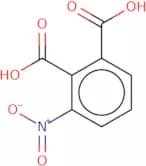
CAS:<p>3-Nitrophthalic acid is an organic compound that has been used in biological studies. It has been shown to bind to DNA and RNA, which may be due to hydrogen bonding interactions with the nitrogen atoms. 3-Nitrophthalic acid is synthesized by reacting sodium carbonate with trifluoroacetic acid, resulting in a carboxylate group. This compound has photochemical properties and can be used as a photosensitizer for the treatment of certain forms of cancer. 3-Nitrophthalic acid reacts with oxygen and generates singlet oxygen, which results in cellular damage.</p>Formula:C8H5NO6Purezza:Min. 95%Colore e forma:PowderPeso molecolare:211.13 g/mol2,4,5-Trimethoxyacetophenone
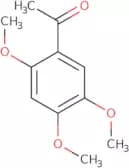
CAS:<p>2,4,5-Trimethoxyacetophenone (2,4,5-TMA) is a phenolic compound that exists as a colorless liquid. It has been shown to interact with the carboxyl group of the amino acid lysine in proteins and sterically hinder the formation of peptide bonds. 2,4,5-TMA also inhibits the production of leukocytes and causes leukemia cells to undergo apoptosis. The molecular weight of 2,4,5-TMA is 236.2 g/mol and it has a melting point of 45°C. The chemical structure is C9H10O3 and its homologues are 2-hydroxyacetophenone and 3-hydroxyacetophenone. Isolated yield was found to be 83%. The nmr spectra for 2,4,5-TMA are: δ=7.31 ppm (1H), δ=6.87 ppm (1</p>Formula:C11H14O4Purezza:Min. 95%Colore e forma:White PowderPeso molecolare:210.23 g/molDL-Aspartic acid
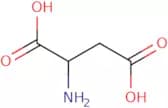
CAS:<p>Aspartic acid is an amino acid that belongs to the group of aspartates. It is synthesized in the human body and used in biochemical reactions. Aspartic acid has been shown to play a role in cancer, bowel disease, and fibrosis. The chemical properties of aspartic acid have been studied using various model systems such as polymerase chain reaction (PCR) and p-nitrophenyl phosphate assay. Aspartic acid is a substrate for the enzyme asparaginase, which converts it into asparagine, another amino acid that can be used by the body.</p>Formula:C4H7NO4Colore e forma:White Off-White PowderPeso molecolare:133.1 g/molGeraniol
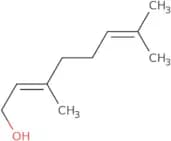
CAS:Geraniol is a naturally occurring compound found in many plants. It has been shown to possess anti-cancer properties against the fungus Candida glabrata, and has been used as a chemical pesticide. It is also believed to have antioxidant, antiviral, and antimicrobial properties. The biological activities of geraniol have been confirmed by enzyme assays and solid phase microextraction experiments. Geraniol can scavenge anion radicals, which are reactive oxygen species that play a role in cancer development, and has been shown to inhibit skin tumor formation in mice. This compound is not toxic to humans at doses up to 2000 mg/kg body weight per day for 30 days. Chemical analysis of geraniol revealed it contains two functional groups: an alcohol group and a phenol group. An analytical method using gas chromatography-mass spectrometry (GC-MS) with electron capture detection (ECD) was developed for the quantitative determination of this compound in plant oils. GC-MSFormula:C10H18OPurezza:Min. 95%Peso molecolare:154.25 g/molAtorvastatin calcium
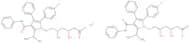
CAS:<p>HMG-CoA reductase inhibitor; anti-hypercholesterolemia agent</p>Formula:C66H68CaF2N4O10Purezza:Min. 97 Area-%Colore e forma:White PowderPeso molecolare:1,155.34 g/mol3-Bromo-4-hydroxycinnamic acid
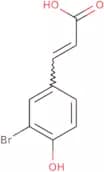
CAS:3-Bromo-4-hydroxycinnamic acid is a useful building block that is obtained from cinnamic acid by substitution of the hydroxyl group with a bromine atom. It has been used in research as a reagent, speciality chemical, and reaction component. 3-Bromo-4-hydroxycinnamic acid is also an important intermediate for the synthesis of various organic compounds. This compound can be used as a scaffold for the synthesis of complex compounds.Formula:C9H7BrO3Colore e forma:PowderPeso molecolare:243.05 g/mol(-)-Corey lactone benzoate
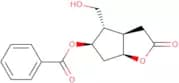
CAS:(-)-Corey lactone benzoate is a compound that was synthesized from a reaction between a primary alcohol and an acylating agent. It has been shown that (-)-Corey lactone benzoate can be used to synthesize the drug clofazimine, which is an anti-tuberculosis drug. The reaction system contains a constant pressure, organic solvent, and anhydrous conditions. (-)-Corey lactone benzoate is produced as a white solid with a melting point of 167 °C. It has been found to be impure and contain chloride and other impurities that are difficult to remove.Formula:C15H16O5Purezza:Min. 95 Area-%Colore e forma:White Off-White PowderPeso molecolare:276.28 g/mol2-Methoxycinnamic acid methyl ester
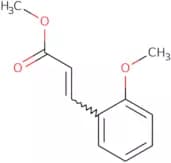
CAS:2-Methoxycinnamic acid methyl ester is a monomer that can be used in the synthesis of magnetic nanoparticles. It has been shown to have high activity and can be used at temperatures between 20°C and 40°C. This reagent is also soluble in organic solvents, making it easy to purify. The size of the particles can be controlled by changing the diameter of the monomer, which can be determined using various techniques such as magnetic separation, filtration, or centrifugation. 2-Methoxycinnamic acid methyl ester was found to have a mesoporous structure when synthesized using an organometallic technique. This reagent is suitable for use in analytical methods such as gas chromatography-mass spectrometry (GC-MS) or liquid chromatography-mass spectrometry (LC-MS).Formula:C11H12O3Purezza:Min. 95%Colore e forma:PowderPeso molecolare:192.21 g/mol6-Amino-7-hydroxy-4-methylcoumarin
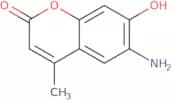
CAS:<p>6-Amino-7-hydroxy-4-methylcoumarin is an antibacterial agent that has been shown to be effective against a range of Gram-positive and Gram-negative bacteria. It is synthesized from coumarins in nature, but also can be synthesized in the laboratory. This compound has been shown to inhibit bacterial growth by forming a covalent bond with the bacterial enzyme DNA gyrase, preventing the synthesis of DNA. 6-Amino-7-hydroxy-4-methylcoumarin has also been shown to have anti cancer properties.</p>Formula:C10H9NO3Purezza:Min. 95%Colore e forma:Yellow solid.Peso molecolare:191.18 g/molValeric acid sodium
CAS:Valeric acid sodium salt is a fatty acid that has been shown to inhibit bacterial growth in the presence of epidermal growth factor and sodium salts. Valeric acid sodium salt is used as an antiseptic in topical formulations and as a preservative for pharmaceuticals. Valeric acid sodium salt also inhibits HIV infection by inhibiting the binding of HIV to its receptor, which prevents the virus from entering cells.Formula:C5H10O2•NaPurezza:Min. 95%Colore e forma:PowderPeso molecolare:125.12 g/mol2-Amino-5-iodobenzoic acid methyl ester
CAS:2-Amino-5-iodobenzoic acid methyl ester (2AIBA) is a molecule that can be used as an activatable probe for imaging cancer. It has a profile suitable for radionuclide therapy and is also senescent. 2AIBA binds to DNA and inhibits the synthesis of proteins, leading to cell death. 2AIBA has potent inhibitory activity against murine melanoma cells and synergistic effects when combined with acridone. The section of tumour cells was shown to be reduced by 42% in mice when treated with 2AIBA, acridone, and radiation compared to mice treated with radiation alone.Formula:C8H8INO2Purezza:Min. 95%Colore e forma:PowderPeso molecolare:277.06 g/mol2,2',4,6'-Tetramethylbenzophenone
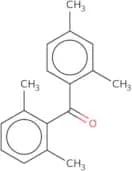
CAS:<p>2,2',4,6'-Tetramethylbenzophenone is a useful building block for organic synthesis. It is a white crystalline solid that can be used as a research chemical or in the production of fine chemicals. This compound has been shown to be an effective intermediate in the synthesis of heterocyclic compounds and can be used as a versatile building block in complex syntheses. 2,2',4,6'-Tetramethylbenzophenone is also a high-quality chemical with a CAS number of 22682-43-5.</p>Formula:C17H18OPurezza:Min. 95%Peso molecolare:238.32 g/mol










![(E)-3-[3'-(4''-fluorophenyl)-1'-(1''-methylethyl)-1H-indol-2''-yl]-2-propnal](/_next/image/?url=https%3A%2Fstatic.cymitquimica.com%2Fproducts%2F3D%2Fthumb-webp%2FFF37514.webp&w=3840&q=75)