Standard farmaceutici
Sottocategorie di "Standard farmaceutici"
- APIs per la ricerca e le impurità(277.372 prodotti)
- Attivatori e inibitori enzimatici(2.829 prodotti)
- Nitrosamine(2.663 prodotti)
- Composti e metaboliti farmaceutici e veterinari(2.891 prodotti)
- Tossicologia(13.353 prodotti)
Trovati 8146 prodotti di "Standard farmaceutici"
D-Aspartic acid sodium salt
CAS:D-Aspartic acid sodium salt is a fine chemical that is useful as a scaffold for the preparation of other compounds. It can be used as a building block in the synthesis of complex compounds, and has been shown to be an intermediate in the production of research chemicals. Aspartic acid sodium salt can also serve as a reaction component for the production of other chemical substances, and is often used as a reagent in laboratory work. D-Aspartic acid sodium salt is available at high purity and quality.Formula:C4H6NO4·NaPurezza:Min. 95%Colore e forma:PowderPeso molecolare:155.08 g/mol(S)-(+)-1,1'-Binaphthyl-2,2'-diyl hydrogen phosphate
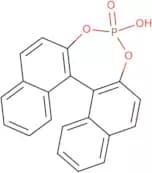
CAS:(S)-(+)-1,1'-Binaphthyl-2,2'-diyl hydrogen phosphate is an organic compound that is used as an analytical reagent. It is a covalent linker with a phosphate group on one end and a binaphthyl group on the other end. The phosphate group can be used to bind solutes for analysis in analytical chemistry. (S)-(+)-1,1'-Binaphthyl-2,2'-diyl hydrogen phosphate has been shown to have inhibition of sulfonic acid groups from environmental pollution. This compound also has chiral properties and can be separated into its two enantiomers using titration calorimetry at constant temperature.Formula:C20H13O4PPurezza:Min. 95%Colore e forma:White Off-White PowderPeso molecolare:348.29 g/mol2-Chloro-2',6'-dimethylacetanilide
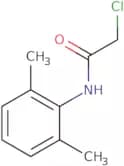
CAS:2-Chloro-2',6'-dimethylacetanilide is a synthetic drug that is used as an intermediate for the manufacture of diazepam. It has been shown to be effective in reducing the severity of symptoms and mortality rate of patients with severe influenza, also known as "pandemic flu". This compound has been shown to be effective in protecting animals from the effects of carbon monoxide poisoning. It has also been used in medicines such as covid-19, which is used for the treatment of Parkinson's disease. 2-Chloro-2',6'-dimethylacetanilide can be found in a number of other pharmaceuticals, such as antidepressants and antibiotics.Formula:C10H12ClNOPurezza:Min. 95%Colore e forma:White PowderPeso molecolare:197.66 g/molMethyl 3-hydroxycinnamate
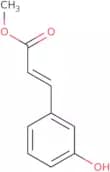
CAS:Methyl 3-hydroxycinnamate is a phenol that is an ester of cinnamic acid. Methyl 3-hydroxycinnamate is used as a flavoring agent in the food industry, and it has shown to be effective in inhibiting the growth of bacteria such as Staphylococcus aureus and Escherichia coli.Formula:C10H10O3Purezza:Min. 95%Colore e forma:PowderPeso molecolare:178.18 g/molLithium 3,5-diiodosalicylic acid
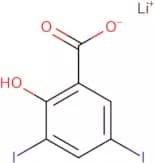
CAS:Lithium 3,5-diiodosalicylic acid (Li3,5I2SA) is a cross-linking agent that has been shown to inhibit phosphatase activity and receptor binding in vitro. It also inhibits sugar transport, which is important for the functioning of human cells. Li3,5I2SA has been used to study the action of drugs on cancer cells and spermatozoa. This compound has also been tested as an inhibitor of membrane lipid peroxidation. Li3,5I2SA attaches to red blood cell membranes by binding to sites with high concentrations of monoclonal antibodies. The sequences of this compound have not yet been fully elucidated.
Formula:C7H4I2O3•LiPurezza:Min. 98 Area-%Colore e forma:PowderPeso molecolare:396.85 g/mol3,5-Diiodo-L-thyronine
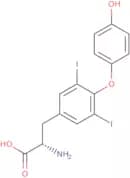
CAS:3,5-Diiodo-L-thyronine (3,5DIT) is a thyroid hormone that has been shown to have a number of physiological effects. It is capable of altering the activity of target enzymes, such as growth factor β1 and 3,5-diiodo-L-thyronine 5'-deiodinase (DID). 3,5DIT can stimulate cardiac effects by binding to the nuclear receptor TRβ1. It also stimulates weight loss by regulating fat metabolism through its effect on adipose tissue. 3,5DIT has been shown to alter mitochondrial functions and mitochondrial energy metabolism. This hormone may be used as an analytical tool for measuring mitochondrial functions in living cells.
Formula:C15H13I2NO4Purezza:Min. 98 Area-%Colore e forma:White Off-White PowderPeso molecolare:525.08 g/mol(S)-2-Methoxy-2-(1-naphthyl)propanoic acid
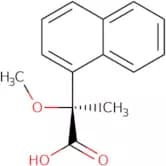
CAS:(S)-2-Methoxy-2-(1-naphthyl)propanoic acid is a chiral molecule that can exist in two different forms, each of which has the same physical and chemical properties. The two enantiomers are not optically active, meaning they have the same degree of rotation when passed through a polarizing filter. It is an organic compound that is used as a flavoring agent in food chemistry and as a bioactive compound. (S)-2-Methoxy-2-(1-naphthyl)propanoic acid also has been shown to function as an attractant for hemipteran insects such as mosquitoes, although it is not clear if this property is due to its aromatic or enantiomeric structure.Formula:C14H14O3Purezza:Min. 95%Colore e forma:PowderPeso molecolare:230.26 g/molD-Methionine
CAS:D-methionine is a form of the amino acid methionine that is synthesized in plants. It has been studied for its potential to help with various metabolic disorders, including osteoarthritis and primary sclerosing cholangitis. D-methionine provides methionine to the body, which is essential for the formation of collagen and elastin. In addition, it has been shown to have a protective effect against neuronal death in a model system. D-methionine may be beneficial for people with liver disease, but more research is needed.
Formula:C5H11NO2SPurezza:Min. 95%Colore e forma:White Off-White PowderPeso molecolare:149.21 g/molL-Serine β-lactone tetrafluoroborate
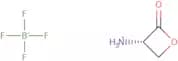
CAS:L-Serine beta-lactone tetrafluoroborate salt is a fine chemical that is used as a reagent, complex compound and building block in the synthesis of other compounds. It is also an important intermediate for the production of pharmaceuticals and agrochemicals. L-Serine beta-lactone tetrafluoroborate salt has been shown to be a versatile building block in organic synthesis. This product may react with acids to produce hydrogen fluoride gas, which can cause injury or death through inhalation or contact with skin, eyes or clothing.Formula:C3H5NO2•BF4•HPurezza:Min. 95%Colore e forma:White/Off-White SolidPeso molecolare:174.89 g/mol9,10-Bis(bromomethyl)anthracene
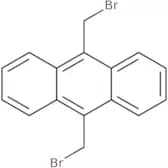
CAS:9,10-Bis(bromomethyl)anthracene is a chemical compound that can be used as a chemical probe for electron spin resonance (ESR) spectroscopy. The ESR spectrum of 9,10-bis(bromomethyl)anthracene in trifluoroacetic acid shows a single peak at g = 2.0286 and the emission spectrum exhibits peaks at 612 nm and 581 nm. 9,10-Bis(bromomethyl)anthracene has been used to detect potassium ions by observing the fluorescence properties of the chromophore. This compound also has fluorine groups which make it very soluble in nonpolar solvents such as hexane or pentane. It can be synthesized with an efficient method that involves reacting an imine with dichloroacetic acid followed by reaction with bromine and potassium hydroxide in chloroform.Formula:C16H12Br2Purezza:Min. 95%Colore e forma:PowderPeso molecolare:364.07 g/molDiclofenac impurity F
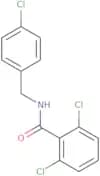
CAS:Please enquire for more information about Diclofenac impurity F including the price, delivery time and more detailed product information at the technical inquiry form on this pageFormula:C14H10Cl3NOPurezza:Min. 95%Colore e forma:PowderPeso molecolare:314.59 g/mol2-Oxo-2H-pyran-5-carboxylic acid methyl ester
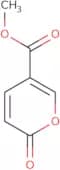
CAS:2-Oxo-2H-pyran-5-carboxylic acid methyl ester is an activated form of 2-oxopyran. It reacts with nucleophiles, such as malic acid, to form ethyl esters. This reaction is an example of the Friedel-Crafts reaction, which is a type of electrophilic aromatic substitution. The rate of this reaction depends on the activation energies and fluorescence properties of the reactants. The mechanism for this reaction is that the double bond in the carbonyl group is ruptured by attacking nucleophiles, resulting in a release of hydrogen gas and formation of carboxylic acid derivatives. The product can be isolated using a solvent extraction technique or purified using column chromatography.Formula:C7H6O4Purezza:Min. 98 Area-%Colore e forma:PowderPeso molecolare:154.12 g/mol1-(2'-Bromophenyl)-1-hydroxyethane
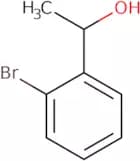
CAS:1-(2'-Bromophenyl)-1-hydroxyethane is a biomolecule that has been shown to inhibit the growth of corynebacterium. This inhibition is stereoselective, with the (S) form being more effective than the (R) form. The oxidation products of this compound are produced by catalytic dehydration of formate and ethyl group elimination, which produce ferrocene and hydroxymethylferrocene respectively. These products are stereogenic, giving rise to chiral molecules that can be used in efficient methods for organic synthesis.Formula:C8H9BrOPurezza:Min. 95%Colore e forma:PowderPeso molecolare:201.06 g/mol4'-Methoxy-α-naphthoflavone
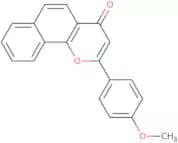
CAS:4'-Methoxy-alpha-naphthoflavone is a flavonoid that has been shown to have inhibitory effects on the metabolism of 3-methylcholanthrene and other xenobiotics. The compound inhibits the oxidation of these compounds by both the cytochrome P450 and NADPH-dependent oxidases. 4'-Methoxy-alpha-naphthoflavone also inhibits the activation of these compounds by hepatic tissues, as well as the metabolism of phenobarbital by rat liver microsomes. The compound may be metabolized in vivo to 4'-hydroxy-alpha-naphthoflavone, which is more potent than 4'-methoxy-alpha-naphthoflavone.Formula:C20H14O3Purezza:Min. 95%Peso molecolare:302.32 g/molChromotrope 2B
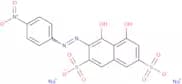
CAS:Chromotrope 2B is a water-soluble dye that is used for the detection of the presence of hydrochloric acid in urine samples. It is also used to detect the presence of biological samples in pharmaceutical preparations. The optimum concentration for this dye is 0.5% with phosphotungstic acid and 3% with human serum. Chromotrope 2B has been shown to be active when exposed to radiation, as well as having an absorption maximum at 381 nm. Chromotrope 2B reacts with plasma proteins to form a blue colored compound called chromoprotein, which can be detected by mass spectrometry. br>br>Formula:C16H9N3O10S2·2NaPurezza:Min. 95%Colore e forma:PowderPeso molecolare:513.37 g/mol1,2-Dioleoyl-sn-glycero-3-phosphatidylethanolamino (+)-biotin
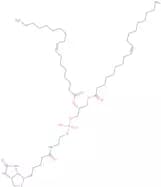
CAS:This is a speciality chemical and is not intended for use in food, drug, or cosmetic applications. This fine chemical is a useful building block, which can be used to synthesize complex compounds. It has been shown to have high reactivity with a variety of reagents, making it an excellent research component.Formula:C51H92N3O10PSPurezza:Min. 95%Colore e forma:PowderPeso molecolare:970.33 g/mol3-Methylnaphth[2,1-d]isoxazole
CAS:Naphth[4,5-A]isoxazole is a chemical compound that has been shown to react with other organic compounds and is used as a reagent in organic synthesis. Naphth[4,5-A]isoxazole can be used as a building block for the synthesis of complex compounds, such as heterocycles. This chemical is also useful for the production of fine chemicals and pharmaceuticals.
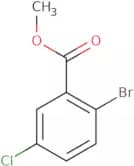
Formula:C12H9NOPurezza:Min. 95%Colore e forma:PowderPeso molecolare:183.21 g/mol2-Bromo-5-chlorobenzoic acid methyl ester
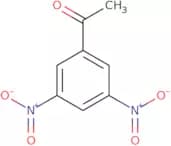
CAS:2-Bromo-5-chlorobenzoic acid methyl ester is a chemical compound that is a component of the perborate oxidant. This chemical reacts with hydrogen peroxide to produce water, oxygen, and 2-bromo-5-chlorobenzoic acid. It can also be used in cyclisation reactions to synthesise heterocyclic compounds. The reaction mechanism for this process involves the formation of an unstable intermediate that spontaneously breaks down into two bromine atoms and one carbon atom. This process is catalyzed by metal ions such as copper, silver, and zinc. 2-Bromo-5-chlorobenzoic acid methyl ester has been used as an intermediate in the synthesis of homologues of ribonucleotide reductase.Formula:C8H6BrClO2Purezza:Min. 95%Colore e forma:PowderPeso molecolare:249.49 g/mol3',5'-Dinitroacetophenone
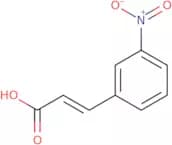
CAS:3',5'-Dinitroacetophenone is a chemical compound that is used as an intermediate in the synthesis of other organic compounds. This chemical is highly toxic and can be fatal if ingested. 3',5'-Dinitroacetophenone has a high solubility in water, but reacts quickly with air, so it should be stored in an airtight container. It has been shown to produce foramen ovale-type lesions when applied to the maxillary sinus. This chemical also has an electron deficient profile and produces frequencies at about 350 MHz and chloride ions at about 250 MHz.Formula:C8H6N2O5Purezza:Min. 95%Colore e forma:PowderPeso molecolare:210.14 g/moltrans-3-Nitrocinnamic acid
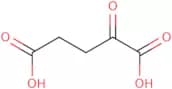
CAS:Trans-3-Nitrocinnamic acid is a white solid that can be obtained by the nitration of cinnamic acid. Trans-3-Nitrocinnamic acid is an isoenzyme as it has different chemical properties than cis-3-nitrocinnamic acid. The intermolecular hydrogen bonding and vibrational frequencies are different in trans-3-nitrocinnamic acid, which causes the dipole to change and increases the solubility in water. The genotoxic activity of trans-3-nitrocinnamic acid was evaluated using the Ames test, which showed that it is not mutagenic. However, there were some genotoxic effects observed in rats after applying trans-3-nitrocinnamic acid on skin.Formula:C9H7NO4Purezza:Min. 95%Colore e forma:PowderPeso molecolare:193.16 g/mola-Ketoglutaric acid
CAS:a-Ketoglutaric acid is a naturally occurring organic compound that is found in the body as well as in plants. It belongs to the group of organic acids and is produced from the breakdown of amino acids, such as leucine and valine. a-Ketoglutaric acid has been shown to have physiological effects on cells and tissues by inhibiting enzymes involved in energy metabolism. In vitro assays have shown that a-ketoglutaric acid has inhibitory properties against plant metabolism. This drug also inhibits the transcriptional regulation of genes for fatty acid synthesis in human erythrocytes. A-ketoglutaric acid has also been shown to inhibit glucose production in rat liver cells, which may be due to its ability to bind covalently with proteins or lipids, changing their structures and functions.Formula:C5H6O5Colore e forma:White Off-White PowderPeso molecolare:146.1 g/molCinnamamide
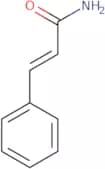
CAS:Cinnamamide is a natural compound that is structurally related to the amino acid lysine and has been shown to regulate skin cell proliferation. Cinnamamide has also been found to be an effective inhibitor of the mitochondrial membrane potential in human erythrocytes. It has been shown to inhibit the production of reactive oxygen species (ROS) and reverse oxidative damage in cells, which may reduce the risk of developing autoimmune diseases. Cinnamamide is also able to prevent cell death caused by epidermal growth factor (EGF) withdrawal and induce apoptosis in HL-60 cells.Formula:C9H9NOPurezza:Min. 95%Colore e forma:White Off-White PowderPeso molecolare:147.17 g/mol2-Amino-5-iodobenzoic acid methyl ester
CAS:2-Amino-5-iodobenzoic acid methyl ester (2AIBA) is a molecule that can be used as an activatable probe for imaging cancer. It has a profile suitable for radionuclide therapy and is also senescent. 2AIBA binds to DNA and inhibits the synthesis of proteins, leading to cell death. 2AIBA has potent inhibitory activity against murine melanoma cells and synergistic effects when combined with acridone. The section of tumour cells was shown to be reduced by 42% in mice when treated with 2AIBA, acridone, and radiation compared to mice treated with radiation alone.Formula:C8H8INO2Purezza:Min. 95%Colore e forma:PowderPeso molecolare:277.06 g/molrec Glial Cell Line-Derived Neurotrophic Factor (human)
Please enquire for more information about rec Glial Cell Line-Derived Neurotrophic Factor (human) including the price, delivery time and more detailed product information at the technical inquiry form on this pagePurezza:Min. 95%4,4',6,6'-Tetramethyl-2,2'-bipyridine
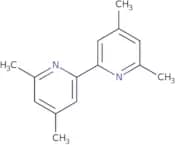
CAS:4,4',6,6'-Tetramethyl-2,2'-bipyridine (TMTB) is a small molecule that can be used as an efficient and cost-effective catalyst for the production of hydrogen from water. TMTB is able to transform solar energy into chemical energy by converting light absorbed in a semiconductor material to an electric current. TMTB has been shown to improve the efficiency of solar cells by boosting the performance of the catalysts that drive chemical reactions in the devices. This effect was found to be synergistic with other materials such as graphene oxide and tungsten disulfide. In addition, TMTB nanoparticles were shown to have a normalizing effect on the charge density in photoelectrochemical cells, which may lead to improved stability and durability.Formula:C14H16N2Purezza:Min. 95 Area-%Colore e forma:PowderPeso molecolare:212.30 g/mol3,5-Di-tert-butyl-4'-hydroxyacetophenone
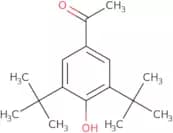
CAS:3,5-Di-tert-butyl-4'-hydroxyacetophenone is a phenol that is used in the synthesis of pharmaceuticals and other compounds. It has been shown to promote angiogenesis by stimulating vascular endothelial cells. The stereoisomers of 3,5-Di-tert-butyl-4'-hydroxyphenylacetic acid have been shown to inhibit tumour growth and induce apoptosis. This compound also has antiangiogenic effects, which may be due to its ability to inhibit vascular endothelial cell proliferation and migration. 3,5-Di-tert-butyl-4'-hydroxyacetophenone is metabolized through a number of metabolic transformations including tautomerization and hydration reactions.
Formula:C16H24O2Purezza:Min. 95%Colore e forma:White PowderPeso molecolare:248.36 g/mol6-Bromo-2-naphthol
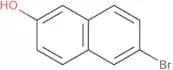
CAS:6-Bromo-2-naphthol is a hydroxylated aromatic compound that is used as a reagent in organic chemistry. It has shown to be an excellent substrate for the cavity test and can be used to detect the presence of a hydroxyl group in other molecules. The nmr spectra of 6-bromo-2-naphthol shows two peaks at 5.1 ppm and 7.5 ppm with a broad peak at 2.6 ppm, which is characteristic of 3-bromoquinoline. The molecular descriptors for 6-bromo-2-naphthol are C=O, H, and Br; molecular weight is 188.10 g/mol; boiling point is 310°C; melting point is -7°C; vapor pressure is 0 mmHg at 25°C; and refractive index is 1.6333 (20°C). The reaction solution of 6-bromFormula:C10H7BrOPurezza:Min. 95%Colore e forma:PowderPeso molecolare:223.07 g/molLopinavir metabolite M-1
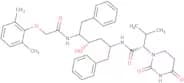
CAS:Lopinavir M-1 is a metabolite of lopinavir, which is an HIV protease inhibitor. Lopinavir M-1 has been shown to have antiviral activity against HIV-1 and other retroviruses. It is a versatile building block that can be used as a reagent or a complex compound in the synthesis of other compounds. Lopinavir M-1 also has antiviral activity against HIV-2 and SIV, but not against the influenza virus.Formula:C37H46N4O6Purezza:Min. 95%Peso molecolare:642.78 g/mol2,2'-Dithiobisbenzoic acid
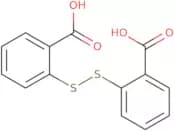
CAS:2,2'-Dithiobisbenzoic acid (DTBA) is a chemical compound that has been used as a cross-linking agent for proteins and nucleic acids. DTBA is an aromatic hydrocarbon that can be synthesized from the reaction of sodium carbonate and hydrogen chloride. DTBA's stability in organic solvents makes it a useful reagent for protein cross-linking studies. It can also be used to measure hydrogen bond strengths between two molecules.Formula:C14H10O4S2Purezza:Min. 95%Peso molecolare:306.36 g/mol3’,5’-Di-O-acetyl-2’-azido-2’-deoxy-5-methyluridine
CAS:Please enquire for more information about 3’,5’-Di-O-acetyl-2’-azido-2’-deoxy-5-methyluridine including the price, delivery time and more detailed product information at the technical inquiry form on this pagePurezza:Min. 95%2-Amino-N-[2-(2-chlorobenzoyl)-4-nitrophenyl]acetamide
CAS:2-Amino-N-[2-(2-chlorobenzoyl)-4-nitrophenyl]acetamide is a fine chemical that is used as a building block in organic synthesis. It is a versatile intermediate for the synthesis of other compounds and can be used to make a variety of useful scaffolds. 2-Amino-N-[2-(2-chlorobenzoyl)-4-nitrophenyl]acetamide has been used in research and development of pharmaceuticals, agrochemicals, herbicides, and other compounds.Formula:C15H12ClN3O4Purezza:Min. 95%Colore e forma:Slightly Yellow PowderPeso molecolare:333.73 g/mol(+)-Biotin-(PEO)4-amine
CAS:Nucleophilic biotinylation reagent. Attaches cell surface glycosides to ELISA-type surfaces, mediated by a hydrophilic spacer/linker.Formula:C18H34N4O5SPurezza:Min. 95%Colore e forma:White PowderPeso molecolare:418.55 g/mol2,3-Dihydroxy-4-methoxycinnamic acid ethyl ester
Please enquire for more information about 2,3-Dihydroxy-4-methoxycinnamic acid ethyl ester including the price, delivery time and more detailed product information at the technical inquiry form on this pagePurezza:Min. 95%WST-1
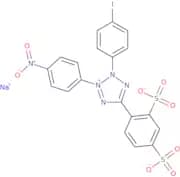
CAS:WST-1 is a water soluble cell permeable dye. Upon NADH-dependent enzymatic cleavage by cellular mitochondrial dehydrogenases, formazan is released, which can be quantified by colorimetric detection at 450 nm.
Formula:C19H11IN5NaO8S2Purezza:Min. 95 Area-%Colore e forma:PowderPeso molecolare:651.35 g/mol4-(2-Hydroxyethylamino)-3-nitrophenol
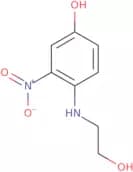
CAS:4-(2-Hydroxyethylamino)-3-nitrophenol is a nitrophenol that can cause toxicity in humans. It has been investigated for its potential use as a treatment for erectile dysfunction. The compound was found to have a long half-life of over 24 hours, which may be due to its slow metabolism by esterases and glucuronidases. 4-(2-Hydroxyethylamino)-3-nitrophenol has been shown to be an allergen and is toxic to the skin, lungs, and muscles. This chemical can cause cancer when it is irradiated or mixed with other chemicals such as 4-amino-2-nitrophenol (ANP).Formula:C8H10N2O4Purezza:Min. 95%Colore e forma:PowderPeso molecolare:198.18 g/molCytisine
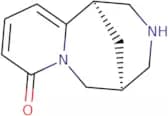
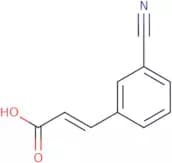
CAS:Cytisine is an alkaloid found in plants of the Cytisus genus of the family Fabaceae. It is a partial agonist to α4β2 nicotinic acetylcholine receptors, which are implicated in the nicotine dependence. In Eastern Europe, it has been used for 50 years to aid smoking cessation.Formula:C11H14N2OPurezza:Min. 95%Colore e forma:White PowderPeso molecolare:190.24 g/mol3-Cyanocinnamic acid
CAS:3-Cyanocinnamic acid is a reactive, unreactive, and stepwise cycloaddition compound. It can participate in photochemical reactions with other compounds to form photodimers. 3-Cyanocinnamic acid has an optimal reaction temperature of 100°C and a reaction time of 5 minutes. The diradical nature of 3-cyanocinnamic acid makes it sensitive to UV light, and the photochemical reactions are simulated by quantum mechanics calculations. Photodimerisation simulations show that 3-cyanocinnamic acid is capable of forming photodimers with 2-cyanocinnamic acid or 4-cyanocinnamic acid at room temperature.Formula:C10H7NO2Purezza:Min. 95%Colore e forma:PowderPeso molecolare:173.17 g/molPenicillin G procaine
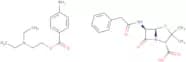
CAS:Prodotto controllatoPenicillin G procaine is a form of penicillin that is commonly used to treat bacterial infections. It is a prodrug that undergoes hydrolysis in the body to release penicillin, its active form. Penicillin G procaine has been shown to be effective against Streptococcus pyogenes, which causes streptococcal pharyngitis, and other bacteria that are sensitive to penicillin. Penicillin G procaine is less toxic than other forms of penicillin and has minimal side effects. The pharmacological effects of the drug are due primarily to the inhibition of bacterial cell wall synthesis by binding to peptidoglycan precursors and blocking their cross-linking. The concentration–time curve for penicillin G procaine shows that it has a long half-life in humans, making it suitable for continuous treatment in patients with chronic infections.Formula:C16H18N2O4S·C13H20N2O2Purezza:Min. 95%Peso molecolare:570.7 g/mol25-Fluorocholesterol
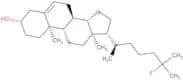
CAS:Prodotto controllato25-Fluorocholesterol is a hydroxylated form of cholesterol that was originally synthesized in vitro. It has been found to inhibit cholesterol synthesis and is used to study the role of cholesterol in mitochondrial function. 25-Fluorocholesterol has also been shown to possess anti-carcinogenic properties, as it inhibits adrenocortical carcinoma cells by inhibiting the production of desmosterol, which is required for their growth. This compound is also able to inhibit cho-k1 cells by side-chain cleavage. 25-Fluorocholesterol has the ability to cross cell membranes and can be detected in non-steroidal anti-inflammatory drug studies using chromatography.Formula:C27H45FOPurezza:Min. 95%Peso molecolare:404.64 g/molCholesterol formate
CAS:Prodotto controllatoCholesterol formate is a chemical that belongs to the group of organic compounds and is classified as an ester. It can be used in research, where it is a reagent for the synthesis of other chemicals. Cholesterol formate can be used in the production of pharmaceuticals, pesticides, fragrances, and other products. Cholesterol formate is also used as a building block in complex chemical reactions because it can act as a versatile scaffold.Formula:C28H46O2Purezza:Min. 95%Colore e forma:White PowderPeso molecolare:414.66 g/mol4-Nitrocinnamaldehyde
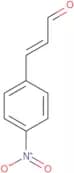
CAS:4-Nitrocinnamaldehyde is a diazonium salt that is used as an efficient method for the synthesis of nitro compounds. Nitro compounds are used in the production of explosives, insecticides, and herbicides. 4-Nitrocinnamaldehyde reacts with hydrochloric acid to produce trifluoroacetic acid, which is then reacted with an organic compound to produce a nitro compound. This reaction has been shown to be irreversible and not sensitive to functional groups. 4-Nitrocinnamaldehyde binds to the enzyme cytochrome P450 reductase, inhibiting its function. The binding of 4-nitrocinnamaldehyde to enzymes such as pyruvate kinase and acetylcholinesterase has also been observed in binding experiments.
Formula:C9H7NO3Purezza:Min. 95%Colore e forma:PowderPeso molecolare:177.16 g/mol3,3'-Dimethylazoxybenzene
CAS:3,3'-Dimethylazoxybenzene is a methylating agent that reacts with an amine to form a triflate. The reactivity of the methylating agent is determined by the electron-donating ability of the methyl group. 3,3'-Dimethylazoxybenzene reacts with electron-poor amines such as aromatic amines to form alkyltriflates. This reaction is not reversible and can lead to DNA damage in cells, which may contribute to cancer formation.
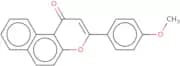
Formula:C14H14N2OPurezza:Min. 95%Peso molecolare:226.27 g/mol4'-Methoxy-5,6-benzoflavone
CAS:4'-Methoxy-5,6-benzoflavone is a versatile chemical building block that can be used in the synthesis of complex compounds. It is a high quality reagent for research and has been used as a speciality chemical due to its ability to react with other chemicals. This compound is also useful in the synthesis of pharmaceuticals and agrochemicals. 4'-Methoxy-5,6-benzoflavone can be used as an intermediate for the synthesis of polycyclic aromatic hydrocarbons or it can be used as a scaffold in organic chemistry.Formula:C20H14O3Purezza:Min. 95%Colore e forma:White Off-White PowderPeso molecolare:302.32 g/molAtazanavir sulfate
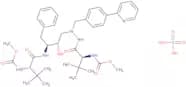
CAS:Anti-viral; HIV protease inhibitor
Formula:C38H52N6O7·H2SO4Purezza:Min. 95%Colore e forma:PowderPeso molecolare:802.94 g/molTropaeolin O sodium salt
CAS:Tropaeolin O sodium salt is a reactive dye that possesses the ability to form hydrogen bonds with hydroxyl groups. Tropaeolin O sodium salt has been used in pharmaceutical preparations as a dye for serum and urine samples. It is also used as an indicator for the presence of fatty acids in human serum. The reactive dye is cationic and can be used to detect anionic surfactants, such as sodium dodecyl sulfate, which are commonly found in detergents and soaps. Tropaeolin O sodium salt exhibits synchronous fluorescence when it reacts with hydroxyl ions. This property can be useful for detecting the presence of hydrochloric acid in a sample or identifying p-hydroxybenzoic acid (a product of human metabolism) in urine samples.Formula:C12H9N2O5SNaPurezza:Min. 95%Colore e forma:PowderPeso molecolare:316.27 g/mol3-Bromo-4-methoxycinnamic acid
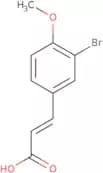
CAS:3-Bromo-4-methoxycinnamic acid is an organic compound that is used as a reagent, a useful scaffold, and a useful intermediate. It has been shown to be an excellent building block for the synthesis of complex compounds. 3-Bromo-4-methoxycinnamic acid can be used in the production of fine chemicals.
Formula:C10H9BrO3Purezza:Min. 95%Colore e forma:PowderPeso molecolare:257.08 g/molNaphthyl glycidylether
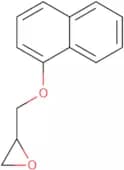
CAS:Naphthyl glycidylether is a chemical compound with chemical stability, which makes it useful for the manufacture of ethers and epoxides. It has been used as an acid catalyst and in the synthesis of polycarboxylic acids. Naphthyl glycidylether is also used to produce genotoxic impurities that are not removed by sterilants or metal hydroxides. This substance can be found as an impurity in some disinfectants, such as mercuric chloride, which can cause toxicity when ingested. In order to determine if naphthyl glycidylether is present in a material, a plate test can be performed to detect its presence.Formula:C13H12O2Purezza:(%) Min. 95%Colore e forma:Colorless Clear LiquidPeso molecolare:200.23 g/mol4'-Fluoroacetophenone
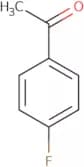
CAS:4'-Fluoroacetophenone is an organic molecule that is used for wastewater treatment. It reacts with amine groups to form a covalent bond. 4'-Fluoroacetophenone can be used to activate AMP-activated protein kinase (AMPK) and increase the rate of cellular respiration, which may help treat cancer. The chemical structure of 4'-fluoroacetophenone includes hydrogen bonds, nucleophilic substitutions, and acylation reactions. The Langmuir adsorption isotherm for this molecule has been determined to be linear.Formula:C8H7FOPurezza:Min. 95%Colore e forma:Clear LiquidPeso molecolare:138.14 g/molβ-Naphthoic acid ethyl ester
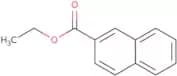
CAS:β-Naphthoic acid ethyl ester (BNAE) is a synthetic compound that has been used as an intermediate in the synthesis of organic compounds. It is also used to prepare hydroxamic acids, which are active methylene compounds. BNAE reacts with nucleophiles and is susceptible to nucleophilic attack. The reaction mechanism for this type of compound involves a cavity with a constant volume, which increases the reactivity of the molecule. This type of reaction can be explained using the functional theory and the use of organic solvents. BNAE is stable when exposed to carbon tetrachloride and hydroxamic acids, but not when exposed to diethyl succinate or chemical agents such as sodium nitrite.Formula:C13H12O2Purezza:Min. 95%Colore e forma:PowderPeso molecolare:200.23 g/molBis(4-Nitrophenyl)phosphoric acid sodium
CAS:Bis(4-nitrophenyl)phosphoric acid sodium is a synthetic compound that has been used as an antibiotic. It is a nitro group donor and may be oxidized to p-nitrophenol phosphate. Bis(4-nitrophenyl)phosphoric acid sodium inhibits bacterial growth by binding to the 30S ribosomal subunit, which prevents protein synthesis and cell division. The rate constant of this reaction has been determined using x-ray diffraction data obtained on crystals of the product with signal peptide. Bis(4-nitrophenyl)phosphoric acid sodium also has biochemical properties, such as pyrazinoic acid formation and polymerase chain reactions, which have been reported in recombinant cytochrome P450s from rat liver microsomes. The disulfide bond coordination geometry and mechanism of the reaction are still unknown but it is thought that the reaction proceeds through a single electron transfer mechanism.Formula:C12H9N2O8P·NaPurezza:Min. 95%Colore e forma:White PowderPeso molecolare:363.17 g/mol



![3-Methylnaphth[2,1-d]isoxazole](/_next/image/?url=https%3A%2Fstatic.cymitquimica.com%2Fproducts%2F3D%2Fthumb-webp%2FFN66641.webp&w=3840&q=75)


![2-Amino-N-[2-(2-chlorobenzoyl)-4-nitrophenyl]acetamide](/_next/image/?url=https%3A%2Fstatic.cymitquimica.com%2Fproducts%2F3D%2Fthumb-webp%2FFA17795.webp&w=3840&q=75)