Standard farmaceutici
Gli standard farmaceutici sono un insieme completo di materiali di riferimento essenziali per garantire la sicurezza, l'efficacia e la qualità dei prodotti farmaceutici. Questa categoria include standard per ingredienti farmaceutici attivi (API), che sono i componenti principali responsabili degli effetti terapeutici. Inoltre, copre composti e metaboliti rilevanti sia per l'industria farmaceutica che veterinaria, fornendo punti di riferimento per la misurazione e l'analisi precisa di queste sostanze. Gli standard di controllo delle nitrosammine sono cruciali per rilevare e mitigare le nitrosammine potenzialmente dannose nelle formulazioni di farmaci. Gli standard di tossicologia aiutano a valutare la sicurezza e i potenziali effetti avversi dei composti farmaceutici. Inoltre, gli standard per attivatori e inibitori enzimatici sono vitali per la ricerca e lo sviluppo, consentendo studi precisi delle vie biochimiche e dei meccanismi d'azione dei farmaci. Questi standard farmaceutici sono strumenti indispensabili per la conformità normativa, il controllo di qualità e la ricerca, garantendo che i prodotti farmaceutici soddisfino rigorosi criteri di sicurezza ed efficacia.
Sottocategorie di "Standard farmaceutici"
- APIs per la ricerca e le impurità(274.923 prodotti)
- Attivatori e inibitori enzimatici(2.827 prodotti)
- Nitrosamine(2.606 prodotti)
- Composti e metaboliti farmaceutici e veterinari(2.873 prodotti)
- Tossicologia(13.652 prodotti)
Trovati 7836 prodotti di "Standard farmaceutici"
Ordinare per
Purezza (%)
0
100
|
0
|
50
|
90
|
95
|
100
Delta 5-avenasterol
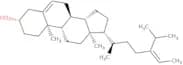
CAS:Prodotto controllato<p>Delta 5-avenasterol is a fatty acid that is used as an anti-inflammatory. It has been shown to reduce inflammation in animals by inhibiting the production of arachidonic acid, which is a precursor of prostaglandins and leukotrienes. Delta 5-avenasterol also has antioxidant properties and can be used as an additive in animal feed to reduce oxidative stress. The most common form of delta 5-avenasterol found in plants is delta 5,6-avenasterol, but delta 5-avenasterol can also be found in soybean oil. Delta 5-avenasterol can be detected using various assays including the chromatographic assay with an ionization detector and a spectrophotometric assay with a UV detector.</p>Formula:C29H48OPurezza:Min. 95%Peso molecolare:412.69 g/molL-Methionine sulfoxide
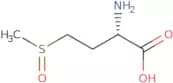
CAS:<p>Methionine sulfoxide is a methionine that has been oxidized to methionine sulfoxide. Methionine sulfoxides are produced through protein oxidation, which is the chemical process of reacting with oxygen in the air or other compounds to form an organic peroxide and superoxide radical. Methionine sulfoxides are found in proteins and are formed as a result of oxidative stress on cells and tissues. The rate constant for the conversion of methionine to methionine sulfoxide is 0.01983 min-1 at pH 7, 25°C. There are two methods of detection: chemiluminescence method and chromatographic analysis. In addition, methionine sulfoxides have natural antioxidant properties that can be used to treat diseases such as Alzheimer's disease and Parkinson's disease, as well as cancer treatments. Methionine sulfoxides have been shown to have a significant effect on wild-type strains of bacteria, reducing their growth rates</p>Formula:C5H11NO3SPurezza:Min. 98 Area-%Colore e forma:White PowderPeso molecolare:165.21 g/molAcetyl-L-methionine sulfoxide
CAS:<p>Please enquire for more information about Acetyl-L-methionine sulfoxide including the price, delivery time and more detailed product information at the technical inquiry form on this page</p>Formula:C7H13NO4SPurezza:Min. 95%Colore e forma:PowderPeso molecolare:207.25 g/molProflavine hemisulfate
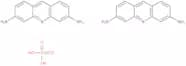
CAS:<p>Proflavine hemisulfate is an antibiotic that inhibits bacterial growth by binding to DNA and inhibiting DNA synthesis. It binds to the dinucleotide phosphate of the bacterial ribosome and changes the shape of the nucleotide, preventing attachment of amino acids to form proteins. Proflavine hemisulfate also has a strong affinity for nuclear dna and is bound to it in a form that inhibits replication. The free form of proflavine is converted into enzyme form by phosphorylation, which inhibits protein synthesis and cell division. Proflavine hemisulfate has been shown to inhibit multidrug efflux pumps in bacteria, leading to increased susceptibility of bacteria to antibiotics. In addition, proflavine hemisulfate possesses inhibitory properties against transfer reactions in cells. The method used for measuring proflavine hemisulfate activity is electrochemical impedance spectroscopy (EIS) on cell nuclei suspensions in a model system.</p>Formula:C13H11N3•(H2SO4)0•(H2O)xPurezza:Min. 95%Colore e forma:PowderPeso molecolare:258.29 g/molBoc-L-aspartic acid a-9-fluorenylmethyl ester
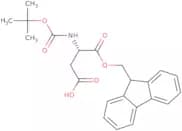
CAS:Boc-L-aspartic acid a-9-fluorenylmethyl ester is a synthetic compound that mimics the structure of acetylcholine. It has been shown to be an efficient method for generating pseudopeptides and cyclic peptides. This compound may be used as a surrogate for acetylcholine in virus research, since it can bind to the same receptor. Boc-L-aspartic acid a-9-fluorenylmethyl ester has also been used to generate monoclonal antibodies that are neutralizing against foot-and-mouth disease viruses.Formula:C23H25NO6Purezza:Min. 97 Area-%Peso molecolare:411.45 g/molRef: 3D-FB47900
1gPrezzo su richiesta2gPrezzo su richiesta5gPrezzo su richiesta10gPrezzo su richiesta500mgPrezzo su richiesta4a-Hydroxy cholesterol
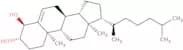
CAS:Prodotto controllatoPlease enquire for more information about 4a-Hydroxy cholesterol including the price, delivery time and more detailed product information at the technical inquiry form on this pageFormula:C27H46O2Purezza:Min. 95%Colore e forma:PowderPeso molecolare:402.65 g/molAmoxicillin dimer tri-sodium salt (penicilloic acid form) - mixture of diastereomers
<p>Please enquire for more information about Amoxicillin dimer tri-sodium salt (penicilloic acid form) - mixture of diastereomers including the price, delivery time and more detailed product information at the technical inquiry form on this page</p>Formula:C32H27N6Na3O11S2Purezza:Min. 95%Peso molecolare:804.69 g/mol2-Hydroxy-1-naphthaldehyde
CAS:<p>2-Hydroxy-1-naphthaldehyde is a redox potential chemical that has been shown to have anticancer activity in vitro and in vivo. It inhibits the growth of cells by binding to iron, which is important for many biological processes including DNA synthesis. 2-Hydroxy-1-naphthaldehyde has also been shown to have metal carbonyl reactivity and fluorescence properties that may be useful as a fluorescent probe. 2-Hydroxy-1-naphthaldehyde binds to iron ions through hydrogen bonding interactions, forming an octahedral complex with six ligands. The compound also has coordination geometry that can be described as either trigonal bipyramidal or square planar, depending on the solvent used. This data was obtained by x-ray diffraction studies of crystalline solids. The compound's Langmuir adsorption isotherm was found to be linear at low concentrations and shifted to nonlinear behavior at higher concentrations. The</p>Formula:C11H8O2Purezza:Min. 95%Colore e forma:SolidPeso molecolare:172.18 g/molCholesterol Heptanoate
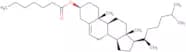
CAS:Prodotto controllato<p>Cholesterol Heptanoate is a liquid crystal composition that is used to coat tablets. It is also used for the diagnosis of fatty acid metabolism and atherosclerotic lesion formation by measuring the fatty acid composition of body tissues. Cholesterol Heptanoate can be used to form polymeric matrices for use in drug delivery systems. These matrices are composed of ionizable, film-forming polymers with excipients that have phase transition temperatures near 37°C.</p>Purezza:Min. 95%Colore e forma:PowderPeso molecolare:498.82 g/molDL-Aspartic acid dimethyl ester hydrochloride
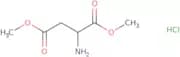
CAS:Please enquire for more information about DL-Aspartic acid dimethyl ester hydrochloride including the price, delivery time and more detailed product information at the technical inquiry form on this pageFormula:C6H11NO4·HClPurezza:Min. 95%Colore e forma:White PowderPeso molecolare:197.62 g/molBudesonide Impurity 9
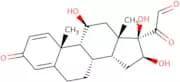
CAS:Prodotto controllatoPlease enquire for more information about Budesonide Impurity 9 including the price, delivery time and more detailed product information at the technical inquiry form on this pageFormula:C21H26O6Purezza:Min. 95%Peso molecolare:374.43 g/mol2-Methylvaleraldehyde
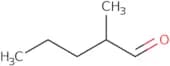
CAS:2-Methylvaleraldehyde is a colorless liquid with a pleasant odor. It is soluble in water and has an acidity of about 8.2%. The chemical formula for 2-methylvaleraldehyde is C6H12O2, and it has a molecular weight of 108.18 g/mol. 2-Methylvaleraldehyde can be obtained by the oxidation of cinnamic acid or by reduction of acetone with sodium borohydride or lithium aluminum hydride. 2-Methylvaleraldehyde can react with sodium carbonate or calcium carbonate to form sodium methoxyethoxide or calcium methoxyethoxide, respectively. The reaction intermediates are methyl ethyl ketone (MEK) and dimethyl ether (DME). These compounds are used in the synthesis of various other chemicals, including pentane, butadiene, and chloroprene. Pentane is a colorless liquid that has an odor threshold at 1Formula:C6H12OPurezza:Min. 95%Peso molecolare:100.16 g/mol3-Bromo-2-nitrophenol
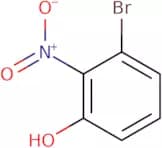
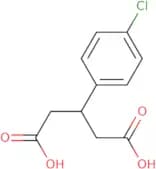
CAS:3-Bromo-2-nitrophenol (3-BNP) is a brominating agent that can be used in the synthesis of a variety of compounds. It is prepared by the refluxing of 3-bromo-2-nitrobenzene with lithium chloride, followed by treatment with trifluoromethanesulfonic anhydride to yield 3-bromo-2-(trifluoromethyl)phenoxyacetic acid. The product can also be obtained from 2,4,6-trinitrophenol and NBS. 3-BNP has shown chemoselectivity for chlorides relative to iodides or fluorides. The yields are higher when it is used in coupling reactions and permutations with lithium or magnesium.Formula:C6H4BrNO3Purezza:Min. 95%Peso molecolare:218 g/mol3-(4-Chlorophenyl)glutaric acid
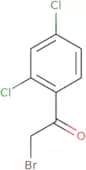
CAS:<p>3-(4-Chlorophenyl)glutaric acid is a subunit of lanthanide complexes. It has been synthesized from cinchona alkaloids and single-crystal x-ray diffraction data obtained in the absence of ligands. 3-(4-Chlorophenyl)glutaric acid is a desymmetrization reagent and has been shown to be an effective ligand for lanthanide complexes. This compound has the potential to form impurities during the synthesis process, which can lead to morphological changes, luminescence, or high-performance liquid chromatography interference.</p>Formula:C11H11ClO4Purezza:Min. 95%Peso molecolare:242.66 g/mol2-Bromo-2',4'-dichloroacetophenone
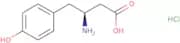
CAS:2-Bromo-2',4'-dichloroacetophenone (2BDCA) is a drug that belongs to the class of active substances. 2BDCA has potent inhibitory activity against erythrocytes and is used in the treatment of leukaemia. 2BDCA is also an optical probe, which can be used to detect phosphate groups and dihedral angles in biological systems. It can be used as a fluorescent probe for biological systems, such as cells or proteins, and has been shown to be effective on red blood cells. 2BDCA binds to these molecules by hydrogen bonding and exhibits optical properties through fluorescence resonance energy transfer.Formula:C8H5BrCl2OPurezza:Min. 95%Colore e forma:Clear LiquidPeso molecolare:267.93 g/molL-b-Homotyrosine hydrochloride
CAS:<p>Please enquire for more information about L-b-Homotyrosine hydrochloride including the price, delivery time and more detailed product information at the technical inquiry form on this page</p>Formula:C10H13NO3·HClPurezza:Min. 95%Peso molecolare:231.68 g/mol[3-(1-Naphthyl)propyl]amine
CAS:3-(1-Naphthyl)propyl]amine is an organic compound that is a colorless solid with a melting point of -118°C. It is soluble in water, methanol, and acetone. 3-(1-Naphthyl)propyl]amine forms acid when heated with concentrated hydrochloric acid. The reaction produces hydrogen chloride gas and benzoic acid as a byproduct. 3-(1-Naphthyl)propyl]amine also reacts with pyridine to produce carbamic acid and ammonia gas as a byproduct. This can be rationalized systematically by the loss of the amine group from the nitrogen atom of the amine molecule. Carbamic acid has two acidic protons on it which are stabilized by the carbonyl group on the other side of the molecule. 3-(1-Naphthyl)propyl]amine can also react with anions such as carbonate ions to form carbamate salts,Formula:C13H15NPurezza:Min. 95%Colore e forma:Clear LiquidPeso molecolare:185.26 g/mol2,2'-Bis-(1-adamantyl)-4,4'-dimethoxybiphenyl
CAS:<p>2,2'-Bis-(1-adamantyl)-4,4'-dimethoxybiphenyl is a methyl ester of adapalene. It is used to assess the effects of adapalene on the skin and to determine its marker for topical application.</p>Formula:C34H42O2Purezza:Min. 95%Peso molecolare:482.7 g/mol(-)-3-Methoxy butorphanol
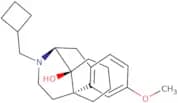
CAS:Prodotto controllato<p>Please enquire for more information about (-)-3-Methoxy butorphanol including the price, delivery time and more detailed product information at the technical inquiry form on this page</p>Formula:C22H31NO2Purezza:Min. 95%Peso molecolare:341.49 g/molIbuprofen Sorbitol Ester - (Mixture of Diastereomers)
<p>Please enquire for more information about Ibuprofen Sorbitol Ester - (Mixture of Diastereomers) including the price, delivery time and more detailed product information at the technical inquiry form on this page</p>Formula:C19H30O7Purezza:Min. 95%Peso molecolare:370.44 g/mol




![[3-(1-Naphthyl)propyl]amine](/_next/image/?url=https%3A%2Fstatic.cymitquimica.com%2Fproducts%2F3D%2Fthumb-webp%2FFN134365.webp&w=3840&q=75)