Standard farmaceutici
Gli standard farmaceutici sono un insieme completo di materiali di riferimento essenziali per garantire la sicurezza, l'efficacia e la qualità dei prodotti farmaceutici. Questa categoria include standard per ingredienti farmaceutici attivi (API), che sono i componenti principali responsabili degli effetti terapeutici. Inoltre, copre composti e metaboliti rilevanti sia per l'industria farmaceutica che veterinaria, fornendo punti di riferimento per la misurazione e l'analisi precisa di queste sostanze. Gli standard di controllo delle nitrosammine sono cruciali per rilevare e mitigare le nitrosammine potenzialmente dannose nelle formulazioni di farmaci. Gli standard di tossicologia aiutano a valutare la sicurezza e i potenziali effetti avversi dei composti farmaceutici. Inoltre, gli standard per attivatori e inibitori enzimatici sono vitali per la ricerca e lo sviluppo, consentendo studi precisi delle vie biochimiche e dei meccanismi d'azione dei farmaci. Questi standard farmaceutici sono strumenti indispensabili per la conformità normativa, il controllo di qualità e la ricerca, garantendo che i prodotti farmaceutici soddisfino rigorosi criteri di sicurezza ed efficacia.
Sottocategorie di "Standard farmaceutici"
- APIs per la ricerca e le impurità(274.920 prodotti)
- Attivatori e inibitori enzimatici(2.827 prodotti)
- Nitrosamine(2.606 prodotti)
- Composti e metaboliti farmaceutici e veterinari(2.871 prodotti)
- Tossicologia(13.652 prodotti)
Trovati 7836 prodotti di "Standard farmaceutici"
Ordinare per
Purezza (%)
0
100
|
0
|
50
|
90
|
95
|
100
Reboxetinemesylate
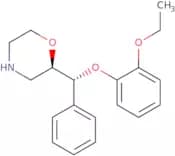
CAS:Prodotto controllato<p>Reboxetinemesylate is a prodrug that is converted to reboxetine, the active form of the drug. It has been shown to be effective in the treatment of symptoms related to depression and Parkinson's disease. Reboxetinemesylate has a long-term efficacy due to its long half-life and slow release from plasma proteins. This drug may have drug interactions with other medications, such as hepatic impairment or drugs that are metabolized by CYP450 enzymes. Reboxetinemesylate also has locomotor activity effects on rats, which may be due to dopamine receptor agonist properties. Reboxetinemesylate is not active against bacterial infections, but is used for the treatment of Parkinson's disease and depression.</p>Formula:C20H27NO6SPurezza:Min. 95%Peso molecolare:409.5 g/molSecretin (porcine) acetate salt
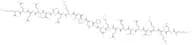
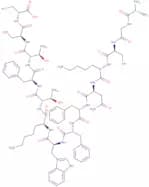
CAS:Prodotto controllatoSecretin acetate salt H-His-Ser-Asp-Gly-Thr-Phe-Thr-Ser-Glu-Leu-Ser-Arg-Leu-Arg-Asp-Ser-Ala is a peptide that is secreted by the pancreas in response to the ingestion of food. Secretin stimulates the release of water and bicarbonate from the pancreas, as well as stimulating the gallbladder to contract, which results in increased flow of bile. Secretin also inhibits gastric acid secretion, slows intestinal motility, and stimulates pancreatic enzyme secretion. The amino acid sequence of this peptide is identical to that of leuprolide acetate (Lupron) and goserelin acetate (Zoladex), which are synthetic analogs with similar biological activity. This peptide can be synthesized on a solid phase or in solution phase. Solid phase synthesis involves attaching amino acidsFormula:C130H220N44O41Purezza:Min. 95%Peso molecolare:3,055.41 g/molNortropinone hydrochloride
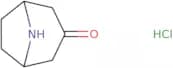
CAS:<p>Nortropinone hydrochloride is a molecule with a pyridinium moiety. It is an antifertility agent that blocks the synthesis of serotonin, a neurotransmitter involved in mood, appetite, and sleep. Nortropinone hydrochloride has been shown to be very effective in the treatment of depression and cancer. Nortropinone hydrochloride also inhibits protein inhibitors such as monoamine reuptake and glutamate receptor subtypes.</p>Formula:C7H12ClNOPurezza:Min. 95%Peso molecolare:161.63 g/molEuropium tris[3-(heptafluoropropylhydroxymethylene)-(+)-camphorate]
CAS:<p>Europium Tris[3-(Heptafluoropropylhydroxymethylene)-(+)-Camphorate] is a chiral compound that can be used as a catalyst for the asymmetric synthesis of spiroketals. The catalyst is immobilized on a monolayer and has been shown to work with nitrogen nucleophiles such as ammonia and amines. It also shows catalytic activity in hydrosilylation reactions, which are used in the production of polymers. Europium Tris[3-(Heptafluoropropylhydroxymethylene)-(+)-Camphorate] is soluble in organic solvents such as ethyl diazoacetate, styrene, and tetrahydrofuran.</p>Formula:C42H42EuF21O6Purezza:Min. 95%Peso molecolare:1,193.71 g/molCyclohexylstatine
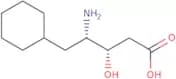
CAS:<p>Cyclohexylstatine is a glycopeptide antibiotic that inhibits the synthesis of collagen in animals and humans. It also has been shown to have anticancer activity. Cyclohexylstatine works by inhibiting the biosynthesis of collagen, which is an important component of skin, ligaments, and tendons. The molecule was synthesized in 1975 and has been used as a pharmaceutical agent since 1980. Cyclohexylstatine is the first anti-collagen drug to be developed for use in humans. It has been shown to be effective against autoimmune diseases such as rheumatoid arthritis but not against cancer cells or bacteria. Cyclohexylstatine binds to the zymogen form of collagenase and inhibits its activity. This inhibition leads to an accumulation of polysaccharides in the extracellular matrix that are converted into oligosaccharides by glycosidases present in tissue fluids. These oligosaccharides inhibit collagen synthesis by binding to</p>Formula:C11H21NO3Purezza:Min. 95%Peso molecolare:215.29 g/molTyr-Somatostatin-28
CAS:<p>Please enquire for more information about Tyr-Somatostatin-28 including the price, delivery time and more detailed product information at the technical inquiry form on this page</p>Formula:C146H216N42O41S3Purezza:Min. 95%Peso molecolare:3,311.73 g/mol6-Hydroxytropinone
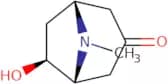
CAS:<p>6-Hydroxytropinone is a synthetic compound that is used in the synthesis of anisodamine and nicotinic acetylcholine. It has been shown to have a high activation energy, and can be synthesized from camphor and sodium carbonate. 6-Hydroxytropinone reacts with hydrochloric acid and gel chromatography to produce tropone, which is then reacted with chloride to produce the desired product. This chemical has been studied clinically for its effects on nicotinic acetylcholine, but it has not been fully studied for toxicity.</p>Formula:C8H13NO2Purezza:Min. 95%Peso molecolare:155.19 g/mol7-Diethylamino-4-methylcoumarin
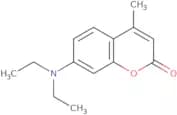
CAS:<p>7-Diethylamino-4-methylcoumarin is a fluorescence probe that can be used in applications such as the study of hydrogen bonding interactions. It is excited by laser light and emits a red-shifted fluorescent light. 7-Diethylamino-4-methylcoumarin is a hydroxyl group analogue of coumarin, which has been shown to have physiological effects on the liver cells. The absorption spectrum of 7-Diethylamino-4-methylcoumarin is sensitive to changes in pH and chemical stability. A decrease in pH increases the intensity of the emission while an increase in pH decreases the intensity of the emission. This compound can also be used to label nucleic acids during polymerase chain reactions (PCR) or for sample preparation before analysis using nuclear magnetic resonance spectroscopy (NMR).</p>Formula:C14H17NO2Purezza:Min. 98 Area-%Colore e forma:PowderPeso molecolare:231.29 g/mol4'-Cyclohexylacetophenone
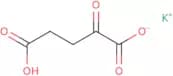
CAS:<p>4'-Cyclohexylacetophenone is a chalcone that is prepared from hexamethylenetetramine and cyclohexanone. The reaction of 4'-cyclohexylacetophenone with methylthio-1,3-dithiane in the presence of proton irradiation yields a mixture of products. 4'-Cyclohexylacetophenone has been used as a precursor for preparing other chalcones. This compound can be readily prepared by chlorinating 1,3-diphenylpropane to give 3-chlorocyclohexylacetic acid followed by hydrolysis to the ketone. It is also used as a starting material for synthesis of heterocycles such as benzofuran and indole.</p>Formula:C14H18OPurezza:Min. 95%Colore e forma:Slightly Yellow PowderPeso molecolare:202.29 g/molα-Ketoglutaric acid potassium
CAS:<p>Intermediate in the Krebs cycle; nitrogen transporter</p>Formula:C5H5O5KPurezza:Min. 98 Area-%Colore e forma:PowderPeso molecolare:184.19 g/molLumisterol 3
CAS:Prodotto controllatoLumisterol 3 is a provitamin compound that is produced by the human body through the conversion of vitamin D into lumisterol. It is used as a dietary supplement and can be found in the human serum, cellular, and skin cells. Lumisterol 3 has been shown to increase cholesterol synthesis, which may be due to its ability to activate enzymes involved in this process. Lumisterol 3 has also been shown to have physiological effects on humans. These effects include an increase in energy expenditure and a decrease in blood pressure and heart rate. The molecular modeling of lumisterol 3 shows that it has a similar structure to vitamin D, but with three instead of two side chains.Formula:C27H44OPurezza:90%NmrColore e forma:PowderPeso molecolare:384.64 g/molNeuronostatin-19 (human, canine, porcine) trifluoroacetate salt
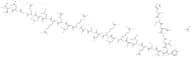
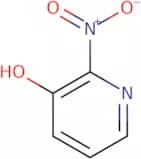
<p>Please enquire for more information about Neuronostatin-19 (human, canine, porcine) trifluoroacetate salt including the price, delivery time and more detailed product information at the technical inquiry form on this page</p>Formula:C90H151N29O25Purezza:Min. 95%Peso molecolare:2,039.34 g/mol3-Hydroxy-2-nitropyridine
CAS:<p>3-Hydroxy-2-nitropyridine is a chemical compound that has been shown to be an inhibitor of nicotinic acetylcholine receptor. The compound has been found to have luminescence properties and can be used as a fluorescent probe in the study of molecular recognition processes. 3-Hydroxy-2-nitropyridine is also an effective antimicrobial agent and has been shown to have clinical potential for the treatment of neurodegenerative diseases such as Parkinson's disease, Alzheimer's disease, and Huntington's disease. It binds to the nicotinic acetylcholine receptor by forming hydrogen bonds with functional groups on the receptor surface. This binding prevents the agonist from binding and activating the ion channel that leads to depolarization of nerve cells. 3-Hydroxy-2-nitropyridine also reacts with chloride ions in order to form hydrochloric acid, which then inhibits microbial growth by altering their cell membrane permeability. The reaction yield is determined</p>Formula:C5H4N2O3Purezza:Min. 95%Peso molecolare:140.1 g/molGLP-1 (7-36)-Lys(biotinyl) amide (human, bovine, guinea pig, mouse, rat) trifluoroacetate
CAS:<p>Please enquire for more information about GLP-1 (7-36)-Lys(biotinyl) amide (human, bovine, guinea pig, mouse, rat) trifluoroacetate including the price, delivery time and more detailed product information at the technical inquiry form on this page</p>Formula:C165H252N44O48S•(C2HF3O2)xPurezza:Min. 95%Peso molecolare:3,652.1 g/mol2'-(2-Thienylidene)-4-chloroacetophenone
CAS:2'-(2-Thienylidene)-4-chloroacetophenone is a fine chemical that is useful as a building block for research, as a reagent in the synthesis of other compounds, and as a speciality chemical. It is also an intermediate in the synthesis of pharmaceuticals and agrochemicals. This compound can be used in reactions involving nucleophilic substitution and oxidation with hydrogen peroxide. 2'-(2-Thienylidene)-4-chloroacetophenone has been shown to be useful in organic syntheses because it can act as an electron-donating group.Formula:C12H9ClOSPurezza:Min. 95%Peso molecolare:236.72 g/molN-Acetyl-[Cys4,10, D-Phe7]-α-Melanocyte Stimulating Hormone Fragment 4-13
CAS:Please enquire for more information about N-Acetyl-[Cys4,10, D-Phe7]-alpha-Melanocyte Stimulating Hormone Fragment 4-13 including the price, delivery time and more detailed product information at the technical inquiry form on this pageFormula:C61H86N18O13S2Purezza:Min. 95%Peso molecolare:1,343.58 g/molAMCA-Glu-Glu-Lys-Pro-Ile-Ser-Phe-Phe-Arg-Leu-Gly-Lys(biotinyl)-NH2
CAS:<p>Please enquire for more information about AMCA-Glu-Glu-Lys-Pro-Ile-Ser-Phe-Phe-Arg-Leu-Gly-Lys(biotinyl)-NH2 including the price, delivery time and more detailed product information at the technical inquiry form on this page</p>Formula:C90H131N21O22SPurezza:Min. 95%Peso molecolare:1,891.2 g/molThymosin β4 (16-38)
CAS:Thymosin beta4 (16-38) is a synthetic peptide that has been deprotected with trifluoroacetic acid. This peptide has impaired potency and is not suitable for blastogenic activity. It is synthesized by the removal of the C-terminal amino acid, which is an N-acetylated lysine, from the native protein thymosin beta4.Formula:C118H204N32O41Purezza:Min. 95%Peso molecolare:2,727.07 g/mol4'-Bromo-2'-fluoroacetophenone
CAS:<p>4'-Bromo-2'-fluoroacetophenone is a bifunctional reagent that reacts with nucleophiles to form conjugates. It is used in the preparation of fluorinated DNA and RNA, as well as in electron-transfer reactions. The selectivity of 4'-bromo-2'-fluoroacetophenone can be attributed to the presence of fluorine atoms on both ends of the molecule.</p>Formula:C8H6BrFOPurezza:Min. 95%Peso molecolare:217.04 g/mol(D-Phe7)-Somatostatin-14
CAS:<p>Please enquire for more information about (D-Phe7)-Somatostatin-14 including the price, delivery time and more detailed product information at the technical inquiry form on this page</p>Formula:C76H104N18O19S2Purezza:Min. 95%Peso molecolare:1,637.88 g/mol

![Europium tris[3-(heptafluoropropylhydroxymethylene)-(+)-camphorate]](/_next/image/?url=https%3A%2Fstatic.cymitquimica.com%2Fproducts%2F3D%2Fthumb-webp%2FFE98265.webp&w=3840&q=75)




![N-Acetyl-[Cys4,10, D-Phe7]-α-Melanocyte Stimulating Hormone Fragment 4-13](/_next/image/?url=https%3A%2Fstatic.cymitquimica.com%2Fproducts%2F3D%2Fthumb-webp%2FFA110402.webp&w=3840&q=75)