


Standard farmaceutici
Sottocategorie di "Standard farmaceutici"
- APIs per la ricerca e le impurità(277.540 prodotti)
- Attivatori e inibitori enzimatici(2.827 prodotti)
- Nitrosamine(2.677 prodotti)
- Composti e metaboliti farmaceutici e veterinari(2.892 prodotti)
- Tossicologia(13.294 prodotti)
Trovati 8194 prodotti di "Standard farmaceutici"
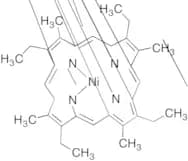
Etioporphyrin I Nickel
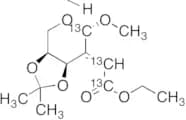
CAS:Prodotto controllatoFormula:C32H36N4NiColore e forma:NeatPeso molecolare:535.348Methyl (2E)-2-Deoxy-2-(2-ethoxy-2-oxoethylidene)-3,4-O-isopropylidene-β-L-erythro-pentopyranoside-13C3
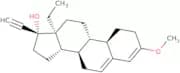
Prodotto controllatoFormula:C3C10H20O6Colore e forma:NeatPeso molecolare:275.272(17a)-13-Ethyl-3-methoxy-18,19-dinorpregna-3,5-dien-20-yn-17-ol
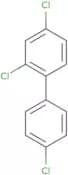
CAS:Prodotto controllatoPlease enquire for more information about (17a)-13-Ethyl-3-methoxy-18,19-dinorpregna-3,5-dien-20-yn-17-ol including the price, delivery time and more detailed product information at the technical inquiry form on this pageFormula:C22H30O2Purezza:Min. 95%Peso molecolare:326.47 g/mol2,4,4’-Trichlorobiphenyl
CAS:Prodotto controllato2,4,4’-Trichlorobiphenyl is a polychlorinated biphenyl congener. It has been shown to have an adverse effect on the central nervous system, causing neurotoxicity. 2,4,4’-Trichlorobiphenyl has been used as a model system for the study of the effects of environmental toxins on mitochondrial membrane potential and lipid peroxidation. 2,4,4’-Trichlorobiphenyl binds to fatty acids in mitochondria and inhibits fatty acid β-oxidation. The inhibition of fatty acid oxidation leads to increased levels of protocatechuic acid in the serum and liver tissue. 2,4,4’-Trichlorobiphenyl has also been found to be toxic to aquatic organisms such as fish and shrimp at low concentrations.
Formula:C12H7Cl3Purezza:Min. 95%Peso molecolare:257.54 g/molTadalafil impurity B
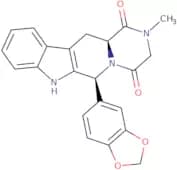
CAS:Please enquire for more information about Tadalafil impurity B including the price, delivery time and more detailed product information at the technical inquiry form on this page
Formula:C20H19N3O3Purezza:Min. 95%Peso molecolare:349.38 g/molRef: 3D-FT63834
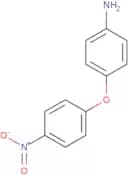
Prodotto fuori produzione4-(4-Nitrophenoxy)aniline
CAS:4-(4-Nitrophenoxy)aniline is a synthetic drug that is used as a substrate for the cytochrome P450 system. It has been shown to be metabolized by the liver in two steps, forming reduction products and interacting with thiourea. This drug also has functional groups which are active in the group p2 of the periodic table, such as diphenyl ethers and aminophenols. 4-(4-Nitrophenoxy)aniline can be used to probe the interaction between an enzyme and its substrate.
Formula:C12H10N2O3Purezza:Min. 95%Peso molecolare:230.22 g/molRef: 3D-FN147043
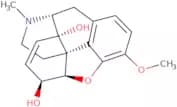
Prodotto fuori produzioneCodeine Impurity F
CAS:Prodotto controllatoCodeine Impurity F is a biochemical that is an impurity of codeine. Codeine Impurity F is a byproduct of the enzymatic reaction with morphine and the bacterial strain Pseudomonas putida. Codeine Impurity F has been shown to inhibit the growth of gram-negative bacteria, including Escherichia coli and Salmonella enterica, by binding to cellular membranes and inhibiting their function. It also binds to RNA in vitro and prevents translation of mRNA from its ribosome complex. The hydroxyl group on Codeine Impurity F binds to aluminium ions, which may interfere with the absorption of other drugs such as ampicillin or tetracycline. This impurity has been shown to have an effect on biological products such as immunoglobulins and albumin.
Formula:C18H21NO4Purezza:Min. 95%Peso molecolare:315.36 g/molRef: 3D-FC161072
Prodotto fuori produzioneNaphthalene
CAS:Naphthalene is a chemical that is used for wastewater treatment and as a pesticide. It is also used in the manufacturing of polymers, resins, and plastics. Naphthalene has antimicrobial properties due to its hydrophobic effect. Naphthalene's antimicrobial activity is based on its ability to react with the skeleton of bacterial cells and disrupt the integrity of their outer membrane. Naphthalene also interacts with proteins and DNA, causing cell death. The molecular mechanisms of naphthalene's antibacterial activity are not well understood but have been studied using Hl-60 cells, which are immortalized human monocytic leukemia cells. This study showed that naphthalene affects the cell cycle by inhibiting protein synthesis in bacteria through binding to ribosomes or by disrupting the dna replication process.
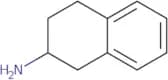
Formula:C10H8Purezza:Min. 95%Peso molecolare:128.17 g/mol1,2,3,4-Tetrahydronaphthalen-2-amine hydrobromide
CAS:Prodotto controllato1,2,3,4-Tetrahydronaphthalen-2-amine hydrobromide (THNA) is an amine that inhibits the enzyme tyrosine hydroxylase. This inhibition leads to a decrease in the synthesis of dopamine and norepinephrine. THNA has been shown to have inhibitory properties on locomotor activity, acid complex formation, and aminotransferases. It also exhibits receptor binding and agonist binding site activity. One study found that THNA had no effect on rat striatal tissue. The drug has been shown to be effective in metabolic disorders such as obesity.
Formula:C10H13NPurezza:Min. 95%Peso molecolare:147.22 g/molRef: 3D-FT133201
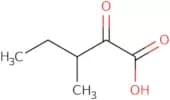
Prodotto fuori produzione(±)-3-Methyl-2-oxovaleric acid
CAS:(±)-3-Methyl-2-oxovaleric acid is a fatty acid that is found in the mitochondria of liver cells and other tissues. It is an intermediate in the citric acid cycle and can be converted into acetyl-CoA, which is used for energy production. (±)-3-Methyl-2-oxovaleric acid has been shown to cause necrotic cell death when it binds to the mitochondrial membrane potential and causes a loss of ATP production. This results in a lack of energy for the cell, leading to cell death. (±)-3-Methyl-2-oxovaleric acid has also been shown to inhibit protein synthesis by decreasing uptake and increasing creatine kinase activity. This inhibition leads to decreased body formation and tissue culture growth in vitro. In vivo, (±)-3-Methyl-2-oxovaleric acid causes primary sclerosing cholangitis, a disease characterized by inflammation of bile ducts that
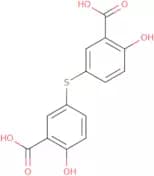
Formula:C6H10O3Purezza:Min. 95%Colore e forma:White PowderPeso molecolare:130.14 g/mol5,5'-Thiodisalicylic Acid
CAS:5,5'-Thiodisalicylic Acid is a reactive functional group with a silver ion. This compound has a hydrochloric acid and hydroxy group that react to form a hydroxyl group with the proton. It also has a nitrogen atom, which can be found in the reactive acidic hydroxyl group of 5,5'-thiodisalicylic acid. The fatty acids are viscosity and carbonyl groups. 5,5'-Thiodisalicylic Acid is an organic compound that reacts with chloride to form patterns.
Purezza:Min. 95%(NZ)-4-chloro-N-[1-[2-(4-nitrophenyl)ethyl]piperidin-2-ylidene]benzenesulfonamide
CAS:Prodotto controllatoPlease enquire for more information about (NZ)-4-chloro-N-[1-[2-(4-nitrophenyl)ethyl]piperidin-2-ylidene]benzenesulfonamide including the price, delivery time and more detailed product information at the technical inquiry form on this page
Formula:C19H20ClN3O4SPurezza:Min. 95%Peso molecolare:421.9 g/molRef: 3D-FN154024
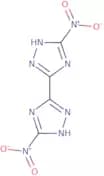
Prodotto fuori produzione5,5'-Dinitro-2H,2'H-3,3'-bi-1,2,4-triazole
CAS:Prodotto controllatoPlease enquire for more information about 5,5'-Dinitro-2H,2'H-3,3'-bi-1,2,4-triazole including the price, delivery time and more detailed product information at the technical inquiry form on this page
Formula:C4H2N8O4Purezza:Min. 95%Peso molecolare:226.11 g/molRef: 3D-FD118856
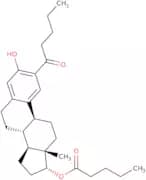
Prodotto fuori produzione2-Valeryl-17'-estradiol 17-valerate
CAS:Prodotto controllatoPlease enquire for more information about 2-Valeryl-17'-estradiol 17-valerate including the price, delivery time and more detailed product information at the technical inquiry form on this page
Formula:CHOPurezza:Min. 95%Ref: 3D-FV165157
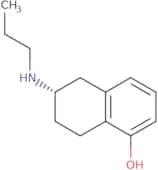
Prodotto fuori produzione(6S)-5,6,7,8-Tetrahydro-6-(propylamino)-1-naphthalenol
CAS:Prodotto controllatoRotigotine is a drug that is used to treat Parkinson's disease. It is a dopamine agonist that stimulates the release of dopamine in the brain. Rotigotine has been shown to be effective in controlling symptoms of Parkinson's disease, such as tremors and stiffness, and improving motor skills. This drug has also been shown to have a good tolerability profile, with few side effects reported. Rotigotine is rapidly absorbed from the gastrointestinal tract and metabolized by CYP2D6 into desalkyl rotigotine, which are pharmacologically inactive compounds. The mean terminal half-life for rotigotine is about 2 hours.
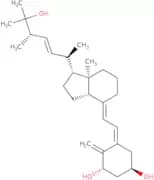
Formula:C13H19NOPurezza:Min. 95%Peso molecolare:205.3 g/mol1a,25-Dihydroxy vitamin D2
CAS:1a,25-Dihydroxy vitamin D2 is a compound that exhibits various characteristics and applications. It is known for its bioavailability and water-soluble properties, making it easily absorbed by the body. This compound has been extensively studied in the field of research chemicals. One of the notable features of 1a,25-Dihydroxy vitamin D2 is its potential therapeutic effects on ganglioside GM2-related disorders. It has been shown to interact with GM2 activator proteins and fatty acids, which are involved in the metabolism of GM2 gangliosides. This interaction may have implications for the treatment of certain neurological conditions. Additionally, 1a,25-Dihydroxy vitamin D2 has been investigated for its role in modulating immune responses and inflammatory processes. Studies have suggested that this compound can inhibit the production of pro-inflammatory substances like prostaglandins, offering potential anti-inflammatory benefits. Moreover, 1a,25-Dihydroxy vitamin D
Formula:C28H44O3Purezza:Min. 95%Colore e forma:White PowderPeso molecolare:428.65 g/molRef: 3D-FD22066
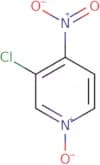
Prodotto fuori produzione3-Chloro-4-nitropyridine 1-oxide
CAS:3-Chloro-4-nitropyridine 1-oxide is the condensation product of 2-chloro-3-nitropyridine and nitric acid. 3-Chloro-4-nitropyridine 1-oxide has an isomeric nature and can be purified by recrystallization from water. The compound has a molecular weight of 286.1 g/mol and a monoclinic crystal structure. It has two n-oxides, which are isomers of each other, with nmr spectra that differ by the shift in the chemical shifts of the protons on the aromatic ring. 3-Chloro-4-nitropyridine 1-oxide condenses with lanthanides to form lanthanide complexes, such as Eu(III)(3,5'-ClO 4 ) 2 . This compound is also used in the synthesis of phenoxathiine derivatives that have antihypertensive activity.
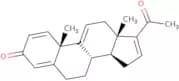
Formula:C5H3ClN2O3Purezza:Min. 95%Peso molecolare:174.54 g/molPregna-1,4,9(11),16-tetraene-3,20-dione
CAS:Prodotto controllatoPregna-1,4,9(11),16-tetraene-3,20-dione is a controlled product that is widely used in the industrial sector. It is a phosphoric compound that has various applications. This chemical compound acts as a chemokine and contains active agents such as tryptamine and aldehyde monophosphate. Pregna-1,4,9(11),16-tetraene-3,20-dione is also known to be a mouse metabolite and has been found to have properties similar to naphthalene and phenylethylamine. With its acidic nature and oxygen-containing structure, this compound can be easily purified through recrystallization. It exists in different tautomeric forms, making it highly versatile for various applications in different industries.
Formula:C21H24O2Purezza:Min. 95%Peso molecolare:308.41 g/mol4-(2-Chlorophenyl)-9-methyl-6H-thieno[3,2-f][1,2,4]triazolo[4,3-a][1,4]diazepine-2-propanoic acid methyl ester
CAS:Prodotto controllatoPlease enquire for more information about 4-(2-Chlorophenyl)-9-methyl-6H-thieno[3,2-f][1,2,4]triazolo[4,3-a][1,4]diazepine-2-propanoic acid methyl ester including the price, delivery time and more detailed product information at the technical inquiry form on this pageFormula:C19H17ClN4O2SPurezza:Min. 95%Peso molecolare:400.88 g/molRef: 3D-FC20337
Prodotto fuori produzione



![(NZ)-4-chloro-N-[1-[2-(4-nitrophenyl)ethyl]piperidin-2-ylidene]benzenesulfonamide](/_next/image/?url=https%3A%2Fstatic.cymitquimica.com%2Fproducts%2F3D%2Fthumb-webp%2FFN154024.webp&w=3840&q=75)
![4-(2-Chlorophenyl)-9-methyl-6H-thieno[3,2-f][1,2,4]triazolo[4,3-a][1,4]diazepine-2-propanoic acid …](/_next/image/?url=https%3A%2Fstatic.cymitquimica.com%2Fproducts%2F3D%2Fthumb-webp%2FFC20337.webp&w=3840&q=75)