Glicoscienza
Sottocategorie di "Glicoscienza"
- Amminozucchero(108 prodotti)
- Glico-anticorpi(284 prodotti)
- Glicolipidi(46 prodotti)
- Glicosaminoglicani (GAGs)(55 prodotti)
- Glicosidi(419 prodotti)
- Monosaccaridi(6.622 prodotti)
- Oligosaccaridi(3.699 prodotti)
- Polisaccaridi(506 prodotti)
Trovati 11035 prodotti di "Glicoscienza"
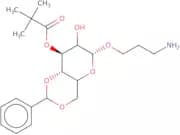
3-Aminopropyl 4,6-O-benzylidene-3-O-pivaloyl-b-D-galactopyranoside
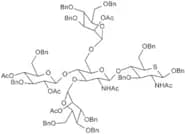
CAS:3-Aminopropyl 4,6-O-benzylidene-3-O-pivaloyl-b-D-galactopyranoside is a glycosylated and fluorinated saccharide that is used as a building block for the synthesis of complex carbohydrates. It can be modified to produce glycans with desired properties, such as improved solubility or stability in high temperatures. This product is available in custom synthesis and high purity.Formula:C21H31NO7Purezza:Min. 95%Peso molecolare:409.47 g/molBenzyl 2-acetamido-4-O-[2-acetamido-4-O-(2,4-di-O-acetyl-3,6-di-O-benzyl-b-D-glucopyranosyl)-3,6-di-O-(2-O-acetyl-3,4,6-tri-O-benzyl -a-D-mannopyranosyl)-2-deoxy-b-D-glucopyranosyl]-3,6-di-O-benzyl-2-deoxy-5-thio-b-D-glucopyranoside
This compound is a custom synthesis for Modification, Fluorination, Methylation, Monosaccharide, Synthetic, Click modification, Oligosaccharide and saccharide. It has CAS No. and Polysaccharide as Carbohydrate. The molecular weight of this compound isFormula:C119H132N2O29SPurezza:Min. 95%Peso molecolare:2,086.38 g/molθ-Cyclodextrins
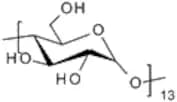
Theta-cyclodextrin (θ-CD) contains 13 glucose units. This cyclodextrin has potential applications in host-guest chemistry, particularly for large molecules or assemblies.Purezza:Min. 95%3,4-O-Benzylidene-D- ribonic acid γ-lactone
3,4-O-Benzylidene-D-ribonic acid gamma-lactone is a synthetic sugar that has been modified with fluorination and methylation. It is a complex carbohydrate that has been shown to have antiviral activity against influenza A virus. 3,4-O-Benzylidene-D- ribonic acid gamma-lactone has been synthesized using custom synthesis and high purity. The chemical structure of this product is O-(1,2:3,4:6,7:8,9) benzylidene D-ribonolactone.Purezza:Min. 95%Hyaluronic acid sodium salt - Low molecular weight 10,000 - 50,000
CAS:Gycosaminoglycan in many organs; joint lubricant and shock absorberFormula:(C14H20NO11Na)nPurezza:Min. 95.0%Colore e forma:Powder2,3,5-Tri-O-benzyl-L-xylofuranose
CAS:2,3,5-Tri-O-benzyl-L-xylofuranose is a sugar molecule that has been modified to inhibit glycosidases. 2,3,5-Tri-O-benzyl-L-xylofuranose is an iminosugar that inhibits the enzyme β-glucosidase and α-galactosidase. The compound is not metabolized and it binds to the enzyme's active site. 2,3,5-Tri-O-benzyl L xylofuranose has been shown to be effective at inhibiting all of the glycosidases tested in this study with inhibition potencies ranging from 0.1 mM to 10 mM. This compound also inhibits epoxides and cyclic enzymes such as azido reductase and dihydropyrimidine dehydrogenase.Formula:C26H28O5Purezza:Min. 95%Colore e forma:PowderPeso molecolare:420.5 g/mol(Hydroxypropyl)methyl cellulose - Viscocity 2600-5600 cP
CAS:Hydroxypropyl methylcellulose (HPMC or hypromellose) is a semisynthetic, inert and viscoelastic polymer that is used as eye drops and as semi-synthetic substitute for tear-films. When applied, a hypromellose solution acts to swell and absorb water, by increasing the thickness of the tear-film, resulting in decreased eye irritation. In addition to its use in ophthalmic liquids, hypromellose has been used as an excipient in oral tablet and capsule formulations, where, depending on the grade, it functions as controlled-release agent. It is also used as a binder and as a component of tablet coatings. Hypromellose in aqueous solution, unlike methylcellulose, exhibits thermal gelation properties. HPMC is approved as a food additive, emulsifier, thickening and suspending agent, and as an alternative to animal gelatin (Codex Alimentarius code (E number) is E464).
Colore e forma:White Powder2,3-Dimethyl-6-tert-butyldimethylsilyl-a-cyclodextrin
Alpha-cyclodextrin (α-CD) derivative with a hydrophilic exterior and lipophilic cavity (smaller than β-CDs and γ-CDs) to allocate certain guest molecules. This structural characteristic enables applications in molecular encapsulation, solubility enhancement, and stabilization across multiple industries. In pharmaceuticals, it serves as a drug delivery vehicle, enhancing the bioavailability and stability of active ingredients. The food industry utilizes it as a stabilizer for flavors, colors, and nutrients, as well as a functional ingredient for its effects on lipid metabolism. In cosmetics, it acts as a complex agent for fragrances and active components. Its applications extend to analytical chemistry for chiral separation and to materials science for developing smart materials and nanosystems.Formula:C84H168O30Si6Purezza:Min. 95%Peso molecolare:1,826.73 g/mol4-O-(6-O-[2-Acetamido-2-deoxy-b-D-glucopyranosyl]-b-D-galactopyranosyl)-D-glucopyranose
CAS:Lacto-N-neotetraose is a trisaccharide composed of two galactose units and one glucose unit. It has been found to be an effective carbohydrate for the treatment of colostrum depletion in newborns. Lacto-N-neotetraose can be obtained through methanolysis, which is the hydrolysis of lactose by the addition of methanol to produce a mixture of sugars. This process is activated by ion exchange chromatography, and then hydrolyzed to produce oligosaccharides. Lacto-N-neotetraose can also be obtained from human or horse milk as 13C NMR spectroscopy shows that it is present in both species.Formula:C20H35NO16Purezza:Min. 98 Area-%Colore e forma:PowderPeso molecolare:545.49 g/mol1,3,4,6-Tetra-O-acetyl-2-deoxy-2-fluoro-D-galactopyranose
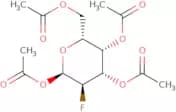
CAS:1,3,4,6-Tetra-O-acetyl-2-deoxy-2-fluoro-D-galactopyranose is a fluorinated sugar that is used in the synthesis of glycosides. It is a synthetic compound that is prepared by reacting 1,3,4,6-tetraacetyl galactose with potassium bifluoride and diethyl oxalate in presence of anhydrous sodium sulfate. The product obtained has the following structural formula: The chemical name for this compound is 1,3,4,6-Tetraacetyl -2-[(1R)-1-(ethoxycarbonyl)propyl]-2-(fluorooxymethyl) -D-galactopyranose. The CAS number for this compound is 83697–45–4.Formula:C14H19FO9Purezza:(As Sum Of Anomers) Min. 98 Area-%Colore e forma:White PowderPeso molecolare:350.3 g/mol1,2,3,4-Tetra-O-acetyl-D-mannopyranose
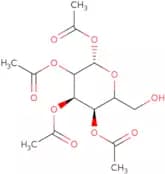
CAS:1,2,3,4-Tetra-O-acetyl-D-mannopyranose is a modified monosaccharide that is synthesized by the Click reaction. This compound has been shown to be useful in the synthesis of oligosaccharides and polysaccharides. It can also be used for protein modification or the fluorination of saccharides. It is also a high purity product that can be used as an intermediate for custom synthesis.Formula:C14H20O10Purezza:Min. 95%Peso molecolare:348.3 g/molPhenyl b-L-thiofucopyranoside
Phenyl b-L-thiofucopyranoside is a custom-synthesized, fluorinated, modified sugar that is used in the synthesis of oligosaccharides and polysaccharides. This compound is an excellent choice for methylation reactions due to its high reactivity and stability under harsh conditions. Phenyl b-L-thiofucopyranoside can be used as a precursor for the synthesis of saccharide derivatives, such as monosaccharides and complex carbohydrates. It has been shown to be stable to heat and pH extremes, making it ideal for use in organic syntheses.Formula:C12H16O4SPurezza:Min. 95%Colore e forma:PowderPeso molecolare:256.32 g/molGlobo-N-tetraose
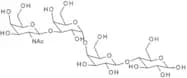
CAS:Tetrasaccharide associated with the glycolipid globosideFormula:C26H45NO21Purezza:Min. 95 Area-%Colore e forma:White PowderPeso molecolare:707.63 g/molMethyl 2,3,4,6-tetra-O-benzyl-D-glucopyranoside
CAS:Methyl 2,3,4,6-tetra-O-benzyl-D-glucopyranoside is a glucopyranoside that has been chemically modified with an allyl group and an azide group. It is also the anomeric form of methyl 2,3,4,6-tetra-O-benzyl-β-D-glucopyranoside. The modification of the sugar moiety offers a new approach to synthesize β-linked D-, L-, or D/L-(2,3,4,6)-linked glycosides. This chemical modification is unambiguously determined by nmr analysis and alkene formation.Formula:C35H38O6Purezza:Min. 95%Colore e forma:Clear LiquidPeso molecolare:554.67 g/molChondroitin sulfate A sodium salt - Average MW 20,000 - 30,000
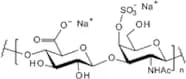
CAS:The disaccharide repeating unit of chondroitin sulphate consists of N-acetyl galactosamine sulphate linked β1,4 to glucuronic acid. Each monosaccharide may be left unsulphated, sulphated once, or sulphated twice. The most common pattern is that the hydroxyl groups of the 4 and 6 positions of the N-acetyl-galactosamine are sulphated, with some chains having the position 2 of the glucuronic acid sulphated.Purezza:Min. 90 Area-%Colore e forma:White Powder4-O-(b-D-Galactopyranosyl)-b-D-thioglucopyranose
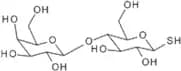
4-O-(b-D-Galactopyranosyl)-b-D-thioglucopyranose is a custom synthesis carbohydrate. It is an oligosaccharide that consists of a monosaccharide with a b-D-galactopyranosyl group and a b-D-thioglucopyranose group. 4-O-(b-D-Galactopyranosyl)-b-D-thioglucopyranose is a polysaccharide and belongs to the class of carbohydrates, which are saccharides or sugars. Carbohydrates are important in cell walls and are modified by methylation, glycosylation, and click modification. Carbohydrates can be classified as simple or complex carbohydrates. Simple carbohydrates contain one molecule with one type of sugar unit bonded together, while complex carbohydrates have more than one type of sugar unit bonded together.Formula:C12H22O10SPurezza:Min. 95%Colore e forma:PowderPeso molecolare:358.36 g/mol(1S) -1- [(2R, 3S) -3- Benzyloxy-N-butyl- 1- azetidinyl] -1, 2- ethanediol
(1S) -1- [(2R, 3S) -3- Benzyloxy-N-butyl- 1- azetidinyl] -1, 2- ethanediol is a synthetic compound that has been modified on the sugar moiety. It is a fluorinated oligosaccharide with an Oligosaccharide group consisting of an alpha (1→4) glycosidic linkage between two glucose molecules and a beta (1→6) glycosidic linkage between two galactose molecules. This compound can be custom synthesized to meet the needs of your project.Purezza:Min. 95%Sucralose
CAS:Sucralose, an artificial sweetener, was discovered in a research programme supported by Tate & Lyle to halogenate sucrose. The majority of ingested sucralose is not broken down by the body, so it is noncaloric. In the European Union, it has been given the E number E955. Sucralose is about 320 to 1,000 times sweeter than sucrose, three times as sweet as both aspartame and acesulfame potassium, and twice as sweet as sodium saccharin. It is stable under heat and over a broad range of pH conditions. Therefore, it can be used in baking or in products that require a long shelf life. The commercial success of sucralose-based products stems from its favorable comparison to other low-calorie sweeteners in terms of taste profile, stability, and safety.Formula:C12H19Cl3O8Purezza:Min. 98 Area-%Colore e forma:White PowderPeso molecolare:397.63 g/molTrigalacturonic acid
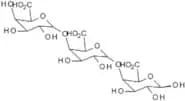
CAS:Trigalacturonic acid, (α-1,4 galacturonotriose) is derived from pectin or pectic acid by enzymatic or partial acid hydrolysis (Combo, 2012). It is used inâ¯galacturonic acidâ¯metabolism research as a substrate to identify, differentiate, and characterize endo- and exopolygalacturonase(s), and gluconase(s) (Jayani, 2005). The addition of very short fragments of homogalacturonan, tri-galacturonate, and tetra-galacturonate oligosaccharides, restores development in dark-grown, de-etiolated seedling mutants, suggesting that they are unable to generate de-methylesterified pectin fragments. A model of spatiotemporally separated photoreceptive and signal-responsive cell types has been proposed, that contains overlapping subsets of the regulatory network of light-dependent seedling development (Sinclair, 2017).Formula:C18H26O19Purezza:Min. 90 Area-%Colore e forma:White Off-White PowderPeso molecolare:546.39 g/mol6’-Sulfated-N-acetyllactosamine
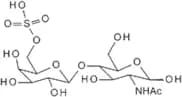
6’-Sulfated-N-acetyllactosamine (6SA) is a complex carbohydrate that is a glycosylation product of lactose. It is methylated at the hydroxyl group and then click-modified by the addition of sulfate groups. 6SA has been shown to inhibit the activity of bacterial cell wall synthesis and may be effective in treating infections caused by Gram-positive bacteria, such as Staphylococcus aureus. 6SA also has antifungal properties and is effective against Candida albicans, including drug-resistant strains. This compound can be custom synthesized or purchased from commercial suppliers.
Formula:C14H25NO14SPurezza:Min. 95%Colore e forma:PowderPeso molecolare:463.41 g/mol



![4-O-(6-O-[2-Acetamido-2-deoxy-b-D-glucopyranosyl]-b-D-galactopyranosyl)-D-glucopyranose](/_next/image/?url=https%3A%2Fstatic.cymitquimica.com%2Fproducts%2F3D%2Fthumb-webp%2FOA05021.webp&w=3840&q=75)


![(1S) -1- [(2R, 3S) -3- Benzyloxy-N-butyl- 1- azetidinyl] -1, 2- ethanediol](/_next/image/?url=https%3A%2Fstatic.cymitquimica.com%2Fproducts%2F3D%2Fthumb-webp%2FMB163382.webp&w=3840&q=75)