Glicoscienza
Sottocategorie di "Glicoscienza"
- Amminozucchero(108 prodotti)
- Glico-anticorpi(284 prodotti)
- Glicolipidi(46 prodotti)
- Glicosaminoglicani (GAGs)(55 prodotti)
- Glicosidi(419 prodotti)
- Monosaccaridi(6.622 prodotti)
- Oligosaccaridi(3.701 prodotti)
- Polisaccaridi(505 prodotti)
Trovati 11034 prodotti di "Glicoscienza"
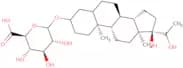
Pregnanetriol 3a-O-b-D-glucuronide
CAS:Pregnanetriol 3a-O-b-D-glucuronide (PG3G) is a metabolite of progesterone that is excreted in the urine during the luteal phase. It is used as a marker for ovulation in women, and can be measured using immunoanalytical techniques. A multicentre study was conducted to measure PG3G levels and found that it is higher during ovulation than at other times of the menstrual cycle. This steroid hormone has been shown to inhibit follicular growth in rats, but its role in humans is less clear.Formula:C27H44O9Purezza:Min. 95%Peso molecolare:512.63 g/mol2,6-Di-O-benzoyl-methyl-a-D-glucopyranoside
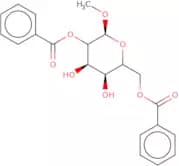
CAS:2,6-Di-O-benzoyl-methyl-a-D-glucopyranoside is a custom synthesis that is an oligosaccharide. It has a molecular weight of 590.17 g/mol and a formula weight of 594.22 g/mol. 2,6-Di-O-benzoyl-methyl-a-D-glucopyranoside has the following structure:Formula:C21H22O8Purezza:Min. 95%Peso molecolare:402.39 g/molCyclohexylethanoyl-N-Hydroxyethylglucamide
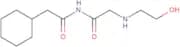
CAS:Cyclohexylethanoyl-N-Hydroxyethylglucamide (CYE) is a membrane protein with a strong affinity for the bacterial enzyme histidine kinase, which is involved in the regulation of bacterial cell wall synthesis. CYE binds to the catalytic site of this enzyme and inhibits its activity. CYE also has an inhibitory effect on clostridium dehydrogenases and campylobacter adenylate cyclases. CYE has been shown to bind to other enzymes, such as tecnologia and diffraction, synchrotron, staphylococcus kinases, and campylobacter adenylate cyclases. Structural studies of CYE have been carried out using crystallography at the Instituto de Tecnología Química e Biológica in Campinas, Brazil.Formula:C16H31NO7Purezza:Min. 95%Peso molecolare:349.42 g/molLacto-N-fucopentaose II-APD-HSA
Lacto-N-fucopentaose II-APD-HSA is a complex carbohydrate that has been chemically modified to include a fucose sugar. Lacto-N-fucopentaose II-APD-HSA is synthesized by the click reaction and then modified with the addition of an acetyl group. The product is then methylated and purified by HPLC. Lacto-N-fucopentaose II-APD-HSA can be used in a wide range of applications, including as a component in glycosylation reactions or as an adjuvant for fluorescence labelling.
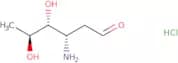
Purezza:Min. 95%3-Amino-2,3,6-trideoxy-L-arabino-hexose hydrochloride
CAS:3-Amino-2,3,6-trideoxy-L-arabino-hexose hydrochloride is a fluorinated sugar. It is synthesized by the fluorination of arabinose. This compound has a high degree of substitution and can be used for glycosylation reactions or modification reactions. 3-Amino-2,3,6-trideoxy-L-arabino-hexose hydrochloride has CAS number 56501-70-3 and is soluble in water.Formula:C6H14ClNO3Purezza:Min. 95%Colore e forma:SolidPeso molecolare:183.63 g/molMannose pentasulfate pentapotassium salt - technical grade
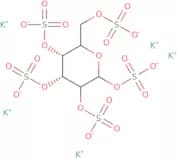
CAS:Mannose pentasulfate pentapotassium salt - technical grade is a white crystalline powder that is soluble in water. This product is a synthetic, high purity, custom synthesis, and glycosylation reagent for the preparation of oligosaccharides and carbohydrates. The CAS number for this product is 359436-63-8.Formula:C6H7K5O21S5Purezza:Min. 95%Peso molecolare:770.93 g/mol1,3-Di-O-benzyl-4,6-O-benzylidene-2-(2-carboxybenzimido)-2-deoxy-b-D-glucopyranoside
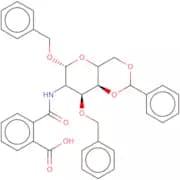
1,3-Di-O-benzyl-4,6-O-benzylidene-2-(2-carboxybenzimido)-2-deoxy-b-D-glucopyranoside (1,3DBG) is a glycosylation compound that is a natural product of the reaction between 1,3,4,6 tetra-, 2,3-, or 3,4-, dihydroxyacetone and benzaldehyde. This compound is an important building block for the synthesis of complex carbohydrates. 1,3DBG can be modified with methyl groups through click chemistry and fluorination reactions. It can also be modified by saccharide modification and acetal formation with polyols. The CAS number is 139027-06-0.Formula:C35H33NO8Purezza:Min. 95%Peso molecolare:595.64 g/mol2,3:5,6-Di-O-isopropylidene-a-D-mannofuranose oxime
2,3:5,6-Di-O-isopropylidene-a-D-mannofuranose oxime is a glycosylation reagent that can be used in the Click reaction to modify proteins and oligosaccharides. This product has a high purity and can be custom synthesized. 2,3:5,6-Di-O-isopropylidene-a-D-mannofuranose oxime is an intermediate for the synthesis of complex carbohydrates. It is synthesized by methylation of mannose with ethylene glycol followed by fluorination of the methylated sugar. The resulting product is then reacted with an alcohol to produce 2,3:5,6-diO-(2'-hydroxyethyl)-a-D-mannofuranose oxime.Purezza:Min. 95%Naloxone 3-β-D-glucuronide
CAS:Prodotto controllatoPlease enquire for more information about Naloxone 3-β-D-glucuronide including the price, delivery time and more detailed product information at the technical inquiry form on this pageFormula:C25H29NO10Purezza:Min. 95%Peso molecolare:503.51 g/mol2,6-Dimethyl-4-heptyl-b-D-maltopyranoside
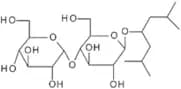
CAS:2,6-Dimethyl-4-heptyl-b-D-maltopyranoside is a cell specific additive that can be used as an interconnecting agent between cells. It has been shown to bind specifically to the dna of invertebrates, such as the fruit fly Drosophila melanogaster and the nematode Caenorhabditis elegans. This compound has also been shown to bind to cancer cells and is able to disrupt their growth. 2,6-Dimethyl-4-heptyl-b-D-maltopyranoside has been used in diagnostic assays for detecting cancer cells in tissue samples and was found to have limited cytotoxicity. The use of this compound may lead to improvements in diagnosis and treatment of cancer.Formula:C21H40O11Purezza:Min. 95%Peso molecolare:468.54 g/mol3-Deoxy-D-ribose
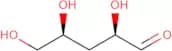
CAS:3-Deoxy-D-ribose is a monosaccharide with a molecular formula of CH(OH)CO. It is the 3-deoxy form of ribose and its pyranose ring has an oxygen atom at the 3 position. 3-Deoxy-D-ribose can be synthesized by periodate treatment of glyceric acid in the presence of hydrochloric acid, followed by hydrolysis to produce sorbose and then reaction with glycolaldehyde to produce D-glycero-D-galactopyranosyl bromide. The final step is conversion to 3-deoxyribose by reaction with aqueous ammonia. 3-Deoxyribose inhibits ribulose synthesis, which prevents the formation of an intermediate molecule required for the synthesis of fatty acids and phospholipids.Purezza:Min. 95%1,3,4,6-Tetra-O-acetyl-2-deoxy-2-trichloroacetamido-D-glucopyranose
1,3,4,6-Tetra-O-acetyl-2-deoxy-2-trichloroacetamido-D-glucopyranose is a modified glucopyranoside that has been synthesized using Click chemistry. This product is made of saccharides and is used to modify proteins. It can be used in the synthesis of glycans or as a building block for oligosaccharides. The product is highly pure and can be custom synthesized to meet your needs. 1,3,4,6-Tetra-O-acetyl-2-deoxy-2-(trichloroacetamido)-D--glucopyranose can be fluorinated with NCS to give the corresponding fluoro derivative. This product does not contain any carbohydrates or sugars and is synthetic.Purezza:Min. 95%Glycyl-monosialyl,monofucosyllacto-N-neohexose I
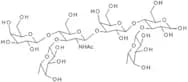
Glycyl-monosialyl,monofucosyllacto-N-neohexose I is a synthetic, fluorinated monosaccharide that has been modified with a glycosylation. This oligosaccharide is an important building block in the synthesis of complex carbohydrates. Glycyl-monosialyl,monofucosyllacto-N-neohexose I is used in the synthesis of polysaccharides and glycoproteins. It is also commonly used as a starting material for modifying other sugars with methylation or click chemistry. The CAS number for this compound is 144977-01-1. The molecular weight of this compound is 254.5 g/mol and it has a purity of 99% (HPLC).Formula:C59H99N5O43Purezza:Min. 95%Peso molecolare:1,566.43 g/mol2-N-Chloroacetyl-2-deoxy-D-glucosamine
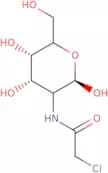
CAS:2-N-Chloroacetyl-2-deoxy-D-glucosamine is a high purity synthetic molecule that is custom synthesized to meet your needs. This product is a sugar with the following Click modification, fluorination, glycosylation, and methylation. 2-N-Chloroacetyl-2-deoxy-D-glucosamine has CAS No. 1334320-67-0. The molecular weight of this compound is 514.25 g/mol. This product can be used in the synthesis of oligosaccharides and monosaccharides as well as saccharides, which are complex carbohydrates.Formula:C8H14ClNO6Purezza:Min. 95%Colore e forma:PowderPeso molecolare:255.65 g/mol6-Phosphogluconic acid trisodium
CAS:6-Phosphogluconic acid trisodium is a synthetic, non-natural glycosylation product that is used as a building block in the synthesis of complex carbohydrates. It can be fluorinated or methylated, and modified with a click reaction to produce various derivatives. The compound has been shown to have high purity and is readily available from commercial suppliers.Formula:C6H13O10P•Na3Purezza:Min. 95%Peso molecolare:345.1 g/molGT3-Oligosaccharide
GT3 oligosaccharide (free acid) is a disaccharide (Galβ1,4Glc) with three sialic acid residues (NeuAc) linked α2,8/α2,8/α2,3 to the galactose residue (Ledeen, 2009). The GT3 ganglioside is the carbohydrate moiety in the GT3 ganglioside, which is implicated in type 1 diabetes. GT3 ganglioside is expressed on pancreatic cells and is the target antigen of anti-GM3-antibodies, which contribute to the autoimmune destruction of pancreatic beta cells (Misasi, 1997). GT3 ganglioside is also abundant in lung tissues and the nervous system.Formula:C45H70N3O35Na3Purezza:Min. 90%Colore e forma:PowderPeso molecolare:1,282.01 g/mol2,5-Anhydro-D-glucitol-1,6-diphosphate
CAS:2,5-Anhydro-D-glucitol-1,6-diphosphate is a cell signaling molecule that is involved in the regulation of glycolysis and the phosphofructokinase enzyme. It binds to platelets and regulates platelet aggregation. This enzyme has been shown to be a potential drug target for cancer. Cancer cells have been found to contain higher concentrations of 2,5-Anhydro-D-glucitol-1,6-diphosphate than their normal counterparts. The increased concentration of this enzyme in cancer cells is due to an allosteric change in the enzyme’s activity. The increased activity leads to a more rapid metabolism of glucose, which provides energy for tumor growth and metastasis. This enzyme can be used as a marker for malignancy in human diseases such as breast cancer or prostate cancer.
Formula:C6H14O11P2Purezza:Min. 98%Colore e forma:Clear LiquidPeso molecolare:324.12 g/molLacto-N-neodifucohexaose
Neutral difucosylated hexasasaccharide naturally present in human breast milkFormula:C38H65NO29Purezza:Min. 75%Colore e forma:PowderPeso molecolare:999.93 g/molL-Heptaguluronic acid heptasodium
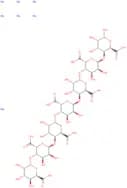
CAS:Please enquire for more information about L-Heptaguluronic acid heptasodium including the price, delivery time and more detailed product information at the technical inquiry form on this pageFormula:C42H58O43•Na7Purezza:Min. 95%Peso molecolare:1,411.81 g/mol6-Deoxy-6-iodo-D-glucose
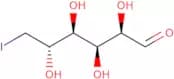
CAS:6-Deoxy-6-iodo-D-glucose is a glucose analog that can be used as a bypassed substrate for the study of d-glucose metabolism in diabetic patients. 6-Deoxy-6-iodo-D-glucose has been shown to be an acceptable substrate for animal cells and can be used for the study of glucose uptake in the pancreas. This analog does not require insulin for uptake, which may help to elucidate the role of insulin resistance in diabetes. The use of 6-deoxy-6-[18F]fluoroethyl D-[1,2]-glucose ([18F]FDG) as an optical imaging agent has also been studied.Formula:C6H11IO5Purezza:Min. 95 Area-%Colore e forma:PowderPeso molecolare:290.05 g/mol