Glicoscienza
Sottocategorie di "Glicoscienza"
- Amminozucchero(108 prodotti)
- Glico-anticorpi(282 prodotti)
- Glicolipidi(46 prodotti)
- Glicosaminoglicani (GAGs)(55 prodotti)
- Glicosidi(419 prodotti)
- Monosaccaridi(6.616 prodotti)
- Oligosaccaridi(3.718 prodotti)
- Polisaccaridi(502 prodotti)
Trovati 11010 prodotti di "Glicoscienza"
2-Acetamido-6-azido-2,6-dideoxy-D-galactopyranose
CAS:2-Acetamido-6-azido-2,6-dideoxy-D-galactopyranose is a synthetic, unnatural monosaccharide bearing an azido biorthogonal reaction group. This compound can enter the cell and is processed by biosynthetic enzymes, in a manner similar to the natural O-linked N-acetyl-β-D-glucosamine. The glycans produced bear the azido functional group which can be chemically tagged with fluorescent dyes or biotin for visualisation or affinity.
Formula:C8H14N4O5Purezza:Min. 95%Peso molecolare:246.22 g/mol2-Acetamido-2-deoxy-D-glucopyranosyl serine
CAS:2-Acetamido-2-deoxy-D-glucopyranosyl serine is a compound that belongs to the class of coumarins and monosaccharides. It contains a nitro group and a heterocycle, making it a unique and versatile molecule. This compound has been studied for its various properties, including its interaction with liver microsomes and its ability to undergo crystallization. Additionally, 2-Acetamido-2-deoxy-D-glucopyranosyl serine has shown promising effects on TGF-beta activation and has been found to inhibit aldehyde formation in trichloroacetic acid solutions. This compound also exhibits interactions with other molecules such as pyrazine, ofloxacin, and famotidine. Its diverse characteristics make it an intriguing compound for further research and potential applications in various fields.Formula:C11H20N2O8Purezza:Min. 95%Colore e forma:White PowderPeso molecolare:308.29 g/molDipyridamole di-O-b-D-glucuronide
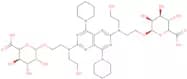
CAS:Dipyridamole di-O-b-D-glucuronide is a fluorinated oligosaccharide that has been synthesized using the click chemistry reaction. It is a monosaccharide that has been glycosylated and modified with methyl groups to produce a high purity product. The carbohydrate consists of one or more sugar units linked by glycosidic bonds. Carbohydrates are classified by their number of sugar units and by the presence of other chemical groups such as phosphate, sulfate, or hydroxyl. This product is also used in the synthesis of complex carbohydrates and polysaccharides.Formula:C36H56N8O16Purezza:Min. 95%Peso molecolare:856.87 g/molChondroitin disaccharide di-6S
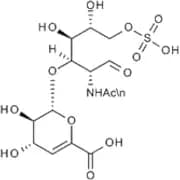
CAS:Chondroitin disaccharide di-6S (CDD6S) is a synthetic, fluorinated oligosaccharide that is used for glycosylation and modification of proteins, polysaccharides, and other biomolecules. It has been shown to be effective in inhibiting the growth of cancer cells by targeting the sugar moiety on cell surface receptors. CDD6S has been modified with methyl groups at various positions on the sugar chain to increase its activity against certain cancers.Formula:C14H21NO15SPurezza:Min. 95%Peso molecolare:475.38 g/mol1,3,4,6-Tetra-O-acetyl-2-azido-2-deoxy-D-galactopyranose
CAS:1,3,4,6-Tetra-O-acetyl-2-azido-2-deoxy-D-galactopyranose is a carbohydrate that has been shown to bind to the lectin domain of the human insulin receptor. This binding is thought to modulate the activity of this protein. The carbohydrate has also been shown to inhibit the uptake of galactose by pancreatic beta cells in vitro. 1,3,4,6-Tetra-O-acetyl-2-azido-2-deoxy-D-galactopyranose is postulated to have anti cancer properties and may be used as a blocker for tumor growth.Formula:C14H19N3O9Purezza:Min. 95%Colore e forma:White PowderPeso molecolare:373.32 g/molβ-Rutinose
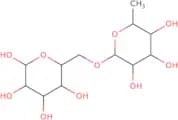
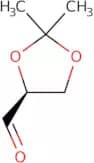
CAS:Beta-rutinose is a potent kinase inhibitor that has shown anti-tumor activity in Chinese hamster ovary (CHO) cells. It inhibits the activity of cyclin-dependent kinases, which are essential for cell division and proliferation. Beta-rutinose has been shown to induce apoptosis in human cancer cells, making it a promising candidate for anticancer therapy. This compound is an analog of rutin, a flavonoid found in many plants, and has been shown to have potent anticancer effects in vitro and in vivo. Beta-rutinose inhibits the growth of cancer cells by blocking the activity of specific kinases involved in tumor progression, making it an attractive target for developing new cancer therapies. Additionally, this compound has been found to be effective at reducing protein levels associated with cancer cell growth and proliferation.Formula:C12H22O10Purezza:Min. 95%Peso molecolare:326.3 g/mol2,3-O-Isopropylidene-L-glyceraldehyde - 50% DCM solution
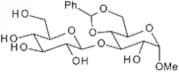
CAS:2,3-O-Isopropylidene-L-glyceraldehyde (2,3-OIPA) is a synthetic compound that was developed as an alternative to paraformaldehyde for the synthesis of enantiopure compounds. It has been used in metathesis reactions and catalysed the conversion of β-unsaturated ketones to enantiopure products. 2,3-OIPA also has significant cytotoxic activity against a range of human cancer cell lines. This compound can be used in asymmetric syntheses to produce chiral molecules with a high degree of optical purity.Formula:C6H10O3Purezza:Min. 95%Colore e forma:Colorless PowderPeso molecolare:130.14 g/molMethyl 4,6-O-benzylidene-3-O-(b-D-glucopyranoside)-a-D-glucopyranoside
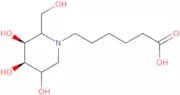
CAS:Methyl 4,6-O-benzylidene-3-O-(b-D-glucopyranoside)-a-D-glucopyranoside is a synthetic oligosaccharide. It is an important building block of polysaccharides and glycoconjugates. This compound is used in the synthesis of complex carbohydrates, such as glycosylation, polysaccharides, and click modification. It can be custom synthesized for research purposes and has been shown to be high purity.Formula:C20H28O11Purezza:Min. 95%Peso molecolare:444.43 g/molN-5-Carboxypentyl-1-deoxygalactonojirimycin
CAS:N-5-Carboxypentyl-1-deoxygalactonojirimycin is an inhibitor of glycolipid hydrolase and a potential drug for the treatment of lysosomal storage disorders. N-5-Carboxypentyl-1-deoxygalactonojirimycin is derived from the natural product galactonojirimycin, which has been shown to inhibit glycolipid hydrolase in vitro. The compound was developed by modifying the peptide sequence to increase its affinity for the enzyme. N-5-Carboxypentyl-1-deoxygalactonojirimycin displays a higher affinity for glycolipid hydrolase than galactonojirimycin, and it also has a greater inhibitory effect on this enzyme. N-5-Carboxypentyl-1-deoxygalactonojirimycin isFormula:C12H23NO6Purezza:Min. 95%Colore e forma:White PowderPeso molecolare:277.31 g/molCellulose acetate - MW 30,000
CAS:Cellulose acetate fiber is one of the earliest synthetic fibers and is based on cotton or tree pulp cellulose. Cellulose acetate is used as a film base in photography, as a component in some coatings, and as a frame material for eyeglasses. It is also used as a synthetic fiber in the manufacture of cigarette filters and playing cards. In photographic film, cellulose acetate replaced nitrate film in the 1950s, being far less flammable and cheaper to produce but in recent years has been rendered obsolete by the advent of digital cameras.Colore e forma:Powder6-Cyano-6-deoxy-a-cyclodextrin
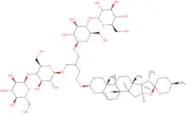
CAS:Alpha-cyclodextrin (α-CD) derivative with a hydrophilic exterior and lipophilic cavity (smaller than β-CDs and γ-CDs) to allocate certain guest molecules. This structural characteristic enables applications in molecular encapsulation, solubility enhancement, and stabilization across multiple industries. In pharmaceuticals, it serves as a drug delivery vehicle, enhancing the bioavailability and stability of active ingredients. The food industry utilizes it as a stabilizer for flavors, colors, and nutrients, as well as a functional ingredient for its effects on lipid metabolism. In cosmetics, it acts as a complex agent for fragrances and active components. Its applications extend to analytical chemistry for chiral separation and to materials science for developing smart materials and nanosystems.Formula:C42H54N6O24Purezza:Min. 95%Peso molecolare:1,026.9 g/molGlyco-diosgenin
CAS:Glyco-diosgenin is an amphipathic molecule that has been found to stabilize proteins. It has the potential to be developed as a drug target for stabilizing proteins in cells. Glyco-diosgenin was synthesized by chemical modification of diosgenin, which is a steroidal saponin found in plants. The chemical modification that occurred at the 3-hydroxyl position of glyco-diosgenin produced a more effective molecule due to increased solubility and decreased toxicity. The protein stabilization properties of glyco-diosgenin have been shown by cryo-electron microscopy on plant cells, titration calorimetry, and functional studies on various proteins.Formula:C56H92O25Purezza:Min. 97 Area-%Colore e forma:PowderPeso molecolare:1,165.31 g/mol5-Deoxy-D-ribose
CAS:5-Deoxy-D-ribose is a molecule that is an intermediate in the shikimate pathway, which produces the aromatic amino acids. 5-Deoxy-D-ribose can be synthesized from D-ribose and shikimic acid. The biosynthesis of 5-deoxy-D-ribose is catalyzed by the enzyme ribose 5'-phosphate kinase, which converts ribose 5'-phosphate to 5-deoxy--D--ribose phosphate. This reaction requires ATP as a source of energy, and it is inhibited by phosphoribosyl pyrophosphate (PRPP). The asymmetric synthesis of 5-deoxy--D--ribose has been achieved with a chiral Lewis acid catalyst. The molecular structure of 5-deoxy--D--ribose has been determined by NMR spectroscopy. Shikimate pathways are present in mammalian cells, but not in plants or bacteria.Formula:C5H10O4Purezza:Min. 95 Area-%Colore e forma:Orange Clear LiquidPeso molecolare:134.13 g/molN-Propionyl-D-glucosamine
CAS:N-Propionyl-D-glucosamine is a sugar used in the synthesis of peptidoglycan, a structural component of bacterial cell walls. N-Propionyl-D-glucosamine is synthesized from formaldehyde and propionic acid. It is used as an antibiotic to treat bacterial infections caused by Gram-positive bacteria such as streptococci and staphylococci. N-Propionyl-D-glucosamine has also been shown to have anti-fungal properties against Candida albicans and Saccharomyces cerevisiae. The biosynthesis of this compound takes place through phosphorylation of the amide group on the sugar residue, which is catalyzed by a number of enzymes including phosphotransacetylase, acetate kinase, and phosphoenolpyruvate synthase. This process requires ATP, phosphate ions, ammonium ion, and water molecules.Formula:C9H17NO6Purezza:Min. 95%Colore e forma:White PowderPeso molecolare:235.23 g/molα-D-Mannopyranosyl amine
CAS:a-D-Mannopyranosyl amine is a synthetic product that is used as a sugar donor in glycosylation reactions. It can be custom synthesized to suit the needs of the customer. The chemical structure contains a methyl group and an oxygen atom, which are both in their highest oxidation state. This product is not intended for use as a food additive or dietary supplement.Formula:C6H13NO5Purezza:Min. 95%Peso molecolare:179.17 g/molTetragalacturonic acid
CAS:Tetragalacturonic acid (α-1,4 galacturonotetraose) is derived from pectin or pectic acid by enzymatic or partial acid hydrolysis (Combo, 2012). It is used inâ¯galacturonic acidâ¯metabolism research as a substrate to identify, differentiate, and characterize endo- and exopolygalacturonase(s), and gluconase(s) (Jayani, 2005). The addition of very short fragments of homogalacturonan, tri-galacturonate, and tetra-galacturonate oligosaccharides restores development in dark-grown, de-etiolated seedling mutants, suggesting that they are unable to generate de-methylesterified pectin fragments. A model of spatiotemporally separated photoreceptive and signal-responsive cell types has been proposed, that contains overlapping subsets of the regulatory network of light-dependent seedling development (Sinclair, 2017).Formula:C24H34O25Purezza:(%) Min. 95%Colore e forma:White PowderPeso molecolare:722.51 g/molPolysorbate 60
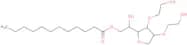
CAS:Polysorbate 60 is a polyoxyethylene-polyoxypropylene block copolymer that is composed of two different saturated fatty acid chains. It has been used as a surfactant and stabilizer in the manufacture of pharmaceuticals, foods, cosmetics, and other products. Polysorbate 60 has been shown to inhibit the growth of epidermal cells by binding to epidermal growth factor (EGF) receptors on the cell surface. The effects of polysorbate 60 are also mediated through hydrogen bonding with the EGF receptor. The pharmacokinetic properties of polysorbate 60 have been studied in vitro using human serum. This polymer is used as an excipient in solid dispersions for oral administration and can be administered intravenously or subcutaneously. Polysorbate 60 is chemically stable at acidic pH levels and hydrochloric acid does not affect its structure. Polysorbate 60 also has protease activity against trypsin at high temperatures,
Formula:C64H126O26Purezza:Min. 95%Colore e forma:Light (Or Pale) Yellow To Yellow Solid Or Liquid (May Vary)Peso molecolare:1,311.67 g/mol4-C-[[(Methylsulfonyl)oxy]methyl]-3-O-benzyl-1,2-di-O-acetyl 5-methanesulfonate D-erythro-pentofuranose
CAS:Methyl 4-C-[[(methylsulfonyl)oxy]methyl]-3-O-benzyl-1,2-di-O-acetyl 5-methanesulfonate D-erythro-pentofuranose is a methylated saccharide used in the synthesis of LNA amiditesFormula:C19H26O12S2Purezza:Min. 95%Colore e forma:PowderPeso molecolare:510.53 g/molPachyman - from Poria cocos
CAS:Poria cocos is an edible medicinal fungus known as “Fuling” in Chinese that has been used as a Chinese traditional medicine for more than two thousand years. Polysaccharide material is the most abundant organic substance in the fungus, accounting for about 85% of the total and is a mixture of polysaccharides with the major component being Pachyman, a β-glucan with a 1,3 backbone and 1,6 side chains. It is reported that Pachyman has a wide range of biological activities including antitumour, immunomodulatory, anti-inflammatory and antioxidative properties. Pachyman is a beta-glucan with a 1,3 backbone and 1,6 side chains of fungal origin (Poria cocos). The image was kindly provided by Dr. Chris Lawson.Purezza:Min. 95%Colore e forma:White PowderGT3-Oligosaccharide
GT3 oligosaccharide (free acid) is a disaccharide (Galβ1,4Glc) with three sialic acid residues (NeuAc) linked α2,8/α2,8/α2,3 to the galactose residue (Ledeen, 2009). The GT3 ganglioside is the carbohydrate moiety in the GT3 ganglioside, which is implicated in type 1 diabetes. GT3 ganglioside is expressed on pancreatic cells and is the target antigen of anti-GM3-antibodies, which contribute to the autoimmune destruction of pancreatic beta cells (Misasi, 1997). GT3 ganglioside is also abundant in lung tissues and the nervous system.Formula:C45H70N3O35Na3Purezza:Min. 90%Colore e forma:PowderPeso molecolare:1,282.01 g/mol







![4-C-[[(Methylsulfonyl)oxy]methyl]-3-O-benzyl-1,2-di-O-acetyl 5-methanesulfonate D-erythro-pentofur…](/_next/image/?url=https%3A%2Fstatic.cymitquimica.com%2Fproducts%2F3D%2Fthumb-webp%2FMM76880.webp&w=3840&q=75)