Glicoscienza
La glicosienza è lo studio dei carboidrati e dei loro derivati, nonché delle interazioni e delle funzioni biologiche a cui partecipano. Questo campo di ricerca è cruciale per comprendere una vasta gamma di processi biologici, tra cui il riconoscimento cellulare, la segnalazione, la risposta immunitaria e lo sviluppo delle malattie. La glicosienza ha importanti applicazioni nella biotecnologia, nella medicina e nello sviluppo di nuovi farmaci e terapie. Presso CymitQuimica, offriamo un'ampia selezione di prodotti di alta qualità e purezza per la ricerca in glicosienza. Il nostro catalogo comprende monosaccaridi, oligosaccaridi, polisaccaridi, glicoconiugati e reagenti specifici, progettati per supportare i ricercatori nei loro studi sulla struttura, funzione e applicazioni dei carboidrati nei sistemi biologici. Queste risorse sono destinate a facilitare scoperte scientifiche e applicazioni pratiche in vari ambiti delle bioscienze e della medicina.
Sottocategorie di "Glicoscienza"
- Amminozucchero(108 prodotti)
- Glico-anticorpi(282 prodotti)
- Glicolipidi(46 prodotti)
- Glicosaminoglicani (GAGs)(55 prodotti)
- Glicosidi(419 prodotti)
- Monosaccaridi(6.624 prodotti)
- Oligosaccaridi(3.682 prodotti)
- Polisaccaridi(503 prodotti)
Trovati 11046 prodotti di "Glicoscienza"
Ordinare per
Purezza (%)
0
100
|
0
|
50
|
90
|
95
|
100
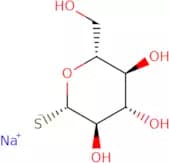
b-D-Thioglucose sodium salt
CAS:<p>Keratin-reducing component in cosmetic applications; used in Glc conjugation</p>Formula:C6H11NaO5SPurezza:Min. 95%Colore e forma:White PowderPeso molecolare:218.2 g/molMethyl a-D-xylopyranoside
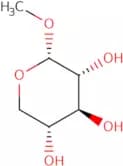
CAS:<p>Methyl a-D-xylopyranoside is an iron chelator that can be used as a mycobacterial drug candidate. It binds to both ferric and ferrous iron, and has been shown to inhibit the uptake of ferric iron by Mycobacterium tuberculosis. It also inhibits the synthesis of siderophores, which are molecules produced by bacteria in order to acquire iron from their environment. Methyl a-D-xylopyranoside does not bind to the alpha-d-glucopyranoside moiety typically found in iron complexes. This is due to its hydroxamate group, which causes it to have an increased affinity for Fe3+. This compound is active against gram negative bacteria such as E. coli and Salmonella enterica serovar Typhimurium, but not against gram positive organisms such as Staphylococcus aureus or Streptococcus pneumoniae.</p>Formula:C6H12O5Purezza:Min. 95%Colore e forma:White Off-White PowderPeso molecolare:164.16 g/mol1,,2-ene-glucose
<p>1,2-ene-glucose is a methylated glucose that can be custom synthesized. It has been modified with a click modification and fluorination. It is an Oligosaccharide and Polysaccharide that is used as a Carbohydrate in the synthesis of complex carbohydrates. The purity of 1,2-ene-glucose is high and it can be modified with Monosaccharides or sugar.</p>Formula:C6H10O5Purezza:Min. 95%Peso molecolare:162.14 g/mol5,6-O-Isopropylidene-3-C-methyl-D-mannono-1.4-lactone
5,6-O-Isopropylidene-3-C-methyl-D-mannono-1.4-lactone is a fluorinated monosaccharide that can be modified with other chemicals to create a variety of products. This chemical is used in the synthesis of oligosaccharides and polysaccharides. 5,6-O-Isopropylidene-3-C-methyl-D-mannono-1.4-lactone has a CAS number of 105853-. It has been shown to be high purity and is also available for custom synthesis. 5,6--O--isopropylidene--3--C--methyl--D--mannono--1.4--lactone can be synthesized from methylation, click modification, and fluorination reactions on glycolaldehyde.Purezza:Min. 95%Salicylic acid-acyl-b-D-glucuronide
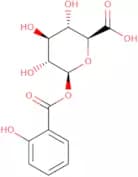
CAS:Salicylic acid-acyl-b-D-glucuronide is an anti-inflammatory compound that is found in the urine of diabetic patients. It has been shown to inhibit the production of a number of proinflammatory compounds, including prostaglandin E2 (PGE2), in human serum. Salicylic acid-acyl-b-D-glucuronide is formed by the reaction of salicylic acid with acetylsalicylic acid. The rate of formation is dependent on the concentration of salicylic acid and pH. The reactive product can form covalent adducts with tyrosinase and other proteins, leading to inhibition of tyrosinase activity and melanin synthesis.Formula:C13H14O9Purezza:Min. 95%Colore e forma:White PowderPeso molecolare:314.24 g/molBenzyl 4-O-(β-D-galactopyranosyl)-β-D-glucopyranoside
CAS:Benzyl 4-O-(b-D-galactopyranosyl)-b-D-glucopyranoside is a Glycosylation product that is custom synthesized to order. It is an oligosaccharide, which is synthesized by the modification of monosaccharides with other saccharides. This product has been fluorinated and acetylated at its C4 position and methylated at its C6 position. This compound has CAS No. 18404-72-3 and can be used as a sugar in the synthesis of complex carbohydrates or as a component of polysaccharides.Formula:C19H28O11Purezza:Min. 95%Colore e forma:PowderPeso molecolare:432.42 g/molAllyl a-D-glucopyranoside
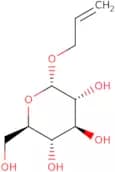
CAS:Allyl a-D-glucopyranoside is a trisaccharide with the chemical formula CHO. It is an important monomer in the synthesis of polymers that are used in, for example, textiles, construction materials, and plastics. Allyl a-D-glucopyranoside has been found to have optical properties that are similar to those of natural rubber. When irradiated with UV light, it undergoes photoinduced polymerization and has been shown to be hydrophilic. The hydrophilicity can be increased by adding alkali metal ions or metal cations such as polyphosphates or calcium ions. Allyl a-D-glucopyranoside also has immunoregulatory activities and can stimulate lymphocyte proliferation, antibody production, and macrophage activity.Formula:C9H16O6Colore e forma:White PowderPeso molecolare:220.22 g/mol2-Acetyl-4-tetrahydroxybutyl imidazole
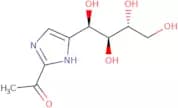
CAS:Inhibitor of sphingosine-1-phosphate lyase; immunosuppressantFormula:C9H14N2O5Purezza:Min. 95%Colore e forma:White PowderPeso molecolare:230.22 g/molMethyl 2,3-di-O-acetyl-4,6-O-(4-methoxybenzylidene)-a-D-glucopyranoside
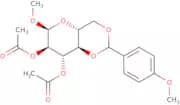
CAS:<p>Methyl 2,3-di-O-acetyl-4,6-O-(4-methoxybenzylidene)-a-D-glucopyranoside is a synthetic saccharide that has been modified with methylation and fluorination. It is an oligosaccharide derived from glucose that can be obtained through the custom synthesis of a polysaccharide. This product has CAS No. 52526-77-9 and is available in high purity. It can be used for the modification of monosaccharides or other carbohydrates.</p>Formula:C19H24O9Purezza:Min. 95%Peso molecolare:396.4 g/mol3,4,6-Trideoxy-3-(dimethylamino-b-D-xylo-hexopyranose)
CAS:3,4,6-Trideoxy-3-(dimethylamino-b-D-xylo-hexopyranose) is a carbohydrate that belongs to the group of saccharides. It is a sugar that has been modified with fluorine groups. Fluorination increases the hydrophilicity of the sugar and makes it more soluble in water. 3,4,6-Trideoxy-3-(dimethylamino-b-D-xylo-hexopyranose) has been custom synthesized and can be ordered as a high purity material. The synthesis process includes methylation and glycosylation steps. 3,4,6-Trideoxy-3-(dimethylamino-b-D-xylo -hexopyranose) is used as a click modification for proteins.Formula:C8H17NO3Purezza:Min. 95%Peso molecolare:175.23 g/mol1,2-Di-O-acetyl-3,5-di-O-benzoyl-3-b-C-methyl-D-ribofuranose
CAS:<p>1,2-Di-O-acetyl-3,5-di-O-benzoyl-3-b-C-methyl-D-ribofuranose is a fluorinated monosaccharide that is synthesized by the glycosylation of 2,6 anhydrofructose with benzaldehyde and acetone. It has a CAS number of 22672-43-1. This product can be used in the modification of polysaccharides or as a synthetic glycoside. It can also be used for click chemistry modification of sugars or as a high purity custom synthesis.</p>Purezza:Min. 95%L-Arabinose - Syrup
CAS:L-arabinose is a monosaccharide that is found in many plants, but not in humans. It is metabolized by the liver to produce L-arabinose-1-phosphate and L-ribulose-1,5-bisphosphate. L-Arabinose syrup is used for the treatment of bacterial infections such as escherichia coli or listeria monocytogenes.Formula:C5H10O5Purezza:Min. 95%Peso molecolare:150.13 g/molD-glycero-D-galacto-Heptose
CAS:D-Glycero-D-galacto-heptose is a sugar that has been shown to have antimicrobial properties and inhibit the growth of oral pathogens. It inhibits the enzyme glycosyltransferase, which is responsible for synthesizing D-galactosyl sugars. This inhibition prevents the formation of a substrate for the enzyme β-1,4-N acetylglucosaminyltransferase, which is necessary for bacterial cell wall synthesis. This leads to cell death as a result of impaired membrane integrity. D-Glycero-D-galacto-heptose has been shown to have inhibitory properties against both Gram negative and Gram positive bacteria in vitro assays. The mechanism of action is through target enzymes such as glycosyltransferases, which are necessary for bacterial cell wall synthesis. Inhibition of these enzymes leads to cell death by impairing membrane integrity.Formula:C7H14O7Purezza:Min. 98 Area-%Colore e forma:PowderPeso molecolare:210.18 g/mol1,4-Dideoxy-1,4-imino-D-ribitol
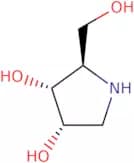
CAS:<p>1,4-Dideoxy-1,4-imino-D-ribitol is a polyhydroxylated pyrrolidine alkaloid isolated from the roots of mulberry trees (Morus alba) and from the bark of leguminous plants (Angylocalyx pynaertii). Due to its structure it has been looked at as enzyme inhibitors that mimic glycoside and nucleoside substrates. It was found to be a potent inhibitor of lysosomal β-mannosidase and eukaryotic DNA polymerases.</p>Formula:C5H11NO3Purezza:Min. 95%Peso molecolare:133.15 g/molN-Acetyl-L-lyxosamine
<p>N-Acetyl-L-lyxosamine is a glycosylation that is used in the synthesis of complex carbohydrates. It can be modified with methyl groups, fluorine atoms, and other substances to produce desired products. N-Acetyl-L-lyxosamine can be used in the synthesis of saccharides such as oligosaccharides and polysaccharides. It is also used in the modification of sugars and monosaccharides. This compound has been synthesized from various sources, including natural glycerol or plant oils. The purity of this chemical is greater than 99%.</p>Formula:C7H13NO5Purezza:Min. 95%Peso molecolare:191.18 g/molMethyl 4-C-Hydroxymethyl-2,3-O-isopropylidene-b-D-ribofuranoside
CAS:Methyl 4-C-Hydroxymethyl-2,3-O-isopropylidene-b-D-ribofuranoside is a modification of the monosaccharide, D-ribose. It is synthesized by the selective methylation of the hydroxymethyl group at position C4. The synthesis of this compound starts with the oxidation of D-ribose to form 2,3'-diisopropylidene boronate ester (1). This compound is then reacted with methyl iodide in the presence of an acid to form 4-(methyloxy)benzaldehyde (2). The final step involves conversion of 2 to 4-(methyloxy)benzylidene boronate ester (3), which is then hydrolyzed to yield methyl 4-C-hydroxymethyl-2,3-O-isopropylidene ribofuranoside.Purezza:Min. 95%1-Deoxy- 3- O- tert.butyldimethylsilyl - 4, 5- O- isopropylidene -D- fructose
<p>1-Deoxy-3-O-tert.butyldimethylsilyl -4,5-O-isopropylidene -D-fructose is a glycosylation reagent used to modify the carbohydrate moieties of proteins and other molecules. It reacts with a protein to produce an alpha O-linked glycosylation at the N terminus of the protein. 1DOTBSDF can be prepared by reacting 1,3,5,7-tetraacetylbenzene with methyl methanolate in the presence of butyllithium. The product is purified by crystallization from hexane and diethylether and has a melting point range of 114°C – 117°C. This compound has been reported in the literature as being used for Click modification reactions that have been reported to have improved yields in comparison to other methods.</p>Purezza:Min. 95%3-O-Benzyl-1,2-O-isopropylidene-6-O-trityl-a-D-glucofuranose
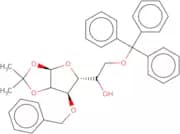
CAS:3-O-Benzyl-1,2-O-isopropylidene-6-O-trityl-a-D-glucofuranose is a synthetic oligosaccharide. It is a glycosylation product of the 6′ position of β-(3,4-)dihydroxybenzoyl α-(1,6)-Dglucopyranosyl bromide with 3,5,-O-(tetraisopropyldisiloxanyl) benzyl alcohol. The molecular weight is 588.8 g/mol and it has the molecular formula C28H31NO14. 3BBIG is soluble in water and methanol, but insoluble in ethanol or ether. This compound can be used for methylation reactions or click chemistry modifications.Formula:C35H36O6Purezza:Min. 95%Peso molecolare:552.66 g/mol3-Deoxy- 3- fluoro- 1, 2- O- isopropylidene - D- allofuranose
<p>3-Deoxy-3-fluoro-1,2-O-isopropylidene-D-allofuranose is an oligosaccharide that has been fluorinated at the 3 position and 3' position of the allofuranose moiety. It is a synthetic monosaccharide that belongs to a family of complex carbohydrates. The modification of this sugar with fluorine atoms is done by click chemistry, which entails the use of copper (II) ions. This sugar can be used for glycosylation and polysaccharide synthesis. Its high purity makes it ideal for use in laboratory settings.</p>Formula:C9H15FO5Purezza:Min. 95%Peso molecolare:222.21 g/mol3,6-Dideoxy-3,6-imino-1,2-O-isopropylidene-a-D-glucofuranose
3,6-Dideoxy-3,6-imino-1,2-O-isopropylidene-a-D-glucofuranose is an oligosaccharide that has been modified to contain fluorine. This sugar is a complex carbohydrate that can be custom synthesized for use in glycosylation reactions. It can be used to modify polysaccharides and has been shown to have a high purity.Purezza:Min. 95%5-Azido-5-deoxy-2,3-O-isopropylidene-L-lyxofuranose
5-Azido-5-deoxy-2,3-O-isopropylidene-L-lyxofuranose (AIL) is a synthetic molecule that belongs to the group of carbohydrates. It is synthesized by the glycosylation and methylation of 5-(azido)-5,6-dideoxyglucose. AIL has been shown to have anti-inflammatory effects in cell culture models and in mice with inflammatory bowel disease.Purezza:Min. 95%6-a-D-Maltotriosyl-maltotriose
CAS:<p>Derived from pullulan using pullulanase</p>Formula:C36H62O31Purezza:Min. 95%Colore e forma:PowderPeso molecolare:990.86 g/molKonjac glucomannan
CAS:<p>Konjac glucomannan is an acetylated (1,4)-β-D-glucomannan obtained from the tubers of Amorphophallus konjac or Konnyaku root. It is widely used in foods, pharmaceuticals paints and explosives. It has been shown that ternary mixtures of konjac glucomannan, xanthan gum and sodium alginate can form a non-covalently linked complex which exhibits enhanced rheological properties of value in, for example, functional foods.</p>Purezza:Min. 75%Colore e forma:White Powder4-Acetamidophenyl b-D-glucuronide sodium salt
CAS:<p>4-Acetamidophenyl b-D-glucuronide sodium salt is a pharmaceutical drug that is a metabolite of acetaminophen. It can be detected in the urine by biochips, which are microarrays that contain immobilized binding sites for specific analytes. The analysis of 4-acetamidophenyl b-D-glucuronide sodium salt in urine is used to screen for the use of acetaminophen and to identify cytochrome P450 2C19 (CYP2C19) activity. This drug can also be detected by spectrometric methods using biochemical assays on plates or hepatocytes and mass spectrometric detection methods using liquid chromatography/mass spectrometry (LC/MS). Acetaminophen has been shown to have toxic effects on the liver, kidneys, and lungs in humans, as well as on diode photoluminescence.</p>Formula:C14H16NNaO8Purezza:Min. 95%Colore e forma:PowderPeso molecolare:349.27 g/molMethyl 3-O-(a-D-mannopyranosyl)-b-D-mannopyranoside
Methyl 3-O-(a-D-mannopyranosyl)-b-D-mannopyranoside is a custom synthesized compound that belongs to the group of complex carbohydrates. It is used in the synthesis of oligosaccharides and polysaccharides. Methyl 3-O-(a-D-mannopyranosyl)-b-D-mannopyranoside can be modified through fluorination, which enhances its properties. This product is available in high purity and with a monosaccharide content of 99%. The CAS number for this compound is 4127757-76-4.Formula:C13H24O11Purezza:Min. 95%Peso molecolare:356.32 g/mol(3R, 4S, 5R, 6R, 7S) -1- Azabicyclo[4.2.0] octane- 3, 4, 5, 7- tetrol
CAS:Fluorination, Monosaccharide, Synthetic, Oligosaccharide, complex carbohydrate, Custom synthesis, Glycosylation, Polysaccharide, Click modification, Methylation Fluorination is a chemical reaction that introduces fluorine into organic compounds. The reactant is typically an alcohol or phenol and the product is a fluoroalcohol or fluoroether. Monosaccharides are simple sugars that cannot be hydrolyzed to smaller carbohydrates. Oligosaccharides are saccharides composed of two to ten monosaccharides. Complex carbohydrates are polymers of saccharides. Click chemistry is a type of chemical reaction used in organic chemistry to create new molecules and modify existing ones with high selectivity and efficiency. Methylation is the process by which methyl groups are introduced into organic compounds such as fats and oils. It can also refer to the addition of a methyl group at one specificPurezza:Min. 95%(2R, 3R) -3- [(3aR, 4R, 6aS) - 2, 2- Diethyltetrahydro- 5- (phenylmethyl) - 4H- 1, 3- dioxolo[4, 5- c] pyrrol- 4- yl] - 3- [[(1, 1- dimethylethyl) dimethylsilyl] oxy] - 1, 2- propanediol
<p>(2R, 3R) -3- [(3aR, 4R, 6aS) - 2, 2- Diethyltetrahydro- 5- (phenylmethyl) - 4H- 1, 3- dioxolo[4, 5- c] pyrrol- 4- yl] - 3-[(1, 1-dimethylethyl) dimethylsilyl]oxy]-1, 2- propanediol is a synthetic carbohydrate that is used as a building block for saccharide synthesis. It can be modified with Click chemistry to introduce reactive groups on its molecules. This compound has been shown to react with oligosaccharides and polysaccharides by glycosylation and methylation reactions. The high purity of this product makes it suitable for use in pharmaceuticals and other chemical applications.</p>Purezza:Min. 95%3'-Sialyl-N-acetyllactosamine sodium salt
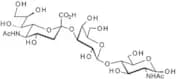
CAS:Component of glycoproteins and glycolipids expressed in antigens and receptors of proteins, bacteria and viruses. Found in the free form in human biofluids, including urine and milk - preventing adhesion of bacteria to urinary epithelium and inhibiting enteric pathogens respectively. An efficient inhibitor of neutrophil-activating protein of H.pylori (HPNAP)-mediated neutrophil activation.Formula:C25H42N2O19·NaPurezza:Min. 95%Colore e forma:White Off-White PowderPeso molecolare:697.59 g/mol1,2,3,4,6-Penta-O-benzyl-β-D-thiogalactopyranoside
CAS:<p>1,2,3,4,6-Penta-O-benzyl-b-D-thiogalactopyranoside is a custom synthesis that is a complex carbohydrate. It has a CAS number of 210358-01-3 and a molecular weight of 603. It is modified with saccharide, methylation, glycosylation, and carbonyl groups. This product is available in high purity and without fluorination or synthetic modification.</p>Formula:C41H42O5SPurezza:Min. 95%Colore e forma:PowderPeso molecolare:646.84 g/molMethyl 2,3-di-O-benzyl-α-D-glucopyranoside
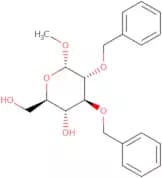
CAS:Methyl 2,3-di-O-benzyl-a-D-glucopyranoside is a chiral sugar that can be synthesized by sulfidation of methyl 1,2,3,4-tetra-O-benzyloxycarbonyl-a-D-glucopyranoside. This sugar was used in the synthesis of oxathianes and sulfones as well as other synthetic methodology.Formula:C21H26O6Purezza:Min. 95%Colore e forma:PowderPeso molecolare:374.43 g/mol1,2:5,6-Di-O-isopropylidene-3-O-methanesulfonyl-α-D-glucofuranose
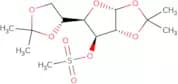
CAS:<p>A protected glucofuranose.</p>Formula:C13H22O8SPurezza:Min. 95%Colore e forma:White To Off-White SolidPeso molecolare:338.37 g/mol5-Azepan-1-yl-5-deoxy-1,2-isopropylidene-a-D-xylofuranose
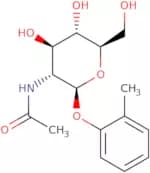
CAS:<p>5-Azepan-1-yl-5-deoxy-1,2-isopropylidene-a-(D)-xylofuranose (ADXF) is a synthetic glycoside that was synthesized in order to explore the potential of ADXF as a drug candidate. ADXF has shown promising antiinflammatory and anticancer activities. The synthesis of ADXF starts with the protection of the hydroxyl group at the anomeric center with acetate and then the glycosylation with azepane and 5-deoxy-1,2 isopropylidene erythronolide B. This synthesis also includes fluorination and methylation steps, which are necessary for modifying the sugar structure.</p>Formula:C14H25NO4Purezza:Min. 95%Colore e forma:Brown solid.Peso molecolare:271.35 g/mol2-Methylphenyl 2-acetamido-2-deoxy-β-D-glucopyranoside
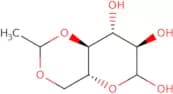
CAS:2-Methylphenyl 2-acetamido-2-deoxy-b-D-glucopyranoside is a fluorinated glycosylation product that is synthesized by custom synthesis. It is a complex carbohydrate with high purity and modification.Formula:C15H21NO6Purezza:Min. 95%Colore e forma:PowderPeso molecolare:311.33 g/mol4,6-O-Ethylidene-D-glucopyranose
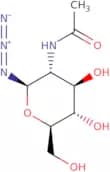
CAS:4, 6-O-Ethylidene-D-glucopyranose is a glucose analogue that inhibits sugar transport. It has been shown to inhibit glucose transport by binding to the hydroxyl group on the red cell membrane. This binding prevents the sugar from entering the cell and as a result, glucose accumulates in the blood. 4, 6-O-Ethylidene-D-glucopyranose also binds to tryptophan fluorescence and inhibits cytochalasin B binding to tryptophans that are located on the plasma membrane of eukaryotic cells.Formula:C8H14O6Purezza:Min. 90 Area-%Colore e forma:PowderPeso molecolare:206.19 g/mol2-Acetamido-2-deoxy-b-D-glucopyranosyl azide
CAS:<p>2-Acetamido-2-deoxy-b-D-glucopyranosyl azide is a biodegradable, environmentally oriented compound that has been shown to be compatible with polylactic acid. This compound has shown unevenness in the hydroxy group and a functional group sensitive to hydrolysis. The molecular weight of 2-acetamido-2-deoxy-b-D-glucopyranosyl azide is 154.14 g/mol. It is soluble in water and has a natural environment frequency of 0.0005%.</p>Formula:C8H14N4O5Purezza:Min. 95 Area-%Colore e forma:White PowderPeso molecolare:246.22 g/mol2-Azido- 2- deoxy- 2, 4- di- C- methyl- 3, 4- O- isopropylidene - L- ribonic acid d- lactone
2-Azido-2-deoxy-2,4-di-C-methyl-3,4-O-isopropylidene -L-ribonic acid d -lactone is a synthetic carbohydrate. It is a monosaccharide that has been modified by the addition of fluorine atoms to the 2 and 4 positions of the ribose ring. The chemical name for this compound is 2-[(4S)-2,2'-azido]-2,4-[1S,3R,4R]dimethyl - 3,4-[1S,3R]oxirane - O-[(1Z)-1-(ethoxycarbonyl)propylidene]- L -ribonic acid d -lactone. This compound can be used in glycosylation reactions with saccharides and other carbohydrates that are not more than two carbons long. It can also be methylated at the 2 position on the ribPurezza:Min. 95%2-Fluoro-4-nitrophenyl 2-azido-2-deoxy-b-D-galactopyranoside
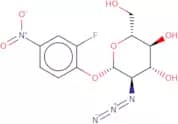
CAS:2-Fluoro-4-nitrophenyl 2-azido-2-deoxy-b-D-galactopyranoside is a synthetic glycosylation agent that has been used in the synthesis of oligosaccharides and polysaccharides. This reagent is also used for click modification, which is a chemical reaction that produces an azide group on the saccharide. Click modification can be used to modify complex carbohydrates with fluorine or methyl groups. 2-Fluoro-4-nitrophenyl 2-azido-2-deoxy-b-D galactopyranoside has a CAS number of 2088233–73–0.Formula:C12H13FN4O7Purezza:Min. 95%Colore e forma:Off-White To Yellow SolidPeso molecolare:344.25 g/mol2,3-Anhydro-3,4-O-ispropylidene-7-O-triphenylmethyl-D-glycero-D-altro-heptonic acid diethylamide
2,3-Anhydro-3,4-O-ispropylidene-7-O-triphenylmethyl-D-glycero-D-altroheptonic acid diethylamide is a custom synthesis that has been modified by fluorination and methylation. The compound is a monosaccharide with an Oligosaccharide chain. It is a synthetic molecule that can be found in the CAS No. 899072. This compound is a saccharide and a carbohydrate. It is complex carbohydrate that consists of glucose and galactose units.Purezza:Min. 95%GD1a-Ganglioside
CAS:GD1a ganglioside is one of the major gangliosides in neuronal and glial membranes. It has a core tetrasaccharide structure (Galβ1,3GalNAcβ1,4Galβ1,4Glc) with sialic acids linked α2,3/α2,8 to the inner galactose residue, α2,3 to the outer galactose residue, and ceramide linked β to position 1 on the reducing terminal glucose residue (Ledeen, 2009). GD1a ganglioside interacts with myelin-associated glycoprotein (MAG) and is essential for long-term axon-myelin stability. GD1a ganglioside plays a role in viral infection as it is a receptor for viral glycoproteins in rotavirus and paramyxovirus 1. The hexasaccharide GD1a moiety was also found on a glycoprotein that acts as a receptor for adenovirus type 37. GD1a ganglioside also interacts with botulinum neurotoxin (BoNT) and is crucial for its entry into cells (Kolter, 2012). The functional significance of ammonia in the brain is not fully understood see: (Modi, 1994).Formula:C84H148N4O39Purezza:Min. 95%Colore e forma:PowderPeso molecolare:1,838.08 g/molIsomaltopentaose
CAS:<p>Produced from high maltose syrup by treatment with transglucosidase</p>Formula:C30H52O26Purezza:Min. 95%Colore e forma:White PowderPeso molecolare:828.7 g/molMethyl 2,3,4-tri-O-benzyl-6-O-trityl-a-D-mannopyranoside
CAS:Methyl 2,3,4-tri-O-benzyl-6-O-trityl-a-D-mannopyranoside is a complex carbohydrate that contains a glycosylation site. This compound has a CAS number of 40653-13-2, and is available for custom synthesis. Methyl 2,3,4-tri-O-benzyl-6-O-trityl-aD mannopyranoside is water soluble and has high purity. The chemical structure of this compound can be modified to include fluorination or Click modification. This compound is also an oligosaccharide containing sugar residues and monosaccharides with a molecular weight of approximately 1000 Da.Formula:C47H46O6Purezza:Min. 95%Peso molecolare:706.89 g/mol3,4,6-Tri-O-acetyl-2-O-trifluoromethanesulfonyl-b-D-mannopyranosyl azide
CAS:3,4,6-Tri-O-acetyl-2-O-trifluoromethanesulfonyl-b-D-mannopyranosyl azide is a chemically synthesized compound that can be used for methylation reactions. It is an Oligosaccharide with a molecular weight of 597.5 and contains the following structural features: A saccharide composed of three monosaccharides (D-glucose, D-mannose, and D-galactose), which is bonded by alpha 1,6 linkages. The chemical formula is C12H14F3N3O8. The CAS number is 1159265-99-2.Formula:C13H16F3N3O10SPurezza:Min. 95%Colore e forma:PowderPeso molecolare:463.34 g/molUDP-D-Fucose
<p>sugar nucleotide</p>Formula:C15H24N2O16P2Purezza:Min. 95 Area-%Peso molecolare:550.31 g/mol1,2,3,4,6-Penta-O-(3,4,5-tri-O-benzylgalloyl)-b-D-glucopyranose
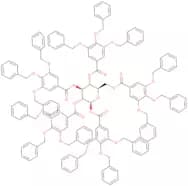
CAS:<p>1,2,3,4,6-Penta-O-(3,4,5-tri-O-benzylgalloyl)-b-D-glucopyranose is a custom synthesis, complex carbohydrate that has been modified with methylation and glycosylation. It is also a saccharide that can be found in the form of an Oligosaccharide or Polysaccharide. The CAS No. for this compound is 122625-60-9. This compound has a purity level of 99% and is 100% synthetic. It has been fluorinated to make it more stable.<br>1,2,3,4,6-Penta-O-(3,4,5-tri-O-benzylgalloyl)-b-D-glucopyranose can be used in pharmaceuticals as a sugar or carbohydrate. It can also be used as a food additive for flavoring purposes</p>Formula:C146H122O26Purezza:Min. 95%Peso molecolare:2,292.52 g/mol1,3,4,6-Tetra-O-benzyl-2-O-(2,3,4,6-tetra-O-benzyl-a-D-glucopyranosyl)-b-D-galactopyranoside
CAS:Tetra-O-benzyl-2-O-(2,3,4,6-tetra-O-benzyl-a-D-glucopyranosyl)-b-D-galactopyranoside is a polysaccharide that is synthesized by the methylation of 1,3,4,6-tetra-O-benzyl -2,3,4,6 tetra - O - benzyl - a - D - glucopyranoside. It can be used to modify proteins and oligosaccharides. This product is custom synthesized and has high purity.Formula:C68H70O11Purezza:Min. 95%Peso molecolare:1,063.28 g/mol1,2,3,4-Tetra-O-acetyl-6-deoxy-6,6,6-trifluoro-L-galactose
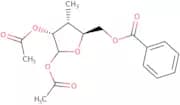
CAS:<p>fucosylation inhibitor</p>Formula:C14H17F3O9Peso molecolare:386.28 g/mol1,2-O-Di-O-acetyl-5-O-benzoyl-3-deoxy-3C-methyl-D-ribofuranose
CAS:1,2-O-Di-O-acetyl-5-O-benzoyl-3-deoxy-3C-methyl-D-ribofuranose is a fluorinated monosaccharide that can be used as a building block for the synthesis of complex carbohydrates. It is a custom synthesis and is available in high purity.Formula:C17H20O7Purezza:Min. 95%Peso molecolare:336.34 g/molNA2 N-Glycan
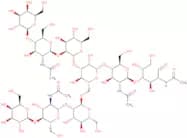
CAS:NA2 is a glycan that is a specific antigen binding molecule. It binds to the CD20 receptor on the surface of human B lymphocytes, which are involved in the development of cancer and inflammatory diseases. NA2 can be used for the treatment of these diseases, as well as cancers that express CD20 receptors. NA2 is generated from endogenous molecules that have been modified by introducing galactose into the carbohydrate backbone. These molecules also form a linker with bendamustine, which is an anticancer drug.Formula:C62H104N4O46Purezza:Min. 90%Colore e forma:PowderPeso molecolare:1,641.49 g/mol6-a-D-Glucopyranosyl maltotriose
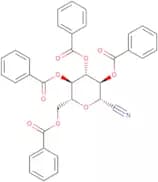
CAS:<p>Substrate for glucoamylases; derived from pullulan using pullulanase</p>Formula:C24H42O21Purezza:Min. 97 Area-%Colore e forma:PowderPeso molecolare:666.58 g/mol2,3,4,6-Tetra-O-benzoyl-b-D-glucopyranosyl cyanide
CAS:2,3,4,6-Tetra-O-benzoyl-b-D-glucopyranosyl cyanide is a quaternary ammonium salt that is found in the cenozoic sequence of samples. It has been suggested that this compound may be a new source of radiocarbon.Formula:C35H27NO9Purezza:Min. 95%Colore e forma:PowderPeso molecolare:605.59 g/mol









![(3R, 4S, 5R, 6R, 7S) -1- Azabicyclo[4.2.0] octane- 3, 4, 5, 7- tetrol](/_next/image/?url=https%3A%2Fstatic.cymitquimica.com%2Fproducts%2F3D%2Fthumb-webp%2FMA163391.webp&w=3840&q=75)