Glicoscienza
Sottocategorie di "Glicoscienza"
- Amminozucchero(108 prodotti)
- Glico-anticorpi(284 prodotti)
- Glicolipidi(46 prodotti)
- Glicosaminoglicani (GAGs)(55 prodotti)
- Glicosidi(419 prodotti)
- Monosaccaridi(6.622 prodotti)
- Oligosaccaridi(3.689 prodotti)
- Polisaccaridi(506 prodotti)
Trovati 11038 prodotti di "Glicoscienza"
Methyl b-D-glucopyranoside hemihydrate
CAS:Methyl b-D-glucopyranoside hemihydrate is a white crystalline solid that is soluble in water. It is a synthetic product, which can be custom synthesized and modified to suit the needs of customers. Methyl b-D-glucopyranoside hemihydrate is used for the synthesis of glycosidic substances and as a raw material for saccharide derivatives. This compound has been shown to have high purity, and is often used in the production of oligosaccharides and monosaccharides.Formula:C7H14O6H2OPurezza:Min. 95%Colore e forma:White to off-white solid.Peso molecolare:203.19 g/mol4-Methylphenyl 2-O-acetyl-3-O-benzyl-b-D-thioglucuronide methyl ester
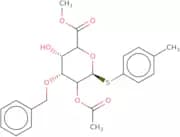
CAS:4-Methylphenyl 2-O-acetyl-3-O-benzyl-b-D-thioglucuronide methyl ester is a custom synthesis of an oligosaccharide. It has been modified with fluorination and methylation, which are chemical reactions that alter the structure of the substance. Click modification is also a type of chemical reaction involving this substance.Formula:C23H26O7SPurezza:Min. 95%Peso molecolare:446.51 g/mol2,3,4,6-Tetra-O-acetyl-a-D-mannopyranosyl isothiocyanate
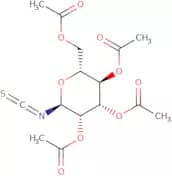
CAS:2,3,4,6-Tetra-O-acetyl-a-D-mannopyranosyl isothiocyanate (TMIT) is a custom synthesis that has been modified to include a fluorine atom. TMIT is a polysaccharide that has been modified by methylation and glycosylation. This compound has been synthesized from the natural carbohydrate D-mannopyranose. TMIT is known for its ability to inhibit protein glycosylation in bacteria cells. It also has high purity with an Oligosaccharide CAS No. 93221-21-7 and modification of saccharides with the addition of methyl groups. The chemical structure of TMIT can be found at 2,3,4,6-Tetra-O-acetyl-a-D-mannopyranosyl isothiocyanate (TMIT).Formula:C15H19NO9SPurezza:Min. 95%Peso molecolare:389.38 g/molL-Galacturonic acid
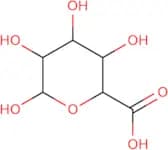
CAS:L-Galacturonic acid is an acidic polysaccharide that is a constituent of many plants, especially in the cell walls of pectin. L-Galacturonic acid has biochemical properties, such as growth factor activity and anticoagulant properties. It also has nucleophilic properties, which means it can be used to extract other substances. The chemical structures of L-galacturonic acid are C6H8O7 with hydroxyl groups on both carbons 1 and 4. The hydroxyl group on carbon 1 makes it a good reactant for nucleophilic attack by sodium carbonate. This reaction increases the number of negative charges on the molecule, which make it a good carbohydrate chemistry reagent. L-Galacturonic acid is not soluble in water but can be dissolved in hydrochloric acid or sodium carbonate solution. It is not toxic when ingested orally and has been shown to have anti-coagulant properties inPurezza:Min. 95%(2S, 4S, 4'R) [4,4'-bi-1,3-dioxolane]-2-methanol-2,2'-dimethyl
CAS:2,4-Dioxolane is a synthetic compound with the molecular formula (2S, 4S, 4'R) [4,4'-bi-1,3-dioxolane]-2-methanol-2,2'-dimethyl. It was first synthesized in 1963 by C. L. Hedrick and coworkers at Eli Lilly and Company as a potential drug for the treatment of schizophrenia. The chemical structure of 2,4-dioxolane consists of two oxetanes linked together with an ether bond. In this molecule both hydroxyl groups are on the same side of the carbon chain.Formula:C9H16O5Purezza:Min. 95%Peso molecolare:204.22 g/molMan-3-F N-Glycan
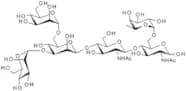
CAS:Man-3-F N-Glycan is a custom synthesis of an oligosaccharide. It is a polysaccharide that is modified with methylation, glycosylation and click modification. Man-3-F N-Glycan is a high purity product that has been fluorinated for use in synthetic biology.Formula:C40H68N2O30Purezza:Min. 95%Peso molecolare:1,056.96 g/molGlycyl-lacto-N-tetraose
Glycyl-lacto-N-tetraose is an oligosaccharide that is modified with lactose. The structure of this carbohydrate is a glycosyl linkage between two glucose residues, plus a galactose residue at the non-reducing end of the chain. This sugar has been custom synthesized and purified to be free of other carbohydrates or contaminants. Glycyl-lacto-N-tetraose has a CAS number of 55719-02-1 and can be used in many applications including as a pharmaceutical ingredient, food additive, or cosmetic ingredient.Formula:C28H49N3O21Purezza:Min. 95%Peso molecolare:763.7 g/molSialyl-dimeric Lex-nona-APD-HSA
Sialyl-dimeric Lex-nona-APD-HSA is a monosaccharide that belongs to the group of complex carbohydrates. It is a custom synthesis product, which has been synthesized by the methylation and glycosylation of a high purity oligosaccharide. The structural formula for this product is C14H30FNO6S2. This product is highly purified and has been fluorinated at one hydroxyl group. Sialyl-dimeric Lex-nona-APD-HSA has CAS No. 569078-29-4 and molecular weight of 432.5 g/mol.br>
br>
This product can be used as a synthetic sugar in various applications such as food, pharmaceuticals, cosmetics, and agrochemicals industries.br>
br>
The following are some properties of this compound:
1) Nonvolatile solids content: 98%Purezza:Min. 95%CMP-Pseudaminic acid
CMP-Pseudaminic acid is a chemical compound that belongs to the group of thuringiensis. It is biosynthesized by the action of enzymes, which catalyze the conversion of sialic acid to CMP-pseudaminic acid. This process is carried out in two steps. The first step involves a reaction between sialic acid and ATP and the second step entails an enzymatic reaction between CMP-pseudaminic acid and UDP-glucose. X-ray crystal structures have been obtained for both steps of this process, with the second step being more complex than the first. Chemical diversity has been observed in pseudaminics, with some being glycosylated while others are not. Analysis with spectrometry has shown that pseudaminics are highly o-glycosylated at their hydroxy groups and have high levels of carbon atoms as well as hydroxyl groups. Structural analysis has revealed that pseudaminicsFormula:C22H32N5O15PPurezza:Min. 95%Peso molecolare:637.49 g/molTri-b-GalNAc-C12-alkyne
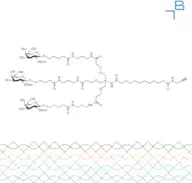
Tri-b-GalNAc-C12-alkyne, also known as trebler GalNAc alkyne, is a multivalent N-acetylgalactosamine (GalNAc) compound with high-affinity to bind to the asialoglycoprotein receptor (ASGPR) found on the surface of hepatocytes in the liver. This trivalent GalNAc derivative contains a C12 alkyne linker and has been extensively studied for its potential in targeted delivery of siRNA conjugates to liver tissue. The multivalent presentation of GalNAc moieties significantly enhances the binding avidity to ASGPR making it an attractive ligand for liver-specific targeting. Researchers have reported successful conjugation of tri-b-GalNAc-C12-alkyne to various therapeutic payloads, such as small interfering RNAs (siRNAs), to facilitate their selective uptake by hepatocytes and enable targeted gene silencing in the liver.Formula:C76H13N11O29Purezza:Min. 95%Peso molecolare:1,664.92 g/molD-Xylose-BSA
D-Xylose-BSA is an anaesthetic agent that is used to treat depression and postoperative pain. It is a natural compound that has been found in the blood cells of humans and animals. D-Xylose-BSA interacts with endogenous receptors for biotinylated D-xylose on granulocytes, which leads to activation of these cells and consequent release of inflammatory mediators. The ability of D-xylose-BSA to bind to microbial surfaces may be due to its chemical structure, which consists of a glycosilated hydrophilic part and a lipid part. D-Xylose-BSA also binds to polymorphonuclear leukocytes, postoperative erythrocytes, and replanted skin grafts.
Purezza:Min. 95%Decasaccharide dp10
Decasaccharide dp10 is a complex carbohydrate that is made up of ten monosaccharides. It is a synthetic oligosaccharide that has been fluorinated and glycosylated. The decasaccharide has been synthesized using click chemistry and methylation, before being purified to produce a high-purity product. Decasaccharide dp10 can be used in the modification of complex carbohydrates, as well as for the synthesis of glycans with customized structures.Formula:C60H155N25O95S15Purezza:Min. 95%Peso molecolare:3,227.97 g/molMomordicoside G
CAS:Momordicoside G is a plant-derived compound that belongs to the group of monoterpenoids. It has been shown to stimulate cell growth and differentiation in vitro by binding to epidermal growth factor (EGF) and colony-stimulating factor (CSF) receptors. Momordicoside G has also been shown to inhibit pentobarbital sodium-induced lung cell lysis, which may be due to its ability to induce synthesis of fatty acids. This molecule has been found in a variety of model organisms, including bacteria and yeast. The fluorescence emission spectrum of momordicoside G has been reported and it was shown that this molecule binds to DNA polymerase. Studies have also shown that momordicoside G can inhibit RNA extraction from lung fibroblasts, which may be due to its ability to bind with RNA polymerase II.Formula:C37H60O8Purezza:Min. 95%Peso molecolare:632.87 g/molPalbociclib N-glucuronide
Palbociclib N-glucuronide is a synthetic, modified sugar that is used in the synthesis of carbohydrates. It has a molecular weight of 542.34 and was originally synthesized by glycosylation and methylation of palbociclib. The chemical formula for Palbociclib N-glucuronide is C10H18N4O5•C6H7O6•2HCOOH.Formula:C30H37N7O8Purezza:Min. 95%Peso molecolare:623.66 g/molLacto-N-difucohexaose I-APD-HSA
Lacto-N-difucohexaose I-APD-HSA is a custom synthesis of an oligosaccharide with a molecular weight of 5,000 Da. It is modified with fluorine and methyl groups at the C6 and C1 positions. Lacto-N-difucohexaose I-APD-HSA is synthesized by click chemistry and has been shown to be effective in inhibiting the growth of cancer cells. This sugar can be modified by glycosylation or carbohydrate modification.Purezza:Min. 95%3-(a-D-Rhamnopyranosyl)-D-glucose
3-(a-D-Rhamnopyranosyl)-D-glucose is a glycosylation product that is synthesized by the methylation of glucose. It is a complex carbohydrate with a high purity, CAS number and custom synthesis. 3-(a-D-Rhamnopyranosyl)-D-glucose has been modified by fluorination and click chemistry to produce a versatile reagent for glycosylation reactions.
Purezza:Min. 95%a-D-Galactose-PAA-biotin
a-D-Galactose-PAA-biotin is a carbohydrate compound that has been modified by the addition of a PAA group and biotin. This compound can be synthesized with high purity and is available for custom synthesis. It is an oligosaccharide, a sugar, and a saccharide. The CAS number for this compound is 97320-93-4.Purezza:Min. 95%Colore e forma:SolidAllyl 4,6-O-benzylidene-a-D-glucopyranoside
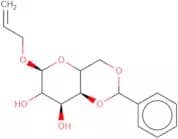
CAS:Allyl 4,6-O-benzylidene-a-D-glucopyranoside is a custom synthesis of an oligosaccharide. It is a complex carbohydrate that belongs to the group of saccharides. This product is methylated and glycosylated, and contains a hexose sugar (glucose) at its reducing end. Allyl 4,6-O-benzylidene-a-D-glucopyranoside has been fluorinated with hydrogen fluoride gas in order to increase its purity. This product is synthesized by click chemistry and has CAS number 65987-12-4.Formula:C16H20O6Purezza:Min. 95%Peso molecolare:308.33 g/molAgarononaose
CAS:Agarose is a polysaccharide found in red algae, typically Gelidium and Gracilaria. It is a strictly alternating polysaccharide of α-1,3 linked D-galactose and β-1,4 linked L-3,6 anhydrogalactose with occasional sulfation at position 6 of the anhydrogalactose residue. Agaro-oligosaccharides result from cleavage at galactose residues and neoagaro-oligosaccharides from cleavage at 3,6-anhydro residues. A number of publications have suggested that agaroheptaose has properties that include: anti-microbial, antiviral, prebiotic, anti-tumoral, immunomodulatory, anti-inflammatory, glucosidase inhibitory, and hepatoprotective properties.Formula:C54H84O42Purezza:Min. 95%Colore e forma:SolidPeso molecolare:1,405.22 g/molNeocarrabiose (b anomer, crystalline)
CAS:Neocarrabiose is a complex carbohydrate that is synthesized by the methylation of carrageenan. It has a molecular weight of about 1,000 Daltons and consists of a linear chain of alternating units of D-galactose and D-glucuronic acid. Neocarrabiose is used in the production of polysaccharides such as heparin, glycosaminoglycans, and polysulfated glycosaminoglycans. The enzyme modification process converts the anomeric configuration to L-arabinofuranose in order to produce polysaccharides with high purity.Formula:C12H20O10Purezza:Min. 95%Peso molecolare:324.28 g/mol5-Deoxy-3,4-di-O-methyl-D-arabinose
5-Deoxy-3,4-di-O-methyl-D-arabinose is a custom synthesis that is a complex carbohydrate. It has been modified by methylation and glycosylation. This product is soluble in water and can be used as a saccharide or sugar. The product has been fluorinated and modified with click chemistry to provide high purity.Purezza:Min. 95%Rhein D-Glucuronide (mixture of 1 & 8 Isomers)
Rhein D-Glucuronide is a mixture of 1 and 8 isomers. It is a natural product that has been modified by methylation and saccharide modification. The CAS number for Rhein D-Glucuronide is 7062-00-2. This product can be custom synthesized to meet your needs. Rhein D-Glucuronide has the following properties: Polysaccharides, Click modification, Modification, Oligosaccharides, Custom synthesis, Glycosylation, High purity, Carbohydrate sugar, Synthetic and Fluorination. Rhein D-Glucuronide is a complex carbohydrate with high purity.Purezza:Min. 95%1,4:3,6-Dianhydro-2,5-di-O-methyl-D-Iditol
1,4:3,6-Dianhydro-2,5-di-O-methyl-D-Iditol is a sugar modified with methyl groups and fluorine. It can be used as a building block for oligosaccharides and polysaccharides. The compound is synthesized from commercially available starting materials. 1,4:3,6-Dianhydro-2,5-di-O-methyl-D-Iditol is soluble in water and methanol. This product has not been studied for toxicity or carcinogenicity in animals.
Formula:C8H14O4Purezza:Min. 95%Peso molecolare:174.19 g/molTri-b-GalNAc-PEG3-azide
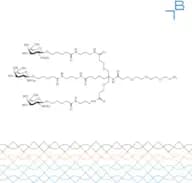
CAS:Tri-GalNAc-PEG3-azide is an ASGPR-targeted ligand. This molecule contains three beta-GalNAc sugar units (trivalent) linked by a discrete and uniform PEG3 spacer. The spacer terminates with a reactive azide group for conjugation to other molecules. Upon binding to ASGPR, tri-GalNAc-PEG3-azide conjugates are efficiently taken up by cells (endocytosis) due to the trivalent GalNAc recognition. This property allows researchers to deliver various cargo, like RNA or Cas9 complexes, specifically to liver cells (hepatocytes) and permits using tri-GalNAc-PEG3-Azide to create targeted drug delivery systems (LYTACs) or labeled with dyes for imaging tissues.Formula:C70H125N13O31Purezza:Min. 95%Peso molecolare:1,644.8 g/molUDP-2-deoxy-2-iodo-D-glucose
UDP-2-deoxy-2-iodo-D-glucose is a sugar that can be custom synthesized as desired. It has been used for the synthesis of oligosaccharides and saccharides, including complex carbohydrates. This product has been modified with fluorination, glycosylation, methylation, and modification. The CAS No. is 53927-64-8. Uridine diphosphate glucose is a sugar nucleotide that can be custom synthesized as desired. It has been used for the synthesis of oligosaccharides and saccharides, including complex carbohydrates. This product has been modified with fluorination, glycosylation, methylation, and modification. The CAS No. is 53927-64-8.br> UDP–2–deoxy–2–iodo–D–glucose is a sugar that can be custom synthesized as desired. It has been used for thePurezza:Min. 95%Tri-b-GalNAc-b-alanine-PEG3-biotin
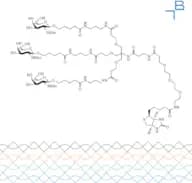
Tri-b-GalNAc-b-alanine-PEG3-biotin comprises a trivalent β-GalNAc ligand, a beta-alanine-PEG3 spacer, and a biotin tag in its structure. The ligand specifically targets ASGPRs (asialoglycoprotein receptors) on hepatocyte cells due to its multivalent GalNAc residues. The flexible linker (beta-alanine-PEG3) connects the GalNAc segment to biotin, allowing researchers to attach it to streptavidin-coated surfaces. Applications include lysosomal targeting, hepatocyte studies, and drug delivery.
Formula:C83H146N14O34SPurezza:Min. 95%Peso molecolare:1,916.19 g/molH Type II-APD-BSA
H Type II-APD-BSA is a custom synthetic sugar that is used as an electron acceptor to reduce a variety of electron-deficient aromatic compounds. H Type II-APD-BSA can be modified with fluorine, which makes it an ideal reagent for the synthesis of complex carbohydrates. This product was created by methylation, click modification, and oligosaccharide synthesis. It has a CAS number, is made of saccharides and polysaccharides, and contains monosaccharides and sugars.
Purezza:Min. 95%Entecavir 3''-O-b-D-glucuronide
Entecavir 3''-O-b-D-glucuronide is a synthetic compound that is a methylated, fluorinated, and modified oligosaccharide. It has CAS number 68655-87-8 and it is a high purity, complex carbohydrate with a saccharide unit. Entecavir 3''-O-b-D-glucuronide can be used in the synthesis of monosaccharides and polysaccharides.Formula:C18H23N5O9Purezza:Min. 95%Colore e forma:SolidPeso molecolare:453.4 g/molTri-b-GalNAc-b-alanine-PEG3-maleimide
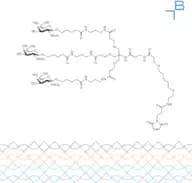
Tri-b-GalNAc-b-Ala-PEG3-MAL contains three terminal beta-N-acetylgalactosamine (GalNAc) sugars arranged in a trivalent configuration, facilitating high-affinity binding to the asialoglycoprotein receptor (ASGPR) expressed on hepatocyte surfaces. The crucial functional group is a terminal maleimide (MAL) moiety, enabling chemoselective bioconjugation with biomolecules harboring thiol (-SH) groups. This strategy allows for site-specific conjugation under mild conditions, valuable for developing targeted conjugates in disciplines like targeted drug delivery and antibody-drug conjugate (ADC) development for hepatocellular carcinoma.Formula:C80H137N13O35Purezza:Min. 95%Peso molecolare:1,841.01 g/molTri-b-GalNAc-b-alanine-PEG3-DBCO
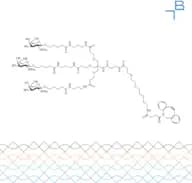
Very similar to tri-b-GalNAc-b-alanine-PEG4-DBCO (which contains a PEG4 instead of PEG3 as a spacer), this cluster, tri-b-galnac-b-alanine-peg3-DBCO, contains also three terminal beta-N-acetylgalactosamine (GalNAc) sugars for efficient ASGPR binding. The beta-alanine linker separates the GalNAc unit from a PEG3 spacer, improving water solubility and potentially influencing pharmacokinetics. The terminal amine group serves as a reactive handle for conjugation to various biomolecules via amide bond formation. This multifunctional combination makes tri-b-GalNAc-b-alanine-PEG3-amine a versatile tool for researchers developing targeted therapies and diagnostics exploiting the ASGPR pathway.Formula:C92H145N13O34Purezza:Min. 95%Peso molecolare:1,977.2 g/molGlycyl-3'-fucosyllactose
Glycyl-3'-fucosyllactose is a synthetic, fluorinated polysaccharide that can be modified with glycosylation and methylation. It has the CAS No. of 12078-02-9 and is a high purity product.Formula:C20H36N2O15Purezza:Min. 95%Peso molecolare:544.5 g/molGanglioside-Total
CAS:Please enquire for more information about Ganglioside-Total including the price, delivery time and more detailed product information at the technical inquiry form on this pagePurezza:Min. 95%Lacto-N-fucopentaose II-BSA
Lacto-N-fucopentaose II-BSA is a glycosylation agent that is derived from the natural substrate N-acetylgalactosamine. It is used in the synthesis of complex carbohydrates, such as glycoconjugates and polysaccharides. Lacto-N-fucopentaose II-BSA can be modified with methyl groups or fluorine atoms to generate derivatives, which are useful for studying glycosylation reactions. The CAS number for this product is 46645-96-8. This product is synthesized using custom methods and has been purified to high purity levels.
Purezza:Min. 95%Maltoeicosaose
Maltoeicosaose is a synthetic oligosaccharide that is synthesized by the glycosylation of maltose with a sugar. Maltoeicosaose can be custom synthesized for different applications, such as complex carbohydrate, glycosylation, polysaccharide, and click modification.Purezza:Min. 95%cis-Resveratrol 4'-O-b-D-glucuronide
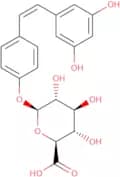
CAS:cis-Resveratrol 4'-O-b-D-glucuronide is a synthetic compound that is a sugar, with a molecular weight of 598. It is an oligosaccharide and has been modified with fluorination on the C2 position. cis-Resveratrol 4'-O-b-D-glucuronide is the methylated form of resveratrol. It has been shown to have anti-inflammatory properties and can be used for the treatment of inflammation associated with arthritis, psoriasis, or septic shock. cis-Resveratrol 4'-O-b-D-glucuronide binds to polysaccharides in the body and inhibits their ability to bind to glycoproteins on cell surfaces. This results in a decrease in inflammation and other inflammatory responses that are mediated by these cells.Formula:C20H20O9Purezza:Min. 95%Peso molecolare:404.37 g/molDisialylated pentaose type I
Disialylated pentaose type I (DSI-1) is a disaccharide sugar that is synthesized in high purity by custom synthesis. It is a complex carbohydrate that consists of five monosaccharides: glucose, galactose, mannose, fucose and N-acetylneuraminic acid. DSI-1 has been shown to have glycosylation and methylation activity. This product has been modified with fluorination and saccharide modification, as well as Click chemistry. Disialylated pentaose type I is used in the pharmaceutical industry as an intermediate for the production of glycoconjugates and in the food industry to produce artificial sweeteners.
Formula:C42H67N3O32Na2Purezza:Min. 95%Peso molecolare:1,171.96 g/mol6-Deoxy-6-fluoro-L-galactose
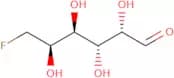
CAS:6-Deoxy-6-fluoro-L-galactose is a sugar nucleotide that is extracted from the dithioacetal of l-fucose and d-galactose. It inhibits the synthesis of DNA and RNA by binding to the enzyme that catalyzes this reaction, thereby blocking these processes. 6DFLG has been shown to inhibit transformation in Escherichia coli. The mechanistic studies of 6DFLG show that it reacts with oxygen at the electrophilic site to produce an olefinic product, which then reacts with nucleophiles, such as water, to form a trackable product. This reagent can be used to determine whether or not a particular sugar is present in a sample.Formula:C6H11FO5Purezza:Min. 95 Area-%Colore e forma:PowderPeso molecolare:182.15 g/mol1,2,3,4,6-Penta-O-pivaloyl-β-D-mannopyranose
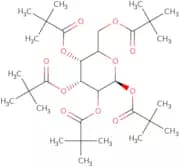
CAS:1,2,3,4,6-Penta-O-pivaloyl-β-D-mannopyranose is an oligosaccharide which is a type of complex carbohydrate. It has the chemical formula C(13)H(22)O(12). 1,2,3,4,6-Penta-O-pivaloyl-β-D-mannopyranose can be synthesized by methylation and glycosylation of pentaerythritol. The molecular weight of 1,2,3,4,6-Penta-O-pivaloyl-β-D-mannopyranose is 391.5 g/mol. 1,2,3,4,6 -Penta -O -pivaloyl - β - D - mannopyranose has been shown to inhibit the growth of Staphylococcus aureus in vitroFormula:C31H52O11Purezza:Min. 95%Colore e forma:White PowderPeso molecolare:600.74 g/mol1-Deoxy-L-altronojirimycin hydrochloride
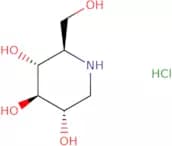
CAS:L-altronojirimycin is a diterpene glycoside that belongs to the group of natural products that have inhibitory properties against lipid peroxidation. It has been shown to decrease the concentration of 1,2-dipalmitoylglycerophosphocholine (DPPC) in primary cells and reduce the rate of lipid peroxidation in a concentration-dependent manner. L-altronojirimycin inhibits the activity of enzymes such as acetylcholinesterase and phospholipase A2, which are involved in inflammation. This drug has also been shown to have cardioprotective effects and inhibit mutations in cardiac muscle cells. L-altronojirimycin has been tested for its long-term efficacy and shown to be effective against both bowel disease and cardiac effects.
Formula:C6H13NO4•HClPurezza:Min. 95%Colore e forma:PowderPeso molecolare:199.63 g/mol4-Methylumbelliferyl 6-O-(tert-butyldiphenylsilyl)-b-D-galactopyranoside
CAS:4-Methylumbelliferyl 6-O-(tert-butyldiphenylsilyl)-b-D-galactopyranoside is a fluorescent saccharide that is useful as a reagent for the detection of glycosidases and glycosyltransferases. It is also used to detect the presence of sialic acid residues on glycoconjugates, as well as to determine the terminal sugars in glycoconjugates. This product has been shown to bind to 3'-terminal sialic acid residues on N-glycans, but not to terminal galactose residues.Formula:C32H36O8SiPurezza:Min. 95%Peso molecolare:576.71 g/mol3-O-Benzyl-a-D-mannopyranose
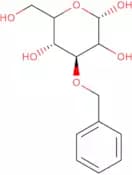
CAS:3-O-Benzyl-a-D-mannopyranose is a sugar that is used in the synthesis of complex carbohydrates. It is a synthetic compound that can be fluorinated, glycosylated, or methylated to produce desired compounds. 3-O-Benzyl-a-D-mannopyranose has a CAS number of 65877-63-6 and can be used in the synthesis of oligosaccharides, monosaccharides, and saccharides. This product has high purity and is available for custom synthesis.Formula:C13H18O6Purezza:Min. 95%Peso molecolare:270.28 g/molMethyl 3-acetamido-4,6-O-benzylidene-2,3-dideoxy-a-D-ribo-hexopyranoside
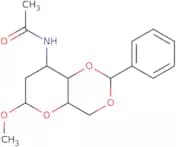
CAS:Methyl 3-acetamido-4,6-O-benzylidene-2,3-dideoxy-a-D-ribohexopyranoside is an organic compound. It is a fluorescent glycosylation reagent used in the synthesis of oligosaccharides and polysaccharides. The modification of this product can be customized to suit your needs. This product is available in high purity and with a CAS No. 23819-31-0.Formula:C16H21NO5Purezza:Min. 95%Peso molecolare:307.35 g/mol4,6-O-(2-Naphthylidene)-D-glucal
4,6-O-(2-Naphthylidene)-D-glucal is a complex carbohydrate that is synthesized by the modification of a polysaccharide. It has been modified by a methylation reaction, glycosylation, and click chemistry. It is an Oligosaccharide with CAS No., and has a high purity. 4,6-O-(2-Naphthylidene)-D-glucal has been fluorinated to increase its stability in the presence of water as well as to prevent it from reacting with other molecules.Purezza:Min. 95%Valienamine HCl
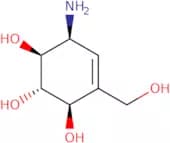
CAS:Glucosidase InhibitorFormula:C7H13NO4Purezza:Min. 95%Colore e forma:White to off-white solid.Peso molecolare:175.18 g/mol4'-O-(b-D-Glucopyranosyl)-D-pantothenic acid
CAS:4'-O-(b-D-Glucopyranosyl)-D-pantothenic acid is a glycosylated, fluorinated, and methylated complex carbohydrate. It has been synthesized by Click chemistry. 4'-O-(b-D-Glucopyranosyl)-D-pantothenic acid has been shown to be a potent inhibitor of the production of proinflammatory cytokines in mouse macrophages. This compound also inhibits the synthesis of bacterial cell wall polysaccharides by inhibiting glycosyltransferases and depolymerizing the sugar backbone.Formula:C15H27NO10Purezza:Min. 95%Peso molecolare:381.38 g/molLacto-N-tetraose-BSA
Lacto-N-tetraose-BSA is a carbohydrate that contains four monosaccharides. It has been shown to be an autoantibody in patients with myasthenia gravis and can cause muscle weakness by binding to the muscle protein, actin. Lacto-N-tetraose-BSA has also been found to bind with nerve tissue and may be involved in the development of sclerosis. This carbohydrate is also negatively charged and agglutinates red blood cells. When used for immunofluorescence, it shows a strong reaction against glycoconjugates on the surface of neurons and nerve tissue. Lacto-N-tetraose-BSA binds specifically to bovine serum albumin (BSA) containing antibodies, which are produced by immune cells called B cells. The binding sites are located on the outer part of the molecule, near the sugar residues.
Purezza:Min. 95%Colore e forma:PowderMethyl (methyl 3-deoxy-D-arabino-hept-2-ulopyranosid)onate-7-(diphenyl phosphate)
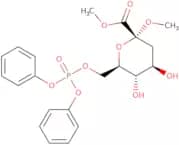
CAS:Methyl (methyl 3-deoxy-D-arabino-hept-2-ulopyranosid)onate-7-(diphenyl phosphate) is a carbohydrate that belongs to the group of oligosaccharides. It is synthesized from an alditol acetate precursor and can be modified with fluorination, methylation, glycosylation, or click chemistry. Methyl (methyl 3-deoxy-D-arabino-hept-2-ulopyranosid)onate-7-(diphenyl phosphate) is used in various industrial applications as a reagent for the synthesis of complex carbohydrates. This compound has CAS No. 91382–79–5.Formula:C21H25O10PPurezza:Min. 95%Peso molecolare:468.39 g/molL-Idaric acid 1,4-lactone
CAS:L-Idaric acid 1,4-lactone is a synthetic glycosylidic sugar that can be modified with fluorine compounds to create a variety of derivatives. It is used as a monomer in the synthesis of oligosaccharides, polysaccharides, and complex carbohydrates. L-Idaric acid 1,4-lactone can also be synthesized from methyl erythritol tetraacetate and glycerol in the presence of acetic anhydride.
Formula:C6H8O7Purezza:Min. 98%Colore e forma:White PowderPeso molecolare:192.12 g/mol2,3,4,6-Tetra-O-acetyl-b-D-galactopyranosyl-(N2-Fmoc)-L-Asparagine tert-butyl ester
CAS:2,3,4,6-Tetra-O-acetyl-b-D-galactopyranosyl-(N2-Fmoc)-L-Asparagine tert-butyl ester is an oligosaccharide with a high purity. It has shown to be stable in the presence of acid and basic conditions. This product can be used in Click chemistry and glycosylation reactions. The molecular weight is 581.5 Da and the CAS number is 467465-72-1.Formula:C37H44N2O14Purezza:Min. 95%Peso molecolare:740.75 g/molStigmasterol glucoside
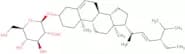
CAS:Stigmasterol glucoside is a phenolic compound that has been isolated from the aerial parts of the plant Stachytarpheta jamaicensis. It has inhibitory properties against Gram-positive and Gram-negative bacteria, including methicillin-resistant Staphylococcus aureus. In addition, it has shown to have significant cytotoxicity against human colon cancer cells. Stigmasterol glucoside is soluble in water and shows phase transition at about 60 °C. The chemical structure of stigmasterol glucoside contains a hydroxybenzoic acid group, which can form an ester with an organic acid such as acetic acid or benzoic acid. The hydroxyl group present in this compound can also react with an amine to form an amide bond. This reactivity may be responsible for its biological activities.Formula:C35H58O6Purezza:Min. 95%Peso molecolare:574.83 g/mol


![(2S, 4S, 4'R) [4,4'-bi-1,3-dioxolane]-2-methanol-2,2'-dimethyl](/_next/image/?url=https%3A%2Fstatic.cymitquimica.com%2Fproducts%2F3D%2Fthumb-webp%2FMM44925.webp&w=3840&q=75)