Glicoscienza
Sottocategorie di "Glicoscienza"
- Amminozucchero(108 prodotti)
- Glico-anticorpi(283 prodotti)
- Glicolipidi(46 prodotti)
- Glicosaminoglicani (GAGs)(55 prodotti)
- Glicosidi(419 prodotti)
- Monosaccaridi(6.619 prodotti)
- Oligosaccaridi(3.711 prodotti)
- Polisaccaridi(505 prodotti)
Trovati 11027 prodotti di "Glicoscienza"
Phosphatidyl 1-(3-deoxy-2-O-methyl-D-myo-inositol)
CAS:Phosphatidyl 1-(3-deoxy-2-O-methyl-D-myo-inositol), also known as phosphatidylinositol (PI) is a lipid molecule that is the main component of cell membranes. PI is synthesized from glucose in the cytosol and then transported to the Golgi where it is converted into its final form, phosphatidylcholine. PI has been shown to inhibit chitinase activity in human HL60 cells and leukemia cells and may be an effective treatment for cancer.Formula:C29H59O10PPurezza:Min. 95%Peso molecolare:598.75 g/molb-D-Mannopyranosyl nitromethane
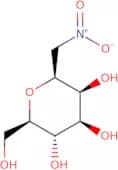
CAS:b-D-Mannopyranosyl nitromethane is a fluorinated monosaccharide. It is used in the synthesis of oligosaccharides and polysaccharides. This compound is also used for glycosylation, methylation, and click modification of sugar molecules. b-D-Mannopyranosyl nitromethane has CAS No. 93302-92-2 and can be custom synthesized to meet your needs.Formula:C7H13NO7Purezza:Min. 95%Peso molecolare:223.61 g/molTrandolaprilat acyl-D-glucuronide
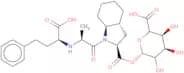
CAS:Trandolaprilat acyl-D-glucuronide is a synthetic compound that has been designed for the treatment of hypertension. Trandolaprilat acyl-D-glucuronide is an active metabolite of trandolapril, which is a prodrug of trandolaprilat. Trandolaprilat acyl-D-glucuronide is glycosylated and has high purity with low impurities. It can be custom synthesized to meet your requirements. The CAS number for this compound is 1260610-97-6.Formula:C28H38N2O11Purezza:Min. 95%Peso molecolare:578.61 g/molN-Acetyl-D-glucosamine-d3
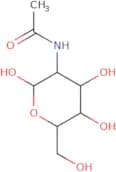
CAS:N-acetyl-D-glucosamine is a regiospecific and stereoselective hydrochloride of D-glucosamine. It is used as a building block for the synthesis of peptides, proteins, and other biological molecules. N-Acetyl-D-glucosamine is synthesized by reacting ethylene diamine with trifluoroacetic acid in the presence of hydrochloric acid. The proton at C2 in the NMR spectrum was found to be diagnostic for the compound. Solid phase microextraction (SPME) was used to extract this compound from a mixture of many components, and it was then analyzed using magnetic resonance spectroscopy (NMR).
Formula:C8H12D3NO6Purezza:Min. 95%Peso molecolare:224.23 g/molGalacto-N-biose-PAA-biotin
Galacto-N-biose-PAA-biotin is a carbohydrate that is synthesized by the addition of PAA (polyallylamine) to galactose. This compound can be used in fluorescence labeling and detection of carbohydrates, glycosylation, and polysaccharide synthesis. Galacto-N-biose-PAA-biotin has a CAS number (CAS: 146988-01-4).Purezza:Min. 95%Colore e forma:White/Off-White SolidNeocarrahexaose-24,41,3,5-tetra-O-sulfate sodium salt
Neocarrahexaose-24,41,3,5-tetra-O-sulfate sodium salt is a glycosylation agent that is used in the synthesis of polysaccharides and oligosaccharides. It is a complex carbohydrate that contains 24% of galactose, 41% of mannose, 3% of glucose and 5% of fructose. This compound has been modified by methylation, click modification and fluorination. Neocarrahexaose-24,41,3,5-tetra-O-sulfate sodium salt has CAS No. 66894-00-2 and can be custom synthesized to meet customer specifications.Formula:C36H52Na4O40S4Purezza:Min. 95%Colore e forma:White/Off-White SolidPeso molecolare:1,345 g/mol2-Cyclohexylethyl-4-O-(a-D-glucopyranosyl)-b-D-glucopyranoside
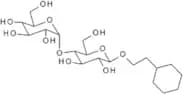
CAS:Oroxylum indicum is a plant that belongs to the family Bignoniaceae. It has been used in traditional medicine for the treatment of cancer and has been shown to possess anti-inflammatory properties. The sequenced genome of Oroxylum indicum has provided a model system for understanding the molecular mechanisms underlying tumorigenesis. This plant contains a number of monoclonal antibodies, including one that is active against mouse monoclonal antibodies and inhibits tumor xenografts. The extract of this plant also inhibits influenza virus and polymerase chain reactions, which are important steps in protein synthesis. Oroxylum indicum may have therapeutic potential as an anti-cancer drug because it can inhibit solid tumours by interfering with protein synthesis.Formula:C20H36O11Purezza:Min. 95%Colore e forma:PowderPeso molecolare:452.49 g/molBenzyl b-D-glucopyranosiduronic acid methyl ester triacetate
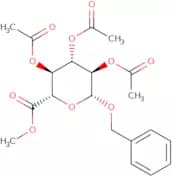
CAS:Benzyl b-D-glucopyranosiduronic acid methyl ester triacetate is a synthetic sugar that can be modified to produce a wide range of oligosaccharides. It is suitable for glycosylation reactions, such as the synthesis of complex carbohydrates. This compound has high purity and is custom synthesized according to customer specifications. Benzyl b-D-glucopyranosiduronic acid methyl ester triacetate has been fluorinated, methylated, and monosaccharide modifications. These modifications provide this compound with many potential uses in the food industry, medicine, and other industries.Formula:C20H24O10Purezza:Min. 95%Peso molecolare:424.4 g/molParomamine trihydrochloride
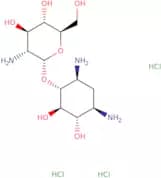
CAS:Paromamine trihydrochloride is a Custom synthesis, Modification, Fluorination, Methylation, Monosaccharide, Synthetic, Click modification of the chemical compound. Paromamine trihydrochloride is an Oligosaccharide and saccharide that has been Glycosylated. The Carbohydrate complex is made up of a number of sugar units that are linked together to form a polysaccharide. This Polysaccharide can be found in many plants and animals.Formula:C12H25N3O7•(HCl)3Purezza:Min. 95%Colore e forma:PowderPeso molecolare:432.72 g/molL-Idonic acid-1,4-lactone
CAS:L-Idonic acid-1,4-lactone is a custom synthesis that is a glycoconjugate with a carbohydrate moiety. It can be used for the modification of glycoproteins and glycopeptides, and has shown to have anti-inflammatory properties. L-Idonic acid-1,4-lactone is a sugar that is made up of an idonic acid attached to an alpha (1→4)-linked D-glucose molecule. This product can be methylated or glycosylated and has been shown to have anticancer activity in animal models. L-Idonic acid-1,4-lactone is soluble in water and has been fluorinated at the 4 position on the glucose unit.Formula:C6H10O6Purezza:Min. 95%Peso molecolare:178.14 g/molMethyl 2-acetamido-2-deoxy-6-O-(b-D-galactopyranosyl)-a-D-glucopyranoside
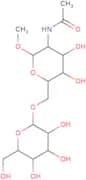
CAS:Methyl 2-acetamido-2-deoxy-6-O-(b-D-galactopyranosyl)-a-D-glucopyranoside is a custom synthesis, modification and fluorination of a monosaccharide. The saccharide is modified with methylation and click modification at the 6th carbon position. This product is designed for use in the synthesis of complex carbohydrates.
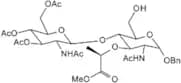
Formula:C15H27NO11Purezza:Min. 95%Peso molecolare:397.38 g/molBenzyl 4-O-(2-acetamido-2-deoxy-3,4,6-tri-O-acetyl-b-D-glucopyranosyl)-N-acetyl-a-D-muramic acid methyl ester
This substance is a custom synthesis, which is created in the laboratory. The modification of this product has been done by fluorination, methylation, and monosaccharide synthesis. This substance is a synthetic compound that belongs to the group of oligosaccharides. It is a saccharide that contains an oxygen atom and belongs to the group of complex carbohydrates. It has been shown to be effective against cancer cells in vitro and has been used as a diagnostic agent for breast cancer.Formula:C33H46N2O16Purezza:Min. 95%Peso molecolare:726.72 g/mola-D-Glucopyranoside-b-D-fructofuranosyl octadecanoate
CAS:Quantification of a-D-glucopyranoside-b-D-fructofuranosyl octadecanoate is possible by real-time PCR. The polymerase chain reaction (PCR) technique is used to detect the presence or absence of DNA or RNA. This process starts with the enzyme DNA polymerase and deoxyribonucleotide triphosphates, which use a primer sequence to synthesize complementary strands of DNA from the template. The resulting double stranded DNA molecule is then heated to separate the two strands, and one strand is used as a template for the next cycle of synthesis. Real-time PCR is an analytical technique that permits quantification in real time because it includes an internal control; this technique can also be used to measure gene expression levels in developmental processes. Quantitative results were obtained using real time PCR analysis on conidia and mycelium of pathogenic fungi.Formula:C30H56O12Purezza:Min. 95%Peso molecolare:608.76 g/molEmodin-1-O-b-D-glucopyranoside
Emodin-1-O-b-D-glucopyranoside is a synthetic, fluorinated, glycosylated oligosaccharide. It can be used as a high purity, non-fluorinated carbohydrate for research purposes. Emodin-1-O-b-D-glucopyranoside has been modified via Click chemistry to provide the desired functional group and is available in various sizes.Purezza:Min. 95%Levofloxacin acyl-b-D-glucuronide
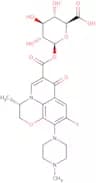
CAS:Levofloxacin acyl-b-D-glucuronide is a metabolite of levofloxacin and belongs to the class of fluoroquinolone antibiotics. It has been shown to be effective against rhesus monkeys in efficacy studies. Levofloxacin acyl-b-D-glucuronide is eliminated via the urine, with >90% excreted within 24 hours. The majority of this drug is excreted as an active n-oxide form with a half-life of 8 hours.Formula:C24H28FN3O10Purezza:Min. 95%Peso molecolare:537.49 g/molMycaminose
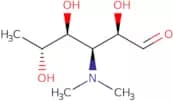
CAS:Mycaminose is a bacterial strain that produces the natural compound mycaminose. Mycaminose has been shown to inhibit the growth of wild-type strains of bacteria, such as nitro and sephadex g-100, which can cause infectious diseases. Mycaminose has also been shown to have some biochemical properties similar to those of tilmicosin, with additional nitrogen atoms and hydroxyl groups. The production of this compound may be due to the activation of monoclonal antibodies by inorganic acid.Formula:C8H17NO4Purezza:Min. 95%Peso molecolare:191.22 g/molTri-b-GalNAc-gly-C6-DBCO
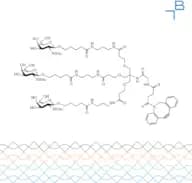
Tri-b-GalNAc-Gly-C6-DBCO is used for targeted siRNA therapies for liver diseases. This synthetic molecule boasts three terminal beta-N-acetylgalactosamine (GalNAc) sugars (tri-antennary GalNAc) enabling high-affinity binding to the asialoglycoprotein receptor (ASGPR) on hepatocyte surfaces. This specific recognition promotes efficient cellular uptake of these cluster conjugates via ASGPR-mediated endocytosis. Crucially, the presence of a C6 spacer and a dibenzoeylcyclooctynone (DBCO) group allows for the attachment of siRNA molecules through bioorthogonal click chemistry. This versatile approach facilitates the development of targeted siRNA conjugates that can be delivered specifically to hepatocytes for RNA interference (RNAi) applications in the liver.Formula:C84H130N12O30Purezza:Min. 95%Peso molecolare:1,787.99 g/molTri-b-GalNAc-PEG2000-DSPE
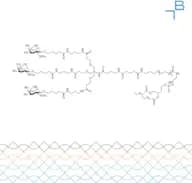
CAS:Tri-b-GalNAc-PEG2000 is a multivalent ligand containing three GalNAc moieties linked to a polyethylene glycol (PEG) spacer designed to selectively bind to the asialoglycoprotein receptor (ASGPR) expressed on hepatocytes. It can be used to create targeted drug delivery vehicles, such as liposomes or lipid nanoparticles, that specifically deliver therapeutic agents to the liver. The multivalent GalNAc ligands have high affinity for ASGPR, allowing for enhanced accumulation of drugs in the target organ while minimizing exposure to non-target tissues. The compound is typically conjugated to a phospholipid, such as 1,2-distearoyl-sn-glycero-3-phosphoethanolamine (DSPE), to create DSPE-PEG2000-triGalNAc. This lipid-based construct can be readily incorporated into liposomes or lipid nanoparticles during formulation, enabling the development of targeted drug delivery systems.Formula:(C2H4O)nC97H180N9O38PH3NPurezza:Min. 95%2,3,5-Tri-O-benzyl-D-arabinofuranosyl chloride
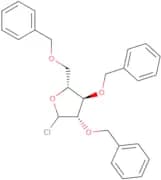
CAS:2,3,5-Tri-O-benzyl-D-arabinofuranosyl chloride is an antitumour drug that is a purine nucleoside analogue. It is a synthetic compound and has been shown to have chemotherapeutic and antitumor activities. This drug binds to the enzyme RNA polymerase II, leading to inhibition of DNA synthesis and cell death. 2,3,5-Tri-O-benzyl-D-arabinofuranosyl chloride has potential as an antitumor agent.Formula:C26H27ClO4Purezza:Min. 95%Peso molecolare:438.94 g/molD-Mannose- 1, 2- 13C2
CAS:D-Mannose- 1, 2- 13C2 is a synthetic sugar that has been modified with a fluorination reaction. D-Mannose-1,2- 13C2 is used for the synthesis of glycosylations and oligosaccharides. This product is available in high purity and custom synthesis. CAS No. 141789-26-6Purezza:Min. 95%Peso molecolare:182.14 g/mol