Glicoscienza
Sottocategorie di "Glicoscienza"
- Amminozucchero(108 prodotti)
- Glico-anticorpi(282 prodotti)
- Glicolipidi(46 prodotti)
- Glicosaminoglicani (GAGs)(55 prodotti)
- Glicosidi(419 prodotti)
- Monosaccaridi(6.616 prodotti)
- Oligosaccaridi(3.718 prodotti)
- Polisaccaridi(505 prodotti)
Trovati 11017 prodotti di "Glicoscienza"
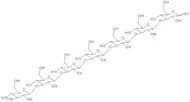
Laminariheptaose
CAS:Ex algal/bacterial polysaccharides-value in b1-3 glucanase assays & diagnosticsFormula:C42H72O36Purezza:Min. 95%Colore e forma:PowderPeso molecolare:1,153 g/molβ-D-Galactopyranosyl-(1-4)-β-D-galactopyranosyl-(1-4)-D-galactose
CAS:b-D-Galactopyranosyl-(1-4)-b-D-galactopyranosyl-(1-4)-D-galactose is a fluorinated saccharide that contains three fluorine atoms. The chemical formula for this product is C8H12F3O11. It is a white powder and the molecular weight of the compound is 514.06 g/mol. b-D-Galactopyranosyl-(1-4)-b-D-galactopyranosyl-(1-4)-D-galactose can be custom synthesized to meet your desired specifications, such as modification, purity, and other criteria. This product has been shown to be useful in glycosylation reactions and click chemistry applications.
Formula:C18H32O16Purezza:Min. 95%Peso molecolare:504.44 g/molL-Glucuronic acid sodium salt
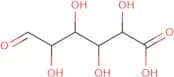
CAS:L-Glucuronic acid sodium salt is a natural product that is used as an excipient and additive in pharmaceuticals. L-Glucuronic acid sodium salt is the sodium salt of L-glucuronic acid, which is a natural compound found in plants, animals and humans. It is used as a protective agent for drugs because it can be easily metabolized by the liver and has low toxicity. L-Glucuronic acid sodium salt inhibits the uptake of radioactive isotopes into cells, which may be due to its ability to bind to cytosolic proteins. The binding of L-glucuronic acid sodium salt to these proteins blocks the binding sites for radioactive isotopes on these proteins. This inhibition leads to reduced uptake of radioactive isotopes by cells.
Formula:C6H9NaO7Purezza:Min. 95%Peso molecolare:216.12 g/molD-Glucose ethylenedithioacetal
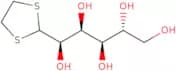
CAS:D-Glucose ethylenedithioacetal is a biological agent. It is a white to off-white crystalline powder that has a molecular weight of 204.3. D-Glucose ethylenedithioacetal is soluble in water and ethanol, but not in ether or chloroform. It is stable in air, but will react with alkali to form the corresponding salt of D-glucose.Formula:C8H16O5S2Purezza:Min. 95%Peso molecolare:256.34 g/mol1,2-¹³C2-D-Rhamnose
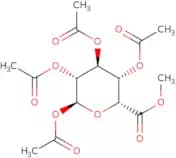
Enantiomer of natural L-Rha 13C-labelled at carbons 1 and 2Formula:C2C4H12O5Purezza:Min. 95%Colore e forma:White PowderPeso molecolare:166.14 g/molMethyl 1,2,3,4-tetra-O-acetyl-a-L-idopyranuronate
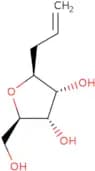
CAS:Methyl 1,2,3,4-tetra-O-acetyl-a-L-idopyranuronate is a carbohydrate standard that belongs to the group of L-iduronic acid derivatives. Methyl 1,2,3,4-tetra-O-acetyl-a-L-idopyranuronate is commonly used in the synthesis of glycosides and glycoconjugates. Its fluorescence properties make it useful for labeling and detection purposes in biochemical assays. This compound can also serve as a substrate for enzymes involved in carbohydrate metabolism. Overall, Methyl 1,2,3,4-tetra-O-acetyl-a-L-idopyranuronate is an essential tool for researchers in the field of glycobiology and biochemistry.Formula:C15H20O11Purezza:Min. 95%Peso molecolare:376.31 g/mol4,7-Anhydro-1,2,3-trideoxy-D-allo-oct-1-enitol
CAS:4,7-Anhydro-1,2,3-trideoxy-D-allo-oct-1-enitol is a modified sugar that has been synthesized for use in glycosylation reactions. It is a high purity product with no detectable impurities. Click modification of this product has been shown to be useful for glycosylation reactions. 4,7-Anhydro-1,2,3-trideoxy-D-allo-oct-1-enitol is also fluorinated and glycosylated. This product can be used in the synthesis of oligosaccharides and monosaccharides.Formula:C8H14O4Purezza:Min. 95%Peso molecolare:174.19 g/mol2,4-Bis(acetylamino)-2,4,6-trideoxy-D-galactose
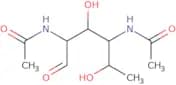
CAS:2,4-Bis(acetylamino)-2,4,6-trideoxy-D-galactose (BTDG) is a nitro derivative of L-threonine that has been derivatized with an acetyl group and a molecule of 2,4,6-trideoxygalactose. BTDG has been shown to be safe in clinical trials for vaccine development against life-threatening diseases. It is the first glycopolymer approved by the FDA for clinical use in humans. This drug has been shown to increase the antibody response and improve protection against influenza virus infection. BTDG also inhibits bacterial replication by blocking protein synthesis in some bacteria and inhibiting glycolysis in others.Formula:C10H18N2O5Purezza:Min. 95%Colore e forma:PowderPeso molecolare:246.26 g/molUDP-b-L-fucose diammonium salt
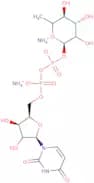
Synthetically produced sugar nucleotideFormula:C15H22N2O16P2·N2H8Purezza:Min. 95%Peso molecolare:584.37 g/molDigalactosylceramide
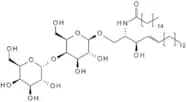
CAS:Digalactosylceramide is a bioactive glycosphingolipid, which is derived from the cellular membranes of certain bacteria and plants. This compound plays a significant role in modulating immune responses through its interaction with the immune system. Its mode of action involves binding to specific receptors on immune cells, influencing cell signaling pathways that are crucial for the regulation of the immune response, including the modulation of cytokine production and immune cell activation.Formula:C46H87NO13Purezza:Min. 95%Colore e forma:PowderPeso molecolare:862.18 g/mol6-α-D-Glucopyranosyl maltotriose-13C6
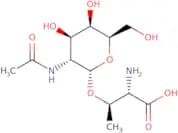
CAS:Please enquire for more information about 6-α-D-Glucopyranosyl maltotriose-13C6 including the price, delivery time and more detailed product information at the technical inquiry form on this pageFormula:C6C18H42O21Purezza:Min. 95%Peso molecolare:672.53 g/mol2-Acetamido-2-deoxy-alpha-D-galactopyranosyl L-threonine hydrochloride
CAS:2-Acetamido-2-deoxy-alpha- D-galactopyranosyl L-threonine is a synthetic sugar. It has a CAS number of 67315-18-8 and a molecular weight of 289.05 g/mol. This sugar is synthesized by the Click modification, fluorination, glycosylation, and methylation methods. The synthesis can be modified to produce 2-acetamido-2,3,4,5,-tetra deoxygalactose or 2 acetamido 4,6 deoxy galactose. This sugar also has saccharide properties as it is classified as an oligosaccharide or monosaccharide.
Formula:C12H22N2O8•HClPurezza:Min. 95%Colore e forma:PowderPeso molecolare:358.77 g/molBlood Group A trisaccharide, spacer-biotin conjugate
CAS:Blood group A antigen conjugated to spacer arm and biotinFormula:C39H67N5O18SPurezza:Min. 95 Area-%Colore e forma:PowderPeso molecolare:926.04 g/molDihydrozeatin-7-glucoside
CAS:Dihydrozeatin-7-glucoside (DZG) is a plant hormone that belongs to the group of abscisic acid. It is biosynthesized from zeatin, an intermediate in the synthesis of the plant hormone gibberellin. DZG has been shown to regulate water loss in plants and plays a role in the regulation of photosynthesis and seed germination. The uptake of DZG by plant cells is complex and can be influenced by both physiological and environmental factors. It can be conjugated with small molecules such as typhasterol, which is found in tobacco leaves, or tabacum l., which is found in certain species of tobacco plants. Dihydrozeatin-7-glucoside also interacts with other hormones such as 24-epibrassinolide and regulates various biochemical processes such as protein synthesis and cell growth.Formula:C16H25N5O6Purezza:Min. 95%Peso molecolare:383.4 g/molCellooctaose
CAS:Cellooctaose is a synthetic, water-soluble oligosaccharide with a molecular weight of 1,000 daltons. It is produced by the reaction of propionate and intramolecular hydrogen with a water molecule to form glycosidic bonds. Cellooctaose can be used as a coating for pharmaceutical tablets and capsules to prevent dissolution in gastric acid. Cellooctaose is homologous to cellulose and has been used in recombinant protein production for the purpose of modifying viscosity. Cellooctaose has also been shown to inhibit the growth of cancer cells via lysosomal membrane permeability enhancement. This may be due to its ability to bind to fatty acids on the surface of cancer cells, which then leads to increased cell death.Formula:C48H82O41Purezza:Min. 95%Colore e forma:PowderPeso molecolare:1,315.14 g/molSialyl Lewis X cholesterol
Sialyl Lewis X Cholesterol is a synthetically modified sugar
Purezza:Min. 95%Chondroitin disaccharide di-diSB trisodium salt
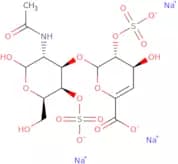
CAS:Chondroitin disaccharide di-diSB trisodium salt is a chondroitin sulfate binding agent that can be used in the diagnosis of subcutaneous tumors. It binds to the chondroitin sulfate component of proteoglycans and stains these proteins under light microscopy. This agent can also be used to detect monoclonal antibodies that bind to the chondroitin sulfate component of proteoglycans. The detection of this agent may be done by enzyme-linked immunosorbent assay or fluorescence microscopy.Formula:C14H18NNa3O17S2Purezza:Min. 95%Colore e forma:PowderPeso molecolare:605.39 g/molBlood Group B trisaccharide, spacer-biotin conjugate
CAS:Blood group B antigen conjugated to spacer arm and biotinFormula:C37H64N4O18SPurezza:Min. 95%Colore e forma:PowderPeso molecolare:884.99 g/mol(±)-Muscarine chloride
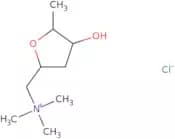
CAS:Prodotto controllatoMuscarine chloride is a potent acetylcholine receptor agonist that causes activation of the postsynaptic membrane by increasing the K+ concentration and hyperpolarizing the membrane. Muscarine chloride increases spontaneous activity in muscle and ganglion cells, which may be due to its ability to activate cholinergic receptors. Muscarine chloride has been shown to cause paralysis of skeletal muscle when injected into frog sciatic nerve, which is caused by its ability to block nerve impulses. Muscarine chloride is effective at doses as low as 0.1 ug/kg and can be used for research purposes when activating acetylcholine receptors.br> br>
Formula:C9H20NO2•ClPurezza:Min. 95%Colore e forma:PowderPeso molecolare:209.71 g/molDifucosyllacto-N-hexaose (c)
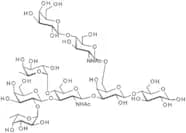
CAS:Difucosyllacto-N-hexaose (c) is an oligosaccharide that can be found in human breast milk. It has been shown to have an anti-inflammatory effect on the ileum, which may be due to its ability to stimulate the production of short-chain fatty acids in the large intestine and inhibit the release of proinflammatory cytokines.Formula:C52H88N2O39Purezza:Min. 95%Peso molecolare:1,365.25 g/mol