Glicoscienza
La glicosienza è lo studio dei carboidrati e dei loro derivati, nonché delle interazioni e delle funzioni biologiche a cui partecipano. Questo campo di ricerca è cruciale per comprendere una vasta gamma di processi biologici, tra cui il riconoscimento cellulare, la segnalazione, la risposta immunitaria e lo sviluppo delle malattie. La glicosienza ha importanti applicazioni nella biotecnologia, nella medicina e nello sviluppo di nuovi farmaci e terapie. Presso CymitQuimica, offriamo un'ampia selezione di prodotti di alta qualità e purezza per la ricerca in glicosienza. Il nostro catalogo comprende monosaccaridi, oligosaccaridi, polisaccaridi, glicoconiugati e reagenti specifici, progettati per supportare i ricercatori nei loro studi sulla struttura, funzione e applicazioni dei carboidrati nei sistemi biologici. Queste risorse sono destinate a facilitare scoperte scientifiche e applicazioni pratiche in vari ambiti delle bioscienze e della medicina.
Sottocategorie di "Glicoscienza"
- Amminozucchero(108 prodotti)
- Glico-anticorpi(282 prodotti)
- Glicolipidi(46 prodotti)
- Glicosaminoglicani (GAGs)(55 prodotti)
- Glicosidi(419 prodotti)
- Monosaccaridi(6.624 prodotti)
- Oligosaccaridi(3.682 prodotti)
- Polisaccaridi(503 prodotti)
Trovati 11046 prodotti di "Glicoscienza"
Ordinare per
Purezza (%)
0
100
|
0
|
50
|
90
|
95
|
100
2,3:4,5:6,7-Tri-O-isopropylidene-D-glycero-D-ido-heptonic acid methyl ester
<p>2,3:4,5:6,7-Tri-O-isopropylidene-D-glycero-D-ido-heptonic acid methyl ester is an oligosaccharide that is a synthetic glycosylation product. It is a complex carbohydrate that has a high purity and CAS No. This compound can be custom synthesized to your specifications and modified in the lab with fluorination or methylation.</p>Purezza:Min. 95%D-Maltose monohydrate
CAS:<p>Please enquire for more information about D-Maltose monohydrate including the price, delivery time and more detailed product information at the technical inquiry form on this page</p>Formula:C12H24O12Purezza:Min. 98 Area-%Peso molecolare:360.31 g/molIsopropyl-beta-D-thioglucuronic acid, sodium salt
CAS:<p>Isopropyl-β-D-thioglucuronic acid is a β-D-glucuronidase inducer. It enhances the sensitivity of β-glucuronidase assays in E. coli.</p>Formula:C9H15NaO6SPurezza:Min. 98 Area-%Peso molecolare:274.27 g/mol1,4-Anhydro-2,O:5,6-di-O-isopropylidene-2-C-(hydroxymethyl)-D-galactitol
<p>1,4-Anhydro-2,O:5,6-di-O-isopropylidene-2-C-(hydroxymethyl)-D-galactitol is a custom synthesis. It is commonly used in the modification of saccharides and oligosaccharides to produce fluorinated derivatives with various functional groups. The preparation of this compound has been described by Click chemistry.</p>Purezza:Min. 95%1-Azido- 1- deoxy- 2- C- hydroxymethyl - 2, 3-O-isopropylidene-D- glucitol
<p>1-Azido-1-deoxy-2-C-hydroxymethyl-2,3-O-isopropylidene -D-glucitol is a synthetic monosaccharide that can be used for glycosylation, methylation, and click modification. It is a complex carbohydrate with an Oligosaccharide structure. 1-Azido -1-deoxy -2 -C -hydroxymethyl -2,3 -O -isopropylidene D glucitol has been fluorinated. This compound is a sugar that has been modified with a Click modification. It is a sugar that has been synthesized and custom synthesized by high purity.</p>Purezza:Min. 95%Dextran 40 - MW 35,000 to 45,000
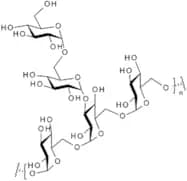
CAS:<p>Dextran is α-(1,6)-linked α-D-glucan with α-(1,3)-linked glucose branch points produced by fermentation of Leuconostoc mesenteroides via the action of the enzyme dextransucrase on sucrose. The main use for native dextran is as an extender in blood transfusions and products having a range of sharp cutoff molecular weights are produced commercially for this and other applications. A complex of iron with dextran, known as iron dextran, is used as a source of iron for baby piglets which are often anaemic at birth.</p>Purezza:Min. 95%Colore e forma:White Powdera-Acetobromo-D-xylose
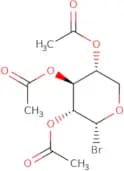
CAS:<p>a-Acetobromo-D-xylose is an oligosaccharide sugar used in glycosylation and polysaccharide modifications. It is synthesized by the fluorination of xylose with acetic acid, bromine, and a base. The product is purified by vacuum distillation and recrystallization. In addition to its use as a carbohydrate, this product can be modified using methylation or click chemistry to create derivatives.</p>Formula:C11H15BrO7Purezza:Min. 95%Peso molecolare:339.14 g/mol1-Octen-3-ol glucoside
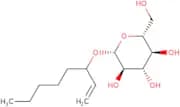
CAS:<p>1-Octen-3-ol glucoside is a synthetic, fluorinated sugar that is modified with glycosylation, methylation, and click chemistry. It contains a high degree of purity and is custom synthesized to order. This product can be used as a substitute for other sugars in the production of oligosaccharides, saccharides, and polysaccharides.<br>1-Octen-3-ol glucoside has been shown to have various modifications including glycosylation, methylation, and click chemistry. It is often used when there are restrictions on the types of sugars that can be used in the synthesis of complex carbohydrates.</p>Formula:C14H26O6Purezza:Min. 95%Colore e forma:PowderPeso molecolare:290.35 g/molGDP-D-mannose disodium salt
CAS:<p>GDP-D-mannose is a natural mannosyl donor and substrate for mannosyltransferases that catalyses mannosylation, for instance during the synthesis of the trimannoside core of complex, high-mannose or hybrid N-glycans. GDP-D-mannose is widely used in (chemo)enzymatic synthesis of oligosaccharides and its biosynthesis occurs from glucose-6-phosphate over several steps. GDP-D-mannose consists of a D-mannose unit, α-glycosydically linked to the nucleotide guanosine diphosphate (GDP). Examples of this important reaction would be the transfer of mannosyl moieties onto the dolichol-P-P-GlcNAc2 precursor of N-glycans in the endoplasmatic reticulum, with release of GDP, or the mannosylation reactions during GPI-anchor (bio)synthesis. GDP-D-mannose has also been used for the in vitro synthesis of b-mannan oligosaccharides.</p>Formula:C16H23N5O16P2Na2Purezza:Min. 95 Area-%Peso molecolare:649.3 g/mol2-Keto-L-galactonic acid
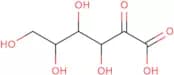
CAS:<p>2-Keto-L-galactonic acid is a chemical compound that belongs to the group of fatty acids. It is produced by the degradation of polyunsaturated fatty acids and has been shown to be a potential control agent for hepatic steatosis. 2-Keto-L-galactonic acid also inhibits the synthesis of dinucleotide phosphate in rat liver cells, leading to an accumulation of intracellular potassium ion. This compound inhibits the uptake of glucose by activating ATPase, which leads to an increase in intracellular pH. The uptake of 2-keto-L-galactonic acid into cells has been shown using cell culture experiments with wild type and mutant strains.</p>Formula:C6H10O7Purezza:Min. 95%Peso molecolare:194.14 g/molUDP-a-D-galactose disodium salt
CAS:<p>UDP-a-D-galactose disodium salt is a nucleotide sugar that is used in the synthesis of oligosaccharides. It is also used to identify mammalian cells that express UDP-galactose:quinone oxidoreductase, which are responsible for synthesizing the sugar. It is a building block of the influenza virus and has been shown to inhibit viral growth by interfering with RNA synthesis. This compound can be synthesized using solid-phase synthesis or multienzyme strategy.</p>Formula:C15H22N2O17P2·2NaPurezza:Min. 95 Area-%Peso molecolare:610.27 g/mol2-Keto-L-gluconic acid
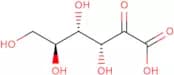
CAS:<p>Please enquire for more information about 2-Keto-L-gluconic acid including the price, delivery time and more detailed product information at the technical inquiry form on this page</p>Formula:C6H10O7Purezza:Min. 95%Peso molecolare:194.14 g/mol2-Deoxy-2-fluoro-D-galactose
CAS:<p>Please enquire for more information about 2-Deoxy-2-fluoro-D-galactose including the price, delivery time and more detailed product information at the technical inquiry form on this page</p>Formula:C6H11FO5Purezza:Min. 97 Area-%Peso molecolare:182.15 g/molExopolysaccharide - from Bacillus polymixa
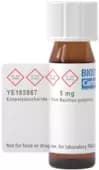
<p>Bacterial exopolysaccharide from gram negative Bacillus polymixa</p>Formula:C23H36O18Purezza:Min. 95%Colore e forma:PowderPeso molecolare:600.52 g/mol3-Deoxy-D-gluconic acid
CAS:<p>3-Deoxy-D-gluconic acid is a chemical compound that has the chemical structure of C6H12O6. It is a white crystalline solid that can be found in nature as a reaction product of glucose and oxygen. 3-Deoxy-D-gluconic acid can also be synthesized by reacting D-glucose with nitrous acid or sulfur dioxide. 3-Deoxy-D-gluconic acid is an organic acid and has been shown to inhibit the growth of filamentous fungi by acting on their glycosidic bonds. This chemical compound has not been shown to have any adverse health effects in humans, although it may cause irritation if it comes into contact with skin or eyes.</p>Formula:C6H12O6Purezza:Min. 95%Peso molecolare:180.16 g/molL-Fucose
CAS:<p>L-Fucose is a monosaccharide that is an important component of glycoproteins and glycolipids. L-Fucose is also found in the cell wall of bacteria. The most abundant sources of L-fucose are from the hydrolysis of lactose or sucrose by bacteria, or as a result of intestinal microbial fermentation. L-Fucose has been shown to be involved in the regulation of many metabolic processes, including the glomerular filtration rate and sephadex g-100 binding capacity in the kidney. It has also been shown to improve growth in infant rats with protein malnutrition. The enzyme that catalyzes the conversion of D-arabinose to L-fucose is known as fucokinase.</p>Formula:C6H12O5Purezza:Min. 98.0 Area-%Peso molecolare:164.16 g/mol(2R, 3R, 4R) -3, 4- Difluoro- 1- (phenylmethyl) - 2- pyrrolidinemethanol
CAS:<p>(2R, 3R, 4R) -3, 4- Difluoro- 1- (phenylmethyl) - 2- pyrrolidinemethanol is a synthetic compound that has been modified to contain fluoro substituents. It is an intermediate for the synthesis of oligosaccharides and complex carbohydrates. This compound can be used in click chemistry or glycosylation reactions. The purity of this compound is greater than 99% and it has not been tested on animals.</p>Purezza:Min. 95%Curdlan
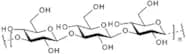
CAS:<p>Curdlan is a microbial polysaccharide produced by a mutant strain of Alcaligenes faecalis var. myxogenes which was first shown to produce succinoglucan prior to mutation. Curdlan is a β-1,3 glucan forming clear solutions at about 55 °C which then gels (“low-set”) when cooled. Suspensions of curdlan at higher temperatures form firm resilient gels (“high set”) that melt at 140 - 160 °C.<br>The image was kindly provided by Dr. Chris Lawson.</p>Purezza:Min. 95%Colore e forma:White Powder2-Deoxy-D-glucose
CAS:<p>Glycolytic inhibitor; pro-apoptotic; anti-cancer agent</p>Formula:C6H12O5Purezza:Min. 98 Area-%Colore e forma:White Off-White PowderPeso molecolare:164.16 g/mol2-O-(a-D-Mannopyranosyl)-D-mannopyranose
CAS:<p>Synthesized by the action of zinc chloride on tetra-O-acetylmannose and 1-chloro-3,4,6- tri-0-acetylmannose. Isolated from partial acetolysates of baker's yeast mannan and Saccharomyces rouxii mannan.</p>Formula:C12H22O11Purezza:Min. 95 Area-%Colore e forma:White PowderPeso molecolare:342.3 g/mol