Antimicrobici
Gli antimicrobici sono agenti che distruggono o inibiscono la crescita di microrganismi, inclusi batteri, virus, funghi e parassiti. Questi composti sono essenziali nella prevenzione e nel trattamento delle infezioni, svolgendo un ruolo cruciale nella medicina, nell'agricoltura e nell'industria alimentare. Presso CymitQuimica offriamo un'ampia gamma di antimicrobici di alta qualità e purezza, adatti a varie applicazioni scientifiche e industriali. Il nostro catalogo comprende antibiotici, antifungini, antivirali e disinfettanti, tutti progettati per soddisfare le esigenze della ricerca e dello sviluppo, nonché per applicazioni cliniche e di produzione. Con i nostri prodotti, i professionisti possono garantire l'efficacia e la sicurezza nel controllo delle infezioni e nella protezione della salute pubblica.
Sottocategorie di "Antimicrobici"
- Antibiotici(4.131 prodotti)
- Antimicotici(909 prodotti)
- Antiparassitari(703 prodotti)
- Antivirali(766 prodotti)
Trovati 2425 prodotti di "Antimicrobici"
Ordinare per
Purezza (%)
0
100
|
0
|
50
|
90
|
95
|
100
Darunavir-D9
CAS:Darunavir-D9 is a prodrug of darunavir, which is an HIV protease inhibitor. Darunavir-D9 has been shown to be bioequivalent in pharmacokinetic parameters to darunavir given as a tablet. The drug exhibits a low plasma concentration profile and high clearance values. This may be due to rapid absorption and distribution of the drug, with a short elimination half-life. Darunavir-D9 also has little effect on the matrix effect and reproducibility of the reaction monitoring assay, making it an ideal candidate for use in clinical trials.Formula:C27H28D9N3O7SPurezza:Min. 95%Peso molecolare:556.72 g/molZabofloxacin
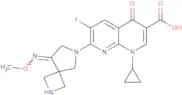
CAS:Zabofloxacin is a synthetic fluoroquinolone antibiotic, which is derived from chemical synthesis with a distinct bactericidal mode of action. Its mechanism involves the inhibition of bacterial DNA gyrase and topoisomerase IV, enzymes critical for DNA replication, transcription, and repair. This dual targeting results in potent antibacterial activity against a wide range of Gram-positive and Gram-negative pathogens.Formula:C19H20FN5O4Purezza:Min. 95%Peso molecolare:401.4 g/molN'-Desmethyl azithromycin
CAS:<p>N'-Desmethyl azithromycin is a semi-synthetic derivative antibiotic, which is derived from the chemical modification of azithromycin, a macrolide antibiotic sourced originally from the bacterium *Streptomyces erythreus*. It functions primarily by inhibiting bacterial protein synthesis, binding specifically to the 50S ribosomal subunit, which results in the prevention of transpeptidation and translocation processes during translation. This action effectively halts bacterial growth, rendering it bacteriostatic.</p>Formula:C37H70N2O12Purezza:Min. 95%Peso molecolare:734.96 g/molAcivicin hydrochloride
CAS:Acivicin hydrochloride is a synthetic compound that acts as a glutamine antagonist, sourced from microbial fermentation processes. It functions primarily through the inhibition of glutamine-utilizing enzymes, such as gamma-glutamyl transferase and carbamoyl phosphate synthetase, which play critical roles in nucleotide biosynthesis and other metabolic pathways. By disrupting these biochemical processes, Acivicin hydrochloride can hinder the proliferation of rapidly dividing cells, displaying potential antitumor properties.Formula:C5H8Cl2N2O3Purezza:Min. 95%Peso molecolare:215.03 g/molIndaziflam-desindenyl
CAS:Indaziflam-desindenyl is an advanced herbicide, which is a product of synthetic chemistry, specifically designed for controlling the germination and growth of a broad spectrum of weed species. It operates through cellulose biosynthesis inhibition, targeting the cellulose production in plant cell walls, thus preventing proper cell division and development. This mode of action disrupts essential mechanisms in the plant's early growth stages, making it particularly effective as a pre-emergent herbicide.Formula:C5H8FN5Purezza:Min. 95%Peso molecolare:157.15 g/molButafenacil
CAS:<p>Butafenacil is a herbicide, which is a chemical formulation sourced from synthetic compounds. It acts by inhibiting protoporphyrinogen oxidase (PPO), an enzyme critical in the biosynthesis of chlorophyll. This inhibition disrupts the photosynthetic process, leading to the accumulation of reactive oxygen species that cause cell membrane damage and ultimately result in plant death.</p>Formula:C17H14ClF3N2O6Purezza:Min. 95%Peso molecolare:434.7 g/molOfloxacin Q acid
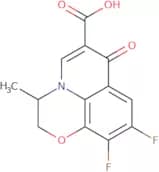
CAS:Ofloxacin Q acid is a quinolone analog, which is a synthetic derivative known for its significant antibacterial properties. This compound is sourced from the chemical synthesis of fluoroquinolone derivatives, designed to enhance reactivity and efficacy in pharmaceutical applications. Ofloxacin Q acid acts by inhibiting bacterial DNA gyrase and topoisomerase IV, enzymes critical for DNA replication, transcription, and repair, thereby leading to the cessation of bacterial growth and replication.Formula:C13H9F2NO4Purezza:Min. 95%Peso molecolare:281.21 g/molCefmenoxime hydrochloride
CAS:Cefmenoxime hydrochloride is a third-generation cephalosporin antibiotic with action on bacterial cell wall synthesis and is used for treating gynecological and obstetric infections.Formula:C16H17N9O5S3HClPurezza:Min. 95%Colore e forma:White PowderPeso molecolare:529.79 g/molLeptomycin B
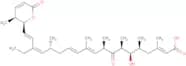
CAS:<p>Leptomycin B is a bacterial secondary metabolite, which is derived from the bacterium Streptomyces sp. This compound is a potent nuclear export inhibitor with a mechanism of action that targets and inhibits the export receptor CRM1 (Chromosomal Maintenance 1), also known as Exportin 1. By binding irreversibly to CRM1, Leptomycin B prevents the nuclear export of proteins and RNA, disrupting the nuclear-cytoplasmic transport essential for cell function.</p>Formula:C33H48O6Purezza:Min. 95%Peso molecolare:540.73 g/molPolymyxin B1-I
CAS:Polymyxin B1-I is an antimicrobial peptide, which is sourced from the bacterium *Bacillus polymyxa*. It functions by interacting with and disrupting the bacterial cell membranes. The polypeptide inserts into the phospholipid bilayer, causing increased permeability and eventual cell lysis. This mechanism is particularly effective against Gram-negative bacteria due to the structural composition of their outer membranes.Formula:C56H98N16O13Peso molecolare:1,203.5 g/molClindamycin 3-phosphate
CAS:<p>Clindamycin 3-phosphate is an antibiotic prodrug, which is a derivative of clindamycin. It is semisynthetic with a synthetic origin, derived by chemically modifying the natural compound lincomycin obtained from the bacterium *Streptomyces lincolnensis*. The mode of action of Clindamycin 3-phosphate involves the inhibition of bacterial protein synthesis. It binds to the 50S subunit of the bacterial ribosome, thereby interfering with the translocation step in protein elongation, ultimately leading to the suppression of bacterial growth.</p>Formula:C18H34ClN2O8PSPurezza:Min. 95%Colore e forma:White To Off-White SolidPeso molecolare:504.96 g/molCeftobiprole medocaril sodium
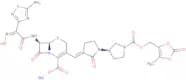
CAS:<p>Ceftobiprole medocaril sodium is a broad-spectrum cephalosporin antibiotic, which is a synthetically derived prodrug of ceftobiprole. Upon administration, ceftobiprole medocaril is rapidly converted into its active form, ceftobiprole, by the body's endogenous esterases. The mode of action involves binding to penicillin-binding proteins (PBPs) in the bacterial cell wall, leading to the inhibition of cell wall synthesis and ultimately the death of the bacteria. This action is effective against a wide range of gram-positive and gram-negative bacteria, including methicillin-resistant Staphylococcus aureus (MRSA) and penicillin-resistant Streptococcus pneumoniae.</p>Formula:C26H26N8O11S2NaPurezza:Min. 95%Peso molecolare:713.65 g/molQuinupristin
CAS:Quinupristin is a semi-synthetic antibiotic, which is derived from the natural compound pristinamycin IIA produced by the bacterium Streptomyces pristinaespiralis. It operates by binding to the 50S ribosomal subunit in bacterial cells, inhibiting protein synthesis and thus exerting a bacteriostatic effect. This mechanism effectively disrupts the growth and proliferation of susceptible bacteria.Formula:C53H67N9O10SPurezza:Min. 95%Peso molecolare:1,022.22 g/molCefepime Related Compound E
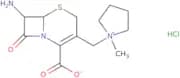
CAS:<p>Cefepime Related Compound E is a chemical impurity, which is typically encountered as a byproduct in the synthesis or degradation of the antibiotic cefepime. This impurity is derived from synthetic processes used in the pharmaceutical industry and can originate from a variety of pathways during the manufacturing or storage of cefepime.</p>Formula:C13H20ClN3O3SPurezza:Min. 95%Peso molecolare:333.83 g/molNatamycin
CAS:<p>Natamycin is a polyene macrolide antifungal agent with action on fungal cell membranes by binding to sterols and is used for treating fungal infections and as a food preservative.</p>Formula:C33H47NO13Purezza:Min. 95 Area-%Colore e forma:PowderPeso molecolare:665.73 g/molCeftibuten
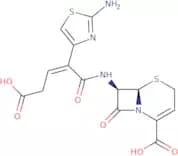
CAS:Ceftibuten is a third-generation cephalosporin antibiotic, which is a beta-lactam class of antimicrobial agents derived from Acremonium, a genus of fungi. This product is synthesized to resist degradation by beta-lactamase enzymes, which are commonly produced by resistant bacteria, thereby maintaining its efficacy against a wide range of bacterial pathogens.Formula:C15H14N4O6S2Purezza:Min. 95%Peso molecolare:410.43 g/molLactoferricin B (4-14) (bovine) trifluoroacetate salt
CAS:Lactoferricin B (4-14) (bovine) trifluoroacetate salt is a peptide derivative, which is a fragment derived from bovine lactoferrin. It is obtained by enzymatic digestion of lactoferrin, a glycoprotein with a well-established role in the innate immune system. This specific peptide, Lactoferricin B (4-14), is known for its potent antimicrobial properties, attributed to its amphipathic structure that facilitates the disruption of microbial membranes. Additionally, it can modulate immune responses through interactions with immune cells, thereby influencing inflammatory processes.Formula:C70H113N25O13SPurezza:Min. 95%Peso molecolare:1,544.87 g/molLomefloxacin hydrochloride
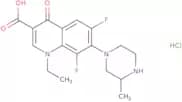
CAS:Lumefantrine is an antimalarial compound with a mode of action that inhibits heme detoxification in Plasmodium parasites. It is used in combination with artemether for treating malaria.Formula:C17H19F2N3O3•HClPurezza:Min. 95%Colore e forma:PowderPeso molecolare:387.81 g/molNocardamine
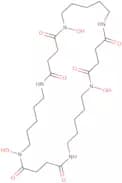
CAS:<p>Nocardamine is a siderophore-based antioxidant, which is naturally derived from the soil-dwelling actinobacteria known as Streptomyces. Its primary mode of action involves the chelation of metal ions, effectively sequestering them and preventing metal-catalyzed oxidation reactions. By binding to iron and other transition metals, Nocardamine mitigates oxidative stress at a cellular level, which could otherwise contribute to cellular damage and dysfunction.</p>Formula:C27H48N6O9Purezza:Min. 95%Peso molecolare:600.71 g/molDihydropenicillin F potassium
CAS:Dihydropenicillin F potassium is a novel antibiotic compound, which is semisynthetic in nature, derived from the penicillin family. It is sourced through the modification of natural penicillins, bringing about enhanced stability and efficacy against certain resistant bacterial strains. The mode of action involves the inhibition of bacterial cell wall synthesis, primarily targeting the penicillin-binding proteins (PBPs). This disruption consequently leads to cell lysis and the eventual bacterial death.Formula:C14H22N2O4S•KPurezza:Min. 95%Peso molecolare:353.5 g/mol