Antimicrobici
Gli antimicrobici sono agenti che distruggono o inibiscono la crescita di microrganismi, inclusi batteri, virus, funghi e parassiti. Questi composti sono essenziali nella prevenzione e nel trattamento delle infezioni, svolgendo un ruolo cruciale nella medicina, nell'agricoltura e nell'industria alimentare. Presso CymitQuimica offriamo un'ampia gamma di antimicrobici di alta qualità e purezza, adatti a varie applicazioni scientifiche e industriali. Il nostro catalogo comprende antibiotici, antifungini, antivirali e disinfettanti, tutti progettati per soddisfare le esigenze della ricerca e dello sviluppo, nonché per applicazioni cliniche e di produzione. Con i nostri prodotti, i professionisti possono garantire l'efficacia e la sicurezza nel controllo delle infezioni e nella protezione della salute pubblica.
Sottocategorie di "Antimicrobici"
- Antibiotici(4.131 prodotti)
- Antimicotici(909 prodotti)
- Antiparassitari(703 prodotti)
- Antivirali(766 prodotti)
Trovati 2425 prodotti di "Antimicrobici"
Ordinare per
Purezza (%)
0
100
|
0
|
50
|
90
|
95
|
100
Curvularin
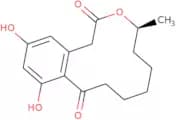
CAS:Curvularin is a secondary metabolite, which is derived from the fungal genus *Curvularia*. This compound is produced through the natural biosynthetic pathways of filamentous fungi, specifically isolated from strains such as *Curvularia lunata*. Curvularin exerts its biological activity primarily through modulation of microtubule dynamics, making it a significant subject of study in cell biology. It disrupts the polymerization processes, impacting the assembly and stability of microtubules, which are critical components of the cytoskeleton involved in cell division, intracellular transport, and structural integrity.Purezza:Min. 95%Sancycline hydrochloride
CAS:Sancycline hydrochloride is a tetracycline antibiotic, which is derived from the natural fermentation process of Streptomyces bacteria. The mechanism of action involves the inhibition of protein synthesis by bindin directly to the 30S ribosomal subunit, thereby preventing the attachment of aminoacyl-tRNA to the A site of the ribosome. This action effectively halts the growth of bacteria by impeding protein production, making it bacteriostatic rather than bactericidal.Formula:C21H23ClN2O7Purezza:Min. 95%Peso molecolare:450.87 g/molNikkomycin Z from streptomyces tendae
CAS:<p>Nikkomycin Z is an antifungal agent, which is a secondary metabolite isolated from the bacterium Streptomyces tendae. This compound functions as a competitive inhibitor of chitin synthase, an essential enzyme responsible for the synthesis of chitin, a vital component of the fungal cell wall. By inhibiting this enzyme, Nikkomycin Z disrupts the structural integrity of the fungal cell wall, leading to impaired growth and cell lysis in susceptible fungi.</p>Formula:C20H25N5O10Purezza:Min. 95%Peso molecolare:495.4 g/molCeftriaxone sodium
CAS:Ceftriaxone sodium is a third-generation cephalosporin antibiotic with action on bacterial cell wall synthesis and is used for treating severe bacterial infections like meningitis and pneumonia.Formula:C18H18N8Na2O7S3Purezza:Min. 84 Area-%Colore e forma:White Yellow PowderPeso molecolare:600.56 g/molSulbactam pivoxyl
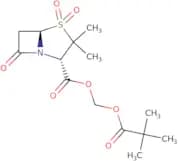
CAS:**Sulbactam pivoxyl** is a prodrug, which is a chemically modified form of sulbactam intended to improve its pharmacokinetic properties. Sulbactam itself is a beta-lactamase inhibitor of synthetic origin, specifically designed to combat antibiotic resistance by inhibiting the beta-lactamase enzymes produced by certain bacteria. These enzymes typically break down beta-lactam antibiotics, rendering them ineffective.Formula:C14H21NO7SPurezza:Min. 95%Peso molecolare:347.38 g/molOxibendazole-amine hydrochloride
CAS:<p>Oxibendazole-amine hydrochloride is a synthetic anthelmintic compound, which is a derivative of benzimidazole, known for its broad-spectrum efficacy against various helminths. It primarily acts by disrupting the polymerization of tubulin into microtubules, effectively impairing essential cellular structures and functions within parasitic worms, leading to their death.</p>Formula:C10H13N3O•HClPurezza:Min. 95%Colore e forma:PowderPeso molecolare:227.69 g/molCefazolin
CAS:Cefazolin is a broad-spectrum antibiotic that inhibits the growth of Gram-positive and Gram-negative bacteria. It is an effective cephalosporin antibiotic against both aerobic and anaerobic bacteria. Cefazolin is used in clinical isolates to inhibit the growth of methicillin-resistant staphylococcus, resistant microorganisms, and systemic inflammation. Some studies has shown good results to inhibit tumor necrosis factor-α (TNFα) production in cell culture.Formula:C14H14N8O4S3Purezza:Min. 95%Peso molecolare:454.51 g/molRetrocyclin-1 trifluoroacetate salt
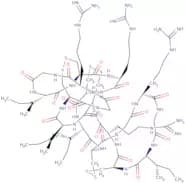
CAS:Retrocyclin-1 trifluoroacetate salt is a synthetic antimicrobial peptide, which is derived from humanized sequences based on the theta-defensin family, originally found in certain primates. Retrocyclin-1 is particularly notable for its circular structure which contributes to its stability and biological activity. The peptide is produced through a process of solid-phase peptide synthesis, designed to mimic the native cyclic conformation of natural theta-defensins.Formula:C74H128N30O18S6Purezza:Min. 95%Peso molecolare:1,918.4 g/molDoripenem
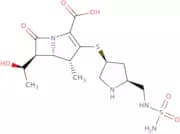
CAS:<p>Doripenem is a carbapenem antibiotic with action on bacterial cell wall synthesis and is used for treating complicated bacterial infections like intra-abdominal infections and urinary tract infections.</p>Formula:C15H24N4O6S2Purezza:Min. 95%Colore e forma:White PowderPeso molecolare:420.51 g/molTaniborbactam hydrochloride
CAS:<p>Taniborbactam hydrochloride is a β-lactamase inhibitor that is synthetically derived for use in combination with β-lactam antibiotics. Its mode of action involves the inhibition of β-lactamase enzymes, which are produced by certain bacteria to confer resistance to β-lactam antibiotics, including cephalosporins and carbapenems.</p>Formula:C19H30BCl2N3O5Purezza:Min. 95%Peso molecolare:462.2 g/molNarasin sodium
CAS:Narasin sodium is an ionophore antibiotic, which is a type of compound that facilitates ion transport across biological membranes. It is derived from the fermentation of the bacterium *Streptomyces aureofaciens*. The mode of action involves the disruption of ion gradients in target organisms, specifically inhibiting the growth of certain pathogenic bacteria and protozoa by altering their cellular ionic balance.Formula:C43H71NaO11Purezza:Min. 95%Peso molecolare:787.02 g/molLinearmycin A
CAS:Linearmycin A is an antibiotic compound, which is a secondary metabolite produced by the bacterium Streptomyces sp. Its mode of action involves disrupting bacterial protein synthesis, leading to the inhibition of bacterial growth. This compound exhibits strong efficacy against various Gram-positive and some Gram-negative bacteria, making it valuable in microbiological research.Formula:C64H101NO16Purezza:Min. 95%Peso molecolare:1,140.5 g/molN-Acetylamphotericin B
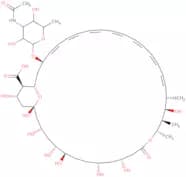
CAS:N-Acetylamphotericin B is a derivative of the well-known antifungal agent Amphotericin B, which is derived from the bacterium *Streptomyces nodosus*. This compound is an acetylated version of Amphotericin B, designed to improve certain pharmacokinetic properties. It operates by binding to ergosterol, a key component of fungal cell membranes, leading to the formation of pores that disrupt membrane integrity, causing cell death. The acetylation is intended to reduce the compound's cytotoxicity and improve its solubility in aqueous solutions, potentially allowing for enhanced therapeutic applications.Formula:C49H75NO18Purezza:(%) Min. 75%Colore e forma:Yellow To Brown SolidPeso molecolare:966.12 g/molFengycin
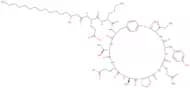
CAS:Fengycin is a cyclic lipopeptide from Bacillus subtilis acts as a biosurfactant and antifungal. As a fungicide, it has a mode of action that involves the formation of ion channels in the fungal lipid membrane, leading to membrane leakage This activity is negatively correlated to cholesterol levels, and may explain why mammalian cells, with higher cholesterol present, are not sensitive to fengycin.Formula:C72H110N12O20Purezza:Min. 90 Area-%Colore e forma:PowderPeso molecolare:1,463.71 g/molEconazole
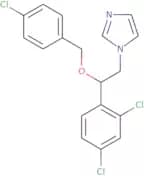
CAS:<p>Econazole is an imidazole antifungal agent with action on fungal cell membrane disruption and is used for treating fungal skin infections like athlete's foot and ringworm.</p>Formula:C18H15Cl3N2OPurezza:Min. 98 Area-%Colore e forma:White PowderPeso molecolare:381.68 g/molPuberulic acid
CAS:Puberulic acid is a fungal metabolite that exhibits significant antimicrobial properties. It is derived from certain species of the Penicillium genus, a well-known source of various bioactive compounds. The mode of action of puberulic acid involves the disruption of microbial cell wall synthesis, leading to inhibited growth and eventual cell death of targeted microorganisms.Formula:C8H6O6Purezza:Min. 95%Peso molecolare:198.13 g/molCarumonam
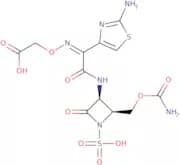
CAS:Carumonam is a synthetic monobactam antibiotic, which is derived from chemically modifying aztreonam to enhance its antimicrobial properties. Its source is entirely synthetic, allowing for precise structural modifications to target specific bacterial pathogens. The mode of action involves the inhibition of bacterial cell wall synthesis. Carumonam binds to penicillin-binding proteins (PBPs) on the surface of bacterial cell walls, disrupting the peptidoglycan cross-linking process necessary for cell wall strength and integrity. This action results in bacterial cell lysis and death, making it effective against a range of Gram-negative bacteria.Formula:C12H14N6O10S2Purezza:Min. 95%Peso molecolare:466.41 g/molAmoxicillin
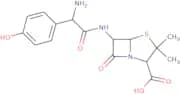
CAS:<p>Amoxicillin is an aminopenicillin antibiotic and is used for the treatment of various bacterial infections. It works by inhibiting the synthesis of bacterial cell wall mucopeptides, leading to cell lysis and death</p>Formula:C16H19N3O5SPurezza:Min. 95%Colore e forma:PowderPeso molecolare:365.41 g/molDesoxymycin
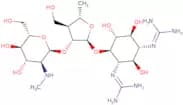
CAS:Desoxymycin is an antibiotic product that belongs to the class of aminoglycosides, which is derived from natural sources such as certain species of Streptomyces bacteria. This compound exhibits its mode of action by specifically binding to the bacterial ribosomal RNA, interfering with protein synthesis. As a result, it inhibits the replication and growth of susceptible bacterial strains.Formula:C21H41N7O11Purezza:Min. 95%Peso molecolare:567.59 g/molGramicidin S hydrochloride
CAS:Gramicidin S hydrochloride is a cyclic peptide antibiotic, which is a derivative of the naturally occurring antibiotic gramicidin S. It is sourced from Bacillus brevis, a type of soil bacterium. This peptide operates through a unique mode of action, whereby it disrupts bacterial cell membranes. By integrating into the lipid bilayer, it increases membrane permeability, leading to leakage of essential ions and molecules, and ultimately causing cell death.Formula:C60H92N12O10•(HCl)2Purezza:90%MinPeso molecolare:1,214.37 g/mol