Antimicrobici
Sottocategorie di "Antimicrobici"
- Antibiotici(4.137 prodotti)
- Antimicotici(904 prodotti)
- Antiparassitari(700 prodotti)
- Antivirali(767 prodotti)
Trovati 2432 prodotti di "Antimicrobici"
Oligomycin
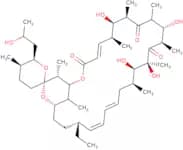
CAS:Oligomycin is a macrolide antibiotic, which is derived from species of the bacterium Streptomyces. It acts as a potent inhibitor of the mitochondrial ATP synthase complex, specifically targeting the F₀ portion of the enzyme. This interference results in the blockage of proton translocation across the mitochondrial membrane, thereby preventing ATP synthesis. Due to this mode of action, Oligomycin is primarily utilized in biochemical research to study cellular respiration and energy metabolism. It serves as a valuable tool in elucidating the mechanisms of oxidative phosphorylation and the role of ATP in various cellular processes. In addition, its application extends to investigations on mitochondrial dysfunctions and the screening of mitochondrial-targeted drugs.Formula:C45H74O11Purezza:Min. 95%Peso molecolare:791.06 g/molBacitracin A
CAS:Bacitracin A is an antibiotic peptide, which is isolated from the bacterium Bacillus subtilis. It functions by interfering with the cell wall synthesis of bacteria. Specifically, Bacitracin A inhibits the dephosphorylation of the C55-isoprenyl pyrophosphate molecule, an essential lipid carrier that transports peptidoglycan building blocks to the growing cell wall. This disruption leads to the inhibition of peptidoglycan synthesis, a critical component of bacterial cell walls, resulting in cell lysis and death.
Formula:C66H103N17O16SPurezza:Min. 95%Peso molecolare:1,422.7 g/molMCB-3681
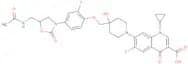
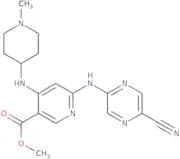
CAS:MCB-3681 is a small-molecule inhibitor, which is synthesized through advanced chemical processes. It operates at a molecular level by selectively targeting and inhibiting specific cellular pathways involved in cancer cell proliferation. The compound's action is characterized by its ability to interfere with enzyme activity crucial for the survival and growth of malignant cells, thus inducing apoptosis and inhibiting tumor progression.Formula:C31H32F2N4O8Purezza:Min. 95%Peso molecolare:626.6 g/molAtisinium chloride
CAS:Atisinium chloride is an organometallic compound, which is synthesized through advanced coordination chemistry techniques. The source of this compound lies in the strategic combination of organic ligands with metal centers, facilitating unique interactions that are pivotal to its functionality. The mode of action primarily involves the ability to participate in complex catalytic cycles, engaging in electron transfer processes that are essential for mediating chemical transformations.
This compound finds applications in specialized fields such as catalysis, where it is utilized to promote and drive reactions that may be inefficient under normal conditions. Its effectiveness in altering reaction pathways and increasing selectivity makes it valuable in synthetic chemistry and industrial processes. Additionally, atisinium chloride's unique properties might be leveraged in materials science for the development of novel materials with tailored functionalities. The intricate balance of its reactive properties and stability under varying conditions makes it a subject of ongoing research for further applications.Formula:C22H34ClNO2Purezza:Min. 95%Peso molecolare:379.96 g/molEnt-avibactam sodium
CAS:Ent-avibactam sodium is a pharmacological agent, categorized as a beta-lactamase inhibitor, which is synthetically derived. This compound acts by binding to and inhibiting the action of beta-lactamase enzymes produced by certain bacteria, thereby preventing the breakdown of beta-lactam antibiotics. Consequently, it restores the effectiveness of these antibiotics against resistant strains.Formula:C7H10N3NaO6SPurezza:Min. 95%Peso molecolare:287.23 g/molCefetrizole
CAS:Please enquire for more information about Cefetrizole including the price, delivery time and more detailed product information at the technical inquiry form on this page
Formula:C16H15N5O4S3Purezza:Min. 95%Peso molecolare:437.5 g/molDicloxacillin sodium salt monohydrate
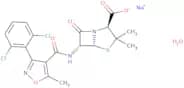
CAS:Dicloxacillin sodium salt monohydrate is a beta-lactam antibiotic with action on bacterial cell wall synthesis and is used for treating infections caused by penicillinase-producing bacteria.
Formula:C19H16Cl2N3NaO5S·H2OPurezza:Min. 95%Colore e forma:White PowderPeso molecolare:510.32 g/molSofosbuvir d6
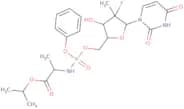
CAS:Sofosbuvir d6 is a deuterated antiviral drug used for the treatment of Hepatitis C virus (HCV) infection, which is synthesized chemically. This modification involves the replacement of hydrogen atoms with deuterium, a stable isotope of hydrogen, resulting in enhanced pharmacokinetic properties. By incorporating deuterium, the metabolic stability of the compound is improved due to the kinetic isotope effect, which slows down the metabolic degradation of the compound.Formula:C22H29FN3O9PPurezza:Min. 95%Peso molecolare:535.5 g/molMafoprazine
CAS:Mafoprazine is an experimental psychotropic drug, which is an organic compound synthetically derived from the azapirone family. It functions primarily as a serotonin receptor agonist, specifically targeting the 5-HT1A receptors, while also exhibiting moderate affinity for dopamine and adrenergic receptors. This dual action on neurotransmitter systems is thought to contribute to its therapeutic effects.Formula:C22H28FN3O3Purezza:Min. 95%Peso molecolare:401.5 g/molMagainin 2
CAS:Magainin 2 is an antimicrobial peptide, which is derived from the skin of the African clawed frog, *Xenopus laevis*. This peptide is renowned for its membrane-disrupting mode of action, where it integrates into lipid bilayers of microbial cell membranes, ultimately leading to disruption and cell lysis. The mode of action is primarily through the formation of pores in the membrane, causing a loss of cellular contents and death of the microbial cell.Formula:C114H180N30O29SPurezza:Min. 95%Peso molecolare:2,466.9 g/molDeoxylapachol
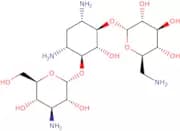
CAS:Deoxylapachol is a naturally occurring metabolite, which is derived from the heartwood of certain Tabebuia tree species. It is a type of naphthoquinone, recognized for its biologically active properties. The mode of action of deoxylapachol involves the inhibition of certain enzymes and signaling pathways, contributing to its potential therapeutic effects. It disrupts cellular respiration and affects redox balance, which can lead to the selective targeting of certain pathogenic organisms and cancer cells.Formula:C15H14O2Purezza:Min. 95%Peso molecolare:226.27 g/molDihydrostreptomycin sesquisulfate
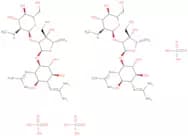
CAS:Dihydrostreptomycin sesquisulfate is an aminoglycoside antibiotic, which is derived from the bacterium Streptomyces griseus. Its mode of action involves binding to the 30S subunit of the bacterial ribosome, leading to the disruption of protein synthesis. This binding interferes with the initiation complex formation, causing misreading of mRNA and ultimately inhibiting bacterial growth.Formula:C21H41N7O12•(H2SO4)1Purezza:Min. 95%Peso molecolare:730.71 g/mol4-Epianhydrotetracycline
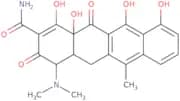
CAS:4-Epianhydrotetracycline is a chemical compound that is a derivative of tetracycline, a well-known antibiotic. It is primarily a byproduct arising from the chemical degradation of tetracycline antibiotics, occurring under acidic or basic conditions. The source of this compound is the structural transformation of tetracycline, resulting in an altered molecular configuration.
Formula:C22H22N2O7Purezza:Min. 95%Peso molecolare:426.4 g/molKanamycin A
CAS:Inhibitor of protein synthesis; aminoglycoside
Formula:C18H36N4O11Purezza:Min. 95%Colore e forma:White Clear LiquidPeso molecolare:484.5 g/molPF 1022A
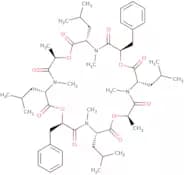
CAS:PF 1022A is a cyclooctadepsipeptide, which is a type of cyclic peptide composed of amino acids and hydroxy acids. It is derived from the fermentation products of the fungus *Mycelia sterilia*, a member of the *Rosellinia* genus. Its mode of action involves disrupting glutamate-gated chloride channels in parasitic nematodes, which leads to paralysis and eventual death of the parasite.
Formula:C52H76N4O12Purezza:Min. 95%Peso molecolare:949.18 g/molAqabamycin C
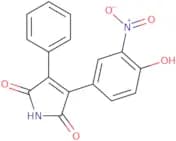
CAS:Aqabamycin C is an antibiotic compound, which is derived from marine bacteria, specifically, the actinomycete strain found in marine environments. Its mode of action involves the disruption of bacterial cell wall synthesis, making it particularly effective against certain gram-negative bacteria. This antibiotic selectively inhibits pathogens by interfering with their essential cellular processes.Formula:C16H10N2O5Purezza:Min. 95%Peso molecolare:310.26 g/molClindamycin-2,4-diphosphate
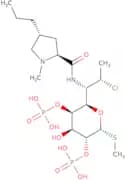
CAS:Clindamycin-2,4-diphosphate is a phosphorylated derivative of the antibiotic clindamycin, which is a semi-synthetic lincosamide antibiotic originally derived from Streptomyces lincolnensis. Its mode of action involves the inhibition of bacterial protein synthesis by binding to the 50S ribosomal subunit, thereby preventing peptide chain elongation during translation. This mechanism effectively disrupts protein production in susceptible bacteria, leading to their growth inhibition or death.Formula:C18H35ClN2O11P2SPurezza:Min. 95%Peso molecolare:584.94 g/molLincomycin B hydrochloride
CAS:Inhibitor of protein synthesis; lincosamideFormula:C17H33ClN2O6SPurezza:Min. 95%Peso molecolare:428.97 g/molMethyl N-[2-[[[1-(4-chlorophenyl)-1H-pyrazol-3-yl]oxy]methyl]phenyl]carbamate
CAS:Methyl N-[2-[[[1-(4-chlorophenyl)-1H-pyrazol-3-yl]oxy]methyl]phenyl]carbamate is a selective insecticide, which is primarily pyrazole-based in nature. It is synthetically derived, allowing for precise structural control over its active components. The compound functions through a specific mode of action targeting the skeletal muscle function of insects by interfering with calcium ion channels. This disruption leads to impaired muscle contractions and eventual paralysis of the target pests.Formula:C18H16ClN3O3Purezza:Min. 95%Peso molecolare:357.8 g/mol4'-Ethynyl-2'-deoxyadenosine
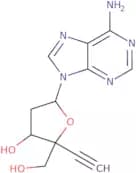
CAS:4'-Ethynyl-2'-deoxyadenosine is a deoxynucleoside analogue, which is synthesized through chemical processes. This compound acts as an antiviral agent, primarily targeting the viral replication machinery. Its mode of action involves the incorporation into viral DNA by mimicking natural nucleosides, which subsequently inhibits the enzymatic activity of reverse transcriptase. This inhibition disrupts the synthesis of viral DNA, effectively curtailing viral replication.Formula:C12H13N5O3Purezza:Min. 95%Peso molecolare:275.26 g/mol




![Methyl N-[2-[[[1-(4-chlorophenyl)-1H-pyrazol-3-yl]oxy]methyl]phenyl]carbamate](/_next/image/?url=https%3A%2Fstatic.cymitquimica.com%2Fproducts%2F3D%2Fthumb-webp%2FMVA16596.webp&w=3840&q=75)