Antimicrobici
Sottocategorie di "Antimicrobici"
- Antibiotici(4.132 prodotti)
- Antimicotici(886 prodotti)
- Antiparassitari(682 prodotti)
- Antivirali(765 prodotti)
Trovati 2438 prodotti di "Antimicrobici"
41-Oxo-rapamycin
CAS:41-Oxo-rapamycin is a synthetic derivative of rapamycin, which is a macrocyclic lactone. It is derived from Streptomyces hygroscopicus, a gram-positive bacterium known for producing various bioactive compounds. The mode of action of 41-Oxo-rapamycin involves binding to the FK506-binding protein (FKBP12), forming a complex that subsequently inhibits the mammalian target of rapamycin (mTOR) pathway. This inhibition results in the suppression of T-cell proliferation and modulation of immune responses.Formula:C51H77NO13Purezza:Min. 95%Peso molecolare:912.2 g/molN-Hexylsilane
CAS:N-Hexylsilane is a silane compound, which is an organosilicon chemical with a hexyl group attached to silicon. This type of product is synthesized through hydroalkoxysilanes in the presence of catalysts. Its mode of action involves acting as a hydrophobic agent, reacting with hydroxyl groups on surfaces to create a silicon-oxygen-silicon link that confers water-resistance properties.Formula:C6H13SiPurezza:Min. 95%Peso molecolare:113.25 g/molPosizolid
CAS:Posizolid is an oxazolidinone antibiotic, which is a synthetic compound derived from chemical synthesis. It acts by inhibiting bacterial protein synthesis through binding to the 50S subunit of the bacterial ribosome, thereby interfering with the translation process essential for bacterial growth and reproduction.
Formula:C21H21F2N3O7Purezza:Min. 95%Colore e forma:SolidPeso molecolare:465.4 g/molPentabromopseudilin
CAS:Pentabromopseudilin is a brominated natural product, which is isolated from marine bacteria, specifically the genus *Pseudomonas*. It operates by inhibiting the enoyl-acyl carrier protein reductase enzyme, interrupting fatty acid biosynthesis essential for bacterial and fungal cell membrane construction. As a halogenated phenol derivative, its unique mechanism of action makes it an interesting candidate for antimicrobial research.
Formula:C10H4Br5NOPurezza:Min. 95%Peso molecolare:553.7 g/molNeomycin B
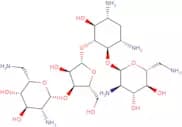
CAS:Neomycin B is an aminoglycoside antibiotic, which is derived from the bacterium *Streptomyces fradiae*. It exerts its antibacterial effects by binding to the 30S subunit of bacterial ribosomes, leading to the inhibition of protein synthesis. This binding disrupts the translation process, thereby preventing the growth and proliferation of bacteria. Neomycin B is effective against a wide range of Gram-negative and some Gram-positive bacteria, making it a valuable tool in both medical and research settings.
Formula:C23H46N6O13Purezza:Min. 95%Peso molecolare:614.64 g/molOfloxacin methyl ester
CAS:Ofloxacin methyl ester is a chemical compound, which is a derivative utilized in scientific research, particularly in the synthesis of ofloxacin-related compounds. It is a synthetic ester, derived from chemical synthesis involving ofloxacin, a fluoroquinolone antibiotic. The mode of action of ofloxacin methyl ester is based on its role as an intermediate compound. It facilitates the creation of active forms or analogs that can be tested for their pharmacological properties. Although not directly used as a therapeutic agent, it plays a crucial role in the development and modification of molecules for antibacterial applications.
Formula:C19H22FN3O4Purezza:Min. 95%Peso molecolare:375.4 g/molGSK 3532795
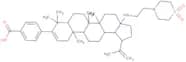
CAS:GSK 3532795 is an investigational antiretroviral compound, which is a synthetic small molecule designed to inhibit HIV-1 capsid function. The source of this compound is GlaxoSmithKline, a pharmaceutical company actively engaged in the development of novel therapeutic agents. GSK 3532795 functions by disrupting the HIV-1 capsid, an essential protein shell that encases the viral RNA and associated enzymes. By targeting this structure, the compound interferes with numerous stages of the viral replication cycle, including disassembly, nuclear import, and encapsidation—thereby effectively inhibiting viral replication.Formula:C42H62N2O4SPurezza:Min. 95%Peso molecolare:691 g/molAureothin
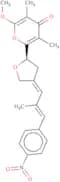
CAS:Aureothin is a bioactive compound, classified as a polyketide antibiotic, which is derived from the culture of the bacterium Streptomyces thioluteus. This compound operates primarily through the inhibition of protein synthesis by interfering with the aminoacylation of tRNA with specific amino acids. Its mode of action disrupts cellular protein synthesis, which is essential for cell growth and function, leading to its potent antibacterial and antifungal activities.Formula:C22H23NO6Purezza:Min. 95%Colore e forma:PowderPeso molecolare:397.42 g/mol(3aR,4R,5R,7S,8S,9R,9aS,12R)-8-Hydroxy-4,7,9,12-tetramethyl-3-oxo-7-vinyldecahydro-4,9a-propanocyclopenta[8]annulen-5-yl 2-((7-fluor o-1-hydroxy-1,3-dihydrobenzo[C][1,2]-oxaborol-6-yl)oxy)acetate
CAS:(3aR,4R,5R,7S,8S,9R,9aS,12R)-8-Hydroxy-4,7,9,12-tetramethyl-3-oxo-7-vinyldecahydro-4,9a-propanocyclopenta[8]annulen-5-yl 2-((7-fluoro-1-hydroxy-1,3-dihydrobenzo[C][1,2]-oxaborol-6-yl)oxy)acetate is a novel antifungal compound derived from boron chemistry, representing a new class of therapeutic agents in the field of antifungal treatments. The compound primarily originates from the synthesis and refinement of boron-based molecular scaffolds, yielding a structure capable of disrupting fungal growth through a unique mode of action. It functions by inhibiting the fungal enzyme leucyl-tRNA synthetase, which is crucial in protein synthesis and thus vital for fungal cell survival and proliferation. By targeting this specific enzyme, the compound effectively halts the production of essential proteins, leading to the cessation of fungal growth and eventual cell death. The primary application of this compound is in the treatment of a range of fungal infections, particularly those that are resistant to conventional antifungal drugs, offering a potent alternative in clinical settings. The application of this compound spans both topical and systemic treatments, addressing a critical need for more effective antifungal therapies.Formula:C29H38BFO7Purezza:Min. 95%Peso molecolare:528.4 g/molElsulfavirine
CAS:Elsulfavirine is a non-nucleoside reverse transcriptase inhibitor (NNRTI), which is derived from advanced medicinal chemistry efforts targeting specific interactions with the HIV-1 reverse transcriptase enzyme. The mode of action of Elsulfavirine involves the inhibition of reverse transcriptase activity by binding to an allosteric site on the enzyme, thereby preventing the transcription of viral RNA into DNA, a critical step in the HIV replication process.
Formula:C24H17BrCl2FN3O5SPurezza:Min. 95%Peso molecolare:629.3 g/molBeauvericin
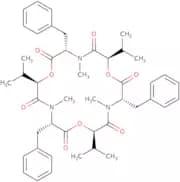
CAS:Beauvericin is a cyclic peptide that is isolated from the fungus Fusarium. It has been shown to have antimicrobial activity against bacteria, as well as a variety of other biological properties. Beauvericin has been shown to inhibit mitochondrial membrane potential and induce toxicity in some animal models. Beauvericin also inhibits protein synthesis and causes cell death by inhibiting DNA polymerase activity. This compound is active against cancer cells, including HL-60 cells, which are derived from human lymphocytes and are used as a model for leukemia. Beauvericin can be extracted from an ETOA extract of the fungus Fusarium oxysporum; this extract has shown anti-cancer effects in vitro assays.
Formula:C45H57N3O9Purezza:Min. 95%Peso molecolare:783.95 g/mol(3R,4R)-A2-32-01
CAS:(3R,4R)-A2-32-01 is an innovative insecticide, which is a synthetic product derived from intensive research in entomology and organic chemistry. It operates by targeting the neurological pathways of specific insect pests, leading to rapid cessation of feeding and, ultimately, death. This mode of action is highly selective, affecting only targeted pest species while minimizing impact on non-target organisms such as beneficial pollinators.Formula:C19H27NO2Purezza:Min. 95%Peso molecolare:301.4 g/mol1,3,5-Triazine-2,4-diamine
CAS:1,3,5-Triazine-2,4-diamine is a selective herbicide, which is synthesized from chemical feedstocks via a process involving triazine ring formation and chlorination. This compound operates by inhibiting photosynthesis in susceptible plants, specifically targeting the photosystem II complex. When absorbed through the roots and leaves, it disrupts the electron transport chain, leading to chlorophyll loss and subsequent plant death.
Formula:C5H6F3N5OPurezza:Min. 95%Peso molecolare:209.13 g/molPanipenem
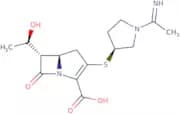
CAS:Panipenem is a carbapenem antibiotic, which is a type of beta-lactam antibiotic derived from thienamycin. It functions by inhibiting penicillin-binding proteins (PBPs), which are essential for bacterial cell wall synthesis. This inhibition disrupts the cell wall construction, leading to cell lysis and death, thereby demonstrating strong bactericidal activity.Formula:C15H21N3O4SPurezza:Min. 95%Peso molecolare:339.41 g/molCefoxitin EP impurity F
Cefoxitin EP Impurity F is a pharmaceutical reference impurity, which is a derivative of the cefoxitin antibiotic. This impurity arises from the degradation or synthesis processes related to cefoxitin, a semi-synthetic, beta-lactam antibiotic of the cephamycin group. The mode of action of cefoxitin involves interfering with bacterial cell wall synthesis by binding to penicillin-binding proteins, ultimately leading to cell lysis and death.Formula:C17H19N3O8S2Purezza:Min. 95%Peso molecolare:457.48 g/molMarbofloxacin hydrochloride
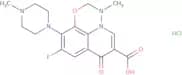
CAS:Marbofloxacin hydrochloride is a synthetic, broad-spectrum antibacterial agent. It is derived from the fluoroquinolone class, which is known for its potent activity against a variety of bacterial pathogens. The mode of action of marbofloxacin hydrochloride involves the inhibition of bacterial DNA gyrase and topoisomerase IV, enzymes critical for DNA replication, transcription, and repair processes. This inhibition disrupts bacterial cell division and ultimately leads to cell death.Formula:C17H20ClFN4O4Purezza:Min. 95%Peso molecolare:398.8 g/molFenaminostrobin
CAS:Fenaminostrobin is a broad-spectrum fungicide, which is synthesized chemically. It operates primarily through inhibition of mitochondrial respiration in fungal cells, targeting the bc1 complex, which disrupts ATP production and leads to the inhibition of spore germination and fungal growth. This mode of action makes Fenaminostrobin effective against a wide range of pathogenic fungi that affect various crops.
Formula:C21H21Cl2N3O3Purezza:Min. 95%Peso molecolare:434.3 g/molZelkovamycin
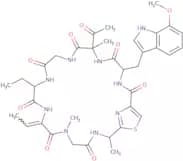
CAS:Zelkovamycin is a novel antibacterial compound isolated from endophytic microorganisms, specifically Streptomyces sp. Endophytes are bacteria or fungi that reside within plant tissues, forming symbiotic relationships and often producing bioactive metabolites. The mode of action of Zelkovamycin involves the inhibition of bacterial cell wall synthesis, interfering with the biosynthesis pathways essential for maintaining the structural integrity and function of bacterial cell walls, particularly in Gram-positive strains.Formula:C36H45N9O9SPurezza:Min. 95%Colore e forma:PowderPeso molecolare:779.86 g/molPicoxystrobin metabolite M8
CAS:Picoxystrobin metabolite M8 is a chemical metabolite, which is a derivative specifically originating from the degradation of the fungicide Picoxystrobin. It is generated through the metabolic pathways that occur after the application of Picoxystrobin on crops. As a strobilurin derivative, its mode of action is primarily related to its ability to disrupt mitochondrial respiration in fungi by inhibiting the electron transport chain at the cytochrome bc1 complex. This interruption leads to energy depletion and subsequent cell death in pathogenic fungi.
Formula:C14H10F3NO3Purezza:Min. 95%Peso molecolare:297.23 g/molFormycin A
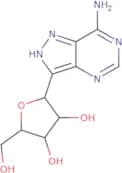
CAS:Formycin A is a nucleoside analog, which is an antibiotic product derived from certain Streptomyces species. Its mode of action involves mimicking adenosine, one of the four nucleosides in RNA. By doing so, it interferes with the RNA processing of certain microorganisms, ultimately disrupting their ability to synthesize proteins effectively. This interference results in the inhibition of bacterial and parasitic growth.
Formula:C10H13N5O4Purezza:Min. 95%Peso molecolare:267.24 g/mol