Antimicrobici
Sottocategorie di "Antimicrobici"
- Antibiotici(4.131 prodotti)
- Antimicotici(912 prodotti)
- Antiparassitari(706 prodotti)
- Antivirali(768 prodotti)
Trovati 2425 prodotti di "Antimicrobici"
26-Oxofusidic acid
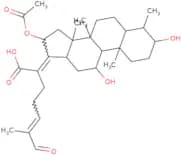
CAS:26-Oxofusidic acid is a derivative of fusidic acid, which is a potent antibacterial compound originally isolated from the fungus Fusidium coccineum. This compound exhibits a unique mode of action by inhibiting bacterial protein synthesis through interference with the elongation factor G (EF-G), a critical component in the translocation step of translation. By targeting this specific aspect of bacterial metabolism, 26-Oxofusidic acid effectively disrupts the growth of gram-positive bacteria, making it an invaluable tool in combating resistant bacterial strains.
Formula:C31H46O7Purezza:Min. 95%Peso molecolare:530.69 g/molStreptidine
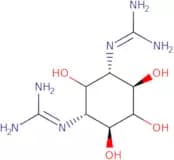
CAS:Streptidine is an amino cyclitol, which is a component of certain aminoglycoside antibiotics. This compound originates from the actinomycete *Streptomyces griseus*, a soil bacterium known for its ability to produce a variety of antibiotics. Streptidine plays a crucial role in the mechanism of aminoglycosides by contributing to the binding affinity of these antibiotics to the bacterial ribosome.Formula:C8H18N6O4Purezza:Min. 95%Peso molecolare:262.13895Ref: 3D-AS178127
5mg303,00€10mg375,00€25mg668,00€50mgPrezzo su richiesta100mgPrezzo su richiesta250mgPrezzo su richiesta500mgPrezzo su richiestaChlorhexidine acetate hydrate(1:2:X)
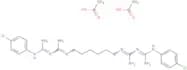
CAS:Prodotto controllatoChlorhexidine acetate hydrate (1:2:X) is a chemical compound used as a disinfectant and antiseptic. It is derived from chlorhexidine, a well-known antimicrobial agent frequently used in both medical and laboratory settings. The compound functions by disrupting microbial cell membranes, resulting in leakage of cellular components and subsequent cell death. This action makes it particularly effective against a wide range of bacteria, fungi, and some viruses.
Formula:C26H38Cl2N10O4Purezza:Min. 95%Peso molecolare:625.5 g/molS-Ethyl (3-hydroxypropyl)propylthiocarbamate
CAS:S-Ethyl (3-hydroxypropyl)propylthiocarbamate is a selective herbicide used primarily in the agricultural sector. Derived from synthetic organic chemistry, it belongs to the thiocarbamate class of herbicides. These compounds are known for their ability to inhibit the growth of undesirable plant species by interfering with lipid synthesis.Formula:C9H19NO2SPurezza:Min. 95%Peso molecolare:205.32 g/molInpyrfluxam
CAS:Inpyrfluxam is a fungicide with a mode of action as a succinate dehydrogenase inhibitor (SDHI), disrupting mitochondrial respiration in fungi. It is used for controlling plant diseases like rust and blight in crops such as cereals and soybeans.Formula:C18H21F2N3OPurezza:Min. 95%Colore e forma:PowderPeso molecolare:333.4 g/molBisphenol A d14
CAS:Bisphenol A d14 is an isotopically labeled compound, which is a variant of Bisphenol A (BPA) where hydrogen atoms are partially replaced with deuterium isotopes. This compound is produced through chemical synthesis, ensuring that 14 of the hydrogen atoms in the BPA molecule are replaced by deuterium to create a stable form with a slightly higher atomic mass, facilitating advanced analytical studies.
Formula:C15H16O2Purezza:Min. 95%Peso molecolare:242.37 g/mol(E)-Coniferin
CAS:(E)-Coniferin is a plant-derived glucoside, which is primarily associated with the lignification process in gymnosperms and angiosperms. It is biosynthesized from the phenylpropanoid pathway, specifically from coniferyl alcohol conjugated with glucose. This conjugation serves as a storage form and transport mechanism for coniferyl alcohol in plants.Formula:C16H22O8Purezza:Min. 95%Peso molecolare:342.34 g/molBenastatin A
CAS:Benastatin A is an antifungal compound, which is derived from marine-derived Streptomyces species. This bacterial genus, known for its prolific production of bioactive secondary metabolites, serves as a rich source for drug discovery and biosynthesis of unique compounds like Benastatin A. The mode of action of Benastatin A involves the disruption of fungal cell membranes, leading to leakage of vital cellular components and subsequent cell death. This interaction is crucial for understanding its efficacy and specificity against fungal pathogens.
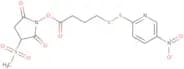
Formula:C30H28O7Purezza:Min. 95%Peso molecolare:500.50 g/mol3-(Methylsulfonyl)-2,5-dioxopyrrolidin-1-yl 4-((5-nitropyridin-2-yl)disulfanyl)butanoate
CAS:3-(Methylsulfonyl)-2,5-dioxopyrrolidin-1-yl 4-((5-nitropyridin-2-yl)disulfanyl)butanoate is a sophisticated biochemical compound used primarily in research settings. This compound, derived from synthetic sources, functions through its reactive disulfide linkage, enabling the modification of thiol groups in proteins or other biomolecules. This reactivity is crucial for applications involving targeted chemical modifications, serving as a useful tool in the investigation of biochemical pathways and interactions.Formula:C14H15N3O8S3Purezza:Min. 95%Peso molecolare:449.5 g/molCefatrizine
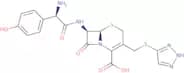
CAS:Cefatrizine is a broad-spectrum antibiotic, which is a semisynthetic cephalosporin derived from cephalosporin C, a natural product originating from the fungus Acremonium chrysogenum. It exerts its mode of action through the inhibition of bacterial cell wall synthesis, a critical component for bacterial growth and replication. Specifically, cefatrizine targets and binds to penicillin-binding proteins (PBPs) located inside the bacterial cell wall, leading to the inhibition of peptidoglycan synthesis. This disruption results in cell lysis and ultimately bacterial cell death.
Formula:C18H18N6O5S2Purezza:Min. 95%Peso molecolare:462.5 g/mol(2S)-2-[N-(Furan-2-carbonyl)-2,6-dimethylanilino]propanoic acid
CAS:(2S)-2-[N-(Furan-2-carbonyl)-2,6-dimethylanilino]propanoic acid is a synthetic compound classified as a potentially bioactive molecule. It is derived through a series of organic synthesis steps that involve the coupling of furan-2-carbonyl chloride with 2,6-dimethylaniline, followed by modification with a chiral propanoic acid moiety.Formula:C16H17NO4Purezza:Min. 95%Peso molecolare:287.31 g/molImibenconazole
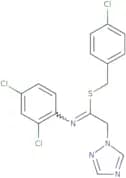
CAS:Imibenconazole is a systemic fungicide, which is a synthetic chemical compound known for its efficacy in controlling a wide spectrum of fungal pathogens. This fungicide operates by inhibiting the biosynthesis of ergosterol, a crucial component of fungal cell membranes, effectively disrupting the growth and spread of fungi. Its action involves the inhibition of the demethylation process in sterol biosynthesis, specifically targeting the cytochrome P450 14α-demethylase enzyme.
Formula:C17H13Cl3N4SPurezza:Min. 95%Peso molecolare:411.7 g/molMafoprazine
CAS:Mafoprazine is an experimental psychotropic drug, which is an organic compound synthetically derived from the azapirone family. It functions primarily as a serotonin receptor agonist, specifically targeting the 5-HT1A receptors, while also exhibiting moderate affinity for dopamine and adrenergic receptors. This dual action on neurotransmitter systems is thought to contribute to its therapeutic effects.Formula:C22H28FN3O3Purezza:Min. 95%Peso molecolare:401.5 g/molTebufenozide-hydroxymethyl
CAS:Tebufenozide-hydroxymethyl is an insect growth regulator, which is synthesized chemically to function as an agonist of the molting hormone, ecdysone, in target pest species. It operates by mimicking the effects of ecdysone, leading to premature and lethal molting in lepidopteran larvae. This disruption in the developmental cycle of the insects effectively suppresses their population by preventing them from reaching maturity and reproducing.
Formula:C22H28N2O3Purezza:Min. 95%Peso molecolare:368.5 g/molAmoscanate
CAS:Amoscanate is an antischistosomal agent, which is a synthetic compound with a broad spectrum of activity against parasitic infections. Its mode of action involves the disruption of parasite metabolism and structure, ultimately leading to the elimination of schistosomes. Schistosomes are trematode worms responsible for schistosomiasis, a significant parasitic disease affecting millions of people worldwide.Formula:C13H9N3O2SPurezza:Min. 95%Peso molecolare:271.3 g/molBromobutide-desbromo
CAS:Bromobutide-desbromo is a chemical compound that functions as a selective herbicide. It is derived from synthetic sources and is specifically formulated to interfere with photosynthesis in target plants. The mode of action of bromobutide-desbromo involves inhibiting photosystem II, a crucial component of the photosynthetic electron transport chain in plants. This inhibition disrupts the energy conversion process, leading to a decrease in ATP and NADPH production, which are essential for plant growth.
Formula:C15H23NOPurezza:Min. 95%Peso molecolare:233.35 g/molClarithromycin-13CD3
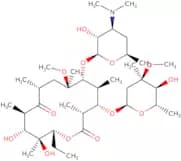
CAS:Clarithromycin-13CD3 is an isotopically labeled macrolide antibiotic, which is synthesized to include deuterium (D) and carbon-13 (^13C) in its molecular structure. This modified compound serves as a stable isotope-labeled standard, primarily sourced from chemical synthesis. The incorporation of these isotopes differentiates it from the naturally occurring antibiotic, enabling its use in precise analytical studies.
Formula:C37CH66D3NO13Purezza:Min. 95%Peso molecolare:751.97 g/molIclaprim
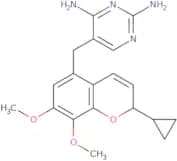
CAS:Iclaprim is an antibiotic, which is a synthetic diaminopyrimidine antimicrobial agent with a specific mechanism of action. It works by selectively inhibiting bacterial dihydrofolate reductase, a crucial enzyme in the bacterial folate synthesis pathway. This inhibition prevents the production of tetrahydrofolate, ultimately disrupting DNA, RNA, and protein synthesis in susceptible bacterial cells.Formula:C19H22N4O3Purezza:Min. 95%Peso molecolare:354.4 g/molRifamycin pr-3
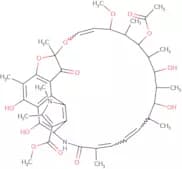
CAS:Rifamycin PR-3 is an antibiotic, which is derived from bacterial fermentation, specifically from the bacterium Amycolatopsis rifamycinica. It acts by inhibiting DNA-dependent RNA polymerase, thereby blocking RNA synthesis in susceptible bacteria. This inhibition disrupts protein synthesis, ultimately leading to bacterial cell death. Rifamycin PR-3 is primarily used for the treatment of various bacterial infections, particularly those caused by gram-positive bacteria and certain mycobacteria. Its application is crucial in managing diseases such as tuberculosis, where it targets the Mycobacterium tuberculosis. As a member of the rifamycin class of antibiotics, it is also explored for use in treating refractory cases and in combinations to prevent the development of resistance. This compound’s efficacy in penetrating phagocytic cells makes it an important player in addressing intracellular infections. Scientists continue to study its pharmacokinetics and potential for synergistic combinations, which may expand its utility in infectious disease therapy.Formula:C43H54N2O13Purezza:Min. 95%Peso molecolare:806.9 g/mol7-O-Demethyl rapamycin
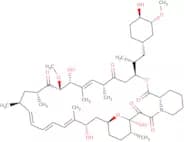
CAS:7-O-Demethyl rapamycin is a macrolide compound, which is a derivative of rapamycin, originally sourced from the bacterial species *Streptomyces hygroscopicus*. This compound operates by binding to the FK506-binding protein 12 (FKBP12), forming a complex that inhibits the mammalian target of rapamycin (mTOR) pathway. This inhibition interferes with cellular processes such as cell growth, proliferation, and survival by altering the phosphorylation state of downstream targets.
Formula:C50H77NO13Purezza:80%MinPeso molecolare:900.15 g/mol




![(2S)-2-[N-(Furan-2-carbonyl)-2,6-dimethylanilino]propanoic acid](/_next/image/?url=https%3A%2Fstatic.cymitquimica.com%2Fproducts%2F3D%2Fthumb-webp%2FTEA59719.webp&w=3840&q=75)