Antimicrobici
Sottocategorie di "Antimicrobici"
- Antibiotici(4.132 prodotti)
- Antimicotici(886 prodotti)
- Antiparassitari(682 prodotti)
- Antivirali(765 prodotti)
Trovati 2438 prodotti di "Antimicrobici"
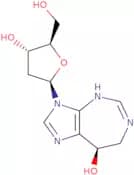
2'-Deoxycoformycin
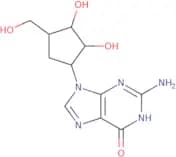
CAS:2'-Deoxycoformycin is a potent adenosine deaminase inhibitor, which is derived from the fermentation of Streptomyces antibioticus, a species of actinomycete bacteria. This compound acts by specifically inhibiting the enzyme adenosine deaminase, leading to an accumulation of toxic deoxyadenosine triphosphate in lymphocytes. This buildup hinders DNA synthesis, effectively suppressing the proliferation of lymphoid cells.Formula:C11H16N4O4Purezza:Min. 95%Peso molecolare:268.27 g/molHexazinone metabolite A
CAS:Hexazinone metabolite A is a chemical compound derived from the degradation of the parent herbicide hexazinone, which is commonly used in agriculture and forestry for broad-spectrum weed control. This metabolite is a result of microbial and environmental processes that modify the original chemical structure, altering its behavior and ecological interactions. With a mode of action involving the disruption of photosynthetic processes, Hexazinone metabolite A impacts plant growth by inhibiting photosystem II, thereby impeding electron transfer required for photosynthesis.Formula:C12H20N4O3Purezza:Min. 95%Peso molecolare:268.31 g/molNalidixic acid ethyl ester
CAS:Nalidixic acid ethyl ester is a chemical compound that functions as a pro-drug antibacterial agent, specifically belonging to the quinolone class of antibiotics. It is synthesized from nalidixic acid, which is derived from the older synthetic derivative class of naphthyridines. Nalidixic acid ethyl ester exhibits its antibacterial properties through the inhibition of DNA gyrase and topoisomerase IV. These are essential enzymes for bacterial DNA replication, transcription, and repair, leading to the disruption of DNA synthesis in susceptible bacterial cells.Formula:C14H16N2O3Purezza:Min. 95%Peso molecolare:260.29 g/molDeoxylapachol
CAS:Deoxylapachol is a naturally occurring metabolite, which is derived from the heartwood of certain Tabebuia tree species. It is a type of naphthoquinone, recognized for its biologically active properties. The mode of action of deoxylapachol involves the inhibition of certain enzymes and signaling pathways, contributing to its potential therapeutic effects. It disrupts cellular respiration and affects redox balance, which can lead to the selective targeting of certain pathogenic organisms and cancer cells.Formula:C15H14O2Purezza:Min. 95%Peso molecolare:226.27 g/molCladospirone bisepoxide
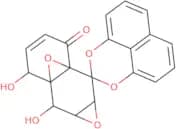
CAS:Cladospirone bisepoxide is a naturally occurring bioactive compound, classified specifically as a fungal metabolite, which is derived from species within the Cladosporium genus. The compound exhibits a complex bisepoxide structure, contributing to its unique chemical properties. Its mode of action involves disrupting microbial cellular processes, displaying potent antimicrobial activity by interfering with the synthesis and functioning of vital cellular components in targeted microorganisms.Formula:C20H14O7Purezza:Min. 95%Peso molecolare:366.3 g/molMinocycline hydrochloride dihydrate
CAS:Minocycline hydrochloride dihydrate is a broad-spectrum antibiotic, which is a synthetic derivative of tetracycline. It is sourced from chemical synthesis processes and possesses potent antimicrobial properties. The mode of action involves inhibiting bacterial protein synthesis by binding to the 30S ribosomal subunit, thereby preventing the addition of amino acids to the growing peptide chain. This mechanism effectively disrupts bacterial growth and replication.
Formula:C23H32ClN3O9Purezza:Min. 95%Peso molecolare:530 g/molColistin A
CAS:Colistin A is an antimicrobial peptide, which is a type of polymyxin antibiotic derived from the bacterium *Paenibacillus polymyxa*. It exerts its bactericidal effect by interacting electrostatically with the lipopolysaccharides and phospholipids in the outer membrane of Gram-negative bacteria. This action disrupts the bacterial cell membrane, leading to increased permeability and cell death.Formula:C53H100N16O13Purezza:Min. 95%Peso molecolare:1,169.5 g/molTioconazole
CAS:Tioconazole is an antifungal agent, which is a synthetic derivative of imidazole with broad-spectrum activity against fungi. This compound is chemically synthesized through complex organic reactions to enhance its antimycotic efficacy. Tioconazole functions by inhibiting the synthesis of ergosterol, an essential component of the fungal cell membrane. By disrupting the ergosterol biosynthesis pathway, tioconazole destabilizes the fungal cell membrane, leading to increased permeability and eventual cell death.
Formula:C16H13Cl3N2OSPurezza:Min. 95%Peso molecolare:387.71 g/molTigecycline, Antibiotic for Culture Media Use Only
CAS:Tigecycline is an antibiotic specifically tailored for use in culture media, which is derived from glycylcycline, a structural analogue of minocycline. Its mode of action involves binding to the 30S ribosomal subunit, thereby inhibiting protein synthesis in a broad spectrum of Gram-positive and Gram-negative bacteria. This action is distinct and not easily circumvented by common resistance mechanisms, such as efflux or ribosomal protection proteins, making tigecycline an effective agent in controlling bacterial contamination during microbiological studies.Formula:C29H39N5O8Purezza:Min. 95 Area-%Peso molecolare:585.65 g/molRef: 3D-Q-101396
1gPrezzo su richiesta5gPrezzo su richiesta10gPrezzo su richiesta25gPrezzo su richiesta2500mgPrezzo su richiestaHsv-tk substrate
CAS:HSV-tk substrate is a nucleotide analogue, which is a synthetic compound derived from the herpes simplex virus thymidine kinase (HSV-tk) gene. This substrate is specifically phosphorylated by the HSV-tk enzyme, a property that provides significant utility in molecular biology and genetic research. The mode of action involves the selective phosphorylation of the substrate by HSV-tk, which is typically absent in mammalian cells but can be introduced via genetic engineering. Once phosphorylated, the substrate becomes toxic to the host cell, allowing researchers to selectively target and eliminate cells expressing the HSV-tk gene.Formula:C11H15N5O4Purezza:Min. 95%Peso molecolare:281.27 g/molEntecavir-13C2,15N
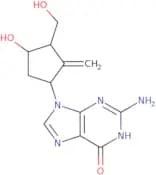
CAS:Entecavir-13C2,15N is an isotopically labeled antiviral agent, which is a synthetic nucleoside analogue derived from natural sources. Its mode of action involves selectively inhibiting the reverse transcription activity of the hepatitis B virus (HBV) polymerase. By mimicking the natural substrates of the viral polymerase, Entecavir-13C2,15N becomes incorporated into viral DNA, ultimately leading to chain termination and suppression of viral replication.Formula:C12H15N5O3Purezza:Min. 95%Peso molecolare:280.26 g/molTenatoprazole sodium
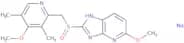
CAS:Tenatoprazole sodium is a proton pump inhibitor, which is a synthetic pharmaceutical compound designed to selectively inhibit the hydrogen-potassium ATPase enzyme in the gastric parietal cells. This enzyme is essential for the final step of gastric acid production. Originating from organic chemical synthesis processes, Tenatoprazole sodium features a unique imidazopyridine structure, distinguishing it from other members of the proton pump inhibitor class such as omeprazole, which belongs to the benzimidazole family.Formula:C16H18N4NaO3SPurezza:Min. 95%Peso molecolare:369.4 g/molAqabamycin C
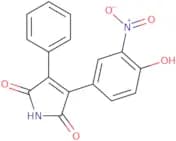
CAS:Aqabamycin C is an antibiotic compound, which is derived from marine bacteria, specifically, the actinomycete strain found in marine environments. Its mode of action involves the disruption of bacterial cell wall synthesis, making it particularly effective against certain gram-negative bacteria. This antibiotic selectively inhibits pathogens by interfering with their essential cellular processes.Formula:C16H10N2O5Purezza:Min. 95%Peso molecolare:310.26 g/molClindamycin-2,4-diphosphate
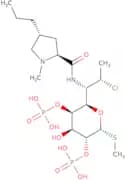
CAS:Clindamycin-2,4-diphosphate is a phosphorylated derivative of the antibiotic clindamycin, which is a semi-synthetic lincosamide antibiotic originally derived from Streptomyces lincolnensis. Its mode of action involves the inhibition of bacterial protein synthesis by binding to the 50S ribosomal subunit, thereby preventing peptide chain elongation during translation. This mechanism effectively disrupts protein production in susceptible bacteria, leading to their growth inhibition or death.Formula:C18H35ClN2O11P2SPurezza:Min. 95%Peso molecolare:584.94 g/molHodgkinsine B
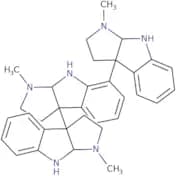
CAS:Hodgkinsine B is an indole alkaloid, which is a complex organic compound derived from natural sources. It is isolated from the leaves of certain Rubiaceae family plants, including Psychotria colorata. Hodgkinsine B is characterized by its unique trimeric structure that contributes to its pharmacological properties.
Formula:C33H38N6Purezza:Min. 95%Peso molecolare:518.7 g/molArbekacin sulfate
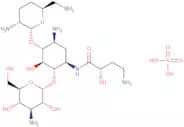
CAS:Inhibitor of DNA replication; aminoglycoside classFormula:C22H44N6O10·xH2SO4Purezza:Min. 95%Colore e forma:White PowderPeso molecolare:650.7 g/molAmikacin B Sulfate
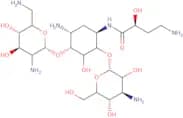
CAS:Inhibitor of protein synthesis; aminoglycosideFormula:C22H44N6O12xH2so4Purezza:Min. 95%Peso molecolare:584.62 g/molVancomycin aglycon
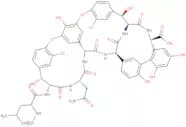
CAS:Vancomycin aglycon is a glycopeptide antibiotic, which is a derivative of vancomycin. It is sourced from the fermentation products of certain Amycolatopsis species, a genus of actinobacteria. The mode of action of vancomycin aglycon involves the inhibition of bacterial cell wall synthesis. It specifically binds to the D-Ala-D-Ala terminus of nascent peptidoglycan chains, thereby preventing the cross-linking that is crucial for maintaining cell wall integrity.
Formula:C53H52Cl2N8O17Purezza:Min. 95%Peso molecolare:1,143.93 g/molFlufenacet-methylsulfone
CAS:Flufenacet-methylsulfone is an herbicidal derivative, which is sourced from the modification of flufenacet metabolites. It operates by inhibiting the biosynthesis of very-long-chain fatty acids, which are crucial components in the formation of cell membranes within target plant species. This biochemical intervention disrupts normal cell division and elongation in weeds, ultimately inhibiting their growth and establishment.
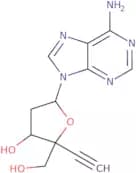
Formula:C12H16FNO3SPurezza:Min. 95%Peso molecolare:273.33 g/mol4'-Ethynyl-2'-deoxyadenosine
CAS:4'-Ethynyl-2'-deoxyadenosine is a deoxynucleoside analogue, which is synthesized through chemical processes. This compound acts as an antiviral agent, primarily targeting the viral replication machinery. Its mode of action involves the incorporation into viral DNA by mimicking natural nucleosides, which subsequently inhibits the enzymatic activity of reverse transcriptase. This inhibition disrupts the synthesis of viral DNA, effectively curtailing viral replication.Formula:C12H13N5O3Purezza:Min. 95%Peso molecolare:275.26 g/mol