Antimicrobici
Sottocategorie di "Antimicrobici"
- Antibiotici(4.133 prodotti)
- Antimicotici(888 prodotti)
- Antiparassitari(687 prodotti)
- Antivirali(764 prodotti)
Trovati 2437 prodotti di "Antimicrobici"
Famciclovir-d4
CAS:Famciclovir-d4 is a deuterium-labeled antiviral nucleoside analog, which is a synthetic derivative of the guanine analog famciclovir. This compound is sourced through advanced chemical synthesis where deuterium atoms replace specific hydrogen atoms, providing an isotopic label that aids in the tracking and analysis of the pharmaceutical compound within biological systems.Formula:C14H19N5O4Purezza:Min. 95%Peso molecolare:325.36 g/molTebufenozide-1-hydroxyethyl
CAS:Tebufenozide-1-hydroxyethyl is an insect growth regulator, which is a synthetic chemical derived from a modified benzoic acid structure. Its mode of action involves mimicking the molting hormone ecdysone, which disrupts the normal development process of insects by inducing premature molting. This specific interference targets lepidopteran larvae, leading to incomplete development and eventual death, thereby controlling pest populations effectively without harming non-target organisms.Formula:C22H28N2O3Purezza:Min. 95%Peso molecolare:368.5 g/molCladospirone bisepoxide
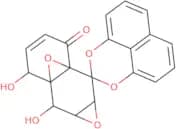
CAS:Cladospirone bisepoxide is a naturally occurring bioactive compound, classified specifically as a fungal metabolite, which is derived from species within the Cladosporium genus. The compound exhibits a complex bisepoxide structure, contributing to its unique chemical properties. Its mode of action involves disrupting microbial cellular processes, displaying potent antimicrobial activity by interfering with the synthesis and functioning of vital cellular components in targeted microorganisms.Formula:C20H14O7Purezza:Min. 95%Peso molecolare:366.3 g/molCadazolid
CAS:Cadazolid is an investigational antibiotic, which is a synthetic oxazolidinone-cephalosporin hybrid, with a novel mechanism of action. It is engineered to disrupt bacterial protein synthesis by binding to the 50S ribosomal subunit, while also exerting strong bactericidal effects. This dual-action approach combines attributes of both linezolid and cephalosporins to target and disrupt essential bacterial processes.Formula:C29H29F2N3O8Purezza:Min. 95%Peso molecolare:585.55 g/molPirodavir
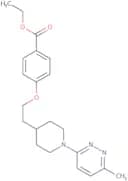
CAS:Pirodavir is a potent antiviral compound, which is a synthetic molecule developed through pharmaceutical research. It acts by targeting the rhinovirus, the most common viral infectious agent in humans, primarily responsible for the common cold. Pirodavir's mode of action involves binding to the viral capsid, thereby preventing the uncoating process essential for viral replication.Formula:C21H27N3O3Purezza:Min. 95%Peso molecolare:369.46 g/molAlisporivir
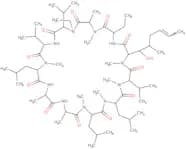
CAS:Alisporivir is an investigational antiviral agent, which is a synthetic derivative of cyclosporine A. It originates from the structural modification of naturally occurring cyclosporines, specifically designed to retain potent antiviral activity while minimizing immunosuppressive effects. Its mode of action involves the inhibition of cyclophilin, an essential cellular protein that facilitates the replication of hepatitis C virus (HCV) by interacting with viral proteins. By binding to cyclophilin, alisporivir disrupts this interaction, effectively halting the viral replication process.Formula:C63H113N11O12Purezza:Min. 95%Peso molecolare:1,216.6 g/molTioconazole
CAS:Tioconazole is an antifungal agent, which is a synthetic derivative of imidazole with broad-spectrum activity against fungi. This compound is chemically synthesized through complex organic reactions to enhance its antimycotic efficacy. Tioconazole functions by inhibiting the synthesis of ergosterol, an essential component of the fungal cell membrane. By disrupting the ergosterol biosynthesis pathway, tioconazole destabilizes the fungal cell membrane, leading to increased permeability and eventual cell death.
Formula:C16H13Cl3N2OSPurezza:Min. 95%Peso molecolare:387.71 g/molBasic violet 3 d6
CAS:Basic Violet 3 is a synthetic dye, which is derived from coal tar sources with a mechanism of action involving the disruption of cellular components. This compound intercalates with nucleic acids, allowing it to bind to specific cellular structures. Its primary mode of action targets the chromosomal material, leading to colorimetric changes that enhance visualization.
Formula:C25H30ClN3Purezza:Min. 95%Peso molecolare:414 g/molL-Carnitine fumarate
CAS:L-Carnitine fumarate is a compound that functions as a dietary supplement, which is synthesized by combining L-carnitine, an amino acid derivative naturally found in the body, with fumaric acid. This product is primarily sourced from fermentation or chemical synthesis processes to produce L-carnitine, which is then reacted with fumaric acid to form the fumarate salt. This combination enhances the stability and bioavailability of L-carnitine.Formula:C7H15NO3·C4H4O4Purezza:Min. 95%Peso molecolare:277.27 g/molTigecycline, Antibiotic for Culture Media Use Only
CAS:Tigecycline is an antibiotic specifically tailored for use in culture media, which is derived from glycylcycline, a structural analogue of minocycline. Its mode of action involves binding to the 30S ribosomal subunit, thereby inhibiting protein synthesis in a broad spectrum of Gram-positive and Gram-negative bacteria. This action is distinct and not easily circumvented by common resistance mechanisms, such as efflux or ribosomal protection proteins, making tigecycline an effective agent in controlling bacterial contamination during microbiological studies.Formula:C29H39N5O8Purezza:Min. 95 Area-%Peso molecolare:585.65 g/molRef: 3D-Q-101396
1gPrezzo su richiesta5gPrezzo su richiesta10gPrezzo su richiesta25gPrezzo su richiesta2500mgPrezzo su richiestaHsv-tk substrate
CAS:HSV-tk substrate is a nucleotide analogue, which is a synthetic compound derived from the herpes simplex virus thymidine kinase (HSV-tk) gene. This substrate is specifically phosphorylated by the HSV-tk enzyme, a property that provides significant utility in molecular biology and genetic research. The mode of action involves the selective phosphorylation of the substrate by HSV-tk, which is typically absent in mammalian cells but can be introduced via genetic engineering. Once phosphorylated, the substrate becomes toxic to the host cell, allowing researchers to selectively target and eliminate cells expressing the HSV-tk gene.Formula:C11H15N5O4Purezza:Min. 95%Peso molecolare:281.27 g/molMagainin 1
CAS:Magainin 1 is a peptide antibiotic, which is sourced from the skin secretions of the African clawed frog, *Xenopus laevis*. It operates through a membranolytic mode of action, whereby it integrates into microbial cell membranes, forming pores and causing cell lysis by disrupting membrane integrity. This mechanism is largely non-specific, making it effective against a broad spectrum of bacteria and fungi.Formula:C112H177N29O28SPurezza:Min. 95%Peso molecolare:2,409.85 g/molTerrelulamide A
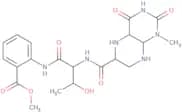
CAS:Terrelulamide A is a bioactive compound, specifically a cyclic peptide, which is derived from marine cyanobacteria. The source of Terrelulamide A is primarily marine environments where these cyanobacteria undergo complex biosynthetic processes to produce such metabolites. This compound's mode of action involves the disruption of cellular processes by binding to specific molecular targets that are critical in cell cycle regulation. It exhibits cytotoxic activity, effectively inhibiting cancer cell proliferation through its interaction with those pathways.Formula:C20H26N6O7Purezza:Min. 95%Peso molecolare:462.5 g/molEntecavir-13C2,15N
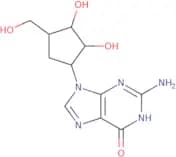
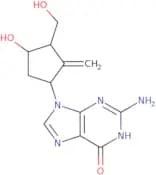
CAS:Entecavir-13C2,15N is an isotopically labeled antiviral agent, which is a synthetic nucleoside analogue derived from natural sources. Its mode of action involves selectively inhibiting the reverse transcription activity of the hepatitis B virus (HBV) polymerase. By mimicking the natural substrates of the viral polymerase, Entecavir-13C2,15N becomes incorporated into viral DNA, ultimately leading to chain termination and suppression of viral replication.Formula:C12H15N5O3Purezza:Min. 95%Peso molecolare:280.26 g/mol4-Epitetracycline ammonium
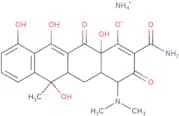
CAS:4-Epitetracycline ammonium is a tetracycline analog, which is a derivative of the well-known antibiotic tetracycline. This compound is synthesized from naturally occurring tetracycline through chemical modification, involving the alteration of the hydroxyl group at the C-4 position. As a result, 4-Epitetracycline ammonium retains the fundamental characteristics of its parent compound.Formula:C22H27N3O8Purezza:Min. 95%Peso molecolare:461.5 g/molAmustaline dihydrochloride
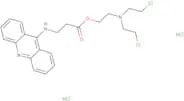
CAS:Amustaline dihydrochloride is a chemical compound known for its alkylating properties, which is synthetically derived through chemical synthesis methods. The mode of action of Amustaline dihydrochloride involves the formation of covalent bonds with nucleophilic entities in DNA, leading to cross-linking and subsequent disruption of DNA function. This results in the inhibition of cellular replication, ultimately inducing apoptosis or programmed cell death in rapidly dividing cells.Formula:C22H27Cl4N3O2Purezza:Min. 95%Peso molecolare:507.3 g/molHodgkinsine B
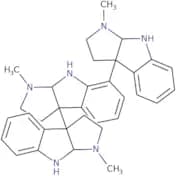
CAS:Hodgkinsine B is an indole alkaloid, which is a complex organic compound derived from natural sources. It is isolated from the leaves of certain Rubiaceae family plants, including Psychotria colorata. Hodgkinsine B is characterized by its unique trimeric structure that contributes to its pharmacological properties.
Formula:C33H38N6Purezza:Min. 95%Peso molecolare:518.7 g/molAmikacin B Sulfate
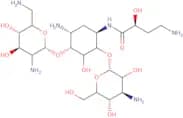
CAS:Inhibitor of protein synthesis; aminoglycosideFormula:C22H44N6O12xH2so4Purezza:Min. 95%Peso molecolare:584.62 g/molN,N′-1,2-Ethanediylbis[3-nitrobenzenesulfonamide]
CAS:N,N′-1,2-Ethanediylbis[3-nitrobenzenesulfonamide] is a chemical compound, specifically a bis-sulfonamide derivative. It is synthesized through the reaction of sulfonamide derivatives with ethylenediamine, resulting in a unique structure characterized by its two nitrobenzenesulfonamide groups linked by an ethylene bridge. As a source, it is obtained through synthetic organic chemistry methods involving nitration and sulfonamidation processes.Formula:C14H14N4O8S2Purezza:Min. 95%Peso molecolare:430.4 g/molAcequinocyl-hydroxy
CAS:Acequinocyl-hydroxy is an acaricide, which is a chemical agent used to manage and control mite populations in various agricultural settings. It is derived from a combination of synthetic organic compounds designed specifically to disrupt the normal biological processes of target pests. The mode of action of Acequinocyl-hydroxy involves interference with the mitochondrial electron transport chain of mites, ultimately disrupting cellular respiration and leading to the death of the pest.Formula:C22H30O3Purezza:Min. 95%Peso molecolare:342.5 g/mol







![N,N′-1,2-Ethanediylbis[3-nitrobenzenesulfonamide]](/_next/image/?url=https%3A%2Fstatic.cymitquimica.com%2Fproducts%2F3D%2Fthumb-webp%2FAAA09662.webp&w=3840&q=75)