Antimicrobici
Gli antimicrobici sono agenti che distruggono o inibiscono la crescita di microrganismi, inclusi batteri, virus, funghi e parassiti. Questi composti sono essenziali nella prevenzione e nel trattamento delle infezioni, svolgendo un ruolo cruciale nella medicina, nell'agricoltura e nell'industria alimentare. Presso CymitQuimica offriamo un'ampia gamma di antimicrobici di alta qualità e purezza, adatti a varie applicazioni scientifiche e industriali. Il nostro catalogo comprende antibiotici, antifungini, antivirali e disinfettanti, tutti progettati per soddisfare le esigenze della ricerca e dello sviluppo, nonché per applicazioni cliniche e di produzione. Con i nostri prodotti, i professionisti possono garantire l'efficacia e la sicurezza nel controllo delle infezioni e nella protezione della salute pubblica.
Sottocategorie di "Antimicrobici"
- Antibiotici(4.130 prodotti)
- Antimicotici(909 prodotti)
- Antiparassitari(703 prodotti)
- Antivirali(766 prodotti)
Trovati 2424 prodotti di "Antimicrobici"
Ordinare per
Purezza (%)
0
100
|
0
|
50
|
90
|
95
|
100
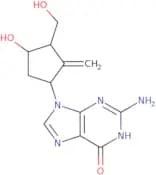
Entecavir-13C2,15N
CAS:Entecavir-13C2,15N is an isotopically labeled antiviral agent, which is a synthetic nucleoside analogue derived from natural sources. Its mode of action involves selectively inhibiting the reverse transcription activity of the hepatitis B virus (HBV) polymerase. By mimicking the natural substrates of the viral polymerase, Entecavir-13C2,15N becomes incorporated into viral DNA, ultimately leading to chain termination and suppression of viral replication.Formula:C12H15N5O3Purezza:Min. 95%Peso molecolare:280.26 g/molNorvancomycin trifluoroacetate
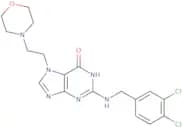
CAS:Norvancomycin trifluoroacetate is an antibiotic compound, which is a glycopeptide derived from the bacterium Amycolatopsis orientalis. Its mode of action involves inhibiting bacterial cell wall synthesis. Specifically, Norvancomycin disrupts the cross-linking of peptidoglycan layers in the bacterial cell wall by binding to the D-alanyl-D-alanine terminus of cell wall precursors. This disruption weakens the bacterial cell wall, ultimately leading to cell lysis and death, thereby exerting a bactericidal effect.Formula:C65H73Cl2N9O24•(C2HF3O2)xPurezza:Min. 95%ACX-362E
CAS:<p>ACX-362E is a novel antibacterial agent, which is a synthetic compound derived from small-molecule chemical libraries with selective action on bacterial pathogens. The mode of action of ACX-362E involves the inhibition of bacterial cell wall synthesis, specifically targeting essential enzymes involved in the peptidoglycan biosynthesis pathway. This interference disrupts cell wall integrity, leading to bacterial lysis and cell death.</p>Formula:C18H20Cl2N6O2Purezza:Min. 95%Peso molecolare:423.3 g/molDesethyl chloroquine (diphosphate)
CAS:<p>Desethyl chloroquine (diphosphate) is a pharmacological compound, which is a derivative and metabolite of chloroquine. Chloroquine itself is a synthetic drug originally derived from quinoline. The mode of action of Desethyl chloroquine involves the interference with heme polymerization in malaria parasites. This process disrupts the detoxification of heme, a byproduct of hemoglobin digestion, thereby exhibiting antimalarial effects.</p>Formula:C16H28ClN3O8P2Purezza:Min. 95%Peso molecolare:487.8 g/molHsv-tk substrate
CAS:HSV-tk substrate is a nucleotide analogue, which is a synthetic compound derived from the herpes simplex virus thymidine kinase (HSV-tk) gene. This substrate is specifically phosphorylated by the HSV-tk enzyme, a property that provides significant utility in molecular biology and genetic research. The mode of action involves the selective phosphorylation of the substrate by HSV-tk, which is typically absent in mammalian cells but can be introduced via genetic engineering. Once phosphorylated, the substrate becomes toxic to the host cell, allowing researchers to selectively target and eliminate cells expressing the HSV-tk gene.Formula:C11H15N5O4Purezza:Min. 95%Peso molecolare:281.27 g/molAvermectin b1a aglycone
CAS:Avermectin B1a aglycone is a potent antiparasitic agent, which is a semi-synthetic derivative of avermectins. Avermectins are naturally sourced from the microorganism *Streptomyces avermitilis*, known for producing macrolide compounds. The mode of action of Avermectin B1a aglycone involves binding to glutamate-gated chloride channels in nerve and muscle cells of invertebrates, leading to increased permeability and disruption of neurotransmission. This action ultimately results in paralysis and death of the targeted parasites.Formula:C34H48O8Purezza:Min. 95%Peso molecolare:584.7 g/molTigecycline, Antibiotic for Culture Media Use Only
CAS:Tigecycline is an antibiotic specifically tailored for use in culture media, which is derived from glycylcycline, a structural analogue of minocycline. Its mode of action involves binding to the 30S ribosomal subunit, thereby inhibiting protein synthesis in a broad spectrum of Gram-positive and Gram-negative bacteria. This action is distinct and not easily circumvented by common resistance mechanisms, such as efflux or ribosomal protection proteins, making tigecycline an effective agent in controlling bacterial contamination during microbiological studies.Formula:C29H39N5O8Purezza:Min. 95 Area-%Peso molecolare:585.65 g/molRef: 3D-Q-101396
1gPrezzo su richiesta5gPrezzo su richiesta10gPrezzo su richiesta25gPrezzo su richiesta2500mgPrezzo su richiestaTioconazole
CAS:<p>Tioconazole is an antifungal agent, which is a synthetic derivative of imidazole with broad-spectrum activity against fungi. This compound is chemically synthesized through complex organic reactions to enhance its antimycotic efficacy. Tioconazole functions by inhibiting the synthesis of ergosterol, an essential component of the fungal cell membrane. By disrupting the ergosterol biosynthesis pathway, tioconazole destabilizes the fungal cell membrane, leading to increased permeability and eventual cell death.</p>Formula:C16H13Cl3N2OSPurezza:Min. 95%Peso molecolare:387.71 g/molCladospirone bisepoxide
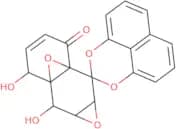
CAS:Cladospirone bisepoxide is a naturally occurring bioactive compound, classified specifically as a fungal metabolite, which is derived from species within the Cladosporium genus. The compound exhibits a complex bisepoxide structure, contributing to its unique chemical properties. Its mode of action involves disrupting microbial cellular processes, displaying potent antimicrobial activity by interfering with the synthesis and functioning of vital cellular components in targeted microorganisms.Formula:C20H14O7Purezza:Min. 95%Peso molecolare:366.3 g/molTebufenozide-1-hydroxyethyl
CAS:<p>Tebufenozide-1-hydroxyethyl is an insect growth regulator, which is a synthetic chemical derived from a modified benzoic acid structure. Its mode of action involves mimicking the molting hormone ecdysone, which disrupts the normal development process of insects by inducing premature molting. This specific interference targets lepidopteran larvae, leading to incomplete development and eventual death, thereby controlling pest populations effectively without harming non-target organisms.</p>Formula:C22H28N2O3Purezza:Min. 95%Peso molecolare:368.5 g/molFamciclovir-d4
CAS:<p>Famciclovir-d4 is a deuterium-labeled antiviral nucleoside analog, which is a synthetic derivative of the guanine analog famciclovir. This compound is sourced through advanced chemical synthesis where deuterium atoms replace specific hydrogen atoms, providing an isotopic label that aids in the tracking and analysis of the pharmaceutical compound within biological systems.</p>Formula:C14H19N5O4Purezza:Min. 95%Peso molecolare:325.36 g/mol(R)-(+)-Pantoprazole
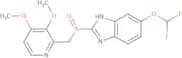
CAS:<p>(R)-(+)-Pantoprazole is a proton pump inhibitor (PPI), which is derived from benzimidazole compounds. Its mode of action involves the selective and irreversible inhibition of the H+/K+ ATPase enzyme system, commonly known as the proton pump, located on the gastric parietal cells. By binding covalently to this enzyme, (R)-(+)-Pantoprazole effectively reduces gastric acid secretion, leading to an increase in gastric pH.</p>Formula:C16H15F2N3O4SPurezza:Min. 95%Peso molecolare:383.4 g/molAqabamycin B
CAS:Aqabamycin B is a novel antibiotic compound, which is derived from marine microorganisms. This secondary metabolite is isolated from a marine sponge-associated bacterium, showcasing the rich potential of oceanic sources for discovering new antimicrobial agents. The mode of action of Aqabamycin B involves inhibition of bacterial cell wall synthesis, disrupting the structural integrity and leading to cell lysis. Its efficacy extends predominantly to combatting multi-drug resistant bacterial strains.Formula:C16H10N2O6Purezza:Min. 95%Peso molecolare:326.26 g/molHexazinone metabolite B
CAS:<p>Hexazinone metabolite B is a chemical byproduct of the breakdown of Hexazinone, which is an herbicide. This metabolite emerges from an extensive metabolic pathway in plants, fungi, and soil microorganisms as they degrade the parent compound. Its mode of action involves interacting with plant processes, potentially affecting growth and development, as it may influence photosynthetic pathways or other vital physiological functions.</p>Formula:C11H18N4O2Purezza:Min. 95%Peso molecolare:238.29 g/molCarbazomycin D
CAS:<p>Carbazomycin D is a bioactive product classified as an antibiotic, which is derived from the bacterium Streptomyces. These actinomycetes are well-known for their ability to produce a wide range of secondary metabolites with antimicrobial properties. The mode of action of Carbazomycin D involves the inhibition of bacterial cell wall synthesis, effectively disrupting the growth and replication of gram-positive bacteria.</p>Formula:C17H19NO3Purezza:Min. 95%Peso molecolare:285.34 g/molHexazinone metabolite E
CAS:Hexazinone metabolite E is a degradation product of the herbicide Hexazinone, which is derived from synthetic chemical processes. This metabolite emerges as a result of the biochemical breakdown of Hexazinone in soil and water environments. The mode of action involves the contamination and persistence in various environmental matrices, making it a key compound of interest for understanding the environmental impact of herbicide application. Hexazinone initially acts by inhibiting photosynthesis in plants, and its metabolites, including metabolite E, provide insights into the degradation pathways and long-term behavior of the herbicide in ecosystems.Formula:C10H15N3O4Purezza:Min. 95%Peso molecolare:241.24 g/molAphidicolin
CAS:<p>Aphidicolin is a tetracyclic diterpenoid that acts as a potent inhibitor of DNA polymerase. Derived from the fungus *Cephalosporium aphidicola*, it is primarily identified for its ability to impede DNA synthesis by targeting eukaryotic DNA polymerase α. This selective inhibition disrupts replication processes, making it a crucial tool for studying cell cycle dynamics.</p>Formula:C20H34O4Purezza:Min. 95%Peso molecolare:338.48 g/molPyraziflumid
CAS:Pyraziflumid is a fungicide, which is chemically synthesized with a specific mode of action as a succinate dehydrogenase inhibitor (SDHI). This compound is designed to target mitochondrial complex II, disrupting critical energy production within fungal cells. The inhibition of succinate dehydrogenase prevents the fungi from efficiently undergoing respiration, ultimately leading to cell death.Formula:C18H10F5N3OPurezza:Min. 95%Peso molecolare:379.3 g/molSulfasymazine
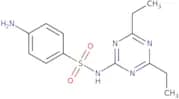
CAS:<p>Sulfasymazine is a synthetic antibacterial agent, which is derived from sulfonamide compounds. These compounds originate from chemical synthesis processes involving the introduction of sulfonamide groups to aromatic amines, creating potent inhibitors of bacterial growth. Sulfasymazine functions by interfering with the synthesis of folic acid within bacterial cells. It inhibits the enzyme dihydropteroate synthase, which is crucial for the production of dihydrofolate, a precursor of folic acid. This disruption hampers nucleic acid synthesis, impeding bacterial proliferation.</p>Formula:C13H17N5O2SPurezza:Min. 95%Peso molecolare:307.37 g/mol9,11β-Dichloro-17,21-dihydroxy-16β-methyl-pregna-1,4-diene-3,20-dione dipropionate
CAS:9,11Beta-Dichloro-17,21-dihydroxy-16beta-methyl-pregna-1,4-diene-3,20-dione dipropionate is a synthetic corticosteroid, which is derived from chemical synthesis in laboratories. It functions by mimicking the actions of naturally occurring corticosteroids in the body, modulating immune responses and suppressing inflammatory mediators at the cellular level.Formula:C28H36Cl2O6Purezza:Min. 95%Peso molecolare:539.50 g/mol