Antimicrobici
Gli antimicrobici sono agenti che distruggono o inibiscono la crescita di microrganismi, inclusi batteri, virus, funghi e parassiti. Questi composti sono essenziali nella prevenzione e nel trattamento delle infezioni, svolgendo un ruolo cruciale nella medicina, nell'agricoltura e nell'industria alimentare. Presso CymitQuimica offriamo un'ampia gamma di antimicrobici di alta qualità e purezza, adatti a varie applicazioni scientifiche e industriali. Il nostro catalogo comprende antibiotici, antifungini, antivirali e disinfettanti, tutti progettati per soddisfare le esigenze della ricerca e dello sviluppo, nonché per applicazioni cliniche e di produzione. Con i nostri prodotti, i professionisti possono garantire l'efficacia e la sicurezza nel controllo delle infezioni e nella protezione della salute pubblica.
Sottocategorie di "Antimicrobici"
- Antibiotici(4.129 prodotti)
- Antimicotici(904 prodotti)
- Antiparassitari(702 prodotti)
- Antivirali(765 prodotti)
Trovati 2424 prodotti di "Antimicrobici"
Ordinare per
Purezza (%)
0
100
|
0
|
50
|
90
|
95
|
100
3-(Dichloroacetyl)-2,2,5-trimethyloxazolidine
CAS:<p>3-(Dichloroacetyl)-2,2,5-trimethyloxazolidine is an oxazolidine derivative, which is a synthetic compound primarily used in the agricultural industry. It is derived through a chemical synthesis process involving the condensation of dichloroacetic acid with trimethyloxazolidine under controlled conditions. This compound functions as a pre-emergent herbicide by inhibiting the biosynthesis of essential enzymes in target plant species.</p>Formula:C8H13Cl2NO2Purezza:Min. 95%Peso molecolare:226.1 g/molCPFX2090
CAS:<p>CPFX2090 is a sophisticated software platform designed for advanced data analytics and visualization, which is developed by a team of computational scientists utilizing cutting-edge algorithms and machine learning techniques. It operates through a dynamic interface that enables automated data processing, multidimensional analysis, and real-time visualization. The platform's mode of action involves ingesting large datasets, performing parallel computations, and visualizing results with interactive graphical tools.</p>Formula:C28H28ClNO6Purezza:Min. 95%Peso molecolare:510 g/molN-Acetyl glyphosate-13C2,15N
CAS:<p>N-Acetyl glyphosate-13C2,15N is a stable isotope-labeled analog of the well-known herbicide glyphosate. This product is synthesized using isotopically enriched carbon and nitrogen sources. Its mode of action involves inhibiting the shikimate pathway by targeting the enzyme 5-enolpyruvylshikimate-3-phosphate synthase (EPSPS), crucial for aromatic amino acid biosynthesis in plants. This pathway is not present in animals, making it a valuable target for selective herbicidal action.</p>Formula:C5H10NO6PPurezza:Min. 95%Peso molecolare:214.09 g/molAntimicrobial compound 1
CAS:<p>Antimicrobial Compound 1 is a broad-spectrum antimicrobial agent, which is derived from natural sources, specifically from marine bacteria with known potent antimicrobial properties. This compound acts by targeting and disrupting the synthesis of bacterial cell walls, specifically inhibiting peptidoglycan cross-linking, which ultimately leads to cell lysis and death due to osmotic instability. Such a mechanism offers a robust approach to tackling Gram-positive and Gram-negative bacteria.</p>Formula:C18H30BrNO2Purezza:Min. 95%Peso molecolare:372.3 g/molPC 190723
CAS:<p>PC 190723 is a synthetic chemical compound, which is derived through targeted chemical synthesis processes involving precise organic reactions. Its mode of action involves disrupting cellular division by inhibiting specific protein functions essential for the mitotic process. This molecular interaction results in potent effects on cell division, making it a valuable tool for studying cellular mechanics and developing therapeutic strategies.</p>Formula:C14H8ClF2N3O2SPurezza:Min. 95%Peso molecolare:355.75 g/molCaerulomycin A
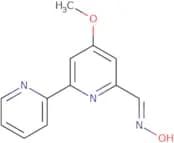
CAS:<p>Caerulomycin A is a bioactive compound classified as a natural broad-spectrum antibiotic, which is derived from various Streptomyces species found in soil. Its mode of action involves inhibiting fungal and bacterial growth by interfering with essential cellular processes, effectively curbing the proliferation of pathogenic microorganisms. This potent molecule achieves its effects by binding to specific cellular targets, thereby disrupting cell wall synthesis and other critical metabolic pathways.</p>Formula:C12H11N3O2Purezza:Min. 95%Peso molecolare:229.23 g/molAcetyl-pepstatin
CAS:Acetyl-pepstatin is a potent protease inhibitor, which is synthesized from a naturally occurring peptide source. Its primary mode of action involves the inhibition of aspartic proteases, a class of enzymes responsible for protein digestion and processing within biological systems. By specifically targeting these enzymes, Acetyl-pepstatin effectively halts the hydrolytic activity, which makes it an invaluable tool in the study of protease function and the regulation of proteolytic pathways.Formula:C31H57N5O9Purezza:Min. 95%Peso molecolare:643.8 g/mol3'-N-Desmethyl-3'-N-tosyl azithromycin
CAS:<p>3'-N-Desmethyl-3'-N-tosyl azithromycin is a semi-synthetic macrolide antibiotic analog, which is a derivative of azithromycin, a well-known member of the macrolide class of antibiotics. This compound is synthesized through chemical modifications of the parent molecule, azithromycin, to potentially enhance its pharmacokinetic and pharmacodynamic properties.</p>Formula:C44H76N2O14SPurezza:Min. 95%Peso molecolare:889.15 g/molPPA-904
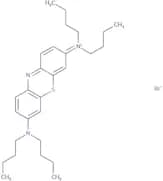
CAS:PPA-904 is an organophosphate compound, which is a chemically synthesized product. It functions as an additive, often utilized in industrial applications due to its unique chemical properties. As an organophosphate, PPA-904 acts through phosphorylation processes, interacting with various substrates to alter their chemical and physical characteristics. This mechanism is utilized to enhance material properties such as stability, functionality, or resistance to environmental conditions.Formula:C28H42BrN3SPurezza:Min. 95%Peso molecolare:532.6 g/molRSV-IN-1
CAS:RSV-IN-1 is a small molecule inhibitor, which is a synthetic compound with potent antiviral activity against Respiratory Syncytial Virus (RSV). Its primary source is chemical synthesis, designed to specifically target and inhibit the function of RSV’s viral polymerase complex. The mode of action involves the interruption of viral RNA synthesis, thereby preventing the replication and proliferation of RSV within host cells.Formula:C20H21N5O4SPurezza:Min. 95%Peso molecolare:427.5 g/molAzabon
CAS:<p>Azabon is a synthetic terpenoid compound, which is derived from renewable natural sources through a series of hydrogenation and isomerization processes. Its mode of action involves inhibiting specific enzymatic pathways, potentially interfering with cellular processes that are dependent on those enzymes. Primarily, Azabon is investigated for its applications in biochemical research, particularly for its effects on metabolic pathways that involve terpenoid interactions.</p>Formula:C14H20N2O2SPurezza:Min. 95%Peso molecolare:280.39 g/molAlthiomycin
CAS:<p>Althiomycin is a macrolide antibiotic, which is derived from Actinobacteria, specifically the genus Streptomyces. Its mode of action involves binding to the 50S subunit of the bacterial ribosome, thereby inhibiting protein synthesis. This mechanism effectively suppresses bacterial growth by interfering with the translation process, ultimately leading to pathogen elimination.</p>Formula:C16H17N5O6S2Purezza:Min. 95%Peso molecolare:439.50 g/molMomfluorothrin
CAS:<p>Momfluorothrin is a synthetic pyrethroid insecticide, which is a man-made derivative based on the natural pyrethrins. It functions primarily as a neurotoxic agent, targeting the sodium channels in the nervous system of insects, leading to paralysis and eventual death. This specific mode of action involves delaying the closing of the sodium channels, resulting in prolonged nerve impulses.</p>Formula:C19H19F4NO3Purezza:Min. 95%Peso molecolare:385.4 g/molBorrelidin
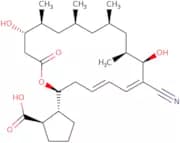
CAS:<p>Borrelidin is a potent antibiotic of the polyketide class, which is isolated from various Streptomyces species. Its mode of action is characterized by its inhibition of threonyl-tRNA synthetase, effectively disrupting protein synthesis within bacteria. Additionally, Borrelidin is known for its unique anti-angiogenic properties, which result from the inhibition of endothelial cell proliferation, making it a compound of interest in cancer research.</p>Purezza:Min. 95%Iohexol
CAS:<p>Iohexol is a non-ionic, water-soluble radiopaque contrast agent, which is synthesized from iodinated organic compounds. With its high iodine content, Iohexol acts as an excellent medium for absorbing X-rays, thereby enhancing the contrast in radiographic images. The compound’s mode of action involves the attenuation of X-ray beams, with its iodine atoms providing the requisite density to create a contrast between different structures and fluids within the body.</p>Formula:C19H26I3N3O9Purezza:Min. 98 Area-%Peso molecolare:821.14 g/molRef: 3D-Q-101936
25gPrezzo su richiesta50gPrezzo su richiesta100gPrezzo su richiesta250gPrezzo su richiesta500gPrezzo su richiestaEnzaplatovir
CAS:<p>Enzaplatovir is a novel antiviral agent, which is a synthetic compound developed through advanced medicinal chemistry techniques. It functions as an inhibitor of RNA-dependent RNA polymerase, a critical enzyme in the replication cycle of various RNA viruses. By targeting this enzyme, Enzaplatovir effectively impedes viral RNA synthesis, thus disrupting viral replication.</p>Formula:C20H19N5O3Purezza:Min. 95%Peso molecolare:377.4 g/molSP187
CAS:<p>Please enquire for more information about SP187 including the price, delivery time and more detailed product information at the technical inquiry form on this page</p>Formula:C16H33NO5Purezza:Min. 95%Peso molecolare:319.44 g/molFosravuconazole L-lysine ethanolate
CAS:<p>Fosravuconazole L-lysine ethanolate is an antifungal prodrug, which is a derivative of the widely used antifungal agent ravuconazole. This compound is synthesized through chemical modification to enhance its bioavailability and aqueous solubility, addressing limitations found in its parent compound. Fosravuconazole is designed to undergo in vivo conversion to ravuconazole, its active form, by enzymatic processes within the body.</p>Formula:C31H40F2N7O8PSPurezza:Min. 95%Peso molecolare:739.7 g/molSulfadiazine-d4
CAS:<p>Sulfadiazine-d4 is an isotopically labeled antibiotic, which is a derivative of sulfadiazine containing four deuterium atoms. This compound is synthesized using advanced chemical techniques to replace hydrogen atoms with deuterium in the molecular structure. The mechanism of action involves inhibition of bacterial dihydropteroate synthase, an enzyme critical in the folate synthesis pathway. By preventing the production of folic acid, sulfadiazine-d4 effectively halts bacterial growth and replication.</p>Formula:C10H6D4N4O2SPurezza:Min. 95%Peso molecolare:254.3 g/mol4-Epitetracycline hydrochloride
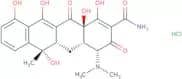
CAS:<p>4-Epitetracycline hydrochloride is a tetracycline antibiotic derivative, which is a secondary metabolite derived from bacterial sources, particularly Streptomyces species. It functions primarily by inhibiting protein synthesis in bacteria through binding to the 30S ribosomal subunit, preventing the attachment of aminoacyl-tRNA to the RNA-ribosome complex. This action hinders bacterial growth by interfering with vital processes necessary for bacterial survival and replication.</p>Formula:C22H25ClN2O8Purezza:Min. 95%Colore e forma:PowderPeso molecolare:480.9 g/mol