Antimicrobici
Gli antimicrobici sono agenti che distruggono o inibiscono la crescita di microrganismi, inclusi batteri, virus, funghi e parassiti. Questi composti sono essenziali nella prevenzione e nel trattamento delle infezioni, svolgendo un ruolo cruciale nella medicina, nell'agricoltura e nell'industria alimentare. Presso CymitQuimica offriamo un'ampia gamma di antimicrobici di alta qualità e purezza, adatti a varie applicazioni scientifiche e industriali. Il nostro catalogo comprende antibiotici, antifungini, antivirali e disinfettanti, tutti progettati per soddisfare le esigenze della ricerca e dello sviluppo, nonché per applicazioni cliniche e di produzione. Con i nostri prodotti, i professionisti possono garantire l'efficacia e la sicurezza nel controllo delle infezioni e nella protezione della salute pubblica.
Sottocategorie di "Antimicrobici"
- Antibiotici(4.128 prodotti)
- Antimicotici(901 prodotti)
- Antiparassitari(701 prodotti)
- Antivirali(765 prodotti)
Trovati 2423 prodotti di "Antimicrobici"
Ordinare per
Purezza (%)
0
100
|
0
|
50
|
90
|
95
|
100
Aqabamycin A
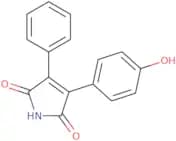
CAS:Aqabamycin A is an antibiotic compound, which is derived from marine microorganisms, specifically actinomycetes. These marine bacteria are known for producing a wide array of bioactive compounds, including antibiotics, due to their unique metabolites shaped by the oceanic environment. Aqabamycin A operates by inhibiting bacterial RNA polymerase, thereby disrupting the transcription process essential for bacterial protein synthesis. This specific mode of action targets the growth and replication of bacteria, making it a potent agent against pathogenic strains.Formula:C16H11NO3Purezza:Min. 95%Peso molecolare:265.26 g/molCefquinome sulfate
CAS:<p>Cefquinome sulfate is a cephalosporin antibiotic, which is a synthetic, broad-spectrum antimicrobial agent. It is derived from the beta-lactam family, specifically designed to combat Gram-positive and Gram-negative bacterial pathogens. The mode of action involves inhibiting bacterial cell wall synthesis. It achieves this by binding to penicillin-binding proteins (PBPs) within the bacterial cell wall, ultimately leading to cell lysis and death due to the interruption of necessary cell wall components.</p>Formula:C23H26N6O9S3Purezza:Min. 95%Colore e forma:White To Light (Or Pale) Yellow To Beige To Light Brown SolidPeso molecolare:626.69 g/molDichlobentiazox
CAS:Dichlobentiazox is a fungicide, which is synthesized from synthetic chemical sources with a mode of action that targets specific fungal processes. It works by inhibiting the biosynthesis of essential cellular components in pathogenic fungi, thereby disrupting their growth and ability to proliferate.Formula:C11H6Cl2N2O3S2Purezza:Min. 95%Peso molecolare:349.2 g/molCephradine
CAS:<p>Cephradine is a broad-spectrum antibiotic, which is a synthetic derivative of cephalosporin C, originating from the mold Cephalosporium acremonium. Its mode of action involves interfering with bacterial cell wall synthesis. Cephradine binds to penicillin-binding proteins (PBPs) located inside the bacterial cell wall, inhibiting the final transpeptidation step of peptidoglycan synthesis, which leads to cell lysis and death.</p>Formula:C16H23N3O6SPurezza:Min. 95%Peso molecolare:385.4 g/molDicloxacillin sodium salt
CAS:<p>Dicloxacillin is a penicillin antibiotic that is used to treat bacterial infections of the gastrointestinal tract, skin, and urinary tract. It binds to the penicillin-binding proteins in bacterial cell walls by competitive inhibition. Dicloxacillin inhibits bacterial growth by binding to the enzyme cell wall synthesis that is required for cell wall biosynthesis, inhibiting protein synthesis and cell division. This drug also has a toxic effect on respiratory system cells, which may be due to its ability to induce apoptosis. Dicloxacillin sodium salt is available as tablets for oral administration or as an intravenous solution for injection. It can interact with other drugs, such as benzalkonium chloride and matrix effect; it also has analytical methods such as chromatographic analysis and rate constant.</p>Formula:C19H17Cl2N3O5S·NaPurezza:Min. 95%Peso molecolare:493.32 g/molCefacetrile sodium
CAS:<p>Cefacetrile sodium is a broad-spectrum antibiotic belonging to the cephalosporin class. It is a semi-synthetic derivative sourced from cephalosporin C, a naturally occurring compound derived from the Acremonium fungus. Its mode of action involves the inhibition of bacterial cell wall synthesis. This occurs by binding to penicillin-binding proteins within the bacterial cell membrane, ultimately leading to cell lysis and death due to the inability to synthesize peptidoglycan, a critical component of the bacterial cell wall.</p>Formula:C13H13N3NaO6SPurezza:Min. 95%Peso molecolare:362.31 g/mol(10E)-3-O-De(a-L-cladinose)-10-dehydro-11-dehydroxy-6-O-methyl-erythromycin
CAS:Erythromycin derivativeFormula:C30H53NO9Purezza:Min. 95%Peso molecolare:571.74 g/molCarbovir monophosphate
CAS:<p>Carbovir monophosphate is an antiviral agent, which is a metabolite derived from the prodrug abacavir. It functions as a nucleotide analog that interferes with viral replication. The source of Carbovir monophosphate is the metabolic conversion of abacavir, an antiretroviral medication used in the treatment of HIV. This conversion occurs primarily in the liver, facilitated by cellular enzymes.</p>Formula:C11H14N5O5PPurezza:Min. 95%Peso molecolare:327.23 g/molDarunavir-D9
CAS:<p>Darunavir-D9 is a prodrug of darunavir, which is an HIV protease inhibitor. Darunavir-D9 has been shown to be bioequivalent in pharmacokinetic parameters to darunavir given as a tablet. The drug exhibits a low plasma concentration profile and high clearance values. This may be due to rapid absorption and distribution of the drug, with a short elimination half-life. Darunavir-D9 also has little effect on the matrix effect and reproducibility of the reaction monitoring assay, making it an ideal candidate for use in clinical trials.</p>Formula:C27H28D9N3O7SPurezza:Min. 95%Peso molecolare:556.72 g/molZabofloxacin
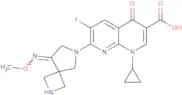
CAS:<p>Zabofloxacin is a synthetic fluoroquinolone antibiotic, which is derived from chemical synthesis with a distinct bactericidal mode of action. Its mechanism involves the inhibition of bacterial DNA gyrase and topoisomerase IV, enzymes critical for DNA replication, transcription, and repair. This dual targeting results in potent antibacterial activity against a wide range of Gram-positive and Gram-negative pathogens.</p>Formula:C19H20FN5O4Purezza:Min. 95%Peso molecolare:401.4 g/molNorfloxacin methyl ester
CAS:<p>Norfloxacin methyl ester is a synthetic derivative of the fluoroquinolone antibiotic, norfloxacin, which is sourced from chemical synthesis. Its mode of action involves inhibiting bacterial DNA gyrase and topoisomerase IV, enzymes crucial for DNA replication, transcription, repair, and recombination. This specific mechanism disrupts bacterial replication and cell division, leading to bacterial cell death.</p>Formula:C17H20FN3O3Purezza:Min. 95%Peso molecolare:333.36 g/molIndaziflam-desindenyl
CAS:Indaziflam-desindenyl is an advanced herbicide, which is a product of synthetic chemistry, specifically designed for controlling the germination and growth of a broad spectrum of weed species. It operates through cellulose biosynthesis inhibition, targeting the cellulose production in plant cell walls, thus preventing proper cell division and development. This mode of action disrupts essential mechanisms in the plant's early growth stages, making it particularly effective as a pre-emergent herbicide.Formula:C5H8FN5Purezza:Min. 95%Peso molecolare:157.15 g/molLedipasvir diacetone
CAS:Ledipasvir is a synthetic drug that inhibits the viral enzyme NS5A, which is necessary for viral replication. Ledipasvir has been shown to inhibit the growth of microorganisms such as bacteria and fungi. It also has antiviral properties, and is active against HIV-1. Ledipasvir can be used in chemotherapy to treat cancer and other diseases. This drug has high purity and is available at life science stores.Formula:C55H66F2N8O8Purezza:Min. 95%Peso molecolare:1,005.2 g/molValidamycin (technical)
CAS:<p>Validamycin (technical) is an antifungal agent, which is a natural product derived from the actinomycete Streptomyces hygroscopicus. This compound functions through a specific mode of action by inhibiting the enzyme trehalase, crucial for the breakdown of trehalose into glucose. Consequently, this disruption in the carbohydrate metabolism weakens fungal structure and growth.</p>Formula:C20H35NO13Purezza:Min. 95%Peso molecolare:497.5 g/molClenpenterol d5 hydrochloride
CAS:<p>Clenpenterol d5 hydrochloride is a deuterated chemical compound, which is a stable isotopic variant of the beta-agonist Clenpenterol, commonly used in research and analytical studies. This compound is synthetically derived to enhance specificity and precision in scientific investigations. Deuteration involves the replacement of hydrogen atoms with deuterium, which contributes to the increased stability and differentiation of the isotopes during analysis.</p>Formula:C13H21Cl3N2OPurezza:Min. 95%Peso molecolare:332.7 g/mol(+)-Oxanthromicin
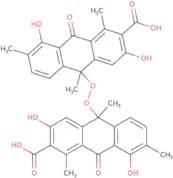
CAS:<p>(+)-Oxanthromicin is a natural compound classified as a polyketide antibiotic, which is derived from certain strains of soil-dwelling actinomycetes. These microorganisms are known to produce a variety of biologically active secondary metabolites. The mode of action of (+)-Oxanthromicin involves the inhibition of specific bacterial enzymes, disrupting essential processes within the microbial cells. This interference can lead to growth inhibition or cell death, showcasing its potential as a therapeutic agent.</p>Formula:C36H30O12Purezza:Min. 95%Peso molecolare:654.6 g/mol8-Fluoro erythromycin
CAS:<p>8-Fluoro erythromycin is a synthetic derivative of the macrolide antibiotic erythromycin. It is derived from the fermentation of *Streptomyces erythraeus*, a species known for producing erythromycin, which is chemically modified to include a fluorine atom at the eighth position. This modification enhances its pharmacokinetic properties, improving its stability and bioavailability compared to the parent compound.</p>Formula:C37H66FNO13Purezza:Min. 95%Peso molecolare:751.92 g/molWF-3681
CAS:<p>WF-3681 is a chemical compound utilized as an insecticide, which is synthesized from organic compounds through a controlled chemical process. The mode of action for WF-3681 involves the disruption of the neural pathways in target insects, leading to paralysis and eventual death. This mechanism specifically interferes with neurotransmitter functions, ensuring efficacy against a broad range of agricultural pests. The compound's specificity minimizes impacts on non-target organisms and the surrounding environment.</p>Formula:C13H12O5Purezza:Min. 95%Peso molecolare:248.23 g/molA2ti-2
CAS:A2ti-2 is an advanced metallurgical alloy, which is a synthesized product combining high-grade titanium and aluminum elements. It is engineered through a precise metallurgical process that involves controlled alloying at elevated temperatures, optimizing the atomic structure for superior performance traits. The mode of action for A2ti-2 involves its exceptional ability to maintain stability under extreme temperatures, providing resistance to thermal degradation and mechanical stress.Formula:C18H18N4O2SPurezza:Min. 95%Peso molecolare:354.4 g/molOmadacycline mesylate
CAS:Omadacycline mesylate is a broad-spectrum antibiotic, which is a semi-synthetic derivative from the natural product tetracycline with enhanced stability and efficacy. It functions by inhibiting bacterial protein synthesis through binding to the 30S ribosomal subunit. This prevents the addition of amino acids to the nascent peptide chain, effectively halting bacterial growth.Formula:C30H44N4O10SPurezza:Min. 95%Peso molecolare:652.76 g/mol