Antimicrobici
Gli antimicrobici sono agenti che distruggono o inibiscono la crescita di microrganismi, inclusi batteri, virus, funghi e parassiti. Questi composti sono essenziali nella prevenzione e nel trattamento delle infezioni, svolgendo un ruolo cruciale nella medicina, nell'agricoltura e nell'industria alimentare. Presso CymitQuimica offriamo un'ampia gamma di antimicrobici di alta qualità e purezza, adatti a varie applicazioni scientifiche e industriali. Il nostro catalogo comprende antibiotici, antifungini, antivirali e disinfettanti, tutti progettati per soddisfare le esigenze della ricerca e dello sviluppo, nonché per applicazioni cliniche e di produzione. Con i nostri prodotti, i professionisti possono garantire l'efficacia e la sicurezza nel controllo delle infezioni e nella protezione della salute pubblica.
Sottocategorie di "Antimicrobici"
- Antibiotici(4.128 prodotti)
- Antimicotici(901 prodotti)
- Antiparassitari(701 prodotti)
- Antivirali(764 prodotti)
Trovati 2423 prodotti di "Antimicrobici"
Ordinare per
Purezza (%)
0
100
|
0
|
50
|
90
|
95
|
100
Cloxacillin benzathine
CAS:Cloxacillin benzathine is a beta-lactam antibiotic, which is synthesized from Penicillium fungi-derived penicillins. It acts by inhibiting bacterial cell wall synthesis. The mechanism involves the irreversible inhibition of penicillin-binding proteins (PBPs). This disruption in the bacterial cell wall structure ultimately leads to cell lysis and death.Formula:C54H56Cl2N8O10S2Purezza:Min. 95 Area-%Colore e forma:White PowderPeso molecolare:1,112.11 g/molThiosildenafil-despiperazine
CAS:<p>Thiosildenafil-despiperazine is a derivative of sildenafil, which is a phosphodiesterase type 5 (PDE5) inhibitor. This compound is synthesized through structural modifications of sildenafil, leading to alterations in its pharmacological profile and potential applications. The source of this derivative involves chemical synthesis techniques to modify the core structure of sildenafil, specifically targeting modifications in the piperazine ring and replacing it with a thioside group to enhance or alter desired effects.</p>Formula:C17H20N4O4S2Purezza:Min. 95%Peso molecolare:408.5 g/molMorinamide hydrochloride
CAS:<p>Morinamide hydrochloride is a synthetic antitubercular agent, which is derived from chemical synthesis processes. Its mode of action involves disrupting the synthesis of mycolic acids in the cell walls of Mycobacterium tuberculosis, thereby inhibiting bacterial growth and proliferation. The compound serves primarily as an antimicrobial agent targeting tuberculosis infections. In a laboratory setting, Morinamide hydrochloride is utilized in the study of bacterial resistance mechanisms and the development of novel therapeutic agents. Its specific action on mycolic acid synthesis makes it a valuable tool for researchers aiming to elucidate the pathways involved in mycobacterial cell wall construction and to develop more targeted chemotherapeutic interventions. Due to its crucial role, understanding the mechanisms and efficacy of Morinamide hydrochloride can greatly benefit scientific efforts in combating tuberculosis, especially in light of increasing drug resistance.</p>Formula:C10H15ClN4O2Purezza:Min. 95%Peso molecolare:258.7 g/molLysostaphin, from staphylococcus staphylolyticus
CAS:<p>Lysostaphin, from Staphylococcus staphylolyticus is a zinc metalloenzyme with action on bacterial cell walls by cleaving polyglycine cross-links and is used for treating staphylococcal infections and in research applications.</p>Purezza:Min. 95%Colore e forma:PowderN-(4-Hexylphenyl)-5-nitro-2-furancarboxamide
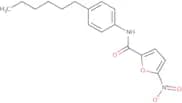
CAS:N-(4-Hexylphenyl)-5-nitro-2-furancarboxamide is a synthetic organic compound, categorized as a nitroaromatic amide. It is synthesized through a condensation reaction involving 4-hexylphenylamine and 5-nitro-2-furancarboxylic acid. The compound's mode of action involves the potential to interfere with specific biomolecular interactions due to its structure, which includes a nitro group capable of engaging in electron transfer reactions. These interactions may modulate enzymatic activities or alter binding affinities between proteins and other biomolecules.Formula:C17H20N2O4Purezza:Min. 95%Peso molecolare:316.35 g/molSPR741
CAS:<p>SPR741 is an antimicrobial potentiator, which is derived from polymyxin B, an antibiotic sourced from the bacterium *Bacillus polymyxa*. Its mode of action involves permeabilizing the outer membrane of Gram-negative bacteria, allowing otherwise impermeable antibiotics to enter the bacterial cell. This potentiation effect significantly enhances the efficacy of co-administered antibiotics against resistant strains.</p>Formula:C44H73N13O13Purezza:Min. 95%Peso molecolare:992.1 g/molMtbHU-IN-1
CAS:<p>MtbHU-IN-1 is a small-molecule inhibitor designed specifically for targeting the HU protein in Mycobacterium tuberculosis. This compound is derived through rational drug design and computational modeling efforts, exploiting the vulnerabilities of the bacterial DNA-binding proteins. Its mode of action involves binding to the HU protein, inhibiting its function, which is crucial for DNA structuring and stability within the bacterial cell. By disrupting HU protein function, MtbHU-IN-1 impairs bacterial chromosomal architecture, leading to an inability to replicate and ultimately cell death.</p>Formula:C44H36N4O12S2Purezza:Min. 95%Peso molecolare:876.9 g/mol6-(2-Chlorophenoxy)-5-fluoro-4(3H)-pyrimidinone
CAS:<p>6-(2-Chlorophenoxy)-5-fluoro-4(3H)-pyrimidinone is a heterocyclic compound, which is a synthetic derivative developed for biochemical research. This compound is synthesized through a series of organic reactions, involving halogenation and cyclization techniques, typically conducted in a controlled laboratory setting. Its design incorporates specific structural features, such as the chlorophenoxy and fluoro groups, which are strategically positioned to enhance its binding affinity and specificity.</p>Formula:C10H6ClFN2O2Purezza:Min. 95%Peso molecolare:240.62 g/molLeptomycin A
CAS:<p>Leptomycin A is a Streptomyces-produced inhibitor, which is derived from the bacterium Streptomyces spiroverticillatus. It functions by specifically binding to and inhibiting the CRM1 (exportin 1), a nuclear export receptor. This action blocks the nuclear export of proteins that contain a leucine-rich nuclear export signal (NES), thereby leading to their accumulation within the nucleus. The inhibition of CRM1 disrupts various cellular processes, including cell cycle regulation and signal transduction pathways.</p>Formula:C32H46O6Purezza:Min. 95%Peso molecolare:526.7 g/molBacitracin A
CAS:<p>Bacitracin A is an antibiotic peptide, which is isolated from the bacterium Bacillus subtilis. It functions by interfering with the cell wall synthesis of bacteria. Specifically, Bacitracin A inhibits the dephosphorylation of the C55-isoprenyl pyrophosphate molecule, an essential lipid carrier that transports peptidoglycan building blocks to the growing cell wall. This disruption leads to the inhibition of peptidoglycan synthesis, a critical component of bacterial cell walls, resulting in cell lysis and death.</p>Formula:C66H103N17O16SPurezza:Min. 95%Peso molecolare:1,422.7 g/molMetolachlor mercapturate
CAS:<p>Metolachlor mercapturate is a metabolite of the herbicide Metolachlor, which is derived from the degradation of the primary active ingredient found in various agricultural herbicide formulations. It is formed through biotransformation processes in plants, soil, and water, where the parent compound undergoes enzymatic reactions leading to its metabolic products. The primary mode of action involves the inhibition of elongase enzymes, which are crucial for the synthesis of fatty acids in plants, thus preventing cell division and impacting weed growth effectively.</p>Formula:C20H30N2O5SPurezza:Min. 95%Peso molecolare:410.5 g/molFenamiphos-sulfoxide d3 (S-methyl d3)
CAS:<p>Fenamiphos-sulfoxide d3 (S-methyl d3) is a deuterated, labeled pesticide intermediate, which is often utilized in advanced laboratory settings for precise analytical studies. This compound is synthesized as a stable isotope-labeled analog, enabling researchers to conduct sophisticated mass spectrometric analyses. Its mode of action involves serving as a reference or tracer in studies concerning the metabolism and degradation of fenamiphos, a well-known organophosphate pesticide.</p>Formula:C13H22NO4PSPurezza:Min. 95%Peso molecolare:322.38 g/molMCB-3681
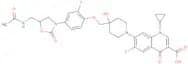
CAS:<p>MCB-3681 is a small-molecule inhibitor, which is synthesized through advanced chemical processes. It operates at a molecular level by selectively targeting and inhibiting specific cellular pathways involved in cancer cell proliferation. The compound's action is characterized by its ability to interfere with enzyme activity crucial for the survival and growth of malignant cells, thus inducing apoptosis and inhibiting tumor progression.</p>Formula:C31H32F2N4O8Purezza:Min. 95%Peso molecolare:626.6 g/molAtisinium chloride
CAS:<p>Atisinium chloride is an organometallic compound, which is synthesized through advanced coordination chemistry techniques. The source of this compound lies in the strategic combination of organic ligands with metal centers, facilitating unique interactions that are pivotal to its functionality. The mode of action primarily involves the ability to participate in complex catalytic cycles, engaging in electron transfer processes that are essential for mediating chemical transformations.<br><br>This compound finds applications in specialized fields such as catalysis, where it is utilized to promote and drive reactions that may be inefficient under normal conditions. Its effectiveness in altering reaction pathways and increasing selectivity makes it valuable in synthetic chemistry and industrial processes. Additionally, atisinium chloride's unique properties might be leveraged in materials science for the development of novel materials with tailored functionalities. The intricate balance of its reactive properties and stability under varying conditions makes it a subject of ongoing research for further applications.</p>Formula:C22H34ClNO2Purezza:Min. 95%Peso molecolare:379.96 g/molEnt-avibactam sodium
CAS:Ent-avibactam sodium is a pharmacological agent, categorized as a beta-lactamase inhibitor, which is synthetically derived. This compound acts by binding to and inhibiting the action of beta-lactamase enzymes produced by certain bacteria, thereby preventing the breakdown of beta-lactam antibiotics. Consequently, it restores the effectiveness of these antibiotics against resistant strains.Formula:C7H10N3NaO6SPurezza:Min. 95%Peso molecolare:287.23 g/molLenacapavir
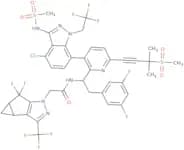
CAS:<p>Lenacapavir is a capsid inhibitor with a mode of action that interferes with the HIV capsid protein, disrupting multiple stages of the viral lifecycle. It is used for treating multidrug-resistant HIV infections.</p>Formula:C39H32ClF10N7O5S2Purezza:Min. 95%Colore e forma:PowderPeso molecolare:968.28 g/molCefetrizole
CAS:<p>Please enquire for more information about Cefetrizole including the price, delivery time and more detailed product information at the technical inquiry form on this page</p>Formula:C16H15N5O4S3Purezza:Min. 95%Peso molecolare:437.5 g/molGentamicin B sulfate
CAS:<p>Gentamicin B sulfate is an aminoglycoside antibiotic, which is produced through the fermentation process involving the actinomycete Micromonospora purpurea. This antibiotic functions primarily by binding to the 30S ribosomal subunit of bacteria, thereby inhibiting protein synthesis. This action disrupts the initiation of protein chain formation, ultimately leading to bacterial cell death. Gentamicin B sulfate is particularly effective against a variety of Gram-negative bacteria and some Gram-positive strains.</p>Formula:C19H40N4O14SPurezza:Min. 95%Peso molecolare:580.60 g/molBPH-1358
CAS:<p>BPH-1358 is a novel synthetic inhibitor, which is derived from a series of advanced chemoinformatics-based design strategies. It functions through the targeted binding to specific cell surface receptors involved in the modulation of immune responses. By blocking these receptors, BPH-1358 effectively alters signaling pathways that are crucial for immune activation and inflammatory responses.</p>Formula:C32H28N6O2Purezza:Min. 95%Peso molecolare:528.6 g/molErythromycin propionate
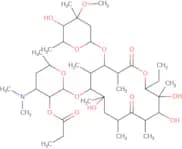
CAS:<p>Erythromycin propionate is an antibiotic, which is derived from the bacterium *Saccharopolyspora erythraea*. This compound functions by inhibiting protein synthesis in susceptible bacteria, specifically targeting the 50S ribosomal subunit. Erythromycin propionate achieves this by binding to the ribosomal RNA, thereby preventing the translocation step of protein elongation.</p>Formula:C40H71NO14Purezza:Min. 95%Peso molecolare:790 g/mol