Antimicrobici
Sottocategorie di "Antimicrobici"
- Antibiotici(4.134 prodotti)
- Antimicotici(886 prodotti)
- Antiparassitari(686 prodotti)
- Antivirali(765 prodotti)
Trovati 2438 prodotti di "Antimicrobici"
Sulbenicillin
CAS:Sulbenicillin is a semi-synthetic penicillin antibiotic, which is derived from 6-aminopenicillanic acid, a natural precursor in the biosynthesis of penicillins. With its beta-lactam structure, Sulbenicillin disrupts bacterial cell wall synthesis by inhibiting penicillin-binding proteins, which are essential enzymes in the cross-linking of peptidoglycan layers. This disruption compromises the structural integrity of the bacterial cell wall, resulting in cell lysis and death, particularly in Gram-negative bacteria.Formula:C16H18N2O7S2Purezza:Min. 95%Peso molecolare:414.46 g/molN-Hexylsilane
CAS:N-Hexylsilane is a silane compound, which is an organosilicon chemical with a hexyl group attached to silicon. This type of product is synthesized through hydroalkoxysilanes in the presence of catalysts. Its mode of action involves acting as a hydrophobic agent, reacting with hydroxyl groups on surfaces to create a silicon-oxygen-silicon link that confers water-resistance properties.Formula:C6H13SiPurezza:Min. 95%Peso molecolare:113.25 g/molMitomycin D
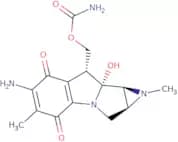
CAS:Mitomycin D is an antibiotic and chemotherapeutic agent known for its ability to inhibit DNA synthesis, making it a potent antitumor agent. It is derived from the bacterium *Streptomyces caespitosus*. Mitomycin D functions as a DNA crosslinking agent by alkylating the DNA strands, which interferes with DNA replication and transcription. This mechanism leads to the cessation of cellular division and ultimately induces apoptosis in rapidly dividing cells.Formula:C15H18N4O5Purezza:Min. 95%Peso molecolare:334.33 g/molAclacinomycin HCl
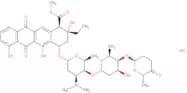
CAS:Aclacinomycin HCl is a cytotoxic antibiotic that inhibits the growth of tumor cells. It has been shown to induce apoptosis in human leukemia cells by altering the transmembrane potential and inhibiting cell proliferation. Aclacinomycin HCl also induces DNA damage response, which leads to caspase activities and cell death. This drug is highly selective for tumor cells, with no effect on normal cells. It has been shown to be effective against primary liver cancer in animal models, as well as developmental disorders such as autism spectrum disorder (ASD).
Formula:C42H53NO15·HClPurezza:Min. 95%Colore e forma:Orange PowderPeso molecolare:848.33 g/molBleomycin HCl
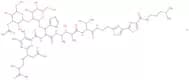
CAS:Inducer of DNA strand breaks; glycopeptide antibiotic, anti-neoplasticFormula:C50H71N16O21S2R•(HCl)xPurezza:Min. 95%Colore e forma:White To Off-White SolidAureothin
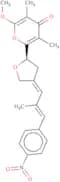
CAS:Aureothin is a bioactive compound, classified as a polyketide antibiotic, which is derived from the culture of the bacterium Streptomyces thioluteus. This compound operates primarily through the inhibition of protein synthesis by interfering with the aminoacylation of tRNA with specific amino acids. Its mode of action disrupts cellular protein synthesis, which is essential for cell growth and function, leading to its potent antibacterial and antifungal activities.Formula:C22H23NO6Purezza:Min. 95%Colore e forma:PowderPeso molecolare:397.42 g/molCarbovir
CAS:Carbovir is a nucleoside reverse transcriptase inhibitor (NRTI), which is derived from carbocyclic nucleosides. Its mode of action involves the selective inhibition of the reverse transcriptase enzyme, an essential component in the replication cycle of retroviruses, such as HIV. By incorporating into the viral DNA chain during synthesis, Carbovir effectively halts chain elongation, thereby impeding the virus's ability to proliferate.Formula:C11H13N5O2Purezza:Min. 95%Peso molecolare:247.25 g/molAtazanavir-d5
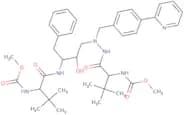
CAS:Atazanavir-d5 is an isotopically labeled variant of the antiretroviral drug Atazanavir, a non-peptidic HIV-1 protease inhibitor. It is synthesized using stable isotope labeling, specifically deuterium, which replaces five hydrogen atoms. The mechanism of action involves binding to the active site of the HIV-1 protease enzyme, a critical enzyme in the replication cycle of HIV, thereby preventing the cleavage of the viral gag-pol polyprotein precursors into the mature protein components of an infectious viral particle.Formula:C38H52N6O7Purezza:Min. 95%Peso molecolare:709.9 g/molPanipenem
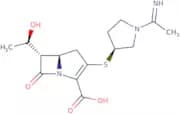
CAS:Panipenem is a carbapenem antibiotic, which is a type of beta-lactam antibiotic derived from thienamycin. It functions by inhibiting penicillin-binding proteins (PBPs), which are essential for bacterial cell wall synthesis. This inhibition disrupts the cell wall construction, leading to cell lysis and death, thereby demonstrating strong bactericidal activity.Formula:C15H21N3O4SPurezza:Min. 95%Peso molecolare:339.41 g/molFenaminostrobin
CAS:Fenaminostrobin is a broad-spectrum fungicide, which is synthesized chemically. It operates primarily through inhibition of mitochondrial respiration in fungal cells, targeting the bc1 complex, which disrupts ATP production and leads to the inhibition of spore germination and fungal growth. This mode of action makes Fenaminostrobin effective against a wide range of pathogenic fungi that affect various crops.
Formula:C21H21Cl2N3O3Purezza:Min. 95%Peso molecolare:434.3 g/moltrans-Abacavir dihydrochloride
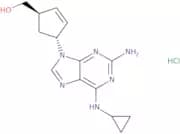
CAS:trans-Abacavir dihydrochloride is a synthetic compound classified as a nucleoside analog. It is derived from chemical synthesis and serves as a prodrug that is metabolized in the body to its active form, carbovir triphosphate. Its primary mode of action involves the inhibition of the HIV-1 reverse transcriptase enzyme. This inhibition is achieved through the incorporation of the active metabolite into viral DNA, resulting in chain termination and preventing viral replication.Formula:C14H18N6O·2HClPurezza:Min. 95%Peso molecolare:359.25 g/molZelkovamycin
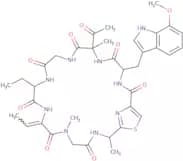
CAS:Zelkovamycin is a novel antibacterial compound isolated from endophytic microorganisms, specifically Streptomyces sp. Endophytes are bacteria or fungi that reside within plant tissues, forming symbiotic relationships and often producing bioactive metabolites. The mode of action of Zelkovamycin involves the inhibition of bacterial cell wall synthesis, interfering with the biosynthesis pathways essential for maintaining the structural integrity and function of bacterial cell walls, particularly in Gram-positive strains.Formula:C36H45N9O9SPurezza:Min. 95%Colore e forma:PowderPeso molecolare:779.86 g/molViramidine hydrochloride
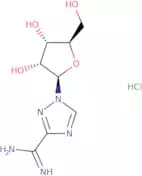
CAS:Viramidine hydrochloride is an antiviral prodrug with action as a precursor to ribavirin, targeting viral RNA synthesis and is used for research on hepatitis C and other viral infections.Formula:C8H14ClN5O4Purezza:Min. 95%Peso molecolare:279.68 g/molPicoxystrobin metabolite M8
CAS:Picoxystrobin metabolite M8 is a chemical metabolite, which is a derivative specifically originating from the degradation of the fungicide Picoxystrobin. It is generated through the metabolic pathways that occur after the application of Picoxystrobin on crops. As a strobilurin derivative, its mode of action is primarily related to its ability to disrupt mitochondrial respiration in fungi by inhibiting the electron transport chain at the cytochrome bc1 complex. This interruption leads to energy depletion and subsequent cell death in pathogenic fungi.
Formula:C14H10F3NO3Purezza:Min. 95%Peso molecolare:297.23 g/molBRITE-338733
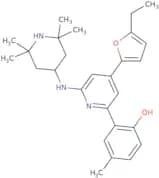
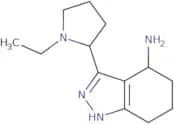
CAS:BRITE-338733 is an advanced biotechnological product, which is derived from microbial fermentation with high specificity enzymatic action. This product is engineered to efficiently catalyze specific biochemical reactions, thereby facilitating various lab-scale processes.Formula:C27H35N3O2Purezza:Min. 95%Peso molecolare:433.6 g/molβ-Cypermethrin
CAS:Beta-cypermethrin is a synthetic pyrethroid insecticide, which is a chemically altered derivative of natural pyrethrins found in chrysanthemum flowers. These pyrethrins are modified to enhance their stability and potency. Beta-cypermethrin acts by targeting the nervous system of insects, specifically by modifying the function of voltage-gated sodium channels. This action leads to prolonged depolarization of the neuron, resulting in paralysis and eventual death of the insect.Formula:C22H19Cl2NO3Purezza:Min. 95%Peso molecolare:416.3 g/molHeronapyrrole B
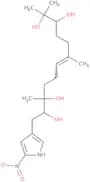
CAS:Heronapyrrole B is a naturally occurring marine-derived antibiotic, which is isolated from a species of marine-derived Streptomyces. This compound is a member of the pyrrole-2-aminoimidazole family, which is characterized by its unique structural framework that contributes to its biological activity. The mode of action of Heronapyrrole B involves disrupting bacterial cell membranes, thereby hindering cell growth and survival. This mechanism is particularly effective against a range of Gram-positive bacteria.Formula:C19H32N2O6Purezza:Min. 95%Peso molecolare:384.5 g/molSolithromycin
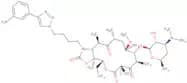
CAS:Solithromycin is a novel macrolide antibiotic, which is derived from the compound ketolide. It functions by binding to the bacterial 50S ribosomal subunit, effectively inhibiting protein synthesis. This mechanism of action enables Solithromycin to exert its effects against a wide range of bacterial pathogens, including strains resistant to traditional macrolides. The unique binding capability to multiple sites on the ribosome enhances its potency and reduces the likelihood of resistance development.Formula:C43H65FN6O10Purezza:Min. 95%Peso molecolare:845.01 g/molSporidesmolide
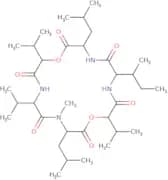
CAS:Sporidesmolide is a cyclic depsipeptide, which is a type of compound characterized by having both ester and amide bonds in its structure. This product is derived from fungal sources, specifically certain species within the genus *Sporidesmium*. The mode of action for sporidesmolide involves disrupting microbial cell membrane integrity, leading to increased permeability and eventual cell death. This activity primarily targets bacteria and fungi, making it an important subject of study for its potential antimicrobial properties.
Formula:C34H60N4O8Purezza:Min. 95%Peso molecolare:652.9 g/molSARS-CoV-IN-2
CAS:SARS-CoV-IN-2 is a highly specific and potent antiviral inhibitor, which is chemically synthesized to target SARS-CoV-2, the virus responsible for COVID-19. This compound functions by interfering with the viral replication process, specifically targeting the viral 3CL protease enzyme, crucial for viral polyprotein cleavage. By inhibiting this protease, SARS-CoV-IN-2 effectively hampers the replication cycle of the virus, limiting its ability to proliferate within the host cells.Formula:C24H18ClFEN3OPurezza:Min. 95%Peso molecolare:455.72 g/mol