Antimicrobici
Gli antimicrobici sono agenti che distruggono o inibiscono la crescita di microrganismi, inclusi batteri, virus, funghi e parassiti. Questi composti sono essenziali nella prevenzione e nel trattamento delle infezioni, svolgendo un ruolo cruciale nella medicina, nell'agricoltura e nell'industria alimentare. Presso CymitQuimica offriamo un'ampia gamma di antimicrobici di alta qualità e purezza, adatti a varie applicazioni scientifiche e industriali. Il nostro catalogo comprende antibiotici, antifungini, antivirali e disinfettanti, tutti progettati per soddisfare le esigenze della ricerca e dello sviluppo, nonché per applicazioni cliniche e di produzione. Con i nostri prodotti, i professionisti possono garantire l'efficacia e la sicurezza nel controllo delle infezioni e nella protezione della salute pubblica.
Sottocategorie di "Antimicrobici"
- Antibiotici(4.131 prodotti)
- Antimicotici(912 prodotti)
- Antiparassitari(703 prodotti)
- Antivirali(767 prodotti)
Trovati 2425 prodotti di "Antimicrobici"
Ordinare per
Purezza (%)
0
100
|
0
|
50
|
90
|
95
|
100
Sporidesmolide
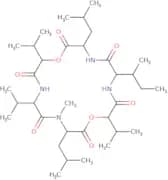
CAS:<p>Sporidesmolide is a cyclic depsipeptide, which is a type of compound characterized by having both ester and amide bonds in its structure. This product is derived from fungal sources, specifically certain species within the genus *Sporidesmium*. The mode of action for sporidesmolide involves disrupting microbial cell membrane integrity, leading to increased permeability and eventual cell death. This activity primarily targets bacteria and fungi, making it an important subject of study for its potential antimicrobial properties.</p>Formula:C34H60N4O8Purezza:Min. 95%Peso molecolare:652.9 g/molAqabamycin C
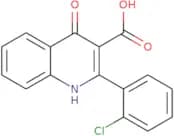
CAS:Aqabamycin C is an antibiotic compound, which is derived from marine bacteria, specifically, the actinomycete strain found in marine environments. Its mode of action involves the disruption of bacterial cell wall synthesis, making it particularly effective against certain gram-negative bacteria. This antibiotic selectively inhibits pathogens by interfering with their essential cellular processes.Formula:C16H10N2O5Purezza:Min. 95%Peso molecolare:310.26 g/molClindamycin-2,4-diphosphate
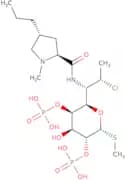
CAS:<p>Clindamycin-2,4-diphosphate is a phosphorylated derivative of the antibiotic clindamycin, which is a semi-synthetic lincosamide antibiotic originally derived from Streptomyces lincolnensis. Its mode of action involves the inhibition of bacterial protein synthesis by binding to the 50S ribosomal subunit, thereby preventing peptide chain elongation during translation. This mechanism effectively disrupts protein production in susceptible bacteria, leading to their growth inhibition or death.</p>Formula:C18H35ClN2O11P2SPurezza:Min. 95%Peso molecolare:584.94 g/molThienamycin
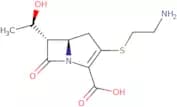
CAS:<p>Thienamycin is a β-lactam antibiotic, which originates from the fermentation of the bacterium *Streptomyces cattleya*. Its mode of action involves inhibiting the synthesis of bacterial cell walls. Thienamycin accomplishes this by binding to penicillin-binding proteins (PBPs) critical for peptidoglycan construction, thereby disrupting cell wall integrity and leading to bacterial lysis.</p>Formula:C11H16N2O4SPurezza:80%MinColore e forma:PowderPeso molecolare:272.32 g/mol4'-Ethynyl-2'-deoxyadenosine
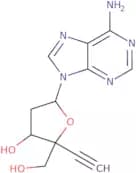
CAS:4'-Ethynyl-2'-deoxyadenosine is a deoxynucleoside analogue, which is synthesized through chemical processes. This compound acts as an antiviral agent, primarily targeting the viral replication machinery. Its mode of action involves the incorporation into viral DNA by mimicking natural nucleosides, which subsequently inhibits the enzymatic activity of reverse transcriptase. This inhibition disrupts the synthesis of viral DNA, effectively curtailing viral replication.Formula:C12H13N5O3Purezza:Min. 95%Peso molecolare:275.26 g/molSARS-CoV-IN-2
CAS:<p>SARS-CoV-IN-2 is a highly specific and potent antiviral inhibitor, which is chemically synthesized to target SARS-CoV-2, the virus responsible for COVID-19. This compound functions by interfering with the viral replication process, specifically targeting the viral 3CL protease enzyme, crucial for viral polyprotein cleavage. By inhibiting this protease, SARS-CoV-IN-2 effectively hampers the replication cycle of the virus, limiting its ability to proliferate within the host cells.</p>Formula:C24H18ClFEN3OPurezza:Min. 95%Peso molecolare:455.72 g/molClarithromycin - EP
CAS:<p>A macrolide, broad-spectrum antibiotic that targets cytochrome P4503A4 (CYP3A4). Clarithromycin has been used to potentiate the pharmacological effects of some drugs that are metabolised by the cytochrome P450.</p>Formula:C38H69NO13Purezza:Min. 95%Peso molecolare:747.95 g/molTylosin D
CAS:<p>Tylosin D is an antibiotic product, which is derived from the bacterium *Streptomyces fradiae*. Its mode of action involves binding to the 50S subunit of the bacterial ribosome, thereby inhibiting protein synthesis essential for bacterial growth and replication. This mechanism is particularly effective against Gram-positive bacteria and mycoplasma species, making it a crucial agent in combatting infections in the veterinary field.</p>Formula:C46H79NO17Purezza:Min. 95%Peso molecolare:918.1 g/mol(4S)-2-[Carboxy[[[3-(2-chloro-6-fluorophenyl)-5-methylisoxazol-4-yl]carbonyl]amino]methyl]-5,5-dimethylthiazolidine-4-carboxylic aci d disodium salt (penicilloic acids of flucloxacillin disodium salt)
CAS:<p>(4S)-2-[Carboxy[[[3-(2-chloro-6-fluorophenyl)-5-methylisoxazol-4-yl]carbonyl]amino]methyl]-5,5-dimethylthiazolidine-4-carboxylic acid disodium salt, known as the penicilloic acids of flucloxacillin disodium salt, is a β-lactam antibiotic. This compound is derived from the penicillin family and exhibits potent antibacterial properties. The mode of action involves the inhibition of bacterial cell wall synthesis, primarily targeting the transpeptidase enzyme, which plays a crucial role in cross-linking the peptidoglycan layers of the bacterial cell wall. By acylating this enzyme, the penicilloic acids disrupt the integrity of the cell wall, leading to cell lysis and death of the bacteria.</p>Formula:C19H17ClFN3Na2O6SPurezza:Min. 95%Peso molecolare:515.9 g/molBensulide-oxon
CAS:<p>Bensulide-oxon is a metabolite derived from the organophosphate pesticide bensulide, which is predominantly used in agricultural settings. It forms as a result of environmental or biological processes that involve the oxidation of bensulide. As a potent acetylcholinesterase (AChE) inhibitor, bensulide-oxon disrupts normal neuronal signaling by preventing the breakdown of the neurotransmitter acetylcholine, leading to an accumulation that affects the nervous systems of target organisms.</p>Formula:C14H24NO5PS2Purezza:Min. 95%Peso molecolare:381.5 g/molChloraniformethan
CAS:Please enquire for more information about Chloraniformethan including the price, delivery time and more detailed product information at the technical inquiry form on this pageFormula:C9H7Cl5N2OPurezza:Min. 95%Peso molecolare:336.4 g/molAcephate d3
CAS:<p>Acephate d3 is an isotopically labeled organophosphorus insecticide, which is a synthetic chemical compound used primarily for its insecticidal properties. It is derived by incorporating deuterium, a stable hydrogen isotope, into the molecular structure of acephate. The inclusion of deuterium isotopes is instrumental in tracing and studying the biochemical pathways and metabolic degradation of acephate within target organisms and ecosystems.</p>Formula:C4H10NO3PSPurezza:Min. 95%Peso molecolare:186.19 g/molTebufloquin
CAS:<p>Tebufloquin is an insecticide, which is a synthetic compound designed to target specific pests. It is derived from chemical synthesis with a mode of action that interferes with critical biological pathways in insects, rendering them unable to survive or reproduce. Tebufloquin works primarily by targeting the nervous system of insects, leading to paralysis and eventual death.</p>Formula:C17H20FNO2Purezza:Min. 95%Peso molecolare:289.34 g/mol(4E)-1-(3,4-Dichlorophenyl)-4-[(4-ethoxyphenyl)methylidene]pyrazolidine-3,5-dione
CAS:(4E)-1-(3,4-Dichlorophenyl)-4-[(4-ethoxyphenyl)methylidene]pyrazolidine-3,5-dione is a synthetic compound belonging to the class of pyrazolidine diones. This compound is mainly derived from chemical synthesis in a laboratory setting. It acts through its interaction with specific biological pathways, potentially affecting enzyme activity or receptor sites involved in various physiological processes.Formula:C18H14Cl2N2O3Purezza:Min. 95%Peso molecolare:377.2 g/molNeuraminidase-in-1
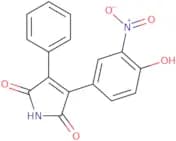
CAS:<p>Neuraminidase-in-1 is a chemical compound known as a neuraminidase inhibitor, which is synthetically derived. This inhibitor functions by blocking the activity of the neuraminidase enzyme, a glycoprotein found on the surface of various viruses, including influenza. The enzyme is crucial for the viral life cycle as it facilitates the release of new viral particles from infected host cells. By inhibiting this enzyme, Neuraminidase-in-1 effectively halts the replication and spread of the virus within the host organism.</p>Formula:C14H11N3O6Purezza:Min. 95%Peso molecolare:317.25 g/mol2-(1-Hydroxyethyl)-6-ethylaniline
CAS:<p>2-(1-Hydroxyethyl)-6-ethylaniline is an organic chemical compound, which is often utilized as an intermediate in the synthesis of dyes, pigments, and other industrial chemicals. This compound is derived from aromatic amines and undergoes specific chemical reactions that enable its functionality in various synthetic processes.</p>Formula:C10H15NOPurezza:Min. 95%Peso molecolare:165.23 g/molAlamethacin
CAS:<p>Alamethacin is a peptide antibiotic, which is derived from the soil fungus Trichoderma viride. This compound consists of a sequence of amino acids that form a helical structure, enabling its interaction with lipid membranes. Alamethacin functions by inserting itself into cellular membranes and forming voltage-dependent ion channels. As a result, it alters membrane permeability, causing ion imbalance and leading to cell death.</p>Formula:C92H150N22O25Purezza:Min. 95%Colore e forma:SolidPeso molecolare:1,964.31 g/molN-Demethylclindamycin
CAS:<p>N-Demethylclindamycin is a metabolite of clindamycin, which is a semi-synthetic antibiotic derived from the naturally occurring compound lincomycin. This product is synthesized by enzymatic or chemical processes that remove the N-methyl group from clindamycin's molecular structure, making it an important derivative in the study of antibiotic activity and metabolic pathways.</p>Formula:C17H31ClN2O5SPurezza:Min. 95%Peso molecolare:411 g/molHexazinone metabolite A
CAS:Hexazinone metabolite A is a chemical compound derived from the degradation of the parent herbicide hexazinone, which is commonly used in agriculture and forestry for broad-spectrum weed control. This metabolite is a result of microbial and environmental processes that modify the original chemical structure, altering its behavior and ecological interactions. With a mode of action involving the disruption of photosynthetic processes, Hexazinone metabolite A impacts plant growth by inhibiting photosystem II, thereby impeding electron transfer required for photosynthesis.Formula:C12H20N4O3Purezza:Min. 95%Peso molecolare:268.31 g/molHypothemycin
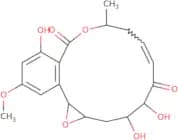
CAS:<p>Hypothemycin is a natural product that serves as a potent inhibitor of protein kinases. It is derived from the fungus Hypomyces subiculosus and belongs to the class of resorcylic acid lactones. Its mode of action involves binding covalently to the ATP-binding site of kinases, leading to the inhibition of their activity. This covalent modification is achieved through the formation of a Michael-type addition with a reactive ene-diene functionality within its structure. By targeting these critical enzymes, hypothemycin disrupts key signaling pathways that are essential for cell growth and proliferation.</p>Purezza:Min. 95%


![(4S)-2-[Carboxy[[[3-(2-chloro-6-fluorophenyl)-5-methylisoxazol-4-yl]carbonyl]amino]methyl]-5,5-dim…](/_next/image/?url=https%3A%2Fstatic.cymitquimica.com%2Fproducts%2F3D%2Fthumb-webp%2FTCA72850.webp&w=3840&q=75)

![(4E)-1-(3,4-Dichlorophenyl)-4-[(4-ethoxyphenyl)methylidene]pyrazolidine-3,5-dione](/_next/image/?url=https%3A%2Fstatic.cymitquimica.com%2Fproducts%2F3D%2Fthumb-webp%2FISA23884.webp&w=3840&q=75)