Antiparassitari
Gli antiparassitari sono composti progettati per trattare e prevenire le infezioni parassitarie inibendo la crescita e la sopravvivenza dei parassiti. Questa categoria include una gamma di agenti antiparassitari destinati esclusivamente all'uso in laboratorio e non per il consumo umano. Questi prodotti sono essenziali per scopi di ricerca, consentendo agli scienziati di studiare i cicli di vita dei parassiti, i meccanismi d'azione e lo sviluppo della resistenza. L'uso di antiparassitari in ambienti di laboratorio aiuta nella scoperta e nell'ottimizzazione di nuovi trattamenti per le malattie parassitarie, contribuendo ai progressi nella parassitologia medica e veterinaria. I ricercatori si affidano a questi prodotti per migliorare la comprensione delle infezioni parassitarie e sviluppare terapie più efficaci.
Trovati 701 prodotti di "Antiparassitari"
Ordinare per
Purezza (%)
0
100
|
0
|
50
|
90
|
95
|
100
4,4'-Dimethyldiphenylamine
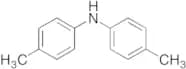
CAS:Prodotto controllato<p>Applications 4,4'-Dimethyldiphenylamine is a reagent used in the comparative studies of the analgesic and anti-inflammatory properties of N-phenylanthranilic acids and mefenamic acid, and the anti parasitic activities of some substituted diphenylamines.<br>References Izard-Verchere, C., et al.: Chimica Therapeutica, 6, 346 (1971)<br></p>Formula:C14H15NColore e forma:NeatPeso molecolare:197.281,2-Diamino-2-methyl Propane
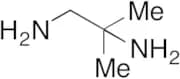
CAS:Prodotto controllato<p>Applications 1,2-Diamino-2-methyl Propane is a reactant used in the preparation of neocryptolepine analogs with antimalarial activity.<br>References Shaban, E., et. al.: Heterocycles, 89, 1055 (2014)<br></p>Formula:C4H12N2Colore e forma:NeatPeso molecolare:88.15p-Cyanoacetophenone
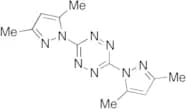
CAS:Prodotto controllato<p>Applications Used in the preparation of antimalarial isonitriles.<br>References Singh, C. et al.; Bioorgan. Med. Chem. Lett. 12, 2277 (2002)<br></p>Formula:C9H7NOColore e forma:NeatPeso molecolare:145.163,6-Bis(3,5-dimethyl-1H-pyrazol-1-yl)-1,2,4,5-tetrazine
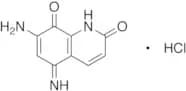
CAS:Prodotto controllatoFormula:C28H38O19Colore e forma:NeatPeso molecolare:678.597-Amino-1,5-dihydro-5-imino-2,8-quinolinedione Hydrochloride
CAS:Prodotto controllato<p>Applications 7-Amino-1,5-dihydro-5-imino-2,8-quinolinedione is a quinoline derivative. The principle use of Quinoline is the preparation of 8-hydroxyquinoline (H953265), a versatile chelating agent and precursor to certain antimalarial and anticancer drugs.<br>References Pettit, G.R., et al.: J. Org. Chem., 33, 1089 (1968);<br></p>Formula:C9H8ClN3O2Colore e forma:NeatPeso molecolare:225.63Methyl 1-[[2-N-(5-Nitrothiazolyl)carboxamido]phenyl]-2,3,4- tri-O-acetyl-β-D-glucopyranuronate
CAS:Prodotto controllato<p>Applications An intermediate in the synthesis of the metabolite of Nitazoxanide.<br>References Honma, K., et al.: Chem. Pharm. Bull., 24, 394 (1976), Dubreuil, L., et al.: Antimicrob. Agents Chemother., 40, 2266 (1996), Stockis, A., et al.: Int. J. Clin. Pharmacol. Ther., 34, 349 (1996),<br></p>Formula:C23H23N3O13SColore e forma:YellowPeso molecolare:581.51N-Decylaminoethanol
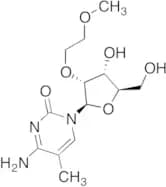
CAS:Prodotto controllato<p>Applications Used in the antileishmanial activity of lipidic amino alcohols.<br>References Coimbra, E.: Chem. Biol. Drug Des. 75, 233 (2010).<br></p>Formula:C12H27NOColore e forma:NeatPeso molecolare:201.352'-O-(2-Methoxyethyl)-5-methylcytidine (~90%)
CAS:Prodotto controllatoFormula:C13H21N3O6Purezza:~90%Colore e forma:NeatPeso molecolare:315.322-Acetamido-2-deoxy-4-O-(β-D-galactofuranosyl)-α,β-D-glucopyranose
CAS:Prodotto controllato<p>Applications Synthetic galactofuranose-containing oligosaccharides could be useful for the identification of strains of T. cruzi as well as for studies on the inhibition of the biosynthesis of these unique O-linked chains.<br>References Gallo-Rodriguez, C., et al.: J. Org. Chem., 61, 1886 (1996)<br></p>Formula:C14H25NO11Colore e forma:NeatPeso molecolare:383.348(E)-4-Hydroxycrotonoic Acid Ethyl Ester (~85%)
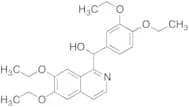
CAS:Prodotto controllato<p>Stability No Date Available<br>Applications (E)-4-Hydroxycrotonoic Acid Ethyl Ester is an intermediate in the preparation of unusual amino acids that are potential Michael acceptor based antiplasmodial and antitrypanosomal cysteine protease inhibitors.<br>References Breuning, A., et al.: J. Med. Chem., 53, 1951 (2010);<br></p>Formula:C6H10O3Purezza:~85%Colore e forma:NeatPeso molecolare:130.14α-(3,4-Diethoxyphenyl)-6,7-diethoxy-1-isoquinolinemethanol
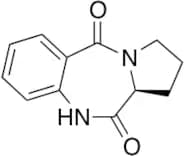
CAS:Prodotto controllato<p>Applications α-(3,4-Diethoxyphenyl)-6,7-diethoxy-1-isoquinolinemethanol is an intermediate in synthesizing Ethaverine (E676700), which is an analogue of Papaverine (P190500), an antispasmodic. An isoquinoline derivative with the potential for antimicrobial, antimalarial and cytotoxic antiviral agents.<br>References Kaplan, D., et al.: Biochem. J., 201, 605 (1982), Hifnawy, M.S., et al.: Anal. Profiles Drug Subs., 17, 367 (1988); Iwasa, K. et al.: Bioorg. Med. Chem., 9, 2871 (2001);<br></p>Formula:C24H29NO5Colore e forma:NeatPeso molecolare:411.49PBD-5,11-dione
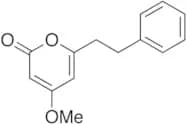
CAS:Prodotto controllato<p>Applications PBD-5,11-dione (cas# 18877-34-4) is a useful research chemical.<br></p>Formula:C12H12N2O2Colore e forma:NeatPeso molecolare:216.244-Methoxy-6-(2-phenylethyl)-2H-pyran-2-one
CAS:Prodotto controllato<p>Applications 4-Methoxy-6-(2-phenylethyl)-2H-pyran-2-one is a Kawain (K145490) derivative that is known to exhibit antimalarial and antituberculosis activities. 4-Methoxy-6-(2-phenylethyl)-2H-pyran-2-one has been identified as a lead compound for the dual treatment of malaria and leishmaniasis.<br>References McCracken, S.T., et al.: Bioorg. Med. Chem., 20, 1482 (2012); Elzaawely, A.A.. et al.: Food. Chem., 103, 486 (2007); Xuan, T.D., et al.: J. Natural. Med., 62, 188 (2008);<br></p>Formula:C14H14O3Colore e forma:NeatPeso molecolare:230.26Pseurotin A
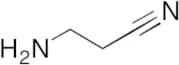
CAS:Prodotto controllato<p>Applications Pseurotin A shows antiparasitic and anticancer activity. It exhibits inhibition towards IgE (immunoglobin E) production.<br>References Martinez-Luis, S. et al.: Nat. Prod. Comm., 7, 165 (2012); Bioorg. Med. Chem. Lett., 19, 1457 (2009);<br></p>Formula:C22H25NO8Colore e forma:NeatPeso molecolare:431.443-Aminopropionitrile (Stabilized with K2CO3)
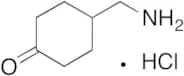
CAS:Prodotto controllatoFormula:C3H6N2Colore e forma:NeatPeso molecolare:70.094-(Aminomethyl)-cyclohexanone Hydrochloride
CAS:Prodotto controllato<p>Applications 4-(Aminomethyl)-cyclohexanone Hydrochloride is used to prepare dispiro-1,2,4-trioxolanes with antimalarial activities. It is also used to synthesize aminopyrimidines as SYK inhibitors useful in the treatment of SYK-mediated diseases.<br>References Tang, Y., et al.: Bioorg. Med. Chem. Lett., 17, 1260 (2007); Altman, M., et al.: PCT Int. Appl. (2011), WO 2011075515 A1 20110623<br></p>Formula:C7H13NO·HClColore e forma:NeatPeso molecolare:127.18 + 36.46Halofuginone
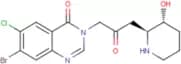
CAS:Halofuginone (RU-19110) inhibits prolyl-tRNA synthetase (Ki=18.3 nM), down-regulates Smad3, and blocks TGF-β at 10 ng/ml.Formula:C16H17BrClN3O3Purezza:99.53%Colore e forma:Off-White SolidPeso molecolare:414.68Ivermectin
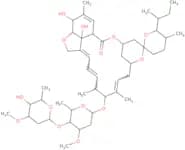
CAS:Naturally produced by the soil bacterium Streptomyces avermitili, it is clinically used in the treatment of parasitosis in both humans and animals. Ivermectin is commercially available as a mixture of 80% 22, 23-dihydroavermectin B1a and 20% 22, 23-dihydroavermectin B1b. In 2020, Ivermectin indicated that it was a good antiviral agent in the treatment of SARS-CoV-2 and a new mechanism of action has been suggested. Ivermectin would act on importin α/β heterodimer and affect nuclear transport and the translocation of viral proteins.Formula:C48H74O14Purezza:85%MinPeso molecolare:875.1 g/mol


![Methyl 1-[[2-N-(5-Nitrothiazolyl)carboxamido]phenyl]-2,3,4- tri-O-acetyl-β-D-glucopyranuronate](/_next/image/?url=https%3A%2Fstatic.cymitquimica.com%2Fproducts%2FTR%2Fthumb-webp%2FM325820.webp&w=3840&q=75)