Acidi grassi
Gli acidi grassi sono acidi carbossilici con lunghe catene di idrocarburi, che possono essere saturi o insaturi. Sono componenti essenziali dei lipidi, fungendo da building blocks fondamentali per lipidi complessi, fonti di energia e molecole di segnalazione. Gli acidi grassi sono coinvolti in vari processi biologici, tra cui il metabolismo, la struttura delle membrane cellulari e l'infiammazione. Presso CymitQuimica, offriamo una vasta gamma di acidi grassi di alta qualità per supportare la tua ricerca in biochimica lipidica, nutrizione e campi correlati.
Sottocategorie di "Acidi grassi"
- Acilgliceroli/Gliceridi(43 prodotti)
- Eicosanoidi(6 prodotti)
- Esteri di acidi grassi(946 prodotti)
- Acidi grassi alogenati(32 prodotti)
Trovati 2447 prodotti di "Acidi grassi"
Ordinare per
Purezza (%)
0
100
|
0
|
50
|
90
|
95
|
100
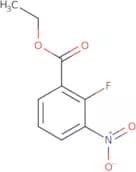
2-Fluoro-3-nitrobenzoic acid ethyl ester
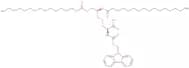
CAS:<p>2-Fluoro-3-nitrobenzoic acid ethyl ester is a versatile, high quality building block with a number of uses in research and industry. It is an intermediate in the synthesis of a range of compounds, including pharmaceuticals and other fine chemicals. 2-Fluoro-3-nitrobenzoic acid ethyl ester is also used as a reagent for the synthesis of complex compounds, such as pharmaceuticals. This compound can be synthesized from readily available starting materials and has been shown to be useful for the preparation of scaffolds for organic synthesis. 2-Fluoro-3-nitrobenzoic acid ethyl ester is not listed on the Chemical Abstract Service (CAS) registry, but it does have an IUPAC name (2-(2,6-difluorophenyl)-5-(1,1,2,2 tetrafluoropropoxy)-3H-[1]py</p>Formula:C9H8FNO4Purezza:Min. 95%Colore e forma:Off-White PowderPeso molecolare:213.16 g/molFmoc-Cys((R)-2,3-di(palmitoyloxy)-propyl)-OH
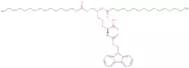
CAS:<p>Fmoc-Cys((R)-2,3-di(palmitoyloxy)-propyl)-OH is a versatile building block that is useful for the synthesis of complex compounds. This compound has been shown to be a useful intermediate in the synthesis of pharmaceuticals, organic dyes and research chemicals. Fmoc-Cys((R)-2,3-di(palmitoyloxy)-propyl)-OH is a fine chemical that is used as a reagent in organic synthesis. It has CAS No. 139573-77-6 and can be used as a speciality chemical or reaction component.</p>Formula:C53H83NO8SPurezza:Min. 95 Area-%Colore e forma:White PowderPeso molecolare:894.29 g/mol2,3-Dihydroxy-4-methoxycinnamic acid ethyl ester
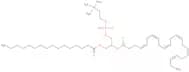
Please enquire for more information about 2,3-Dihydroxy-4-methoxycinnamic acid ethyl ester including the price, delivery time and more detailed product information at the technical inquiry form on this pagePurezza:Min. 95%Palmitoyldocosahexaenoyl phosphatidylcholine
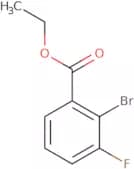
CAS:Palmitoyldocosahexaenoyl phosphatidylcholine (PC-S) is a fatty acid with six double bonds. It has been shown to induce osteogenic genes in human macrophages and can be used as a potential therapeutic agent for the treatment of bone diseases. PC-S also has anti-inflammatory properties, which is due to its ability to inhibit secretory phospholipase A2 (sPLA2). PC-S is structurally similar to the polyunsaturated fatty acid linoleic acid and has been found to have reactive properties. PC-S may be used as an adjuvant therapy for cancer and other diseases, such as Alzheimer's disease. Clinical studies are currently being conducted.Formula:C46H80NO8PPurezza:Min. 95%Colore e forma:PowderPeso molecolare:806.1 g/mol2-Bromo-3-fluorobenzoic acid ethyl ester
CAS:2-Bromo-3-fluorobenzoic acid ethyl ester is a versatile building block that can be used in the preparation of many different chemical compounds. It is a high quality chemical with a CAS number 1131040-49-7. 2-Bromo-3-fluorobenzoic acid ethyl ester is useful in the synthesis of complex compounds, and has been shown to be an effective reagent. This chemical has also been used as a reaction component and scaffold in research chemicals.Formula:C9H8BrFO2Purezza:Min. 95%Colore e forma:PowderPeso molecolare:247.06 g/mol1,2-Dipalmitoyl-sn-glycero-3-phosphoethanolamine
CAS:1,2-Dipalmitoyl-sn-glycero-3-phosphoethanolamine is a phospholipid that plays an important role in many cellular processes. It is a major component of the lipid bilayer that surrounds cells and provides stability to the membrane. 1,2-Dipalmitoyl-sn-glycero-3-phosphoethanolamine can form hydrogen bonding interactions with other molecules in the cytoplasm. The redox potential of this compound is also high enough to allow it to participate in oxidation reactions. This phospholipid also has a phase transition temperature at which it changes from a liquid state to a solid state at room temperature. 1,2-Dipalmitoyl-sn-glycero-3-phosphoethanolamine can be used as a reaction mechanism for synthesizing glycosylated proteins or lipids. In vitro assays have been performed using this compound asFormula:C37H74NO8PPeso molecolare:691.96 g/molPaliperidone palmitate
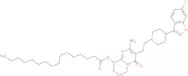
CAS:Prodotto controllato<p>Paliperidone palmitate is a drug that is used in the treatment of schizophrenia. It is the most potent and selective atypical antipsychotic agent available. Paliperidone palmitate has shown long-term efficacy and low risk of extrapyramidal symptoms, which are associated with some other antipsychotic agents. The drug has been shown to have minimal effects on prolactin levels, although it can cause an increase in serum prolactin levels when administered with risperidone. Paliperidone palmitate is a prodrug that is metabolized by esterases to its active form, paliperidone. Paliperidone does not bind to plasma proteins and therefore may be more suitable for patients with hepatic impairment.</p>Formula:C39H57FN4O4Purezza:Min. 95%Colore e forma:PowderPeso molecolare:664.89 g/mol2-Acetyl-3-oxo-butyric acid ethyl ester - 90%
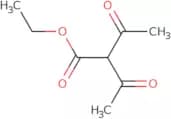
CAS:2-Acetyl-3-oxo-butyric acid ethyl ester (2ABEE) is a chemokine receptor antagonist that binds to the CCR5 receptor. It is a small molecule drug candidate with potential therapeutic value for HIV and other diseases. 2ABEE has been shown to be active against human immunodeficiency virus type 1 (HIV-1) in cell culture and animal models, as well as against influenza virus in mice. This compound also inhibits the production of chemokines, which are inflammatory proteins that recruit immune cells from the blood stream to the site of infection. In addition, 2ABEE is not toxic to healthy human cells, indicating that it may have fewer side effects than other anti-HIV drugs.Formula:C8H12O4Purezza:Min. 95%Colore e forma:Clear LiquidPeso molecolare:172.18 g/mol4-Bromo-2,6-pyridinedicarboxylic acid ethyl ester
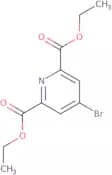
CAS:4-Bromo-2,6-pyridinedicarboxylic acid ethyl ester is a luminescent compound that emits light in the visible region of the spectrum. It can be used as a ligand for polymerized monolayers or as a bifunctional covalent coupling agent. The carboxylate group on 4-Bromo-2,6-pyridinedicarboxylic acid ethyl ester interacts with lanthanide metal ions to produce luminescence. This chemical also has low frequency emission and can be used for supramolecular interactions.Formula:C11H12BrNO4Purezza:Min. 95%Peso molecolare:302.12 g/mol2-Amino-5-iodobenzoic acid ethyl ester
CAS:<p>2-Amino-5-iodobenzoic acid ethyl ester is a chemical reagent that is used to prepare 2-chloro-5-iodobenzoic acid. It can be prepared by the hydrolysis of 2,4,6-trinitrobenzene with an aqueous solution of sodium hydroxide. The iodination reaction proceeds in two steps: (1) chlorination of methyl anthranilate with chlorine and (2) addition of the resultant product to 2,4,6-trinitrobenzene. In the first step, methyl anthranilate reacts with chlorine to form 2-chloro-5-iodobenzoic acid ethyl ester and hydrogen chloride gas. In the second step, this product reacts with 2,4,6-trinitrobenzene to form 2-amino 5 -iodobenzoic acid ethyl ester and nitrogen gas</p>Formula:C9H10INO2Purezza:Min. 95%Colore e forma:PowderPeso molecolare:291.09 g/mol1-Palmitoyl-2-ω-(2-Diazo-3,3,3-Trifluoropropionyloxy)Lauroyl-Sn-Glycero-3-Phosphocholine
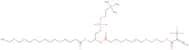
CAS:1-Palmitoyl-2-omega-(2-Diazo-3,3,3-Trifluoropropionyloxy)Lauroyl-Sn-Glycero-3-Phosphocholine is a potential therapy for pulmonary fibrosis. It is an admixture of two phospholipids containing the fatty acid palmitic acid and omega-(2,3,3,3,-trifluoroethoxy)acetyl lauroylglycerophosphocholine. The molecule is activated by carbon monoxide (CO), which converts it to a form that can be taken up by cells. CO has been shown to inhibit the growth of cells in culture and in animal models of pulmonary fibrosis. Treatment with the molecule also inhibits production of galacturonic acid and oligosaccharides from lysophosphatidylethanolamine and its derivatives.Formula:C39H71F3N3O10PPurezza:Min. 95%Peso molecolare:829.96 g/mol4-Hydroxymandelic acid ethyl ester
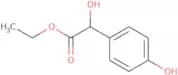
CAS:<p>Mandelic acid is a natural product that can be found in the leaves and rhizomes of plants from the genus Mandelia. It has been analysed for its natural product profile and was found to contain alcohols, fatty acids, and volatile compounds. 4-Hydroxymandelic acid ethyl ester is a synthetic compound that has been shown to have age-related benefits and functional properties. The compound has been shown to increase fatty acid synthesis, decrease oxidation of fatty acids, and inhibit signalling pathways associated with inflammation.</p>Formula:C10H12O4Purezza:Min. 95%Colore e forma:PowderPeso molecolare:196.2 g/molEtomidate
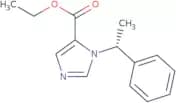
CAS:Prodotto controllatoEtomidate is a potent, non-competitive, centrally acting α-adrenergic receptor agonist that has been used as a diagnostic agent and anesthetic. It is also used in the treatment of diabetic neuropathy. Etomidate binds to the α-adrenergic receptors on the presynaptic membrane and blocks the release of norepinephrine. This prevents nerve impulses from being transmitted to the muscle cells, leading to relaxation of muscles. Etomidate also inhibits locomotor activity by inhibiting postsynaptic neurons in the spinal cord that are responsive to acetylcholine. Etomidate is not active against polymorphonuclear leucocytes or water vapor. The risk group for etomidate includes patients who have had intubations, those with systolic pressures greater than 120 mmHg, and those with heart rates greater than 100 beats per minute. The mechanism of action for etomidate is thought to be through formation of stable complexes with nitrogen atoms.Formula:C14H16N2O2Purezza:Min. 95%Colore e forma:PowderPeso molecolare:244.29 g/molIndole-2-carboxylic acid ethyl ester
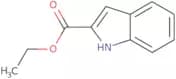
CAS:<p>Indole-2-carboxylic acid ethyl ester is a synthetic compound that binds to cancer cells. It has been shown to inhibit the growth of leukemia cells and breast cancer cells in vitro. Indole-2-carboxylic acid ethyl ester inhibits the binding of collagen to cells, which may be due to its ability to bind to β-carboline alkaloids on collagen. The binding of indole-2-carboxylic acid ethyl ester with these alkaloids prevents them from binding to collagen, thereby preventing the formation of new collagen fibers. This drug also inhibits aldehyde production, which is important for DNA synthesis in cancer cells.</p>Formula:C11H11NO2Purezza:Min. 95%Colore e forma:PowderPeso molecolare:189.21 g/mol(R)-(-)-3-Hydroxybutyric acid ethyl ester
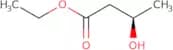
CAS:(R)-(-)-3-Hydroxybutyric acid ethyl ester is an enantiomer of 3-hydroxybutyric acid. It is synthesized from diethyl succinate in a one-pot, stereoselective, high-yield process by using asymmetric synthesis and hydrogenation. The reaction vessel used for this synthesis is a reaction solution that has been optimized to be resistant to high pressure and temperature. This product can be used as a renewable feedstock in the production of polyesters and other polymers.Formula:C6H12O3Purezza:Min. 95%Colore e forma:Colorless Clear LiquidPeso molecolare:132.16 g/molFmoc-Cys((S)-2,3-di(palmitoyloxy)-propyl)-OH
CAS:Fmoc-Cys((S)-2,3-di(palmitoyloxy)-propyl)-OH is a reagent used in the synthesis of complex compounds. It is also a useful scaffold for the synthesis of speciality chemicals and versatile building blocks. This compound is an intermediate that can be used in the preparation of fine chemicals and pharmaceuticals. Fmoc-Cys((S)-2,3-di(palmitoyloxy)-propyl)-OH has a CAS number of 139573-78-7 and can be purchased as a high quality chemical.Formula:C53H83NO8SPurezza:Min. 95 Area-%Colore e forma:Slightly Yellow PowderPeso molecolare:894.29 g/mol4-Benzyloxyindole-2-carboxylic acid ethyl ester
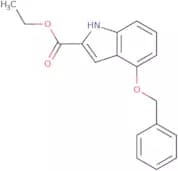
CAS:4-Benzyloxyindole-2-carboxylic acid ethyl ester is a cyclic compound that has been synthesized through an intramolecular carboxylate cyclization. This class of compounds are known for their ability to form propargylic analogues, which have the potential to be used as anticancer drugs. The compound was first reported in 1969 by Schardt and co-workers and was found to have activity against leukemia cells. It has been shown to undergo a series of cyclizations, which are triggered by the presence of oxygen or other electron acceptors.Formula:C18H17NO3Purezza:Min. 95%Peso molecolare:295.33 g/molDL-α-Hydroxypalmitic acid
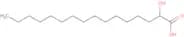
CAS:Palmitic acid is a fatty acid that is found in animal and vegetable fats. It is also an important component of the cell membrane. Palmitic acid has been shown to inhibit the growth of bacteria by interfering with the synthesis of cell membranes, which are largely composed of lipids. Palmitic acid has been shown to be active against Gram-positive bacteria, including Bacillus subtilis and Staphylococcus epidermidis, as well as Gram-negative bacteria such as Salmonella enterica Serovar Typhi and Escherichia coli O157:H7. Palmitic acid can be used to produce monolayers for use in magnetic resonance spectroscopy. These monolayers have been shown to have an effect on the rate at which glucose is transported across the surface of the membrane. Palmitic acid also inhibits glucosylceramide production in ganoderma lucidum, a type of fungus that causes plant diseases, by blockingFormula:C16H32O3Purezza:Min. 98 Area-%Colore e forma:PowderPeso molecolare:272.42 g/mol3-Amino-4-fluorobenzoic acid ethyl ester
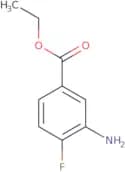
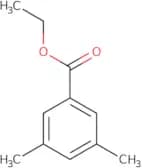
CAS:<p>3-Amino-4-fluorobenzoic acid ethyl ester is a linker that is used to attach a drug molecule to the tautomycin, an analgesic. It has been shown to have nontoxic properties in animals and does not react with intestinal contents. The 3-Amino-4-fluorobenzoic acid ethyl ester also reacts with azide, phosphatase, and hydrocarbons. It is stable in the presence of aromatic hydrocarbons and can be used as a photolabeling agent for introducing a fluorescent group into a molecule.</p>Formula:C9H10FNO2Purezza:Min. 95%Colore e forma:PowderPeso molecolare:183.18 g/mol3,5-Dimethylbenzoic acid ethyl ester
CAS:3,5-Dimethylbenzoic acid ethyl ester is a quinoline derivative that can be synthesised from the reaction of isobutyraldehyde with benzoic acid. This compound yields terminal alkynes and polynuclear compounds in reactions with metals. It can also be prepared by cross-coupling reactions of substituted benzoates with aminobenzoates as ligands. 3,5-Dimethylbenzoic acid ethyl ester is used in preparative chemistry to synthesise other organic compounds.Formula:C11H14O2Purezza:Min. 95%Colore e forma:Clear LiquidPeso molecolare:178.23 g/mol