Acidi grassi
Sottocategorie di "Acidi grassi"
- Acilgliceroli/Gliceridi(42 prodotti)
- Eicosanoidi(6 prodotti)
- Esteri di acidi grassi(950 prodotti)
- Acidi grassi alogenati(32 prodotti)
Trovati 2463 prodotti di "Acidi grassi"
2-Morpholinecarboxylic Acid Ethyl Ester
CAS:Prodotto controllatoFormula:C7H13NO3Colore e forma:NeatPeso molecolare:159.18Tetrahydro 11-Deoxycorticosterone
CAS:Prodotto controllatoApplications Tetrahydro 11-Deoxycorticosterone is a metabolite of 11-Deoxycorticosterone (DOC) (D232590).
References Fedele, E., et al.: J. Neurochem., 75, 782 (2000), Adkins, C., et al.: J. Biol. Chem., 276, 38934 (2001), Erceg, S., et al.: Brain Res., 1036, 115 (2005),Formula:C21H34O3Colore e forma:White To Off-WhitePeso molecolare:334.495,7-Docosadiynoic Acid
CAS:Prodotto controllatoApplications Amphiphilic molecule used in the synthesis of artificial cell membranes for diagnostics and therapeutics.
References Deckert, A.A., et al.: Langmuir, 11, 643 (1995); Charych, D., and Nagy, J.O.: Chemtech, 26(9), 24 (1996); Pan, J.J. and Charych, D.: Langmuir, 13, 1365 (1997)Formula:C23H38O2Colore e forma:NeatPeso molecolare:346.55Palmitoyl-16,16,16-d3-L-carnitine Hydrochloride
CAS:Prodotto controllatoApplications Palmitoyl-16,16,16-d3-L-carnitine Hydrochloride is the isotope labelled analog of Palmitoyl-L-carnitine Hydrochloride (P155050); a long-chain fatty ester of carnitine which is accumulated and released into the circulation in fatty-acid oxidation defects.
References Ventura, F., et al.: Clinica Chimica Acta, 281, 1 (1999); Pourfarzam, M., et al.: Clinical Chem,, 40, 2267 (1994); Schaefer, J., et al.: Pediatric Res., 37, 354 (1995)Formula:C23H43D3NO4•ClColore e forma:NeatPeso molecolare:439.09rac cis-9,10-Epoxystearic Acid
CAS:Prodotto controllatoApplications An epoxy fatty acid found in Pneumocystis carinii lipids.
References Gibson, G., et al.: Xenobiotica, 19, 1123 (1989), Pellegrini, L., et al.: Plant Physiol., 103, 509 (1993), Scheller, U., et al.: J. Biol. Chem., 273, 32528 (1998), Tijet, N., et al.: Biochem. J., 332, 583 (1998),Formula:C18H34O3Colore e forma:NeatPeso molecolare:298.46Ethylene Glycol Monostearate
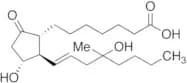
CAS:Prodotto controllatoFormula:C20H40O3Colore e forma:Off-WhitePeso molecolare:328.53Misoprostol Acid (10 mg in 1 mL Methyl Acetate)
CAS:Formula:C21H36O5Colore e forma:Single SolutionPeso molecolare:368.51Desacetyl Forskolin
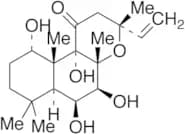
CAS:Prodotto controllatoApplications Desacetyl Forskolin is an analogue of Forskolin (F701800). Desacetyl Forskolin was tested for its ability to activate rat brain adenylate cyclase, activate detergent-solubilized rat brain adenylate cyclase, increase cyclic AMP in intact S49 wild-type cells, and inhibit the binding of 3H-forskolin to rat brain membranes.
References Desouza, N., et al.: Med. Res. Rev., 3, 201 (1983); Seamon, K., et al.: J. Med. Chem., 26, 436 (1983); Seguin, E., et al.: Planta Medica, 54, 4 (1988);Formula:C20H32O6Colore e forma:NeatPeso molecolare:368.46a-Cortol
CAS:Prodotto controllatoStability Hygroscopic
Applications α-Cortol, is a derivative of Cortisone (C696500), a Glucocorticoid, and an anti-inflammatory agent.
References Honda, A., et al.: J. Biol. Chem., 268, 7759 (1993), Narko, K., et al.: J. Clin. Endocrinol. Metab., 86, 1765 (2001), Michael, A., et al.: Reproduction, 126, 425 (2003),Formula:C21H36O5Colore e forma:NeatPeso molecolare:368.5111-Hydroxylauric Acid
CAS:Applications 11-Hydroxylauric Acid is used as a substrate to determine the functional expression and characterization of cytochrome P450 52A21.
References Kuehnel, K., et al.: Adv. Synthesis. Cata., 349, 1451 (2007); Kim, D.H., et al.: Arch. Biochem. Biophy., 464, 213 (2007);Formula:C12H24O3Colore e forma:NeatPeso molecolare:216.32Lauroylcholine Chloride
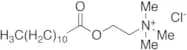
CAS:Prodotto controllatoApplications Lauroylcholine Chloride (cas# 25234-60-0) is a compound useful in organic synthesis.
Formula:C17H36NO2·ClColore e forma:NeatPeso molecolare:321.93Cetyl Stearate
CAS:Prodotto controllatoApplications Cetyl Stearate is a wax ester of stearic acid. Wax esters are esters between long chained fatty alcohols and fatty acids. Wax esters have significance in pharmaceutical and cosmetics applications and occur naturally in plants and animals. Stearate esters are used most frequently in the formulation of eye makeup, skin makeup, lipstick and skin care products.
References Wheatley, V., et al.: Biochem. J., 58, 167 (1954); Shichijo, S., et al.: Biochem. Med., 22, 256 (1979); Robosky, L., et al.: J. Lipid Res., 49, 686 (2008);Formula:C34H68O2Colore e forma:NeatPeso molecolare:508.9DL-alpha-Hydroxypalmitic acid
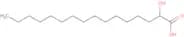
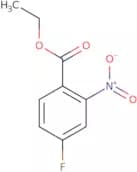
CAS:Palmitic acid is a fatty acid that is found in animal and vegetable fats. It is also an important component of the cell membrane. Palmitic acid has been shown to inhibit the growth of bacteria by interfering with the synthesis of cell membranes, which are largely composed of lipids. Palmitic acid has been shown to be active against Gram-positive bacteria, including Bacillus subtilis and Staphylococcus epidermidis, as well as Gram-negative bacteria such as Salmonella enterica Serovar Typhi and Escherichia coli O157:H7. Palmitic acid can be used to produce monolayers for use in magnetic resonance spectroscopy. These monolayers have been shown to have an effect on the rate at which glucose is transported across the surface of the membrane. Palmitic acid also inhibits glucosylceramide production in ganoderma lucidum, a type of fungus that causes plant diseases, by blockingFormula:C16H32O3Purezza:Min. 98 Area-%Colore e forma:PowderPeso molecolare:272.42 g/mol4-Fluoro-2-nitrobenzoic acid ethyl ester
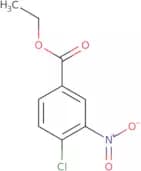
CAS:4-Fluoro-2-nitrobenzoic acid ethyl ester is a fine chemical that can be used as a reagent, intermediate compound, building block, scaffold and building block for speciality chemicals. It has been shown to be an effective chemical in the synthesis of 4-fluoro-2-nitrobenzoic acid, which is a versatile building block with many potential applications. 4-Fluoro-2-nitrobenzoic acid ethyl ester is also useful in reactions involving amines and alcohols as well as metal catalyzed reactions. This product has CAS No. 1072207-10-3.Formula:C9H8FNO4Purezza:(%) Min. 85%Colore e forma:Clear LiquidPeso molecolare:213.16 g/mol4-Chloro-3-nitrobenzoic acid ethyl ester
CAS:4-Chloro-3-nitrobenzoic acid ethyl ester is a six-membered, planar, hydrogen bond that has a crystal structure with a six-membered ring. It has hydrogen bonds and five-membered ring. The molecule is coplanar and oriented.Formula:C9H8ClNO4Purezza:Min. 95%Colore e forma:PowderPeso molecolare:229.62 g/mol2-Chloro-5-hydroxybenzoic acid ethyl ester
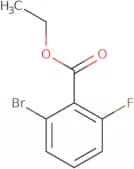
CAS:2-Chloro-5-hydroxybenzoic acid ethyl ester is synthesized by the substitution of anthranilic acid with an aryl ring. The substituents on the aryl ring are chloro and hydroxy, which are attached to carbon atoms. 2-Chloro-5-hydroxybenzoic acid ethyl ester can be metabolized into a number of different metabolites. For example, it can be converted into acid metabolites that have substituents on the benzene ring such as nitro or nitroso groups. These metabolites are then excreted in urine or bile.Formula:C9H9ClO3Purezza:Min. 95%Colore e forma:Off-White To Yellow To Brown SolidPeso molecolare:200.62 g/mol2-Bromo-6-fluorobenzoic acid ethyl ester
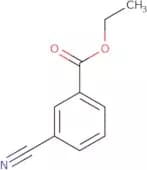
CAS:2-Bromo-6-fluorobenzoic acid ethyl ester is a chemical that reacts with other chemicals to form new substances. It is a useful scaffold for complex compounds and can be used as a building block for fine chemicals, pharmaceuticals, agrochemicals, and other organic compounds. 2-Bromo-6-fluorobenzoic acid ethyl ester is also a versatile building block or intermediate in the synthesis of many different substances.Formula:C9H8BrFO2Purezza:Min. 90%Colore e forma:PowderPeso molecolare:247.06 g/mol3-Cyanobenzoic acid ethyl ester
CAS:3-Cyanobenzoic acid ethyl ester is a reaction component that is used in organic synthesis. It is a versatile building block, useful intermediate, and useful building block. 3-Cyanobenzoic acid ethyl ester is a fine chemical that can be used as a reagent for the preparation of other compounds. This compound has been assigned CAS No. 2463-16-3 and has the molecular formula C7H6O2.Formula:C10H9NO2Purezza:Min. 95%Colore e forma:PowderPeso molecolare:175.18 g/mol3-Bromo-4-methoxyphenylacetic acid ethyl ester
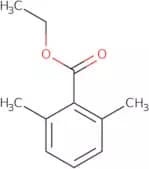
CAS:3-Bromo-4-methoxyphenylacetic acid ethyl ester is a versatile building block that can be used to synthesize a variety of compounds. It is also a useful intermediate for research chemicals and pharmaceuticals. 3-Bromo-4-methoxyphenylacetic acid ethyl ester is a fine chemical with high quality and can be used as a reagent or speciality chemical. As a reaction component, this product makes an excellent scaffold for complex compounds.Formula:C11H13BrO3Purezza:Min. 95%Colore e forma:Clear LiquidPeso molecolare:273.12 g/mol2,6-Dimethylbenzoic acid ethyl ester
CAS:2,6-Dimethylbenzoic acid ethyl ester (DBE) is an organic compound that is used as a starting material for the synthesis of other chemicals. It is produced by reacting chlorobenzene with magnesium in the presence of a suitable catalyst such as copper(II) chloride. The reaction can be carried out in bulk or in liquid phase, and yields are optimized by using activated carbon as a support. DBE is one of the most commonly used dialkyl benzoates for chemical syntheses due to its high reactivity. DBE has a particle size of about 10 micrometres and a bulk density close to 1 g/cm3.Formula:C11H14O2Purezza:Min. 95%Colore e forma:PowderPeso molecolare:178.23 g/molAzidopalmitic acid
CAS:Azidopalmitic acid is a synthetic fatty acid that is used in the detection of cellular DNA. It can be detected using methods such as tritiated, expressed, or myristic azide. Azidopalmitic acid has also been shown to be compatible with polymerase chain reaction (PCR) and immobilized metal ion affinity chromatography (IMAC). This molecule is useful for conjugates that are radiolabeled with [3H]azidoacetyl palmitate and [14C]azidoacetyl palmitate. Azidopalmitic acid has been synthetically produced by reacting malonic acid with sodium azide. This compound is also reusable, which makes it an ideal way to label nucleotides during PCR reactions.
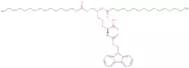
Formula:C16H31N3O2Purezza:Min. 95%Colore e forma:White PowderPeso molecolare:297.44 g/molFmoc-Cys((S)-2,3-di(palmitoyloxy)-propyl)-OH
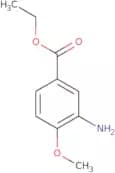
CAS:Fmoc-Cys((S)-2,3-di(palmitoyloxy)-propyl)-OH is a reagent used in the synthesis of complex compounds. It is also a useful scaffold for the synthesis of speciality chemicals and versatile building blocks. This compound is an intermediate that can be used in the preparation of fine chemicals and pharmaceuticals. Fmoc-Cys((S)-2,3-di(palmitoyloxy)-propyl)-OH has a CAS number of 139573-78-7 and can be purchased as a high quality chemical.Formula:C53H83NO8SPurezza:Min. 95 Area-%Colore e forma:Slightly Yellow PowderPeso molecolare:894.29 g/mol3-Amino-4-methoxybenzoic acid ethyl ester
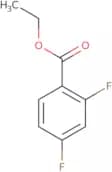
CAS:3-Amino-4-methoxybenzoic acid ethyl ester is a chemical building block that can be used in the synthesis of various organic compounds. It is an important reaction component, and can also be used as a reagent or useful scaffold. 3-Amino-4-methoxybenzoic acid ethyl ester is soluble in organic solvents and has a high quality. This chemical has been shown to be useful for research purposes.Formula:C10H13NO3Purezza:Min. 95%Colore e forma:PowderPeso molecolare:195.22 g/mol2,4-Difluorobenzoic acid ethyl ester
CAS:C9H8F2O2 2,4-Difluorobenzoic acid ethyl ester is a drug that inhibits the growth of protozoan parasites in the intestine. It has been shown to be effective against coccidiosis and grignard reagent, an antifungal drug. C9H8F2O2 2,4-Difluorobenzoic acid ethyl ester is a fungicide that inhibits the synthesis of RNA by binding to the cgmp-dependent protein (cyclic guanosine monophosphate) in protozoa, preventing protein synthesis and causing cell death. Magnesium chloride and chloride ions are required for this reaction to take place.Formula:C9H8F2O2Purezza:Min. 95%Colore e forma:Clear LiquidPeso molecolare:186.16 g/mol3,5-Dimethoxy-4-hydroxycinnamic acid ethyl ester
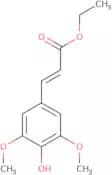
CAS:3,5-Dimethoxy-4-hydroxycinnamic acid ethyl ester is a redox potential with an acidic character. It can be synthesized from p-hydroxybenzoic acid and acetate extract of the plant Carthamus tinctorius. The synthesis starts with an asymmetric synthesis of protocatechuic acid and its derivatives. This compound is also found in the surface methodology of fatty acids and radiation that has been studied by nmr spectroscopic data. 3,5-Dimethoxy-4-hydroxycinnamic acid ethyl ester has bioactive phenolic properties and can be used for the treatment of various diseases such as cancer or diabetes.Formula:C13H16O5Purezza:Min. 95%Colore e forma:PowderPeso molecolare:252.26 g/molPropargyl chloride
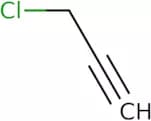
CAS:Propargyl chloride is a chemical that is used as an inhibitor in organic synthesis. It can be used to synthesize compounds with reactive groups such as alkenes, ketones, and amines. Propargyl chloride reacts with the hydroxyl group of an alcohol to form a propargyl alcohol. The reaction mechanism involves intramolecular hydrogen bonding between the hydroxyl group of the propargyl chloride and the carbon atom adjacent to it. Kinetic energy is required for this reaction to occur. The product of this reaction can then react with other molecules in order to form new compounds. Propargyl chloride has been shown to have therapeutic effects on chronic coughs due its ability to reduce the amount of kinetic energy needed for respiratory tract cells, which may have reduced coughing frequency. END>>Formula:C3H3ClPurezza:Min. 95%Colore e forma:Colorless Yellow Clear LiquidPeso molecolare:74.51 g/mol2-Chloro-3-nitrobenzoic acid ethyl ester
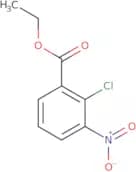
CAS:2-Chloro-3-nitrobenzoic acid ethyl ester is a reactive chemical intermediate that can be used as a building block in organic synthesis. It is a versatile reagent that can be used in many reactions, such as condensation, cyclization, amination, and oxidation. The compound has been shown to be useful in the synthesis of polymers, pharmaceuticals, and natural products. 2-Chloro-3-nitrobenzoic acid ethyl ester is an environmentally friendly compound with a low toxicity profile. It has been classified as a high quality fine chemical with CAS number 3979-45-1.Formula:C9H8ClNO4Purezza:Min. 95%Colore e forma:PowderPeso molecolare:229.62 g/molHexadecanal
CAS:Hexadecanal is a chemical compound that belongs to the group of basic proteins. It is an intermediate in the synthesis of hexanol and hexadecanoic acid. Hexadecanal has been shown to have receptor activity on rat liver microsomes, as well as p450 activity. The physiological functions of this molecule are unknown, but it has been shown to have synergic effects with other bioactive phytochemicals such as sodium citrate.Formula:C16H32OPurezza:Min. 95 Area-%Colore e forma:White Off-White PowderPeso molecolare:240.42 g/molFmoc-L-propargylglycine
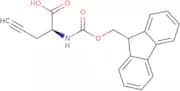
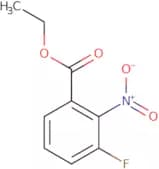
CAS:Fmoc-L-propargylglycine is a cyclic peptide that is synthesized by chemical ligation. It has antiviral, anti-tumor, and anti-inflammatory activities. Fmoc-L-propargylglycine inhibits the growth of cancer cells in vitro. The mechanism of action is not fully understood, but it may involve the inhibition of cellular proliferation and the induction of apoptosis. This compound also inhibits epidermal growth factor (EGF) induced cell proliferation in caco-2 cells.Formula:C20H17NO4Purezza:Min. 98 Area-%Colore e forma:White PowderPeso molecolare:335.35 g/mol3-Fluoro-2-nitrobenzoic acid ethyl ester
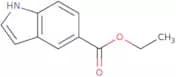
CAS:3-Fluoro-2-nitrobenzoic acid ethyl ester is a fine chemical that is useful as a versatile building block in the synthesis of complex compounds. It can be used as an intermediate in the preparation of research chemicals and has been shown to react with amines to form nitrosoamines, which are useful reaction components. 3-Fluoro-2-nitrobenzoic acid ethyl ester has CAS number 163077-89-2 and is available at high quality.Formula:C9H8FNO4Purezza:Min. 95%Colore e forma:PowderPeso molecolare:213.16 g/molIndole-5-carboxylic acid ethyl ester
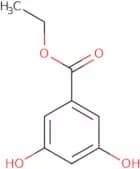
CAS:Indole-5-carboxylic acid ethyl ester is a formamide activated analog of piperidine. It is an effective antibacterial agent against Staphylococcus aureus. Indole-5-carboxylic acid ethyl ester inhibits the growth of bacteria by binding to the extracellular surface and interfering with cell membrane permeability. The compound also has anti-cancer properties, and may be used in pharmaceuticals as a pyrazole derivative.Formula:C11H11NO2Purezza:Min. 95%Colore e forma:PowderPeso molecolare:189.21 g/mol3,5-Dihydroxybenzoic acid ethyl ester
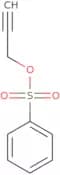
CAS:3,5-Dihydroxybenzoic acid ethyl ester (3,5-DHBA) is a compound that inhibits the growth of cancer cells by binding to the active site of serine protease. It has been shown to inhibit the activity of two enzymes that are involved in phosphatase and hydroxylation reactions. 3,5-DHBA is also a photophysical reagent for palladium complexes which have been used for the treatment of cancers. This compound also binds to oxadiazole, a substance found in plants that may have anticancer properties. The synthesis of 3,5-DHBA has been studied extensively and it has been shown to be synthesized from hydroxybenzoic acid and carbinols.Formula:C9H10O4Purezza:90%Colore e forma:PowderPeso molecolare:182.17 g/molPropargyl benzenesulfonate
CAS:Propargyl benzenesulfonate is a chemical compound that has been shown to inhibit protease activity, an enzyme that breaks down proteins. It is also used in the synthesis of aminoindane and cyclic peptides. The chemical stability of propargyl benzenesulfonate has been demonstrated by its ability to withstand trifluoroacetic acid and hydrochloric acid, as well as malonic acid and immobilized conditions. Propargyl benzenesulfonate binds to integrin receptors on cells and inhibits depression-like behavior in animal models. It also has the ability to form hydrogen bonds with amines. The structural formula for propargyl benzenesulfonate is shown below:Formula:C9H8O3SPurezza:Min. 98%Colore e forma:Clear LiquidPeso molecolare:196.22 g/molPalmitoyl-glycine
CAS:Palmitoyl-glycine is a fatty acid amide. It is an analog of the naturally occurring amino acid glycine that has been modified by adding a palmitoyl group to the side chain. Palmitoyl-glycine is enzymatically inactivated by bacterial enzymes and cationic surfactants and can be used as a skin cell model system for basic structure and physiological effects. Palmitoyl-glycine has been shown to have skin cell protective effects against oxidative stress, which may be due to its ability to form hydrogen bonds with the acyl chains of lipids.Formula:C18H35NO3Purezza:Min. 95%Colore e forma:White PowderPeso molecolare:313.48 g/molL-Propargylglycine
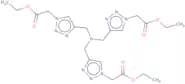
CAS:L-Propargylglycine is a novel, synthetic compound that has been shown to inhibit bacterial growth. It is a strong inhibitor of the polymerase chain reaction (PCR) and nuclear DNA replication. L-Propargylglycine has also been shown to inhibit mitochondrial membrane potential and human serum which may lead to its anti-inflammatory properties. L-Propargylglycine has antioxidative properties, antimicrobial peptide activity, and ATP channel inhibition. This drug also has a number of other pharmacological effects including modulation of intestinal inflammation in models of inflammatory bowel disease and improvement of atherosclerotic lesions in animal models.Formula:C5H7NO2Purezza:(%) Min. 98%Colore e forma:PowderPeso molecolare:113.11 g/mol1,1',1''-Tris(1H-1,2,3-triazol-4-yl-1-acetic acid ethyl ester) trimethylamine
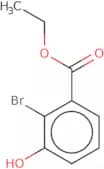
CAS:1,1',1''-Tris(1H-1,2,3-triazol-4-yl-1-acetic acid ethyl ester) trimethylamine is an organic solvent that has been used in the synthesis of azide–alkyne cycloaddition products. The solvent has shown to be soluble in water and is stable at high temperatures. It can also be used as a reagent or ligand for cycloaddition reactions with alkynes.Formula:C21H30N10O6Purezza:Min. 95%Colore e forma:White PowderPeso molecolare:518.53 g/mol2-Bromo-3-hydroxybenzoic acid ethyl ester
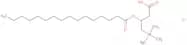
CAS:2-Bromo-3-hydroxybenzoic acid ethyl ester is a versatile building block that can be used in the synthesis of complex compounds. It is a fine chemical and research chemical with CAS No. 1260889-94-8. This compound has high quality and is used as a reagent, scaffold, or intermediate in organic syntheses. 2-Bromo-3-hydroxybenzoic acid ethyl ester is also useful for the preparation of speciality chemicals and reaction components.Formula:C9H9BrO3Purezza:Min. 95%Colore e forma:Yellow PowderPeso molecolare:245.07 g/molPalmitoyl-DL-carnitine chloride
CAS:Palmitoyl-DL-carnitine chloride is a fatty acid that is an important component of cellular membranes. It has been shown to inhibit the growth of cancer cells in rats and mice by increasing the concentration of diacylglycerol in the cell membrane, which leads to increased formation of procyanidins. Palmitoyl-DL-carnitine chloride can also be used as an absorption enhancer for drugs and other compounds. The compound can be used to deliver drugs or other substances into cells, such as Caco-2 cells, for therapeutic purposes. Palmitoyl-DL-carnitine chloride has been shown to increase the production of ornithine in cultured mouse fibroblasts, which may be due to its ability to enhance cellular carnitine levels.
Formula:C23H46ClNO4Purezza:Min. 95%Colore e forma:PowderPeso molecolare:436.07 g/mol1,3-Dipalmitoylglycerol
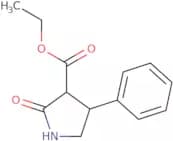
CAS:1,3-Dipalmitoylglycerol is a diacylglycerol, which is a type of fatty acid that is also known as a 1,2-diacylglycerol. It has been shown to exhibit hemolytic activity in the presence of hydroxyl groups. The optimum pH for 1,3-dipalmitoylglycerol is at around 7.5 and it can be used as a biocompatible polymer to form controlled-release preparations with neutral pH that are tumoricidal.Formula:C35H68O5Purezza:Min. 95%Colore e forma:PowderPeso molecolare:568.91 g/mol4-Phenyl-2-pyrrolidone-3-carboxylic acid ethyl ester
CAS:4-Phenyl-2-pyrrolidone-3-carboxylic acid ethyl ester is an organic compound. It is an intermediate in the synthesis of 2,4,6-trichloroisonicotinic acid and 2,4,6-trichloropyrimidine. The compound has a variety of uses as a reagent and building block for organic synthesis. 4-Phenyl-2-pyrrolidone-3-carboxylic acid ethyl ester is soluble in many solvents such as acetone, ethers and chloroform. It has a CAS number of 5245032. This chemical can be used as a speciality chemical or fine chemical to produce drugs.
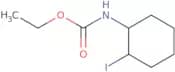
Formula:C13H15NO3Purezza:Min. 95%Colore e forma:PowderPeso molecolare:233.26 g/mol(2-Iodocyclohexyl)carbamic acid ethyl ester
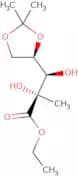
CAS:(2-Iodocyclohexyl)carbamic acid ethyl ester is a fine chemical that can be used as a building block, reagent, or speciality chemical in research. It is soluble in organic solvents and can be used as a reaction component, useful intermediate, or useful scaffold. This compound has been shown to react with various groups including amines, alcohols, phenols and thiols.Formula:C9H16INO2Purezza:Min. 95%Colore e forma:PowderPeso molecolare:297.13 g/mol(2S,3R)-3-((4R)-2,2-Dimethyldioxolan-4-yl)-2-methyl-2,3-dihydroxypropanoic acid ethyl ester
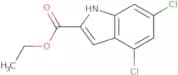
CAS:(2S,3R)-3-((4R)-2,2-Dimethyldioxolan-4-yl)-2-methyl-2,3-dihydroxypropanoic acid ethyl ester is a high quality reagent that is used as an intermediate for the synthesis of complex compounds. It is also a useful building block for the synthesis of speciality chemicals and research chemicals. The versatility of this compound makes it a useful scaffold and building block for reaction components.Formula:C11H20O6Purezza:Min. 95%Colore e forma:PowderPeso molecolare:248.27 g/mol4,6-Dichloro-1H-indole-2-carboxylic acid ethyl ester
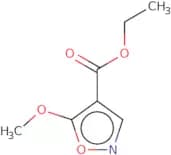
CAS:4,6-Dichloro-1H-indole-2-carboxylic acid ethyl ester is a synthetic compound that functions as an agonist of the indole 2 receptor. It has been shown to have affinity for cortical and brain membranes, with a greater affinity for acidic regions of the membrane. 4,6-Dichloro-1H-indole-2-carboxylic acid ethyl ester is also capable of binding to the indole 2 receptor and activating it. The carboxyl group in this compound is substituted with benzene rings, which are connected by a moiety containing two carboxylic groups. 4,6-Dichloro-1H-indole-2-carboxylic acid ethyl ester was synthesised from 1H -indole acetic acid and chloroethane in four steps.Formula:C11H9Cl2NO2Purezza:Min. 95%Colore e forma:SolidPeso molecolare:258.1 g/mol5-Methoxyisoxazole-4-carboxylic acid ethyl ester
CAS:5-Methoxyisoxazole-4-carboxylic acid ethyl ester is a fine chemical that has been used as a reagent, speciality chemical, and complex building block. It is also useful as a versatile intermediate for the synthesis of other organic compounds. 5-Methoxyisoxazole-4-carboxylic acid ethyl ester has been shown to react with alcohols and amines to form ethers and amides respectively. The compound can be used in the synthesis of polymers and pharmaceutical intermediates. 5-Methoxyisoxazole-4-carboxylic acid ethyl ester has a molecular weight of 210.24 g/mol and CAS No. 1314983-30-6.
Formula:C7H9NO4Purezza:Min. 95%Peso molecolare:171.15 g/mol1,3-Dipalmitoyl-glycero-2-phosphoethanolamine
CAS:Please enquire for more information about 1,3-Dipalmitoyl-glycero-2-phosphoethanolamine including the price, delivery time and more detailed product information at the technical inquiry form on this page
Formula:C37H74NO8PPurezza:ReportedColore e forma:White/Off-White SolidPeso molecolare:691.96 g/mol2-Palmitoylglycerol
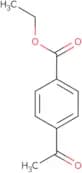
CAS:2-Palmitoylglycerol is a monoacylglycerol that is synthesized from the breakdown of dietary fats. It is also synthesized in tissues through the action of phospholipase A2 and diacylglycerol acyltransferase. 2-Palmitoylglycerol has been shown to bind to the cannabinoid receptor type 1 (CB1), which leads to activation of peroxisome proliferator-activated receptor α (PPARα). This activation induces gene expression changes that lead to increased fatty acid oxidation and decreased triglyceride synthesis in liver cells. 2-Palmitoylglycerol has been shown to reduce body weight gain and increase insulin sensitivity in mice models on high fat diets. 2-Palmitoylglycerol has also been shown to increase butyrate, a short chain fatty acid, levels in rats with metabolic disorders.Formula:C19H38O4Purezza:Min. 95%Colore e forma:PowderPeso molecolare:330.5 g/mol4-Acetylbenzoic acid ethyl ester
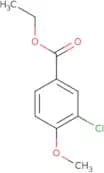
CAS:4-Acetylbenzoic acid ethyl ester is a receptor binding agent that inhibits the activity of phosphatidylinositol 3-kinase (PI3K), which is a protein involved in cell growth, differentiation and survival. It has been shown to inhibit tumor growth and induce apoptosis in cancer cells. 4-Acetylbenzoic acid ethyl ester also induces cell death in inflammatory diseases by inhibiting the activation of protein kinase C γ (PKC γ) by retinoic acid. This agent has been shown to be active against recombinant human Pparγ and can be used as an additive for cell-based assays.Formula:C11H12O3Purezza:Min. 95%Colore e forma:PowderPeso molecolare:192.21 g/mol3-Chloro-4-methoxybenzoic acid ethyl ester
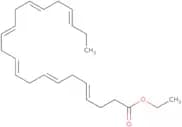
CAS:3-Chloro-4-methoxybenzoic acid ethyl ester is a chemical compound that is used as a reactant in organic synthesis. It has shown high quality and can be used for research. 3-Chloro-4-methoxybenzoic acid ethyl ester can be used as a scaffold to make fine chemicals, pharmaceuticals, and other products. It has been shown to be useful in the synthesis of many complex compounds and as an intermediate or building block for chemical reactions.Formula:C10H11ClO3Purezza:Min. 95%Colore e forma:PowderPeso molecolare:214.65 g/molcis-4,7,10,13,16,19-Docosahexaenoic acid ethyl ester - 90%
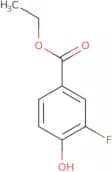
CAS:Cis-4,7,10,13,16,19-Docosahexaenoic acid ethyl ester (DHAEE) is a polyunsaturated fatty acid that belongs to the omega-3 family. It is used as an alternative feedstock for biodiesel production and has been shown to be a good candidate for hydrogenation reactions. The adsorption equilibrium of DHAEE has been studied using isotherms at different densities and pressures. At high pressures, the adsorption of DHAEE on silica gel was found to be reversible. This means that adsorbed DHAEE can be desorbed by heating the solid phase. This property could be useful in the recovery of this compound from spent catalysts or in other applications where it needs to be recovered from a solid phase.Formula:C24H36O2Purezza:Min. 95%Colore e forma:PowderPeso molecolare:356.54 g/mol3-Fluoro-4-hydroxybenzoic acid ethyl ester
CAS:3-Fluoro-4-hydroxybenzoic acid ethyl ester is a versatile building block that is used as a reagent in organic synthesis. It has the CAS number 56355-21-6. This compound has been shown to be useful for the synthesis of various pharmaceuticals and other complex compounds, such as 3-fluoro-4-(2,2,2-trifluoroethoxy)benzoic acid ethyl ester.
Formula:C9H9FO3Purezza:Min. 95%Colore e forma:PowderPeso molecolare:184.16 g/mol