Acidi grassi
Gli acidi grassi sono acidi carbossilici con lunghe catene di idrocarburi, che possono essere saturi o insaturi. Sono componenti essenziali dei lipidi, fungendo da building blocks fondamentali per lipidi complessi, fonti di energia e molecole di segnalazione. Gli acidi grassi sono coinvolti in vari processi biologici, tra cui il metabolismo, la struttura delle membrane cellulari e l'infiammazione. Presso CymitQuimica, offriamo una vasta gamma di acidi grassi di alta qualità per supportare la tua ricerca in biochimica lipidica, nutrizione e campi correlati.
Sottocategorie di "Acidi grassi"
- Acilgliceroli/Gliceridi(43 prodotti)
- Eicosanoidi(6 prodotti)
- Esteri di acidi grassi(946 prodotti)
- Acidi grassi alogenati(32 prodotti)
Trovati 2447 prodotti di "Acidi grassi"
Ordinare per
Purezza (%)
0
100
|
0
|
50
|
90
|
95
|
100
4-Bromo-2,6-pyridinedicarboxylic acid ethyl ester
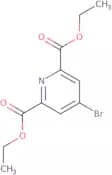
CAS:<p>4-Bromo-2,6-pyridinedicarboxylic acid ethyl ester is a luminescent compound that emits light in the visible region of the spectrum. It can be used as a ligand for polymerized monolayers or as a bifunctional covalent coupling agent. The carboxylate group on 4-Bromo-2,6-pyridinedicarboxylic acid ethyl ester interacts with lanthanide metal ions to produce luminescence. This chemical also has low frequency emission and can be used for supramolecular interactions.</p>Formula:C11H12BrNO4Purezza:Min. 95%Peso molecolare:302.12 g/molHexadecanal
CAS:Hexadecanal is a chemical compound that belongs to the group of basic proteins. It is an intermediate in the synthesis of hexanol and hexadecanoic acid. Hexadecanal has been shown to have receptor activity on rat liver microsomes, as well as p450 activity. The physiological functions of this molecule are unknown, but it has been shown to have synergic effects with other bioactive phytochemicals such as sodium citrate.Formula:C16H32OPurezza:Min. 95 Area-%Colore e forma:White Off-White PowderPeso molecolare:240.42 g/molFmoc-Cys((S)-2,3-di(palmitoyloxy)-propyl)-OH
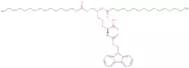
CAS:Fmoc-Cys((S)-2,3-di(palmitoyloxy)-propyl)-OH is a reagent used in the synthesis of complex compounds. It is also a useful scaffold for the synthesis of speciality chemicals and versatile building blocks. This compound is an intermediate that can be used in the preparation of fine chemicals and pharmaceuticals. Fmoc-Cys((S)-2,3-di(palmitoyloxy)-propyl)-OH has a CAS number of 139573-78-7 and can be purchased as a high quality chemical.Formula:C53H83NO8SPurezza:Min. 95 Area-%Colore e forma:Slightly Yellow PowderPeso molecolare:894.29 g/mol4-Benzyloxyindole-2-carboxylic acid ethyl ester
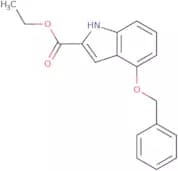
CAS:4-Benzyloxyindole-2-carboxylic acid ethyl ester is a cyclic compound that has been synthesized through an intramolecular carboxylate cyclization. This class of compounds are known for their ability to form propargylic analogues, which have the potential to be used as anticancer drugs. The compound was first reported in 1969 by Schardt and co-workers and was found to have activity against leukemia cells. It has been shown to undergo a series of cyclizations, which are triggered by the presence of oxygen or other electron acceptors.Formula:C18H17NO3Purezza:Min. 95%Peso molecolare:295.33 g/molPipotiazine palmitate
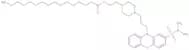
CAS:Prodotto controllatoPipotiazine palmitate is a long-acting antipsychotic drug that belongs to the class of phenothiazine derivatives. It is used for the treatment of schizophrenia and other psychotic disorders. Pipotiazine palmitate has been shown to be effective in treating chronic schizophrenia with minimal side effects. This drug binds to dopamine D2 receptors, which leads to a decrease in dopaminergic activity in the brain and improves symptoms of psychosis. Pipotiazine palmitate is administered orally in two doses per day. A major limitation of this medication is its low bioavailability due to its high lipophilicity, which may be due to its undecylenate ester form.Formula:C40H63N3O4S2Purezza:Min. 95 Area-%Colore e forma:PowderPeso molecolare:714.08 g/molPaliperidone palmitate
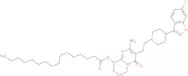
CAS:Prodotto controllato<p>Paliperidone palmitate is a drug that is used in the treatment of schizophrenia. It is the most potent and selective atypical antipsychotic agent available. Paliperidone palmitate has shown long-term efficacy and low risk of extrapyramidal symptoms, which are associated with some other antipsychotic agents. The drug has been shown to have minimal effects on prolactin levels, although it can cause an increase in serum prolactin levels when administered with risperidone. Paliperidone palmitate is a prodrug that is metabolized by esterases to its active form, paliperidone. Paliperidone does not bind to plasma proteins and therefore may be more suitable for patients with hepatic impairment.</p>Formula:C39H57FN4O4Purezza:Min. 95%Colore e forma:PowderPeso molecolare:664.89 g/mol3-Chloro-4-methoxybenzoic acid ethyl ester
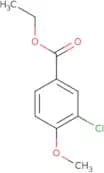
CAS:<p>3-Chloro-4-methoxybenzoic acid ethyl ester is a chemical compound that is used as a reactant in organic synthesis. It has shown high quality and can be used for research. 3-Chloro-4-methoxybenzoic acid ethyl ester can be used as a scaffold to make fine chemicals, pharmaceuticals, and other products. It has been shown to be useful in the synthesis of many complex compounds and as an intermediate or building block for chemical reactions.</p>Formula:C10H11ClO3Purezza:Min. 95%Colore e forma:PowderPeso molecolare:214.65 g/mol8-Chloro-6-oxo-octanoic acid ethyl ester
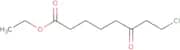
CAS:8-Chloro-6-oxo-octanoic acid ethyl ester is a chiral, thermostable and oxidizing agent that is used as an intermediate in organic synthesis. It is used to produce 8-chloro-6-oxo-octanoic acid ethyl ester, a reactive carbonyl reagent that can be used in the synthesis of amines and amides. This compound has been shown to be effective against wild type strains of E. coli as well as recombinant strains of E. coli. It also has been found to have fungicidal activity against Candida parapsilosis and Paracoccidioides brasiliensis at concentrations of 0.1 mg/mL or less.Formula:C10H17ClO3Purezza:Min. 95%Colore e forma:PowderPeso molecolare:220.69 g/molPyridoxine dipalmitate
CAS:<p>Pyridoxine dipalmitate is a polycarboxylic acid that is used as an antioxidant. It can be found in fruit extracts and has been shown to have antimicrobial properties. Pyridoxine dipalmitate also possesses antioxidant properties, which may be due to its ability to react with reactive oxygen species (ROS) and other free radicals. The compound has been shown to improve skin conditions and prevent damage caused by ROS. Pyridoxine dipalmitate is also used in the treatment of metabolic disorders, such as damaged cell membranes and fatty acid metabolism disorders. This compound may act as a cationic surfactant or phosphorus pentachloride.</p>Formula:C40H71NO5Purezza:Min. 95%Colore e forma:PowderPeso molecolare:646 g/molDL-α-Hydroxypalmitic acid
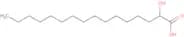
CAS:Palmitic acid is a fatty acid that is found in animal and vegetable fats. It is also an important component of the cell membrane. Palmitic acid has been shown to inhibit the growth of bacteria by interfering with the synthesis of cell membranes, which are largely composed of lipids. Palmitic acid has been shown to be active against Gram-positive bacteria, including Bacillus subtilis and Staphylococcus epidermidis, as well as Gram-negative bacteria such as Salmonella enterica Serovar Typhi and Escherichia coli O157:H7. Palmitic acid can be used to produce monolayers for use in magnetic resonance spectroscopy. These monolayers have been shown to have an effect on the rate at which glucose is transported across the surface of the membrane. Palmitic acid also inhibits glucosylceramide production in ganoderma lucidum, a type of fungus that causes plant diseases, by blockingFormula:C16H32O3Purezza:Min. 98 Area-%Colore e forma:PowderPeso molecolare:272.42 g/mol2,6-Dimethylbenzoic acid ethyl ester
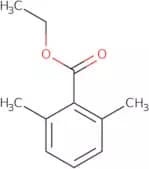
CAS:<p>2,6-Dimethylbenzoic acid ethyl ester (DBE) is an organic compound that is used as a starting material for the synthesis of other chemicals. It is produced by reacting chlorobenzene with magnesium in the presence of a suitable catalyst such as copper(II) chloride. The reaction can be carried out in bulk or in liquid phase, and yields are optimized by using activated carbon as a support. DBE is one of the most commonly used dialkyl benzoates for chemical syntheses due to its high reactivity. DBE has a particle size of about 10 micrometres and a bulk density close to 1 g/cm3.</p>Formula:C11H14O2Purezza:Min. 95%Colore e forma:PowderPeso molecolare:178.23 g/mol2-Cyano-5-fluorobenzoic acid ethyl ester
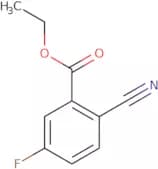
CAS:2-Cyano-5-fluorobenzoic acid ethyl ester is a chemical compound with the formula C6H4(COOCH2)2FO. The compound is an intermediate in the synthesis of other chemicals, such as pharmaceuticals. It is also used as a building block in other syntheses. 2-Cyano-5-fluorobenzoic acid ethyl ester has been assigned CAS No. 1260751-65-2 and is useful in organic synthesis because it is a versatile building block, complex compound, and fine chemical.Formula:C10H8FNO2Purezza:Min. 95%Peso molecolare:193.17 g/molThiazole-2-carboxylic acid ethyl ester
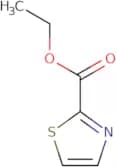
CAS:<p>Thiazole-2-carboxylic acid ethyl ester is a synthetic compound that is used as a model for peroxides and as a substrate in the study of carbonyl chemistry. It has been shown to react with benzene, yielding an alpha-hydroxybenzylidene ketone. The heterocycle can be converted to the corresponding carboxylic acid by dehydrogenation with hydrogen peroxide or sodium perborate. The yields of this reaction are dependent on the substituent effects of the heterocycle. Thiazole-2-carboxylic acid ethyl ester reacts with serine protease and amide in an enzyme assay. Kinetic data for this reaction are available in the literature.</p>Formula:C6H7NO2SPurezza:Min. 95%Colore e forma:PowderPeso molecolare:157.19 g/molN-(Phenylsulfonyl)palmitamide
<p>N-(Phenylsulfonyl)palmitamide is a versatile building block that can be used to create complex compounds for research. CAS No. is 527-87-2 and it is a reagent and speciality chemical with high quality. It is also useful as a reaction component in the synthesis of other compounds, or as a scaffold for the synthesis of new derivatives.</p>Formula:C22H37NO3SPeso molecolare:395.61 g/mol3,5-Dihydroxybenzoic acid ethyl ester
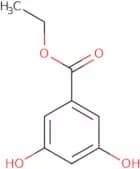
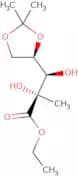
CAS:<p>3,5-Dihydroxybenzoic acid ethyl ester (3,5-DHBA) is a compound that inhibits the growth of cancer cells by binding to the active site of serine protease. It has been shown to inhibit the activity of two enzymes that are involved in phosphatase and hydroxylation reactions. 3,5-DHBA is also a photophysical reagent for palladium complexes which have been used for the treatment of cancers. This compound also binds to oxadiazole, a substance found in plants that may have anticancer properties. The synthesis of 3,5-DHBA has been studied extensively and it has been shown to be synthesized from hydroxybenzoic acid and carbinols.</p>Formula:C9H10O4Purezza:90%Colore e forma:PowderPeso molecolare:182.17 g/mol(2S,3R)-3-((4R)-2,2-Dimethyldioxolan-4-yl)-2-methyl-2,3-dihydroxypropanoic acid ethyl ester
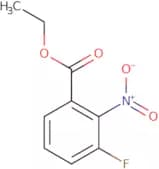
CAS:(2S,3R)-3-((4R)-2,2-Dimethyldioxolan-4-yl)-2-methyl-2,3-dihydroxypropanoic acid ethyl ester is a high quality reagent that is used as an intermediate for the synthesis of complex compounds. It is also a useful building block for the synthesis of speciality chemicals and research chemicals. The versatility of this compound makes it a useful scaffold and building block for reaction components.Formula:C11H20O6Purezza:Min. 95%Colore e forma:PowderPeso molecolare:248.27 g/mol3-Fluoro-2-nitrobenzoic acid ethyl ester
CAS:3-Fluoro-2-nitrobenzoic acid ethyl ester is a fine chemical that is useful as a versatile building block in the synthesis of complex compounds. It can be used as an intermediate in the preparation of research chemicals and has been shown to react with amines to form nitrosoamines, which are useful reaction components. 3-Fluoro-2-nitrobenzoic acid ethyl ester has CAS number 163077-89-2 and is available at high quality.Formula:C9H8FNO4Purezza:Min. 95%Colore e forma:PowderPeso molecolare:213.16 g/molL-Propargylglycine
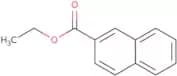
CAS:L-Propargylglycine is a novel, synthetic compound that has been shown to inhibit bacterial growth. It is a strong inhibitor of the polymerase chain reaction (PCR) and nuclear DNA replication. L-Propargylglycine has also been shown to inhibit mitochondrial membrane potential and human serum which may lead to its anti-inflammatory properties. L-Propargylglycine has antioxidative properties, antimicrobial peptide activity, and ATP channel inhibition. This drug also has a number of other pharmacological effects including modulation of intestinal inflammation in models of inflammatory bowel disease and improvement of atherosclerotic lesions in animal models.Formula:C5H7NO2Purezza:(%) Min. 98%Colore e forma:PowderPeso molecolare:113.11 g/molβ-Naphthoic acid ethyl ester
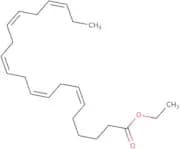
CAS:β-Naphthoic acid ethyl ester (BNAE) is a synthetic compound that has been used as an intermediate in the synthesis of organic compounds. It is also used to prepare hydroxamic acids, which are active methylene compounds. BNAE reacts with nucleophiles and is susceptible to nucleophilic attack. The reaction mechanism for this type of compound involves a cavity with a constant volume, which increases the reactivity of the molecule. This type of reaction can be explained using the functional theory and the use of organic solvents. BNAE is stable when exposed to carbon tetrachloride and hydroxamic acids, but not when exposed to diethyl succinate or chemical agents such as sodium nitrite.Formula:C13H12O2Purezza:Min. 95%Colore e forma:PowderPeso molecolare:200.23 g/mol(all-Z)-6,9,12,15,18-Heneicosapentaenoic acid ethyl ester 98%, 10mg/ml ethanol solution
CAS:(all-Z)-6,9,12,15,18-Heneicosapentaenoic acid ethyl ester 98% is a quaternary ammonium salt that is useful as a reaction component or reagent. It has been shown to be a useful scaffold for the synthesis of complex compounds with high quality. This chemical can also be used as a building block for the synthesis of speciality chemicals and versatile building blocks. This compound is highly reactive and can be used in reactions with other chemicals to form more complex compounds. (all-Z)-6,9,12,15,18-Heneicosapentaenoic acid ethyl ester 98% has CAS No. 131775-86-5 and is soluble in ethanol solution at 10mg/ml.Formula:C23H36O2Purezza:Min. 98 Area-%Colore e forma:Clear LiquidPeso molecolare:344.53 g/mol